A car rental can begin with a rather unfair request: first, find your way to the car. Before the drive comes the collection, before the collection comes the office, and somewhere in the middle is the question of how you were supposed to get there. Abdulkader Almkinzy found a business opportunity in that small piece of everyday choreography.
Around 2016, he was helping his father with a rental business. Customers were coming into the office to arrange cars. Almkinzy expected an app to be doing more of this work. His father’s operation acted as an intermediary, finding vehicles through other rental offices. The ingredients for a marketplace were already there, conducted through people and telephone calls.
He began working on an app. Ali Alfehaid became his co-founder. Telgani took shape around a familiar transaction that seemed to contain too many errands. The premise was easy to appreciate: let people arrange the rental digitally, and make getting the vehicle easier. The customer had somewhere to go. Visiting a rental counter was rarely the point of the excursion.
A CV with two kinds of machinery
Almkinzy arrived at this problem with experience on both sides of a business system. His earlier professional record includes web development at VisionNet, business systems analysis at Saudi Aramco and IT project management at Asharqia Chamber of Commerce. There were databases, enterprise applications and the less photogenic business of making processes work.
He also studied finance at Arkansas State University and investment management and financial analysis at Creighton University. His work at Creighton included business reporting and reviewing agreements. A business development role at Takamol Holding followed in 2015, involving feasibility studies, pricing and financial models.
Read together, those jobs make the rental venture easier to understand. Software can organize an order; commercial terms determine whether anybody will fulfil it. A developer sees the steps in a transaction. A business analyst asks what each step costs and who benefits. Telgani would require both kinds of attention.
His own public introduction is admirably spare: entrepreneurship, product development, problem solving. There is a small, unexpected addition among his credentials, too: Disney Institute certificates in team creativity and its approach to excellence, dated December 2008. The professional trail runs from enterprise software to customer experience, with a brief detour through Disney.
An agreement has to reach the car park
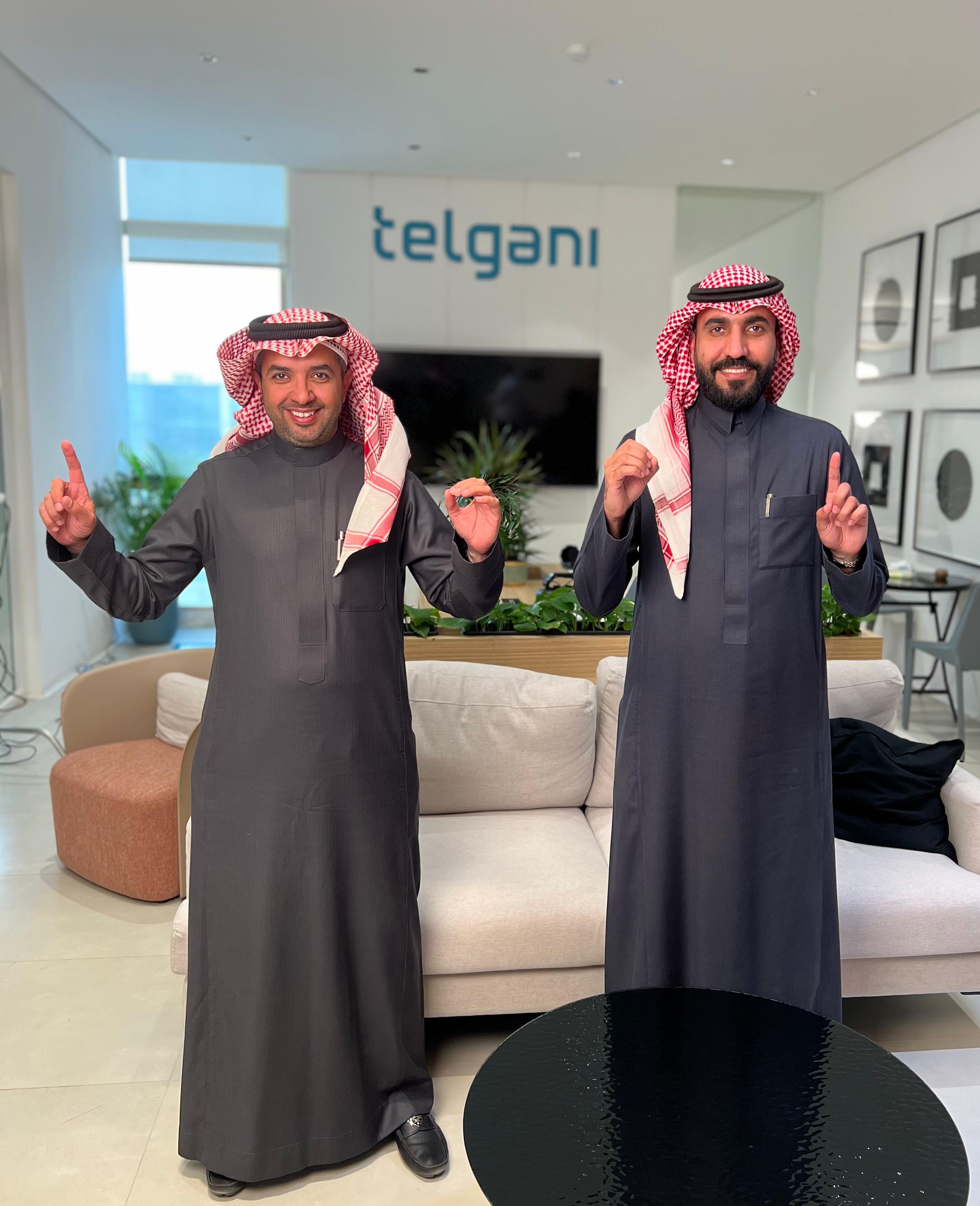
Partnerships became a visible part of Almkinzy’s work. Telgani publicly announced an agreement he signed with Raed Dodokh, the fleet and operations manager for Hertz and Thrifty in Saudi Arabia. The stated purpose was to improve the rental experience and offer customers more options. Behind that polite corporate language sat a practical requirement: a booking had to turn into a vehicle in somebody’s hands.
By January 2021, Hertz had received almost 4,000 bookings and processed 2,500 vehicle deliveries through the partnership. Telgani itself completed more than 13,000 deliveries during 2020. These were useful measures of a service that existed beyond its screen.
The arrangement also shows the kind of company Almkinzy was building. Established rental operators had cars and operating knowledge. Telgani supplied a digital route to customers and a way to arrange delivery. Each side had something the other could use. The renter, ideally, experienced the combination as one service.
That last point matters. Customers have little reason to admire the complexity of a partnership. They notice whether the booking is understood, whether the car arrives and whether the handover works. An agreement can fill several pages. Its customer verdict may take a single missed delivery.
A simple customer journey depends on several people keeping the same promise.
The investors came with useful neighbours
In May 2020, Telgani announced a six-figure seed round backed by 500 Startups, Impact46 and angel investors. The platform was already operating across more than 20 Saudi cities, with a reported expansion into the UAE. The financing was intended to improve the service and support expansion.
Almkinzy described the opportunity in terms of a more efficient rental industry and Saudi Arabia’s Vision 2030. His explanation of the market was practical: corporate customers around airports and hotels, leisure customers near major roads and metropolitan areas. A rental car is useful in different ways depending on where the customer’s day begins.
In November 2021 came a $2.5 million pre-Series A led by Impact46, with Nomw Capital participating. At that point, Telgani reported agreements with more than 50 rental companies, over 500 branches and coverage of more than 44 Saudi cities. Its partners included Budget, Theeb, Hertz, Sixt and Key Car Rental.
The network gave the platform range without requiring a customer to search each operator separately. It also gave Almkinzy a continuing coordination job. More choice helps only when a customer can turn that choice into an actual rental.
2021 and 2023 bars share a scale. The 2020 amount was undisclosed and appears as a label.
February 2023 brought a $6 million Series A co-led by Hala Auto and Elm. The pairing had a certain industrial logic: an automotive business and a digital solutions company investing in an operation that needed both cars and software. Telgani planned to expand short-term rentals in Saudi Arabia and develop more technology for flexible car subscriptions.
The announcement also noted airport car delivery among services introduced the previous year. The original question about getting to the car had found another setting. At an airport, the customer has already made one journey and is trying to start the next. The handover becomes part of the itinerary.
A funding figure is a convenient milestone because it fits neatly in a headline. The announced uses of that money tell a more specific story about Almkinzy’s agenda: improve access, extend the rental options and make the service work across more of a customer’s travel needs.
The work hidden inside convenience
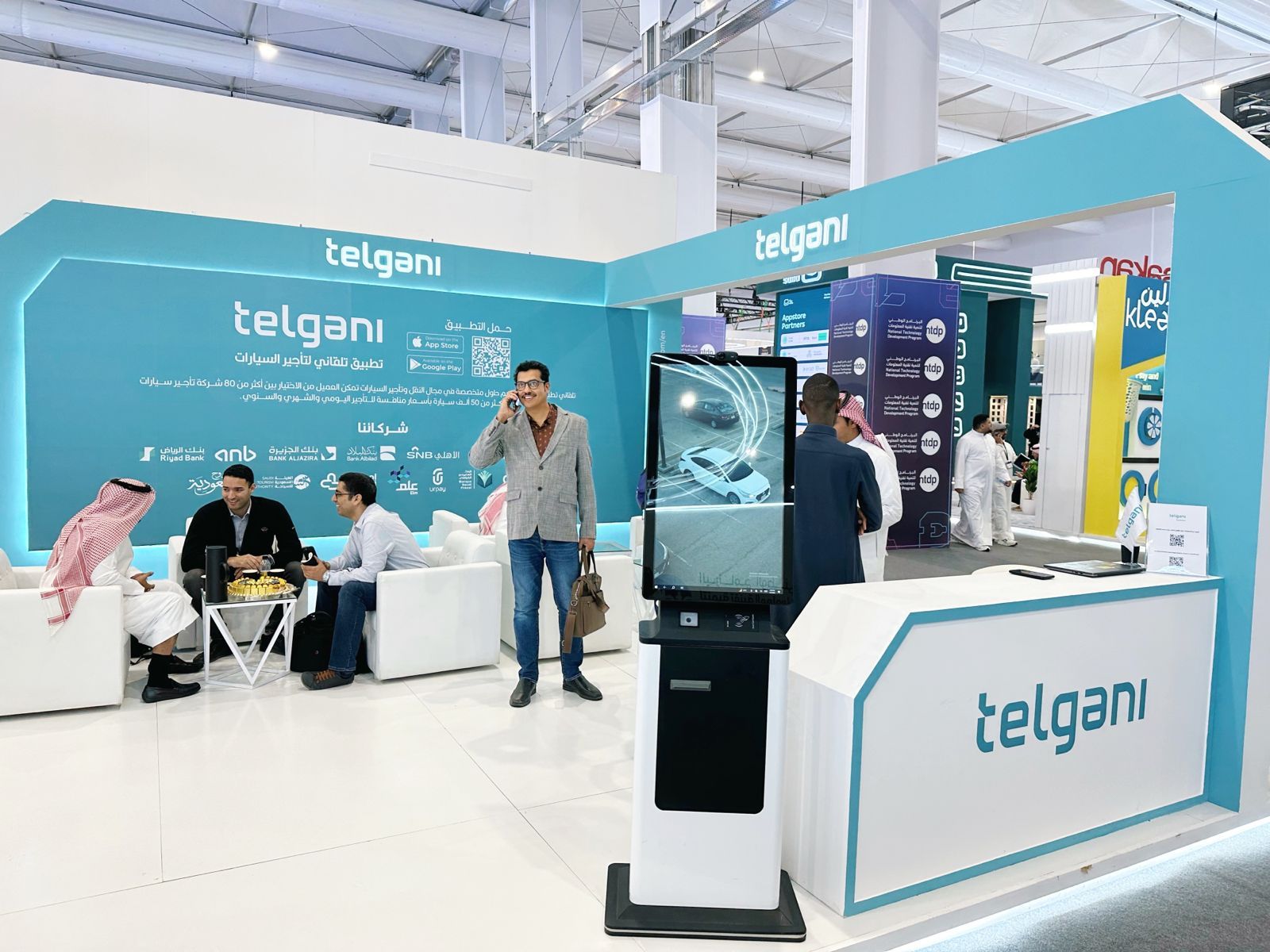
By 2024, Almkinzy was discussing a service with more moving parts than a booking form. Telgani offered doorstep delivery across more than 40 cities. An incentive scheme rewarded drivers for punctual deliveries, with the reward shared between Telgani and the rental company. Operating managers could monitor orders and delivery performance through an app.
He also described changes for expatriate customers: English-speaking customer support, better translation and lower deposit requirements. These details belong in the same story as the software. A customer who cannot understand the process, or cannot manage the deposit, has encountered a very real barrier to using it.
His 2024 priorities included Flex Lease and corporate vehicle bookings for employees and visitors. He continued to talk about expansion beyond Saudi Arabia. The direction was toward serving more circumstances in which someone needs access to a car, for different lengths of time and for different kinds of trip.
“For our customers, we guarantee price, quality, and convenience.”
Abdulkader Almkinzy · April 2023
His earlier ambitions included electric-vehicle delivery, better demand forecasting and tools to help rental partners sell vehicles at the end of their rental lives. Those were plans he discussed in 2023. They show how far his attention had travelled from the initial booking to the working life of the vehicle itself.
In a public post about a visit from Courtney Powell and Amal Dokhan to Telgani’s office, he used a particularly compact phrase: “growth is empathy.” He connected it to improving the customer experience. It is an appealing principle because it can be tested against ordinary details. Did the customer understand the instructions? Did the driver arrive when expected? Was getting the keys straightforward?
For a rental platform, those questions keep the philosophy close to the car park. Convenience acquires substance through the things a customer no longer has to arrange.
Breakfast, a microphone, and the next handover
There are glimpses of Almkinzy away from formal company announcements. Jon Edward Santillan described a founders’ breakfast with him and Telgani’s Mazen AlZamil, discussing fundraising in Saudi Arabia and the mechanics of B2B sales. Santillan identified Almkinzy as a fellow 500 Global Misk batchmate and described their habit of exchanging notes when their travels overlapped.
Almkinzy has also taken the operating questions into public conversations. He appeared in a 2020 Besarahah podcast episode about hiring for startups, alongside founders from Sabbar and POSRocket. The episode considered what founders look for in candidates, how they find people and what attracts them to a young company. It is another practical subject in a career usually introduced through an app. A customer-facing service eventually depends on the judgement of the people answering questions, coordinating partners and solving the awkward cases that a booking form cannot anticipate. In February 2025, he announced a panel appearance at LEAP’s CODE Stage about automotive and transportation startups, covering car rental, repair and ecommerce.
Telgani also reported his participation in a business sustainability session within the Ministry of Transport and Logistic Services’ Mahattak incubator. The discussion brought him together with other founders in transport and logistics, including executives from Torod and Salasa. It was a setting suited to the questions his company faces: how do several businesses fit together well enough for the person at the end to experience one reliable service?
Later that year, CoMotion included him among the 13 founders and CEOs recognized in its Top Innovators of 2025 edition. The recognition placed the Telgani CEO alongside founders working across several forms of mobility.
The public milestones have become larger; the original problem remains easy to picture. Somebody needs a car. Before they can drive it, someone has to make the arrangements work. Almkinzy’s route into entrepreneurship runs through that space between choosing a vehicle and receiving the keys. The less the customer has to think about it, the closer the business comes to delivering its promise.