One night, a delivery client had a problem before the delivery could even begin. The orders needed picking and packing. Abdulmajeed Alyemni and his partner, Hasan Alhazmi, stepped in to help. Their business was moving e-commerce orders by car and motorcycle; now they were handling the work that came before the journey. In Alyemni’s telling, the idea for Salasa’s fulfillment service emerged from that practical interruption.
It is an appealingly unceremonious beginning. A customer needed something done. Doing it revealed a service worth offering to other customers. The founders eventually left their jobs to build around it. When Alyemni later retold the episode onstage in Hail, he returned to the importance of acting when someone needs help. The origin he chose to remember was a useful evening’s work.
Today, Alyemni is Salasa’s co-founder and CEO, based in Riyadh. His business handles the physical obligations behind digital shopping: storing goods, preparing orders, arranging shipments, and dealing with the movement of products across markets. A customer sees a checkout button. Alyemni has built his working life around everything that button sets in motion.
First, explain the warehouse
Before Salasa, Alyemni studied at King Saud University and worked in inventory planning at 3M. Planning and supply-chain work preceded the company. By early 2017, the fulfillment proposition had taken shape: merchants could hand over operational tasks that distracted them from products, marketing, and sales.
Before Salasa could persuade merchants to use the service, it had to explain it. The early team held educational sessions, made videos, and attended exhibitions. Outsourcing fulfillment required a conversation about what the company would actually take off a merchant’s hands. The vocabulary needed unpacking before the boxes did.
Alyemni has also recalled expecting a municipal licence to take a month and waiting eight. Entrepreneurship supplied its own revised delivery estimate. His early advice to other founders was equally practical: organize the accounting and human-resources work before growth makes neglect expensive. His instruction was plain: “do it right.”
A founder in other people’s corner
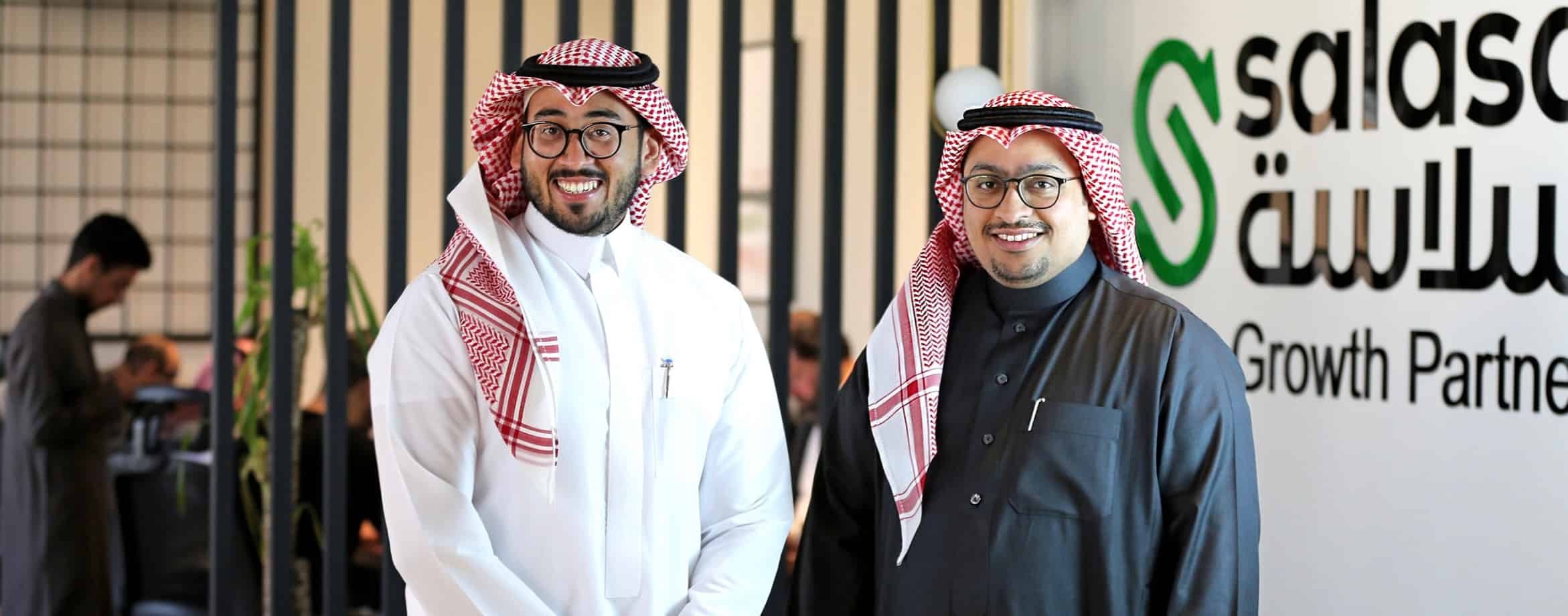
In March 2019, Alyemni was selected as an Endeavor Entrepreneur in Cairo. The selection brought him into a network designed to connect founders with mentors and experienced business leaders. Candidates went through interviews and a panel decision. Salasa was still young enough for the early operating lessons to be fresh.
The network’s selection process examined a founder’s potential to build a larger business and contribute to an entrepreneurial community. The panel had to agree unanimously. For selected entrepreneurs, support included introductions to business mentors and volunteers who could help with particular company needs. Alyemni joined with a business whose own purpose was to make other companies easier to operate.
That same month, he took part in a public entrepreneurship gathering organized by the Delni Business Center. His advice to prospective online merchants concerned their products: look for something new instead of repeating what is already available. It was a broader concern than transporting orders. A fulfillment service needs merchants with something customers want to buy.
He continued discussing the business in public, including an Arabic podcast conversation in September 2019 about inventory management and logistics. The subjects were concrete. Stock has to be held somewhere. Orders have to be prepared. Someone must make those activities fit together, however elegant the storefront looks on a screen.
The podcast episode ran for about 58 minutes, a generous amount of time for a subject usually hidden behind a tracking number. Its advertised focus was his experience of running an inventory-management and logistics business. The conversation gave those everyday operating tasks room for a longer explanation.
In a later television appearance, he pointed to merchants that had started from scratch and reached monthly revenues in the millions of riyals. He chose their progress as something to talk about alongside Salasa’s own. It is a recurring feature of his public account of the company: the merchant’s business remains part of the story.
“Our culture thrives on a balance of reliability and disruption.”
Abdulmajeed Alyemni, on company culture
Reliability has to leave room for experiments
Alyemni has described an operating culture with two demands. Customers must be able to depend on promises being fulfilled. Employees must also be able to test ideas and improve the way work gets done. He has spoken about perseverance, experimentation, and helping the next generation of leaders develop confidence.
Those preferences belong to a particular kind of business. A merchant entrusts a logistics company with goods and with part of its customer relationship. An experiment takes place alongside obligations that are already live. There are orders to complete while the company considers how the next batch could move more efficiently.
In his comments on leadership, Alyemni places mentoring and empowering colleagues within his own responsibilities. The ambition extends beyond introducing another tool. It includes people who can handle new problems as the business changes. He explicitly encourages experimentation while acknowledging that attempts can fail.
His ninth-anniversary message returned to people as well. Alongside the volume of orders, he celebrated the e-commerce entrepreneurs using Salasa and the employees doing the daily work. After years of speaking about operations, he chose to mark an anniversary through the people who make those operations useful.
More parcels, a longer horizon
By December 2020, Salasa was reporting more than 10 million products shipped for over 300 clients across 15 industries. It announced an $8.6 million Series A led by Alsulaiman Group, with participation from SVC and 500 Startups. The plans included expanding services, adding to the team, and growing its network of partners.
At the time, Alyemni emphasized transparency and flexibility as the company entered additional markets. Those are modest-sounding words next to a funding announcement, but they concern the relationship a merchant actually experiences. A business handing over inventory needs to understand what is happening to it, and needs services that fit its own operation.
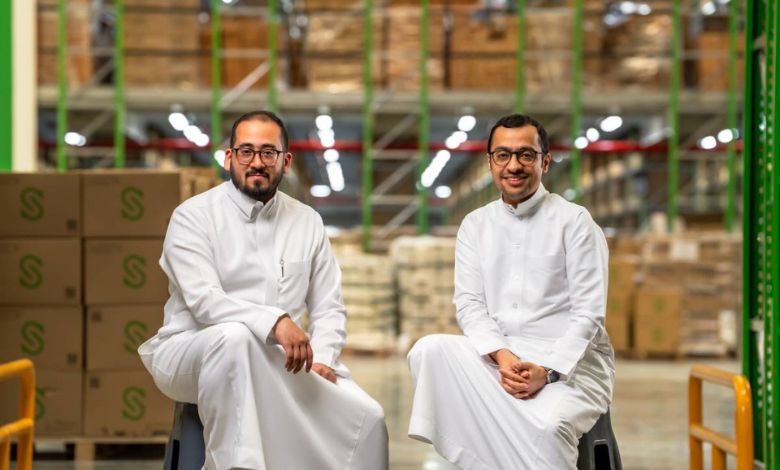
On August 4, 2025, Salasa announced a $30 million Series B led by Artal Capital. Its reported cumulative total had passed 50 million products, with more than 1,000 merchants served. The new money was intended for fulfillment capacity, technology, talent, and a wider cross-border business.
Alyemni described the direction as becoming a technology-first logistics company. The announcement combined physical expansion with plans for more predictive and automated operations. Warehouses and software appeared in the same agenda. More space can hold more stock; deciding where stock belongs and how an order travels introduces another set of tasks.
A border is another packing problem
In 2025, Alyemni took the conversation to Paris, joining a VivaTech panel about infrastructure for startups built to serve international markets. He described Salasa’s role in helping merchants reach customers beyond their home market. The subject enlarged the map around the same practical question that had occupied the founders at the beginning.
His expansion ambitions run in two directions. Saudi brands should be able to sell abroad. International brands should be able to enter Saudi Arabia and the Gulf. He has pointed to the purchasing power of the market and the infrastructure that incoming businesses need in order to serve it.
In September 2025, he set out three uses for the new capital: infrastructure, technology, and specialist talent. He described deeper coverage within Saudi Arabia, selected GCC markets, and trade moving both into and out of the region. He also discussed commercializing Salasa’s order-management software and adding related services.
These were stated plans. They describe the work he wanted the company to undertake, rather than a finished international network. For a founder whose origin story involves helping with unfinished orders, the expansion agenda still has an identifiable customer at its center: a merchant trying to reach someone the current operation cannot easily serve.
He has also addressed the less glamorous material around a shipment. In a discussion of sustainability for smaller businesses, Alyemni described the challenge of balancing affordable operations with access to suitable packaging and logistics options. He spoke about working with local suppliers and partners to make those choices more accessible.
He identified education as part of that effort too. Businesses could regard sustainable options as expensive or complicated, while suppliers and logistics partners could help widen the available choices. It returned him to a task familiar from Salasa’s early years: helping a merchant understand an operational decision before asking them to make it.
Let the reader carry the story
A book fair supplied a particularly tangible expression of his approach. At the Riyadh International Book Fair in 2025, Salasa offered hands-free shopping: visitors could leave purchases at collection points and have them delivered. Publishers and exhibitors could keep selling while visitors continued browsing without carrying everything they had bought.
There is a pleasing fit between the service and the setting. Books are easy to fall in love with one at a time. The bag becomes persuasive evidence of their collective weight. Collection and shipping turn that problem into something a visitor can hand over, then return to the shelves.
Alyemni spoke about the book-fair work in terms of customer experience and the role logistics could play in cultural commerce. It brought the company’s proposition into view. The operational work happened around the reader, who was free to spend more attention on the books.
The scene sits comfortably beside the company’s beginning. A client had orders that needed packing. A reader has purchases that need carrying. Across the intervening years of funding rounds, software plans, and expansion discussions, Alyemni keeps returning to work someone else would be glad to entrust to a capable pair of hands.