Breaking
Grip Ships $1B in Perishables, Year One Forbes 30 Under 30 Miami 2023 FreightTech 100 - Two Years Running 25M Data Points Routed Daily Five Warehouses. Coast to Coast. Walking Meetings, Frozen Goods Grip Ships $1B in Perishables, Year One Forbes 30 Under 30 Miami 2023 FreightTech 100 - Two Years Running 25M Data Points Routed Daily Five Warehouses. Coast to Coast. Walking Meetings, Frozen Goods
Vol. 1 / Issue 06 / The Operator

Juan Camilo Meisel

He spent six years figuring out how to deliver frozen steaks without thawing the customer's patience. Now he runs the software that does it for everyone else.

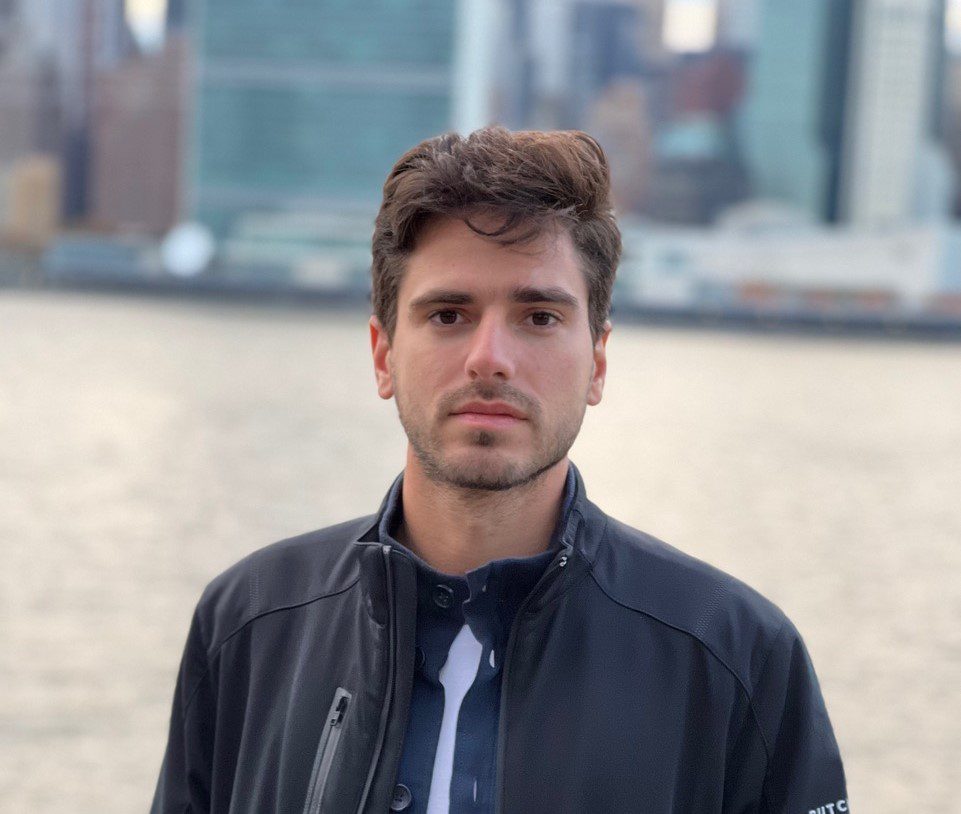
Juan Camilo Meisel, founder and CEO of Grip
Juan Camilo Meisel - Brickell HQ, Miami
The Lede

A Colombian in Brickell, fixing the box of melting steaks.

There is a meeting at Grip called "the Jersey loop." It happens inside a refrigerated warehouse, at walking pace, in a coat. Juan Camilo Meisel is its inventor and its biggest fan.

Most software founders sell you a dashboard. Meisel sells you a cold one. Grip, the Miami company he co-founded with Jimmy Cooper in 2022, is what happens when two former ButcherBox operators decide the world has too many melted ice cream pints and not enough patience. The company moves perishable e-commerce orders - meat, seafood, ice cream, anything that loses value the second it warms - across a network of refrigerated fulfillment hubs in New Jersey, Florida, Michigan, California, and Texas. In year one it helped deliver roughly a billion dollars worth of consumer goods. In year two it built the software to do it faster.

Meisel did not arrive at this by accident. For six years he ran logistics at ButcherBox, the direct-to-consumer meat subscription that became one of the great quiet wins of D2C. He watched it scale from zero to about $600 million in annual revenue. He also watched, in detail, what happens when a box of frozen meat misses its delivery window in July. Customer trust does not come back. Refunds compound. Cold packs become very expensive paperweights. The lesson was simple: in perishable e-commerce, the product is the shipment.

"Most brands still ship their products the same way they have for decades," he likes to say, "but there's a better way." It is the kind of line that sounds modest until you realize it is the entire thesis. The cold chain is one of the last analog corners of consumer logistics. Carriers, warehouses, gel packs, dry ice, weather, zip codes - each one is a variable. Each one is usually decided by a human staring at a spreadsheet. Grip pulls those decisions into one engine and runs them on roughly 25 million data points a day.

The Grip platform decides which warehouse fulfills a given order, which carrier carries it, how much refrigerant goes in the box, and when to hold the shipment if a storm is sitting on Memphis. The output is unglamorous and important: more orders arrive cold, fewer arrive ruined, the brand saves money, and the customer never thinks about it. The company says its tools have cut shipping costs by roughly 30 percent for clients and dropped shipping failure rates by 25 percent. Those are the numbers a CFO writes down. The customer just notices the ice cream is still ice cream.

What makes Meisel interesting is not the pitch. It is the location. He moved from Boston to Miami about eighteen months before launching Grip publicly, drawn by the city's gravitational pull on operators and capital around 2021. "As soon as I saw people starting companies down here, I wanted to be part of this moment early on," he told Refresh Miami. He set up Grip's headquarters at 801 Brickell, which is the address you give when you want to look like a hedge fund and the inventory you ship is salmon.

Forbes noticed. In 2023 he was named to the 30 Under 30 Local Miami list - a recognition that, in a city more famous for its crypto founders, landed on the most unsexy possible business: temperature-controlled freight. The same year, Grip was named South Florida's Startup of the Year. The following two years, FreightWaves put it on the FreightTech 100. None of those headlines are the ones an outsider would pick. They are the ones the industry picks. There is a difference.
Most brands still ship their products the same way they have for decades, but there's a better way. - Juan Meisel, on the cold chain status quo
By the Numbers

A logistics company, by the receipts.

$1B
Goods delivered in Grip's first year
$600M
ButcherBox revenue under his logistics watch
25M
Data points routed daily
5
Cold-storage hubs: NJ, FL, MI, CA, TX
The Pitch, Visualized

What Grip actually does for a brand.

Approximate impact for D2C perishable brands using Grip, per company disclosures.

Shipping cost reduction30%
-30%
Shipping failure decrease25%
-25%
Coast-to-coast warehouse coverage~55%
2-day reach
Annual seed round (2022)$2M
The Arc

From a meat subscription to a national refrigerator.

~ 2016
Joins the early team at ButcherBox, eventually heading logistics for six years.
2016 - 2022
Helps scale ButcherBox from $0 to roughly $600M annual revenue.
2021 - 2022
Relocates from Boston to Miami. Co-founds Grip with Jimmy Cooper.
2022
Closes a $2M seed round with Soma Capital, Western Technology Investment, and angels.
2023
Named to Forbes 30 Under 30 Local Miami. Grip wins South Florida Startup of the Year.
2024
Launches dedicated frozen and refrigerated fulfillment after a $1B year. FreightTech 100 honoree.
2025
FreightTech 100 again. Five-warehouse network operational across the U.S.
The Walk

Why his favorite meeting is held in a coat.

Meisel has a tic that says a lot about how he runs a company. He calls it the Jersey loop. It is a walking meeting that happens inside Grip's New Jersey warehouse, which is a building kept at temperatures that do not reward a polo shirt. "Grip terminology: the Jersey loop," he posted on X in 2024. "Means a walking meeting around our facility in Jersey. I am a big fan. Gets the juices flowing." Translation: the CEO would rather be on the floor than in a slide deck.

You can read the loop as a productivity hack. Or you can read it as a small declaration about what kind of company Grip wants to be. Logistics is one of those industries where the founders who win are not the ones who write the cleverest decks. They are the ones who can tell you what a dry-ice puck costs at 3am in Newark, and how many pallets fit on a 26-foot trailer with a swing door. Meisel chose to live in the cold room. The rest is software.

The choice of Jimmy Cooper as co-founder underscores the same instinct. Cooper is another ButcherBox alumnus. The two of them already lived through the problem - on the inside, at scale, with a P&L on the line. They did not have to imagine what could go wrong with perishable e-commerce. They had a notebook full of it. Grip is, in many ways, their second draft of a system they had already shipped once. The first draft moved $600M of meat. The second draft is a platform anyone can plug into.

The seed round was $2 million, modest by 2022 standards, but the cap table is what you'd want: Soma Capital, Western Technology Investment, plus operators from the industry. Meisel does not appear to be a founder who optimizes for headline rounds. He optimizes for warehouse leases and fulfillment volume. The Miami press has noted, accurately, that Grip's growth has outrun its press coverage. That is usually a good sign.

It helps that the underlying market keeps getting bigger. Frozen and refrigerated e-commerce, once a niche for meat boxes and meal kits, has bled into wellness, pet food, baked goods, even pharma. Every category that ships a thing that melts is a category Grip can sell into. The TAM is the entire refrigerator. Meisel, who has been doing this since before D2C perishable was a phrase venture capitalists could pronounce, is roughly five years ahead of most operators on the same problem.

What's quietly remarkable is the temperament. There are louder founders in Miami. There are founders with bigger Twitter followings, bigger personal brands, bigger TED-style ambitions. Meisel posts about walking meetings. The rest of his feed is shipping volumes, customer wins, and the occasional joke about packaging. Asked what motivates him, he tends to land somewhere between "the work" and "the people." His public quotes contain almost no jargon. The company's website reads like an operator wrote it. That is because one did.

In His Words

Quotes from a warehouse-walker.

Our team set up the full logistics infrastructure for how to get boxes of frozen meat to people's doorsteps.

As soon as I saw people starting companies down here, I wanted to be part of this moment early on.

Grip terminology: the Jersey loop. Means a walking meeting around our facility in Jersey. I am a big fan. Gets the juices flowing.

Most brands still ship their products the same way they have for decades, but there's a better way.

What Sets Him Apart

Three details that explain the founder.

Detail 01

He didn't pivot in. He earned the seat.

Six years deep in ButcherBox logistics is not a resume bullet. It is the specific apprenticeship Grip needed. Meisel was already the customer his company now serves.

Detail 02

Boring is the moat.

Cold-chain software is invisible to consumers and indispensable to brands. The unsexiness is the defense. Few founders want to live in a freezer for a decade.

Detail 03

Miami isn't a vibe, it's a hub.

He moved 1,500 miles for proximity to capital, operators, and ports. Brickell happens to be a logistics decision too. Geography is a business strategy.

Fun Facts

The footnotes worth keeping.

  1. Colombian-born, Boston-seasoned, Miami-headquartered - the rare founder whose arc is also a temperature gradient.
  2. Co-founder Jimmy Cooper is another ButcherBox alumnus. Grip is the band getting back together.
  3. Grip's "Smart Logistics Engine" weighs weather, carrier performance, zip code, and refrigerant load - then picks. Like a tiny airline for ice cream.
  4. The company crossed 5 million shipments processed through its platform by mid-2024.
  5. His preferred meeting venue is a refrigerated warehouse in New Jersey. The agenda is whatever happens during the loop.
  6. The Grip HQ at 801 Brickell sits among hedge funds and law firms. The product, by contrast, is gel packs and gel packs and gel packs.
The Long Game

Where this is going.

If Grip works, you will never hear about it again, which is the goal. The clearest mark of infrastructure software is invisibility. Stripe is invisible. AWS is invisible. The cold chain, when it works, is invisible. Meisel is building toward that ceiling. He wants perishable e-commerce to feel as ordinary as ordering a paperback. No drama. No melt. No surprise refrigerant fee. The hard part is that the path to invisibility runs through warehouses, weather APIs, and a thousand tiny operational decisions that have to be right enough times in a row.

The strategic question for Grip is whether it stays a software-plus-fulfillment hybrid or eventually picks a side. Right now, it does both. It runs the engine and it runs the buildings. That is unusual. Pure software companies in logistics tend to lose to operators; pure operators tend to lose to software. Grip's bet is that the only way to credibly route a perishable shipment is to own enough of the network to enforce the routing. Five warehouses is a lot for a four-year-old startup. It is also a lot of leases.

Meisel does not appear to be in a hurry to look like a tech CEO. He appears to be in a hurry to look like an operator who happens to be using software. That distinction matters in cold-chain logistics, where customers - meat brands, ice cream brands, pet food companies - want to know the founder has personally been on the dock at 5am. The Jersey loop is, in that sense, a marketing tool as much as a productivity one. It signals what kind of company this is to anyone paying attention.

The bigger picture: the U.S. perishable e-commerce market is still small relative to its potential. Most categories that could ship cold do not yet, because shipping cold is hard. Every percentage point of category penetration is a percentage point of TAM for Grip. The five-warehouse network gets shorter every year as e-commerce keeps centralizing on regional hubs. Meisel started building this map five years before most of his peers thought to draw it. He may simply be early. Being early, in infrastructure, is the only way to be on time.