The most irritating part of renting a car is often the part before driving one. The airport shuttle. The queue. The counter where a stranger asks whether you would like to pay more for a different car. Kyte's answer was almost comically direct: what if the car came to you?
The short version
- Kyte delivered rental cars to customers and collected them afterward.
- It grew from a partner supplied fleet to vehicles sourced directly from manufacturers.
- At its peak, it reached 14 US markets; by late 2024 it was down to two.
- Loan trouble led to fleet repossession, and Kyte shut down in August 2025.
The service began in 2019 with three German founders in San Francisco: Nikolaus Volk, Ludwig Schoenack and Francesco Wiedemann. Their résumés made an unusually tidy founding diagram. Volk had worked on machine learning and location systems at Uber. Wiedemann had built consumer mobility products at BMW. Schoenack had developed automotive strategies at McKinsey. They saw that a phone could summon a ride, but getting a car for a weekend still meant going to where the cars lived.
For a customer, Kyte's proposition was simple. Book on the app or website, choose the place and time, and meet a delivery partner - a “Surfer” in the company's vocabulary - with the keys. When the trip ended, another handoff took the car away. A city resident who needed wheels for a weekend could skip two journeys to a rental branch. A traveler could avoid the counter. Someone trying car access without buying could rent for weeks or take a subscription.
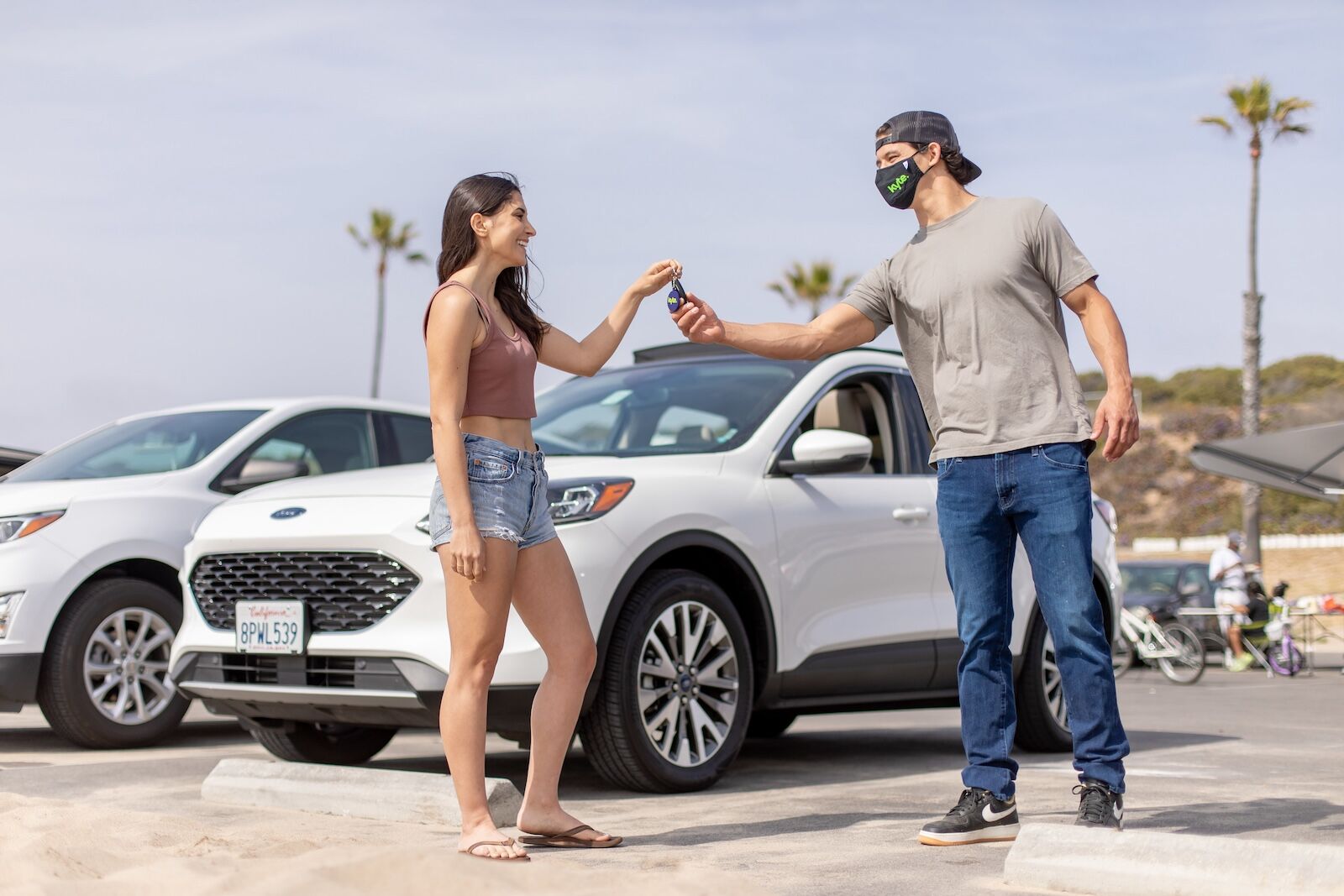
The counter was only the visible problem
Early Kyte was deliberately light on vehicles. Volk described it in 2020 as a technology and logistics platform that used inventory from rental companies, dealerships and carmakers. The partners knew how to buy, maintain and sell cars; Kyte would handle demand, software, distribution and the last mile. This gave the startup a way to test the customer experience without first buying a city full of depreciating metal.
The distinction from Turo mattered. On Turo, a guest typically booked a car listed by an individual host. At Kyte, the customer booked a managed rental experience, with scheduled delivery and collection. The distinction from Hertz or Avis mattered too: the address of the counter was replaced by the renter's address. It was a clever way to make an old category feel new, even though the car still had to be cleaned, insured, positioned, maintained and returned.
This is the part a prospective imitator should study. Kyte did not begin by inventing a new kind of car. It removed a trip the customer disliked and built operations around that absence. The product was the handoff. The hard part was making enough money after two handoffs, fleet idle time and the inevitable drive back.
When the cars became its own problem
The business evolved. Kyte later sourced vehicles directly from manufacturers and financed a much larger fleet. In 2021 it announced a $30 million Series A. In March 2022 it arranged $200 million of asset backed credit with Goldman Sachs and Ares. That November came a $60 million Series B led by InterAlpen Partners. In March 2024, Barclays and Waterfall Asset Management provided a facility of up to $250 million that refinanced and enlarged the earlier arrangement. Those figures describe available financing, not cash profit, and the 2024 facility was a replacement rather than another $250 million stacked on top.
The money made growth possible. Kyte reached more than a dozen American markets and said in 2024 that it had grown sixfold since 2022. It also made each city a real estate problem on wheels: cars had to be bought or financed, put where demand would appear, delivered at a promised time and kept busy enough to pay for themselves. The app could make the booking feel instant. A lender still expected regular payments.
Kyte also offered longer access. In 2022 it introduced a Tesla Model 3 subscription and later advertised subscriptions for sedans and SUVs. A contemporary report put monthly starting prices at $519 for a small sedan, $679 for an SUV and $899 for a Tesla. Those were advertised prices at the time, not a live offer. The broader ambition included electrified and eventually autonomous fleets. But in 2024 Volk said the company had held back from filling its fleet with EVs, a decision he was glad of when electric car resale values weakened.
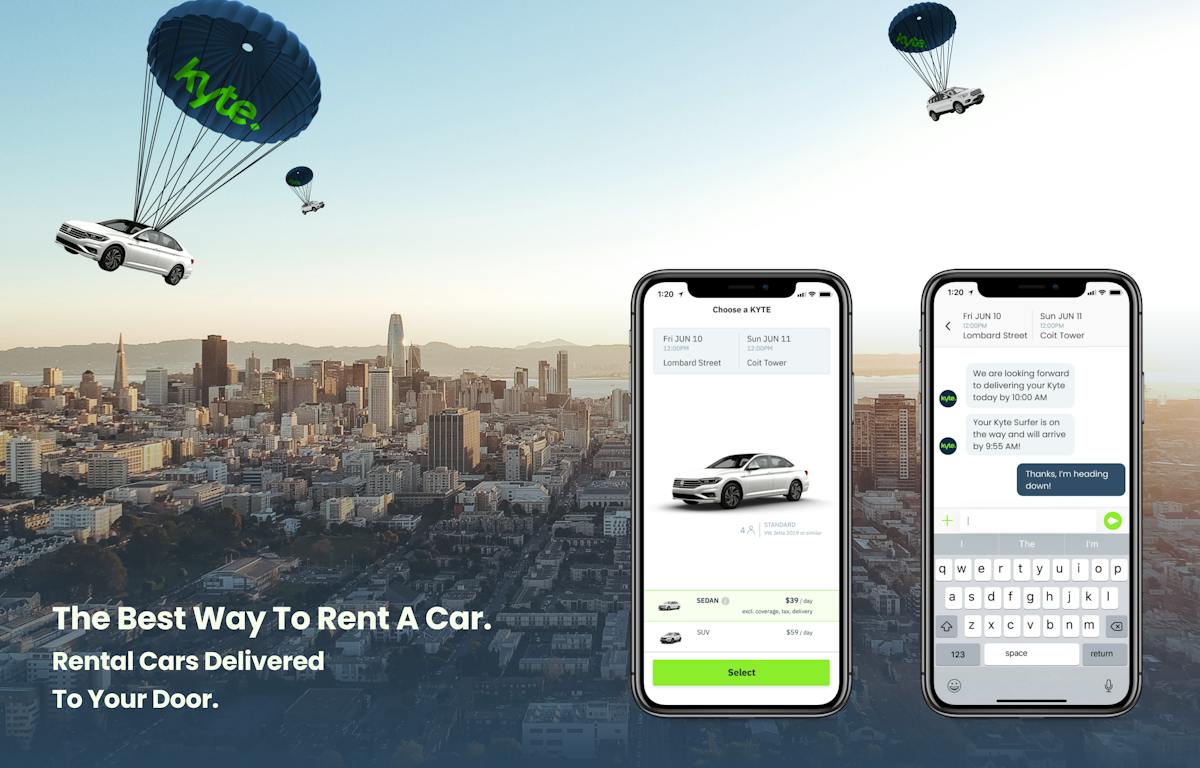
The map shrank faster than the ambition
By summer 2024, the company's own calculation had changed. Volk said expansion markets including Atlanta, Chicago, Boston and Washington, DC were not generating enough free cash flow. Kyte explored a sale, then chose a narrower attempt at survival: concentrate on San Francisco and New York City, including Jersey City. Those two areas accounted for roughly 70% of revenue. The company exited other cities and cut about 40% to 50% of its staff.
“In a capital-constrained environment, where capital is super expensive, we have to focus on our strongest markets.”Nikolaus Volk, 2024
The retreat was rational on paper. It showed which markets had demand dense enough to support the model. It also revealed why nationwide growth had been misleading. A booking in a weak market could bring revenue while still consuming more cash than the operation returned. This is the unromantic test for every delivery business: take the full cost of the thing being delivered, then count the journeys and the time between paying customers.
In July 2025, Turo announced an agreement to acquire select Kyte assets and welcomed its customers. It did not say it was continuing Kyte's managed fleet. The following month, Kyte shut down. A notice to creditors reported that the company had fallen behind on loans; its top lender repossessed and liquidated the vehicle fleet. The board sought financing and voted to wind down when it could not secure it. Some customers with advance bookings were left chasing refunds.
What the curbside experiment taught
Kyte identified a genuine irritation and built a service people could understand in one sentence. That is a product lesson worth copying: remove the errand surrounding the product, not just a button in its app. Its early partner model offers a second lesson: use someone else's specialist infrastructure while testing whether customers care. Later, Kyte's experience asks for a harsher spreadsheet. A city needs enough repeated demand, compact delivery routes and vehicle use to carry the cost of drivers, idle cars, maintenance and credit.
This approach would struggle in sparse places, with long journeys between bookings, or where vehicle financing becomes dearer than the margin a rental can earn. Kyte's strongest markets showed the density that could make doorstep rental attractive. Even there, the larger company ran out of time and capital. The counter had disappeared for the customer; the economics behind it had merely moved out of sight.