On the last day of its service, Caffeine put two kinds of numbers on the same goodbye page. There were 61 million monthly users and four million daily users. There were also 200 sports partners in 17 categories. Then came the sentence that ended the broadcast: the company was “still not quite profitable.” On June 26, 2024, the screens went dark. It is hard to imagine a cleaner demonstration that being watched and being paid are separate events.
- Caffeine made live video easier to broadcast and quicker to respond to, with chat, social discovery and virtual gifts.
- It shifted from gaming and celebrity streams toward free coverage of sports whose audiences were scattered across the internet.
- The sports pivot drove reported reach, but gifts, ads, subscriptions and pay per view never made the service profitable.
Ben Keighran and Sam Roberts founded Caffeine in 2016. Both had worked at Apple; Keighran had led product design for Apple TV. The original idea was a small rebellion against the awkwardness of livestreaming. You should be able to press a button and go live. A viewer should be able to speak, and the broadcaster should hear them while the remark was still alive. Discovering a broadcast should feel more like following people than consulting a television schedule.
The expensive pleasure of being there
Caffeine's early pitch was “one-click” broadcasting with almost no delay. Its web and mobile tools let people stream games, talk to viewers, and watch friends watch something else. Comments were organized around social connections. The effect Caffeine sought was less auditorium, more crowded sofa: a broadcast where the performer could actually answer you before everyone forgot the question.
That is a real product distinction. Twitch and YouTube offered larger established audiences; Caffeine tried to make the exchange between broadcaster and viewer feel immediate. Fans could also buy digital items called Props with Caffeine Gold. In 2019, Caffeine said creators received half the value of those items. A cheer became a tiny transaction, animated on screen. For creators, it was a way to earn; for viewers, a way to be noticed.
But real time has a bill attached. Keighran later described beginning with WebRTC, a technology suited to intimate, low-delay streams, and learning that it was costly to push toward huge sports audiences. The company eventually used its own delivery systems and AWS CloudFront, with different streaming formats for different events. That decision was less romantic than the original pitch, and more useful. A league with a million viewers has different needs from a gamer talking to a roomful of friends.
“Caffeine is for sports you can't find anywhere else.”Ben Keighran, 2023
A map of the games between the games
The first Caffeine catalog wandered happily. Fox Sports and ESPN helped supply events. Live Nation brought concerts. Offset hosted shows. A 2020 agreement with Drake and the Ultimate Rap League made battle rap free to watch live on the platform. The list sounded like a television executive's desk after someone had shaken it. It also gave Caffeine a way to test which communities showed up together, and which came back.
By 2023, the answer was increasingly sports. Not only the familiar games with expensive broadcast homes, but surfing, skating, basketball, fighting and other competitions hunting for distribution. For a league, Caffeine offered another screen and a chance to reach young viewers. For fans, the price of admission was usually nothing. Live streams, replays and highlights appeared across the website and apps; chat and reactions gave the viewing a crowd.
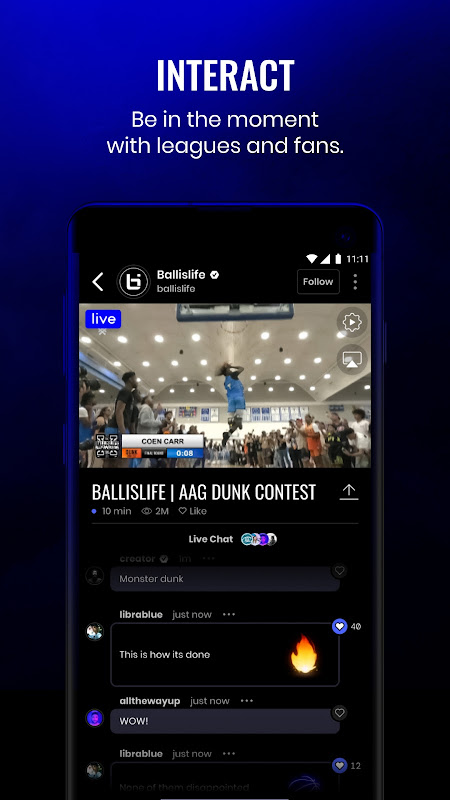
That pitch worked as distribution. Caffeine said its monthly audience grew from five million in late 2022 to 60 million a year later. Its December 2023 roster included the X Games, World Surf League, World Poker Tour and other leagues and publishers. In February 2024, LIV Golf announced that Caffeine would carry Friday tournament coverage and original programs. LIV said those programs had generated more than seven million views on Caffeine across two events. The platform had become useful to organizations for which the old television dial had little room.
There is a catch in that impressive graph. Monthly users count people who arrived; they do not tell us how long they stayed, what it cost to bring them in, or whether any advertiser or fan paid enough to support the visit. Caffeine's company-reported growth was steep. Its own closure notice shows that the revenue line did not climb high enough with it.
Every experiment had a price tag
Caffeine raised serious money to pursue the idea. In 2018, 21st Century Fox invested roughly $100 million across Caffeine and a jointly owned studio. Andreessen Horowitz and Greylock also backed the company. In July 2020, a $113 million Series D brought in Cox Enterprises, Fox Corporation and Sanabil Investments, with existing investors joining. The funding bought technology, programming and time. It did not settle the question of who would pay for an enormous free audience.
Caffeine tried several answers. Props turned affection into cash, with a share going to the broadcaster. Subscriptions and pay per view put a price on access. Advertising offered a way to keep the front door free. By late 2023, Keighran said ads were the main source of revenue and that the company limited them to protect engagement. That is the kind of product choice fans appreciate and accountants remember.
The company did not publish a complete breakdown of content costs, rights terms, ad yield or losses. So its precise failure point is not public. What we can see is the sequence: the original, highly interactive delivery method proved expensive at scale; the sports pivot brought a much larger audience; the experiments in making that audience pay did not reach profitability. The company itself gave the last fact plainly in its farewell.
A platform can solve discovery for a league and entertainment for a fan while leaving its own invoice unpaid.
The most transferable Caffeine idea is its choice of audience. Instead of trying to own all live video, it gathered sports with passionate fans and patchy distribution. A smaller league could give viewers a dependable place to find the next event, then use social features to make those viewers return. That can work when rights are affordable, viewing repeats, and advertising or direct fan payments cover the cost of acquiring and serving each audience. It becomes fragile when the price of content and delivery rises faster than the money each viewer brings in.
What to copy
Find scattered communities with regular live events. Make their next broadcast easy to discover and their fans easy to reconnect.
What to measure
Track repeat viewing, rights and delivery cost, and revenue per viewer together. A swelling user count cannot answer those questions alone.
Caffeine's finish was abrupt for its partners as well as its staff. The LIV agreement had been announced only months earlier. Its shutdown left the golf league seeking another paid streaming partner for the rest of the season. Yet the service had proved something: audiences for overlooked live sports were there, waiting to be assembled. Caffeine found them. Its unfinished work was to make the gathering pay for itself.