In the autumn of 2010, a video call between an iPhone and an Android handset qualified as a minor wonder. Apple had placed FaceTime inside its own immaculate garden. Skype still belonged mainly to the laptop. Mobile networks were moody, front-facing cameras were new, and callers could reasonably expect a face to freeze in the expression of someone remembering a troubling smell. Uri Raz looked at this state of affairs and made a prediction: within two years, everyone would talk on the phone this way.
The timetable was enthusiastic. The instinct was sound. Raz and his co-founder, the engineer Eric Setton, had created Tango to make mobile video less fussy about allegiances. The service worked across iOS and Android, across Wi-Fi and 3G, and it found friends through a phone's existing contacts. No new username was required. The trick was technical; the pleasure was social. You tapped a familiar person and, network permitting, there they were.
Raz had a charmingly practical favorite use for the product. His daughter was away at college, an early company biography noted, so they used Tango every day. For all the grand forecasts about the future of communications, here was the quieter demand underneath: a parent wanted a face attached to a voice.
“Two years from now, everyone will talk on the phone like this.”Uri Raz at Tango's 2010 launch
A career spent arguing with the network
Tango was not Raz's first attempt to make a network do something ambitious. His career reads like a recurring disagreement with the phrase “too much data.” After completing engineering studies at the Technion in 1988, he built companies in the early online-services market. Teletel and Golden Screens arrived before the consumer internet had acquired its modern gloss. AppStream, started around 2000, sent pieces of software to users as they needed them rather than forcing a complete installation up front. A United States patent granted in 2001 names Raz among the inventors of its streaming-module system.
Symantec later acquired AppStream. Raz then founded Dyyno, a live-video distribution company, with Setton. By the time the pair started Tango in 2009, they had already spent years learning what happened when rich media met ordinary connections. Their division of labor was legible: Raz steered product and strategy; Setton, with a doctorate in engineering, led the technology.
One technical instinct, four forms
online services
software on demand
live video distribution
calls, then creators
This continuity makes Raz easier to understand. He did not dart randomly among fashionable categories. Each venture asked a version of the same question: what becomes possible when a network can carry a richer experience without making the user study the plumbing? Software, live video, presence - the nouns changed, but impatience with friction remained.
The sofa at the top of the hill
Tango's first year was a rush. By July 2011, the company said it had 18 million members in 190 countries. It brought video calling to Windows PCs and supported hundreds of mobile devices. The product expanded into voice, text, photos, music and games. A tool for calling people you already knew began to imagine itself as a place where you might linger.
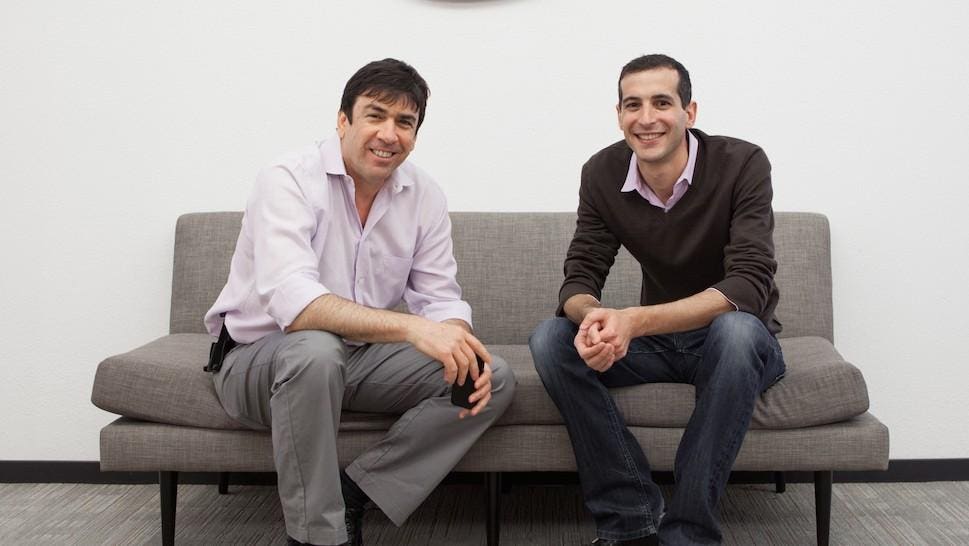
In March 2014, Tango announced a $280 million Series D led by Alibaba, which supplied $215 million. The company reported 200 million registered users and 70 million monthly active users. Total funding reached a reported $367 million. Tango had joined the billion-dollar valuation club, that peculiar establishment where the champagne is real and the exit sign is often difficult to locate.
The money enlarged the possibilities, and perhaps the menu. Tango was now messaging, gaming, content discovery, advertising and, briefly, commerce. It partnered with Spotify. It explored shopping with Alibaba and Walmart. The company possessed a large audience but not a settled answer to the old consumer-internet question: what, precisely, should all these people do here that they cannot do elsewhere?
The market was answering with unusual brutality. WhatsApp made messaging feel inevitable. Facebook Messenger enjoyed Facebook's reach. WeChat and Line turned chat into broad platforms in their home markets. Tango's independence was attractive in theory and expensive in practice. A product can be early and still arrive late to the business model.
The handoff, the hard middle, the return
By the end of 2015, Tango had closed its commerce effort and cut 9 percent of a roughly 200-person staff. In January 2016, Raz moved from chief executive to executive chairman and Setton became CEO. The transition came amid reported tension inside the company and pressure from its board. Complaints from former employees about Raz's management were published and disputed. The tidy version was a generational handoff; the full version was plainly more difficult.
Raz's own statement contained an odd, revealing piece of arithmetic. He had served as a founder and CEO for more than 28 years, he said, “half of my life,” and it was time to pass the torch. He also praised Setton, his partner across two companies, as a leader who had grown over their eight years together. Founders are often advised to make themselves replaceable. Few enjoy the practical demonstration.
Raz's original forecast concerned video calls. The durable asset was broader: years of engineering for live video on unreliable networks.
Tango tried simplification. It separated social features from core chat. Yet preserving the original messenger could not reverse a market that had already chosen its habits. The more consequential decision arrived after the handoff. In 2017, Raz concluded that Tango needed to refocus; in 2018, the company pivoted toward user-generated live streaming. Public profiles later identified him again as chief executive as well as executive chairman.
A pivot is often described as if a company spins neatly on one heel. This one was closer to renovating a ship while its passengers continued to send stickers. Tango retained its video infrastructure and applied it to a different social unit. The old product connected one person to another. The new one connected a broadcaster to an audience, with chat, virtual goods and micro-transactions turning attention into income.
The call became a stage
Raz said Tango entered the shift with 35 patents related to video quality and a habit of moving quickly. The technical inheritance mattered. Capital announces itself in a headline; engineering knowledge hides in routing decisions, codecs, latency budgets and thousands of small compromises. Tango's second act used that accumulated work rather than pretending the previous decade had never happened.
The business model changed with the format. Instead of building the experience around advertising, Tango emphasized direct spending between viewers and creators. Raz described an ambition to let broadcasters interact, build a following and earn a part-time or full-time living. His thesis was that shorter attention spans, faster mobile networks and live participation would move western social products toward the micro-transaction models already visible in Asian markets.
There is an irony here that Raz would probably appreciate. Tango began by stripping ceremony from video. It wanted a call to be as uncomplicated as a call. Its live-streaming incarnation adds a different kind of ceremony: hosts, audiences, gifts, performances, status. The technology grew quieter while the social theater grew louder.
“In 2017 it was clear that Tango had to refocus to keep up with the world.”Uri Raz on the move into live streaming
By 2023, an investment-banking company profile listed Tango at more than 450 million downloads and identified Raz as CEO and co-founder. Those figures are company representations rather than a view into the private company's books, but they show the scale of the second act Tango presents to the market. Current investor and executive profiles continue to place Raz at the company, leading a platform marketed to creators and global audiences.
What survived the prediction
Raz's 2010 prophecy came true in the untidy manner of most prophecies. People do talk by video constantly, although much of that talking occurs in work meetings, group rooms and live streams rather than ordinary telephone calls. Video did not merely replace voice. It escaped the call and became a medium.
Tango's history follows that escape. It moved from a clever utility to a broad social network, suffered the indigestion that accompanies too many ambitions, changed leadership, and found a new use for its oldest competence. The story contains no frictionless ascent. It has a large financing, public criticism, abandoned products and the awkward spectacle of a founder returning to the chief executive's chair. That mess is also what makes it useful.
A founder's deepest commitment is easy to confuse with the first product. Raz offers another model. His commitment appears to be to real-time connection and to the conviction that bandwidth, sooner or later, stops saying no. The interface can change from a call button to a live stage. The audience can change from a daughter at college to strangers around the world. The wager underneath remains surprisingly stable.
On the gray sofa in the 2014 photograph, Raz and Setton look like men who have reached the happy ending. In startup life, happy endings are usually scene changes. Tango's valuation made a fine photograph. Its survival required a film.