Sierra raises $950M Series E at $15.8B valuation - May 2026 Bret Taylor: Co-creator of Google Maps, inventor of the Like button OpenAI Board Chairman - stabilized the company after Altman crisis Sierra: 40% of Fortune 50 companies as customers $150M ARR in 8 quarters - fastest enterprise software ramp in history Twitter board chair: forced Elon Musk to complete the $44B deal Forbes billionaire - ~25% stake in Sierra Sierra raises $950M Series E at $15.8B valuation - May 2026 Bret Taylor: Co-creator of Google Maps, inventor of the Like button OpenAI Board Chairman - stabilized the company after Altman crisis Sierra: 40% of Fortune 50 companies as customers $150M ARR in 8 quarters - fastest enterprise software ramp in history Twitter board chair: forced Elon Musk to complete the $44B deal Forbes billionaire - ~25% stake in Sierra
YesPress Profile — San Francisco, CA

Bret
Taylor

Co-founder & CEO of Sierra. Chairman of OpenAI. The builder who keeps arriving just before the future does.

AI Founder OpenAI Chairman Sierra $15.8B Valuation Google Maps Like Button Stanford CS
$15.8B Sierra Valuation
$950M Series E (2026)
3 Companies Founded
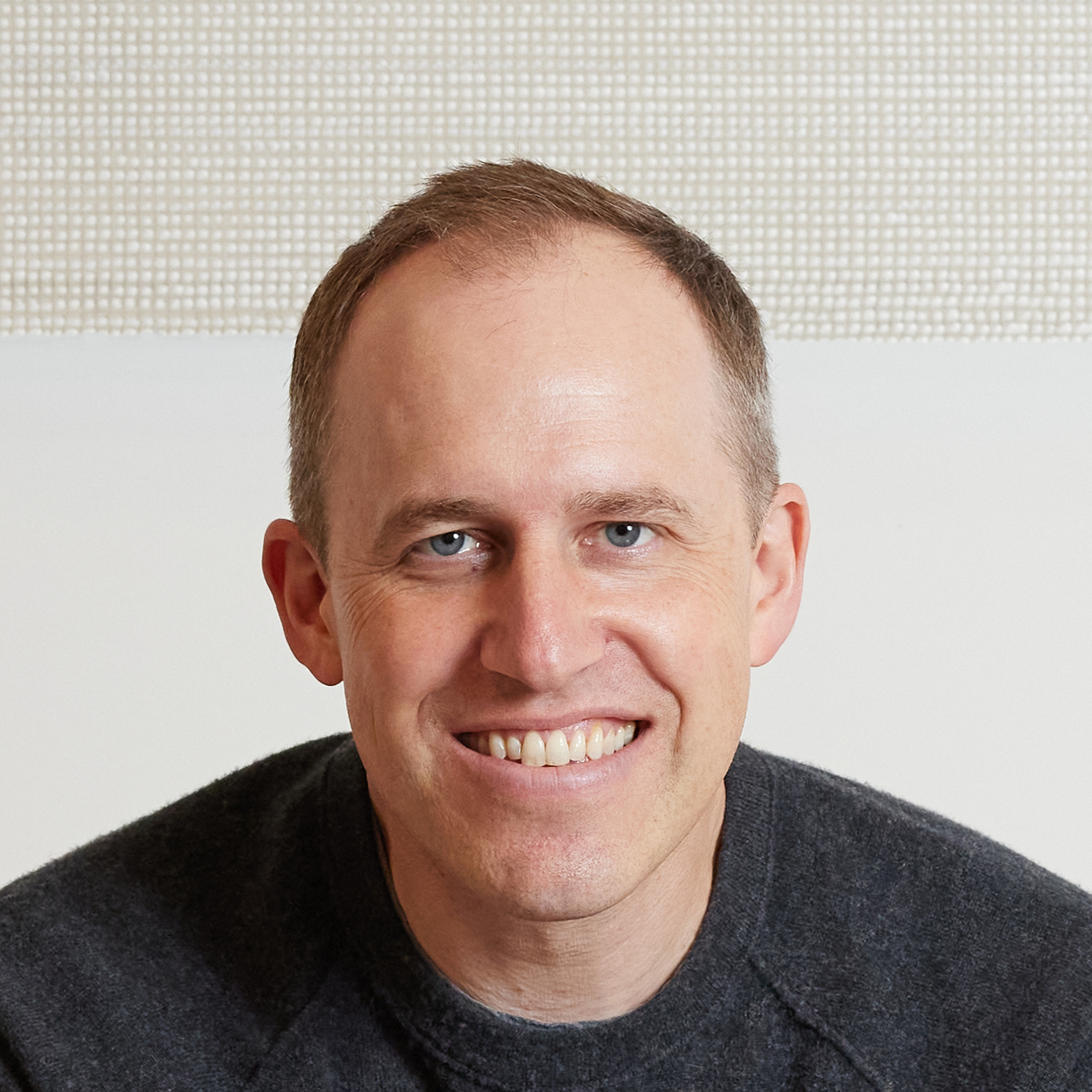
Bret Taylor, Co-Founder & CEO of Sierra

Bret Taylor - Co-Founder & CEO, Sierra

$150M+ Sierra ARR
40% Fortune 50 Customers
350+ Sierra Employees
2003 Stanford CS Grad

The Builder Who
Keeps Showing Up

In May 2026, Sierra closed a $950 million Series E at a $15.8 billion valuation. Forty percent of Fortune 50 companies now run their customer service through Sierra's AI agents. The round was led by Tiger Global and Google's GV. Bret Taylor - co-founder, CEO, and architect of the whole thing - had been building it for just three years.

Three years. From idea to the fastest enterprise software ramp in history. From two founders in San Francisco to a company serving 40% of the world's biggest corporations. When Taylor describes the current AI moment, he uses the word "early."

"Rarely do you encounter a new technology so powerful that it feels like it changes everything."

- Bret Taylor

Sierra's thesis is blunt: AI agents won't just help companies serve customers better. They'll replace the entire SaaS layer underneath. No more license fees for software nobody fully uses. Instead, outcome-based pricing - you pay when the AI actually solves a problem. Taylor has been arguing this since before most people believed it, and the Fortune 500 is now validating it at scale.

The "Forrest Gump of Silicon Valley" nickname follows Taylor everywhere. It's meant affectionately. He was at Google when the company invented the modern web's navigation layer. He was at Facebook when the Like button rewired human psychology. He was at Salesforce when enterprise software consolidated. He was at Twitter when Elon Musk tried to walk away from the biggest social media acquisition in history. He sued. Musk paid. Then, in November 2023, when OpenAI briefly fired its own CEO, the board called Taylor to chair the reconstituted governance structure.

At each of those moments, Taylor wasn't just present. He built something, negotiated something, or stabilized something. The luck story doesn't hold. The pattern is too consistent.

Before Sierra, Taylor spent 20 years compressing an entire career's worth of outcomes into one role after another. Stanford computer science, then Google, where a brutal product review early in his tenure nearly ended things. That failure redirected him toward Search by Location - the internal project that became Google Maps. He was a product manager, not an engineer, when he rewrote critical pieces of the application over a single weekend.

When he left Google in 2007 to co-found FriendFeed with Paul Buchheit (creator of Gmail) and others, he brought a feature that nobody had thought was important enough to build yet: a simple button to indicate appreciation. No comment required. Just a click. FriendFeed called it "Like." Facebook acquired FriendFeed for roughly $50 million in 2009, inherited the feature, and changed the emotional architecture of the internet. The Like button didn't originate at Facebook. It originated at Taylor's scrappy social aggregator, two years prior.

Taylor served as CTO of Facebook through its most explosive growth years, then left in 2012 to found Quip - a collaborative document editor that bet on mobile before most enterprise tools knew what mobile was. Salesforce acquired Quip in 2016. Taylor joined the board, then became Chief Product Officer, then President and COO, then Co-CEO alongside Marc Benioff. He stepped down from Salesforce in early 2023 to found Sierra with Clay Bavor, the former Google executive who built Google VR and AR.

"If there's one lesson I wish I could give my younger self, it's to focus less on the technology and more on the customer need."

- Bret Taylor

Sierra's platform does something deceptively simple: it deploys conversational AI agents that interact with customers on behalf of brands, handling everything from subscription changes and order tracking to complex troubleshooting and compliance-sensitive inquiries. The agents are customizable, monitorable, and deeply integrated with enterprise systems - Salesforce, CRMs, ERPs. They don't just chat. They act.

The company launched commercially in early 2024. Within seven quarters, it crossed $100 million in ARR. Within eight, $150 million. For context: Salesforce took years to reach that threshold. Workday took years. Sierra did it while the company was still under 350 employees.

Taylor sees a market correction coming within two years - a "culling effect" that will drain capital from all but the leaders. Sierra is investing aggressively now to be one of the few standing when it arrives. "We are multiples larger than the next biggest," he said in May 2026, "and we are trying to invest aggressively to continue to expand our lead."

That combination of long-term vision and tactical urgency is the Taylor signature. Sheryl Sandberg gave him the framework years ago: ask every morning what's the most impactful thing you can do today. The question sounds obvious. Most people don't actually answer it honestly.

Taylor does. That's why the map app is still on your phone. The Like button still governs your feed. OpenAI is still running. And Sierra is selling AI to half the Fortune 50.
One Builder, Every Era of the Internet

🗺️
2004
Google Maps
👍
2007
FriendFeed / Like
🔵
2010
Facebook CTO
📄
2012
Quip
☁️
2021
Salesforce Co-CEO
🤖
2023
Sierra

What He Built

From Oakland to the Board of OpenAI

1998

Enrolled at Stanford University, studying Computer Science. Graduated with both a B.S. (2002) and M.S. (2003).

2003

Joined Google as an Associate Product Manager, recruited by Marissa Mayer. Began working on location-based search.

2004

Led the development of Google Maps. A failed product review nearly ended his Google career - the failure redirected him toward navigation.

2007

Left Google. Co-founded FriendFeed with Paul Buchheit and others. Launched the first "Like" button in social media.

2009

Facebook acquired FriendFeed for ~$50 million. Taylor joined Facebook. The Like button came with him.

2010

Named CTO of Facebook. Helped scale the platform through its most explosive growth period.

2012

Left Facebook. Founded Quip, a mobile-first document collaboration tool that bet on remote work before remote work was mainstream.

2016

Salesforce acquired Quip. Taylor joined Salesforce's board and soon became Chief Product Officer, then President & COO.

2021

Elevated to Vice Chair and Co-CEO of Salesforce alongside Marc Benioff.

2022

As Twitter board chairman, negotiated and enforced Elon Musk's $44 billion acquisition after Musk attempted to exit the deal.

2023

Left Salesforce. Co-founded Sierra with Clay Bavor (Feb 2023). Named Chairman of OpenAI board after Sam Altman's brief ouster (Nov 2023).

2024

Sierra launched commercially. The company crossed $100M ARR in 7 quarters - one of the fastest ramps in enterprise software history.

2025

Forbes recognized Taylor as a billionaire. Sierra raised $350M at $10B valuation and crossed $150M ARR. Taylor acquired minority stake in SF 49ers.

2026

Sierra raised $950M Series E at $15.8B valuation, led by Tiger Global and Google GV. 40%+ of Fortune 50 companies are Sierra customers.

Sierra: The AI Agent Layer for the Fortune 500

🤝

Outcome-Based Pricing

Sierra doesn't charge licenses. It charges for results. When the AI agent actually resolves a customer's problem, Sierra gets paid. Taylor believes this model will redefine enterprise software.

🏗️

Deep Enterprise Integration

Sierra agents connect directly to CRMs, ERPs, and order management systems. They don't just chat - they act: processing refunds, updating subscriptions, resolving technical issues in real time.

🛡️

Compliance & Governance

Built for regulated industries including healthcare, finance, and telecom. Every interaction is monitored, tagged, and auditable. Guardrails are configurable to brand standards and legal requirements.

📊

Real-Time Analytics

Sierra provides performance dashboards, conversation tagging, and feedback loops that let enterprise teams monitor AI behavior and continuously improve agent performance over time.

Speed to Market

$100M ARR in 7 quarters. $150M ARR in 8. Taylor attributes the velocity to focusing on customer outcomes rather than product features - a philosophy shaped 20 years ago at Google.

🌐

Multi-Channel Deployment

Sierra agents operate across voice, chat, messaging apps, and digital channels - wherever customers actually are. One platform, all touchpoints, consistent brand voice.

What Taylor Thinks

"

If there's one lesson I wish I could give my younger self, it's to focus less on the technology and more on the customer need.

Bret Taylor
"

There's a lot of power in combining product and engineering into as few people as possible. Few great things have been created by committee.

Bret Taylor
"

We are multiples larger than the next biggest and are trying to invest aggressively so that we can continue to expand our lead.

Bret Taylor, May 2026
"

Rarely do you encounter a new technology so powerful that it feels like it changes everything. We are in one of those moments right now.

Bret Taylor on AI

The Specifics

Taylor was a product manager - not a software engineer - when he rewrote key parts of Google Maps over a single weekend. The PM/engineer distinction dissolved about halfway through Saturday.

The Like button's first appearance was not on Facebook. It launched at FriendFeed in 2007, two years before Facebook adopted it. Facebook bought FriendFeed. The button came with the deal.

Taylor's FriendFeed co-founders included Paul Buchheit, the creator of Gmail. Not a bad founding team for what most people remember as a social aggregator that Facebook absorbed for $50 million.

When Elon Musk tried to back out of the $44 billion Twitter acquisition in 2022, Taylor - as board chairman - led the legal effort that forced the transaction to close. It is one of Silicon Valley's most dramatic corporate litigation sagas.

Taylor holds both a B.S. and M.S. in Computer Science from Stanford, completing both in five years. He graduated in 2003 and joined Google immediately afterward, recruited by Marissa Mayer's APM program.

Sheryl Sandberg's daily discipline shaped Taylor's operating philosophy across every role: ask every morning "What's the most impactful thing I can do today?" He credits the practice for compressing career impact across decades.

In December 2025, Taylor acquired approximately a 1% ownership stake in the San Francisco 49ers - the NFL team whose home stadium sits roughly 40 miles from the Oakland neighborhood where he grew up.

Sierra's $150M ARR in 8 quarters puts it in extremely rare company: Salesforce, Workday, and ServiceNow all took significantly longer to reach the same threshold, with far more capital and employees.

Share This Profile