"The data whisperer who says data isn't enough - Architect of the industrial brain, Los Altos, CA"
CEO & Co-Founder of AITOMATIC. Stanford PhD. Former Google founding Engineering Director. Four decades running from Intel's first flash memory transistors to writing the internet's soul for Vietnam - and now teaching factories to think.
Before there was a Knowledge-First AI movement, there was a graduate student at Stanford encoding Vietnamese characters into Unicode so that 90 million people could eventually type their own language on a computer.
Christopher Cuong T. Nguyen arrived in the United States from Vietnam in 1978 with a trajectory that would unfold across four decades, four continents, and at least four consequential bets on where technology was going next. He graduated from UC Berkeley summa cum laude, earned his doctorate from Stanford in semiconductor device physics, and then walked directly into a career that has never stopped building foundational things.
At Intel in the 1980s, he worked on the transistor architecture that would become flash memory - the storage technology now embedded in every smartphone, SSD, and USB drive on the planet. He was not an observer at the beginning of the chip era; he was building the components that defined it.
When Hong Kong University of Science & Technology opened in 1991, Nguyen was among the founding faculty who designed its Computer Engineering department from nothing. Three years later, he returned to industry. In parallel, he helped establish Vietnam's first internet connection and wrote RFC 1456 - the technical standard that contributed Vietnamese character encoding to Unicode 1.0. The standard exists. Millions use it. Almost nobody knows his name is attached to it.
The Google chapter began in the mid-2000s when Nguyen became the founding Engineering Director of Google Apps - the suite that became Google Workspace. His team also directed engineering for Gmail in its early years. He received the Google Founders' Award, which the company gives for contributions it considers exceptional even by Google's standards.
From Intel's first flash memory chips in the 1980s to launching SemiKong LLM in 2024.
Cited by scholars across deep learning, semiconductor physics, and software engineering.
Agenda-Asia, Arimo (acquired by Panasonic), and AITOMATIC - plus a long tenure running Panasonic's global industrial AI.
- Christopher Nguyen, CEO of AITOMATIC
After Google, Nguyen founded Arimo - an enterprise AI platform - and eventually sold it to Panasonic, then spent four years running Panasonic's global Industrial AI operations. He worked with factory floors, supply chains, and industrial clients who had one thing in common: enormous operational complexity and very little patience for AI systems that required datasets they didn't have.
That experience crystallized a conviction. In April 2021, he co-founded AITOMATIC with a central thesis that cuts against the dominant narrative of big-data AI: domain expertise is not supplementary to good models - it is the starting point. The company calls this "Knowledge-First AI," and Nguyen has been making the case for it at conferences, in podcasts, and through open-source code ever since.
The argument is not anti-data. It's anti-naivety about what data can do on its own. A predictive maintenance model trained only on historical sensor readings will miss failure modes that never appeared in training data but that a 25-year veteran maintenance engineer knows to watch for. Knowledge-First AI encodes that veteran's reasoning into the model - before the sensors speak.
In July 2024, AITOMATIC unveiled SemiKong at SEMICON West - the world's first open-source large language model built specifically for the semiconductor industry. Built on Meta's Llama3 architecture and trained with domain expertise from companies including Tokyo Electron and FPT Software, SemiKong is not a general-purpose chatbot retrofitted for chips. It was designed from the ground up to understand the language and physics of semiconductor fabrication.
The semiconductor industry runs on $500 billion in annual revenue. A meaningful fraction of its operational knowledge exists inside the heads of senior engineers who will retire within the next decade. SemiKong is Nguyen's attempt to give that knowledge somewhere to live.
While most of the AI industry debates which trillion-parameter model will win the general-purpose race, Nguyen is building in the opposite direction. AITOMATIC's DXA Factory platform, launched with global distribution partners ITOCHU Techno-Solutions and FPT in February 2025, manufactures what the company calls Small Specialist Agents (SSAs) - compact, domain-aware AI systems that combine deep expertise with multi-agent collaboration.
The logic is industrial pragmatism: a factory running cryogenic compressors doesn't need a general-purpose model that can also write poetry. It needs an agent that knows compressor physics, understands the failure signatures of this specific equipment, and can act without waiting for a data center in another country to respond.
Nguyen's connection to Vietnam has never been purely historical. He helped establish the country's first internet connection in the late 1990s. His doctoral work produced RFC 1456, the technical standard contributing Vietnamese character encoding to Unicode 1.0 - meaning that before the web existed, he was already solving the problem of how a language with six tones and a unique diacritic system could survive the digital era.
Since 2018, he has served on the board of Fulbright University Vietnam, a liberal arts institution modeled on American universities that opened in Ho Chi Minh City. It is the kind of institution-building that doesn't show up in a startup's funding announcement but says something about how Nguyen sees technology: as infrastructure for human flourishing, not just efficiency.
He is also a member of the Steering Committee of The AI Alliance, the cross-industry body advancing open-source foundation models and responsible AI development, a role he has held since August 2023.
At a moment when the AI industry is consolidating around a handful of large model providers and the narrative that scale alone produces intelligence, Nguyen is arguing for something less fashionable and probably more durable: that the irreplaceable expertise of domain specialists - accumulated over careers, embedded in intuition, rarely written down - is the actual scarce resource in industrial AI, and that anyone who ignores it will eventually build systems that fail in the field.
His open-source contributions - H1st (Human-First AI), OpenSSM, Distributed DataFrame - suggest he wants this to be a shared position, not a proprietary one.
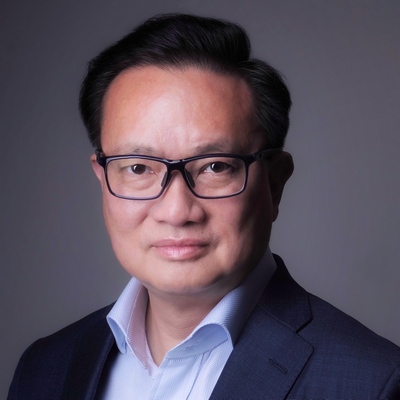
- Christopher Nguyen
Fled Vietnam. Resettled in the United States. Enrolled at UC Berkeley.
UC Berkeley, summa cum laude. BS in Electrical Engineering & Computer Science.
Intel. Built the first flash memory transistors - storage technology now in every modern device.
Stanford PhD. Dissertation in semiconductor device physics. Authored RFC 1456, contributing Vietnamese character encoding to Unicode 1.0.
HKUST. Assistant Professor, Electrical & Computer Engineering. Co-founded the Computer Engineering program at the newly opened university.
Vietnam's internet. Helped establish the country's first internet connection. Founded Agenda-Asia.
Google. Became founding Engineering Director of Google Apps; also led Gmail engineering. Received Google Founders' Award.
Arimo. Co-founded enterprise AI platform. Later acquired by Panasonic.
Panasonic. President & CEO of Arimo (a Panasonic company). Led Global Industrial AI across Panasonic's worldwide operations for four years.
Fulbright University Vietnam. Joined as Board Member. Advises Vietnam's first US-modeled liberal arts university.
AITOMATIC founded. Co-founded with the mission of Knowledge-First AI for industrial applications.
The AI Alliance. Joined Steering Committee, advancing open-source foundation models and responsible AI development.
SemiKong. Unveiled at SEMICON West - the world's first open-source LLM for the $500B semiconductor industry. Built on Meta Llama3 with partners including Tokyo Electron.
DXA Factory Platform. Selected by ITOCHU Techno-Solutions and FPT for global deployment, targeting the next billion industrial AI agents.
Received Google's highest internal recognition for exceptional contributions as founding Engineering Director of Google Apps, including Gmail.
Authored the technical standard contributing Vietnamese character encoding to Unicode 1.0, enabling millions to use their language digitally.
Developed Intel's first flash memory transistors in the 1980s - the foundational technology now in every SSD, smartphone, and USB drive.
Among the founding faculty who built Hong Kong University of Science & Technology's Computer Engineering department from scratch in 1993.
Launched the world's first open-source large language model tailored specifically for the $500B semiconductor manufacturing industry (2024).
Played a key role in establishing Vietnam's first internet connection in the late 1990s, helping connect 90+ million people to the web.
The mainstream AI narrative runs like this: more data plus bigger models equals better outcomes. Christopher Nguyen has spent years dissenting from this position, with evidence from factory floors, oil fields, and chip fabs to back it up.
Industrial systems fail in ways that have never happened before. The sensor data that trained the model has never seen this specific failure mode. But a maintenance engineer with 30 years of experience recognizes the pattern from the sound, the vibration, the temperature combination that doesn't appear in any dataset because until now, nobody had recorded it as significant.
Knowledge-First AI encodes that reasoning first, then refines with data. AITOMATIC's approach starts with structured domain expertise - the physicist's intuition, the engineer's pattern recognition - and treats data as a complementary signal, not a substitute.
The result is models that work on day one, in domains where data is scarce, noisy, or structurally incapable of capturing what actually matters.
Illustrative comparison - industrial predictive maintenance scenarios.
"You can have terabytes of data, but it doesn't contain the expertise that your engineer has accumulated over the last 20, 30 years in their brain. The combination of human knowledge and data builds better predictive models than data alone."
"There is something very qualitatively different and powerful - but also very disturbing - when we think about augmenting our minds with technology that may possibly be smarter than us."
"I don't care how much data you're collecting - it's not enough. You really do need domain expertise, people who have been learning the physics of these systems, building up experience over 20, 30 years."
"For the kinds of things that we do - industrial AI - we really need a foundation in physics, in electrical engineering and mechanical engineering. That's the substrate everything else runs on."
"Humans will always be needed. There's always going to be this top executive layer asking the questions. I think that layer is going to be even more needed, not less."
"What happens if technology adapts faster than our biological rate? What does that mean for how we build institutions, educate people, make policy?"
As a PhD student at Stanford, Nguyen authored RFC 1456 and contributed the Vietnamese character encoding to Unicode 1.0. The standard went into the specification. Millions of Vietnamese-language documents now exist because of it. He moved on to the next problem.
Before there was NAND flash in your phone, Nguyen was developing the transistor architecture at Intel that made it possible. He was not a student of the chip revolution - he was in the fabrication lab working on it.
When Hong Kong University of Science & Technology opened its doors in 1991, Nguyen was on the founding faculty. He helped design the Computer Engineering curriculum from scratch - for a university that didn't yet exist - then returned to industry three years later.
As founding Engineering Director of Google Apps, Nguyen led the product that became Google Workspace - used by hundreds of millions. His team also directed early Gmail engineering. The Google Founders' Award recognizes contributions considered exceptional even by Google's internal standards.
After Arimo was acquired by Panasonic, Nguyen didn't take the acquisition check and leave. He ran Panasonic's Global Industrial AI operations for four years, working directly with factory floors across Japan and global manufacturing - the experience that crystallized the Knowledge-First thesis.
SemiKong was built on Meta's open-source Llama3 model with domain knowledge contributed by Tokyo Electron and FPT Software - two of the semiconductor industry's most specialized players. AITOMATIC did not try to build the base model from scratch; they put the expertise where the expertise lives: in the domain layer.
His Twitter/X handle is @pentagoniac - a nod to his academic background in geometric topology, not to the US Department of Defense.
He wrote Vietnamese into the Unicode standard before most Americans had heard of the web. RFC 1456 is still in the IETF archive.
He is on the board of Fulbright University Vietnam - a liberal arts university modeled on US institutions - while simultaneously running one of Silicon Valley's most technically demanding industrial AI companies.
His open-source framework H1st (Human-First AI) predates the mainstream conversation about responsible AI by years. He was not reacting to a trend; he was starting one.
He is cited by over 1,127 scholars - spanning semiconductor physics, deep learning, and software engineering. Most researchers specialize in one of those fields in their entire career.
AITOMATIC has worked with Tesla and Panasonic on battery manufacturing efficiency for electric vehicles - meaning his work may be in the car you drive.
AITOMATIC's DXA Factory Platform selected by ITOCHU Techno-Solutions Corporation and FPT for global deployment, targeting the manufacturing of the next billion industrial AI agents. The platform uses Domain-Aware Neurosymbolic Agent (DANA) research to combine deep domain expertise with multi-agent collaboration.
Unveiled SemiKong at SEMICON West 2024 - the world's first open-source large language model designed specifically for the semiconductor industry. Built on Meta Llama3 with domain contributions from Tokyo Electron and FPT Software. Targets a $500B industry whose operational knowledge is concentrated in a retiring generation of engineers.
Joined the Steering Committee of The AI Alliance, the cross-industry organization advancing open-source foundation models and responsible AI development. Works alongside leading AI researchers and technologists on policy and technical standards.