Lauren Berson had brought the wrong shoes to San Francisco. In 2012, approaching thirty and starting over after a divorce, she went apartment hunting in four-inch heels. The map suggested a short walk. The hill suggested a change of footwear. She remembers inching down it and laughing. A person can be thoroughly unprepared for a place and still be on her way to belonging there.
She found a sublet. Over time, she also found people. There were weekly family dinners and parties with more than seventy guests. The newcomer became a host. It is an appealing reversal, particularly for anyone who has arrived in a city with a suitcase and a very optimistic assessment of their existing friendships.
Berson now leads Conceive, the company she founded in 2021. Before that came finance, a startup, Google, venture capital, and WW. The names attract attention. The connecting work between them makes a more revealing story. Again and again, her job involved finding the people an organization needed to know, then giving the relationship something useful to accomplish.
A career between the boxes
At Cornell University, Berson attended the College of Human Ecology, graduating in 2004. Her early professional life took her to Citi. Banking came before the technology companies that would later become shorthand for her career. That sequence matters: her working life did not begin with a founder title or a company of her own.
By 2011 she was in business development at Meebo. Google acquired the company in 2012, and her next chapter involved strategic partnerships there. The work ranged across Google+ and Android. These are jobs that live between teams: a product needs partners, partners need a reason to participate, and somebody has to make the arrangement work.
There is a peculiar invisibility to a useful partnership. When it succeeds, people see a product doing what they expect. The negotiations, introductions, explanations, and adjustments recede. Berson’s professional record belongs partly to that less conspicuous side of technology, where getting another organization involved is itself a substantial piece of building.
- 2004Cornell → Citi
- 2011–14Meebo → Google
- 2014–18Andreessen Horowitz
- 2018–20WW
- 2021Founded Conceive
Selected roles, in sequence. A career built across organizational boundaries.
At Andreessen Horowitz, where she worked from 2014 to 2018, she was a partner in market development. The distinction helps explain her path. Venture firms contain several kinds of work. Her experience included helping founders connect with companies that could become business partners and customers. The introduction had to lead somewhere.
In November 2017, she moderated a summit conversation with Suhail Doshi of Mixpanel, Gil Elbaz of Factual, and Jeff Glueck of Foursquare. The discussion, released as an a16z podcast the following February, concerned data and customer experience. It put a practical question on the table: what does information actually help a company understand about the person using its product?
That question has a useful resistance to fashion. Technology businesses acquire new vocabulary quickly. A customer still has to make sense of what is offered. Someone still has to decide whether it deserves their time. Berson’s work placed her repeatedly near that meeting point between a company’s ambition and another person’s reason to care.
What a room is for
Her next move took her to WW, formerly Weight Watchers, where she held a vice president role in strategic growth. She has described being drawn to its digital community. After years of bringing people together in person, she wanted to understand how participation could work through a screen.
She makes a useful distinction when talking about community: followers and participants are different kinds of relationships. A person can subscribe, glance, and leave. A participating member contributes something, recognizes other people, and has a reason to come back. Anyone who has tried to keep a group conversation alive knows how much work hides in that last requirement.
In her account, a community needs a clear purpose. Members should feel that their contributions matter, and the design should help them make progress toward a shared goal. It is a fairly demanding view of a word that is often used as a flattering synonym for an audience.
That emphasis also explains why a career in partnerships and a career in community can sit comfortably together. Both require attention to what happens after the invitation. People need to understand why they are there. They need a way to contribute. The host has responsibilities long after the door opens.
An investor takes her own turn
In 2021, Berson became the founder and CEO of Conceive. The change gave her responsibility for a company rather than a function inside somebody else’s organization. Strategy, hiring, product, partnerships, and communication now had to coexist under the same roof.
Her public biographies also describe an ongoing life as an angel investor and advisor. On her advisory profile, she lists Sugarman Ventures and reports investments in more than fifteen companies, along with limited partner commitments to four funds. She offers advice on product direction, bringing products to market, fundraising, partnerships, and acquisitions.
The list reads like a set of different vantage points on the same enterprise. An operator works within constraints. An advisor can suggest a route. An investor decides whether to back one. A founder must keep moving while the available information remains incomplete. Having occupied several of those positions does not make the next decision automatic; it provides more ways to examine it.
Berson has said that other founders have been valuable people to turn to for candid conversations. That admission deserves space beside the executive titles. A long résumé cannot supply the exact answer to a new problem. Sometimes the useful asset is another person who will stay on the call while you explain the awkward part.
Her record includes service beyond commercial companies, too. JCCA, the New York child services agency, named Lauren Berson Sugarman among its trustees in its 2021 annual report. It adds another institutional setting to a career already crossing several of them, and another reason to resist reducing her biography to the most recent company name.
Leave space on the calendar
There is an improv class in this story. Berson took classes at the Upright Citizens Brigade and has described valuing the way improvisation encourages collaboration and creative thinking. A scene requires you to listen to what somebody has actually offered. Planning your own impressive line can get in the way.
“I love improv!”
Lauren Berson
It is easy to give that a business interpretation, and Berson does. The more interesting part is its ordinary demand: pay attention, contribute, and allow the other person to change the direction. Those habits have a place in a rehearsal room and in the less theatrical, though occasionally more dramatic, business of working with other people.
She is equally practical about the calendar. In a January 2026 conversation, she described trying to keep Wednesdays and Fridays free of internal meetings so there would be time for writing and product thinking. She acknowledged that external appointments still find their way in. Even a carefully defended calendar has a side entrance.
The ambition is modest enough to be recognizable. Work that needs concentration must be given somewhere to happen. It competes with work that arrives carrying an invitation and a scheduled start time. Leaving a blank space can be a deliberate choice, even when the calendar makes it look like nothing at all.
A different reading list
The public record of Berson’s reading extends back through her venture capital years. She contributed to a16z’s 2016 book recommendations. In the winter 2017 edition, she chose Tana French’s Dublin Murder Squad novels and welcomed their ability to take a reader elsewhere.
“A great escape!” was her verdict. She praised the series as more than routine murder mysteries and pointed out that the books could be approached without reading them in sequence. For once, the person working around technology companies was recommending a collection without a required order of operations.
The detail is useful because professional profiles tend to turn leisure into another productivity method. A novel can simply be a novel. Berson’s enthusiasm gives us something more specific than a generic claim that she is curious: a named writer, a particular series, and the pleasure of being carried into someone else’s story.
Paris, with room for company
One of her own travel recollections takes place at Chez Janou in Paris. On an early solo trip, newly divorced and between jobs, she wandered into the restaurant in Le Marais. She remembered the food, the welcome, and the chocolate mousse. Years later, a neighborhood dinner recommendation sent her back to the same place.
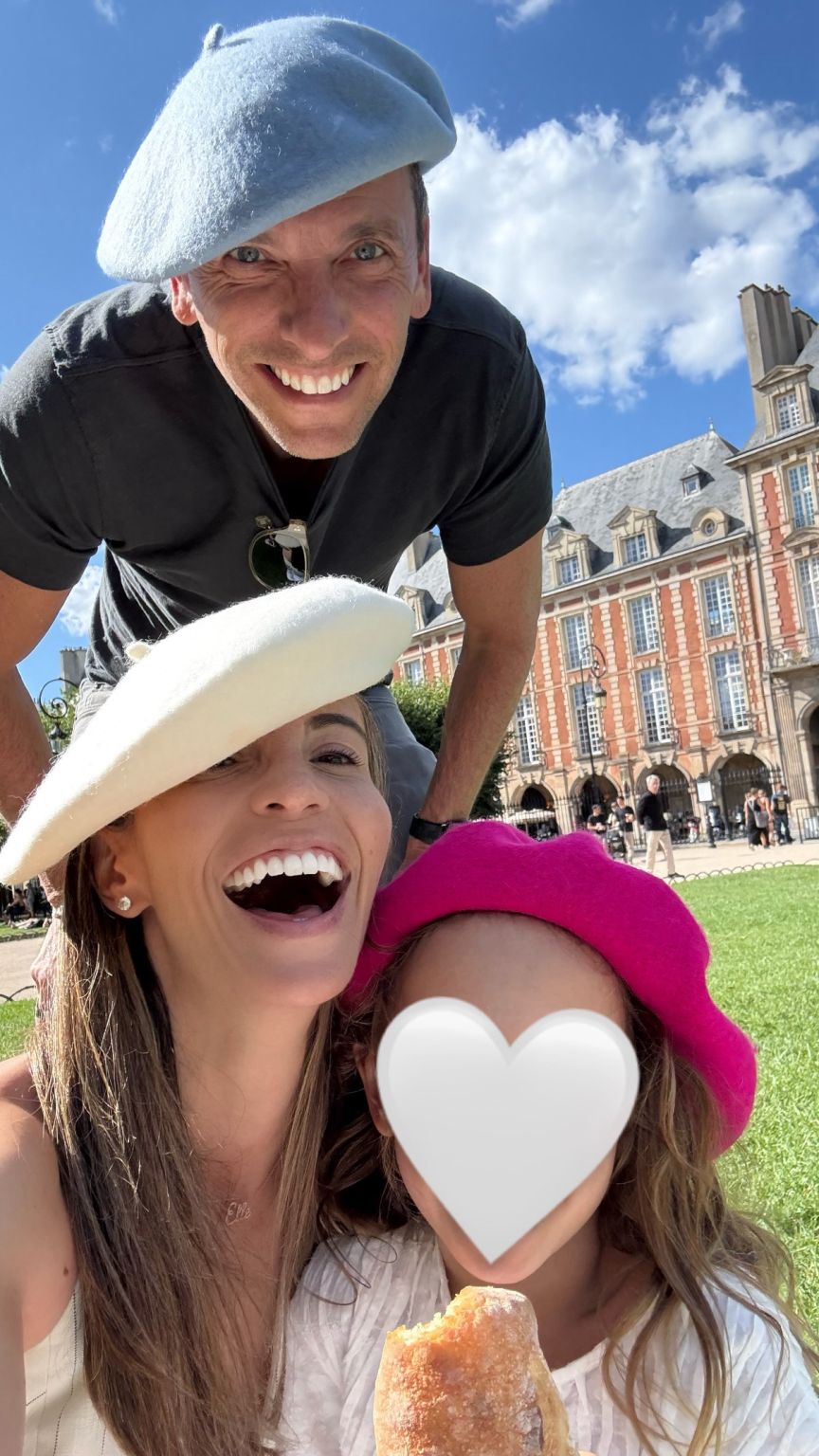
On that later visit, her husband and daughter joined her. They walked through galleries, picnicked, and spent time in the city together. The picture she shared is cheerfully informal: berets, grass, blue sky, a baguette. It belongs to the part of a person’s life that a sequence of company logos cannot communicate.
There is a familiar pattern across these episodes: arriving, finding company, returning with other people. San Francisco had its weekly dinners. Her professional life had its partnerships. Paris supplied a restaurant whose welcome she remembered years afterward. The settings differ; the importance she gives to the people inside them is recognizable.
That is a reasonable place to leave Lauren Berson’s story for now. Still building a company. Still investing and advising. A former newcomer with experience of hosting the room, and enough affection for a good meal to remember exactly where to go back.