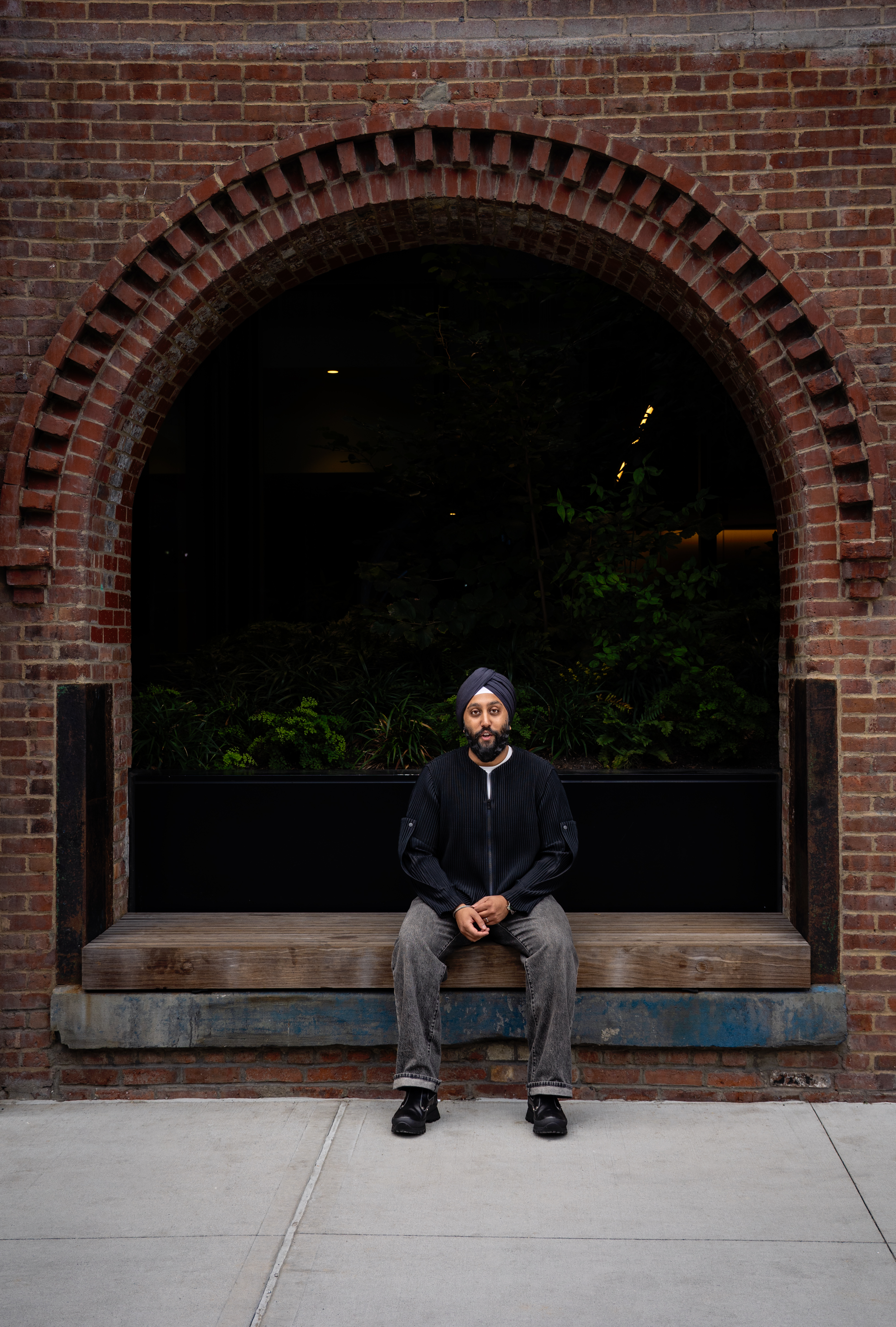
Here's what you need to know about Sumeet Singh: he sits in a Brooklyn cafe every Friday and Saturday morning, iPad only, no phone, no laptop, reading AI research papers. That ritual led him to spot Sardine before the fraud wave hit fintech. The company is now worth 10x his entry valuation. While everyone else was chasing crypto in 2021, Singh was thinking two steps ahead - what happens when all that money moves? Fraud. Simple.
Before he was predicting the future from a cafe table, Singh was slinging salads. At Georgetown, he co-founded The Hilltoss, a student-run restaurant serving smoothies and salads under The Corp, an entirely student-owned company. He handled everything - operations, purchasing, brand development, store design. The venture opened in 2014 in the Healey Family Student Center. Students wanted healthier options. Singh gave them healthier options. No mystery.
His path wasn't typical. Georgetown to Nyca Partners, a fintech-focused venture fund where he cut his teeth on companies like Fidel, Brigit, Catch, Blend, SentiLink, Ribbon, and Revolut. Then Brigit hired him to lead Business Development and Strategy. He helped launch their credit builder product and programs to support consumers through the pandemic. Operator experience, not just PowerPoint and handshakes.
In 2021, Andreessen Horowitz came calling. Singh joined as a partner on the fintech team, investing at the intersection of fintech, consumer social, marketplaces, commerce, and healthcare. He led investments in Sardine, Carry1st (Africa's leading game publisher, $20M round), and Adaptive. His track record spoke: Brigit got acquired for $500M. Revolut hit $45B valuation. The Rounds kept growing. He was good at this.
The Bitter Lesson
Singh's investment thesis rests on Richard Sutton's "bitter lesson" - the idea that scale and compute always beat specialization. Most AI founders are building specialist tools the same way they built SaaS products a decade ago. Singh thinks that playbook is dead. He sees two paths to durability: build the infrastructure layer (compute, data, energy, security) that keeps models scaling, or invent entirely new workflows that only AI makes possible. Everything else is noise.
The Friday Morning Ritual
Singh practices discipline like a monk. Every Friday and Saturday morning, he's at the same Brooklyn cafe. Only his iPad. Phone stays home. Laptop stays home. He deep-dives into bookmarked AI research papers and articles. No distractions. No checking Twitter. No responding to urgent emails that aren't actually urgent.
This isn't performative productivity theater. This is how he spots patterns. This is how he identified the fraud problem before everyone else saw it coming. This is how he knows that the length of tasks generalist models can achieve is doubling every seven months. This is how he built conviction that commercial infrastructure - not technical infrastructure - will create the most value in this AI wave.
Specialization eventually loses out to simpler systems with more compute and more training data.
That quote captures Singh's worldview. He's not betting on the smartest algorithm or the most elegant solution. He's betting on scale. He's betting on infrastructure. He's betting on the boring stuff that makes the exciting stuff possible.
The Fashion Detour
In 2018, while investing in billion-dollar startups, Singh co-founded Creature/Of, a sustainable streetwear brand. Not a side hobby. A real company. The concept: modular fashion platform with customizable denim. Customers pick their fit, wash, size, and length. Made-to-order only. Zero inventory. Zero waste. Own the entire supply chain. Prices range from $175 to $195 depending on what you choose.
Why would a venture capitalist launch a fashion brand? Because Singh isn't just an investor. He's an operator. He builds things. The Hilltoss taught him that. Creature/Of taught him supply chain, sustainability, customer experience, brand positioning. When he evaluates founders, he's not just reading a deck. He's lived it.
The Infrastructure Thesis
Singh distinguishes between technical infrastructure (making products possible) and commercial infrastructure (enabling 10x user experiences). He's backing the latter. Plaid was commercial infrastructure for fintech - easy bank account access. Now he's looking for equivalents in AI.
- Browserbase: headless browser infrastructure for agents
- Anon: authorization for agents accessing internet accounts
- Domain-specific context layers for vertical AI
- Memory systems for companion apps
The Portfolio
Worldbuild's investments span AI infrastructure, fintech, and consumer. Each bet reflects the same philosophy: build what models need to scale, or build what only models make possible.
- San Francisco Compute Company
- Browserbase (founding investor)
- Interfere (YC S25, lead pre-seed)
- Flower Computer Company
- Aetherflux
- Deepshard (seed investor)
The Background
Singh speaks four languages - English, Spanish, Hindi, and Punjabi. That multilingual perspective helped him spot global fintech opportunities others missed. He holds FINRA Series 7 and Series 63 certifications. He's Managing Partner at GoMassive alongside Worldbuild. He has 8,000+ LinkedIn followers and 6,800+ on Twitter.
The Worldbuild Era
In 2025, Singh left a16z to found Worldbuild. Not a typical venture fund. A thesis-driven investment firm partnering with creative technologists. He calls them worldbuilders. People building the post-software era. People who understand that the homogeneous software era is over. People who aren't retrofitting AI into existing workflows but inventing workflows that couldn't exist without AI.
His Substack, launched in February 2023, has hundreds of subscribers. He writes about commercial infrastructure for AI, influence-led software, compute absorption. In December 2025, he published "Two Ways to Win in the Post-software Era" on Every. The piece crystallized his thesis: most AI founders are making a critical mistake by ignoring Sutton's bitter lesson. They're building special tools that believe they can beat base models with specific workflows. But base models are becoming increasingly capable. Generalist systems are eating specialist systems. The math is unforgiving.
2011-2015
Georgetown University, BSBA Finance & Marketing. Co-founded The Hilltoss student restaurant. Learned operations, brand building, customer service.
2016
Earned FINRA Series 7 and Series 63 certifications. Credentials for the regulated world.
2017-2021
Senior Associate at Nyca Partners. Invested in Fidel, Brigit, Catch, Blend, SentiLink, Ribbon, Revolut. Built fintech investment muscle.
2018
Co-founded Creature/Of, sustainable streetwear brand. Made-to-order denim, zero waste, full supply chain ownership.
2020-2021
Head of Business Development & Strategy at Brigit. Launched credit builder product. Supported consumers through pandemic.
2021-2024
Partner at Andreessen Horowitz. Led investments in Sardine, Carry1st, Adaptive. Watched Brigit exit for $500M, Revolut hit $45B.
2025
Founded Worldbuild. Thesis-driven VC backing creative technologists building the post-software era. Investing in worldbuilders.
2025-2026
Investments in Browserbase, SF Compute, Interfere, Flower Computer, Aetherflux, Deepshard. Building the infrastructure layer for AI.
The Contrarian Bets
San Francisco Compute Company is a Worldbuild portfolio company that started as an audio model company, bought a year-long GPU cluster, realized they couldn't get out of the lease, and ended up building a cloud almost by accident. That's the kind of story Singh loves - unexpected pivots, capital efficiency, building what the market needs rather than what the pitch deck promised.
Browserbase gives agents headless browser infrastructure to navigate complex websites reliably. Interfere is a YC S25 company where Worldbuild led the pre-seed. Flower Computer Company is building something in the AI stack. Aetherflux is working on energy. Deepshard raised a seed round with Singh's backing. Each investment reflects the same pattern recognition: what do models need to get better? What workflows only become possible because AI exists?
My job as a venture capitalist is to predict the future and fold that back into how I choose which companies to invest in.
Singh doesn't hide the ball. He's explicit about his methodology. Read research papers. Identify structural shifts. Find companies building those shifts. Write checks. Help them win. Repeat.
The Second-Order Thinker
When everyone chased crypto, Singh spotted fraud. When everyone chased SaaS, Singh spotted infrastructure. When everyone chases specialist AI tools, Singh backs generalist model infrastructure. This is second-order thinking. This is what separates good investors from great investors. Great investors see around corners. They see consequences. They see cascades.
His essay on commercial infrastructure for AI identifies four emerging needs: authorization (Anon), domain-specific context, headless browser infrastructure (Browserbase), and memory systems. He outlines six characteristics required for commercial infrastructure companies: exponential market growth, emergence from technology innovation or regulation, criticality to the product's core function, innovative early customers, technical differentiation, and network effects. This isn't hand-waving. This is a framework.
Worldbuild
a16z
Fintech
AI Infrastructure
Post-Software Era
Georgetown
Nyca Partners
Brigit
Sardine
Revolut
Browserbase
Creature/Of
The Hilltoss
Brooklyn
Venture Capital
The Human Side
Singh's Instagram handle is @__sumzy__ with a globe emoji. His Twitter @sumeet724 has been active since August 2010. He's been at this for over a decade. He has recommendations on LinkedIn praising his effectiveness as an intern - "quickly acknowledged as a valued and focused asset." He worked on private equity research, financial modeling, marketing materials. He built the foundation.
He helped develop "Hoya's Guide to Georgetown," a digital student guide. He worked on "Snap Some Shots," a customer engagement initiative at The Corp. These aren't resume bullets. These are projects. Initiatives. Things he shipped. Evidence of a pattern - Singh builds things. Always has. Always will.
His multilingual capability isn't decorative. English, Spanish, Hindi, Punjabi - these languages represent markets, cultures, perspectives. When he evaluated Carry1st, Africa's leading game publisher, he wasn't looking at it through a Silicon Valley lens only. When he backed Revolut's European expansion, he understood cross-border dynamics. Language shapes how you see opportunity.
The Future Bet
Singh's long-term vision is clear: be the first check for worldbuilders creating durable, multi-billion-dollar outcomes in the AI-native economy. Not the safe bet. Not the consensus pick. The contrarian insight. The second-order effect. The infrastructure play everyone else overlooks because they're too busy chasing the shiny application layer.
Through Worldbuild, he's backing founders who understand that specialization loses to scale. N of 1 companies through commercial infrastructure rather than the SaaS playbook. Companies that make products 10x better, not 10% better. Companies that become critical, not nice-to-have.
The startups that will succeed in this new era of AI are those that build either the infrastructure layer - the stuff that keeps models scaling: compute, data, energy, and security - or a new generation of applications built around what models make possible.
That's the whole thesis. Two paths. Pick one. Execute relentlessly. Everything else is distraction.
The Brooklyn Morning
Picture this: it's Friday morning. Singh walks into his Brooklyn cafe. He's got his iPad. No phone buzzing with Slack notifications. No laptop with 47 open tabs. Just him, his iPad, and a queue of AI research papers. He reads about transformer architectures. He reads about scaling laws. He reads about emergent capabilities. He connects dots. He sees patterns. He builds conviction.
By Saturday afternoon, he knows something you don't. By Monday, he's taking a meeting with a founder building it. By next month, he's writing a check. By next year, that company is announcing their Series A. By the year after, they're the infrastructure layer everyone depends on. This is how it works. This is how Singh works.
From The Hilltoss salad bar to Worldbuild's infrastructure bets, the pattern holds. Build what people need. Spot what's coming. Execute before others see it. Scale beats specialization. Infrastructure outlasts applications. Boring beats flashy. Every time.