Lacey Ford has built a career around a problem that hides beneath the cheerful language of growth: eventually, every expanding company becomes a translation exercise. Sales has one version of the customer. Product has another. Marketing has a dashboard, customer success has a queue, and the board has a number circled in red. Ford's specialty is getting those versions to speak to one another before the company mistakes motion for progress.
At ABC Fitness, where she became chief marketing officer in 2025, the translation is unusually demanding. The company sells technology to sprawling gym chains, boutique studios and individual trainers. They inhabit one industry but do not shop, operate or grow alike.
An enterprise group expects a consultative buying cycle. A studio owner needs speed and a clear time to value. A solo coach can arrive through a product-led, self-service path. Ford's answer is not to squeeze all three through one fashionable funnel. It is to design distinct journeys, then make the teams behind them share a narrative, share metrics and close the loop around what customers actually do.
That idea sounds less dramatic than a rebrand, which is probably why it matters. Ford's career has passed through telecom, legal information, financial reporting, digital experience, supply-chain software and now fitness technology. The nouns keep changing. The operating verbs do not: listen, align, measure, integrate, repeat.
The cupboard after the earthquake
The clearest view of Ford at work comes from her tenure as senior vice president of marketing at insightsoftware. The financial-reporting company was acquiring businesses at a brisk clip: 14 in a couple of years. Every deal brought more than products and customers. It brought systems, habits, teams and data with their own histories. The result was growth with a hangover.
Ford described the company as being on a hypergrowth trajectory. Her immediate requirement was not a sweeping teardown. She needed foundational elements that could scale while the business kept moving. There was no leisurely season in which to close the shop, replace every pipe and unveil the renovated machine.
“What we needed was to build the foundational elements to scale the business as quickly as possible.”Lacey Ford, on the insightsoftware integration
She reduced the marketing challenge to three practical areas: the right team structure, data infrastructure that could support decisions, and a demand-generation engine with enough discipline to be repeated. She brought in an outside adviser, Shiv Narayanan, but wanted more than advice from altitude. Ford chose someone who could operate beside her, challenge an idea on Monday and take ownership of a workstream by Tuesday.
Their cadence was almost athletic. They met weekly, decided what mattered, ran in separate directions and regrouped when necessary. Ford even invited Narayanan into interviews for new marketing hires. A leader asking an adviser to inspect her candidate choices is a small but revealing act. Confidence is often mistaken for having no doubts. Ford's version leaves room for a fast, useful argument.
The inbound share of the marketing funnel rose from about 25 percent to 50 percent over roughly six months. More important, the team could see where it was over-investing and under-investing. Events, those glamorous and expensive creatures, could finally be asked to show their receipts. Not every data gap disappeared. Fourteen acquisitions leave plenty of ghosts in the spreadsheet. But the marketing organization became readable enough to steer.
Ford later called that group one of the best marketing teams she had worked with. The compliment belonged partly to the people and partly to the system that allowed strong individuals to function as a team. Her enduring lesson was about time: a board may want proof this quarter, while a sound demand program needs four to six months to bear fruit. The executive's job is to show credible early indicators without selling tomorrow's harvest today.
A customer journey with three front doors
Ford carried this mixture of architecture and accountability through Crownpeak, where she led go-to-market strategy and demand generation, and into TrueCommerce. Appointed global CMO in 2022, she described her goal with a phrase that could serve as the spine of her career: rethink the go-to-market motion from a customer-first position. The work included a better understanding of customer needs, then feeding those insights into every part of the experience.
By the time ABC Fitness recruited her, Ford had more than two decades in technology marketing and a useful resistance to treating the funnel as private marketing property. Fitness adds a peculiar intimacy to the business. The software may handle billing, scheduling, communications and analytics, but the experience it supports occurs in repeated human encounters. A member walks through the same door several times a week. A trainer notices an absence. A front-desk employee remembers a name. Retention lives in those small moments long before it appears in a report.
On a 2025 podcast about vertical SaaS, Ford mapped ABC's market by the way each customer buys. Large operators need enterprise consultation. Studios value momentum. Coaches using ABC Trainerize can enter through a product-led motion. The sophistication lies less in naming the segments than in preserving one operating cadence across them. Marketing, sales, product and customer success need to enter the conversation early, agree on the story and examine the same outcomes.
This is where Ford's old subjects return with new clothes. In 2015 she wrote about customer journeys, retention, feedback and alignment. A decade later, they are no longer topics for a marketing article. They are the connective tissue of a global portfolio. The customer journey grew up and acquired several software platforms, multiple continents and a finance department.
Go-to-market and retention become the same muscle when the customer stays at the center.
Speed, with a compass
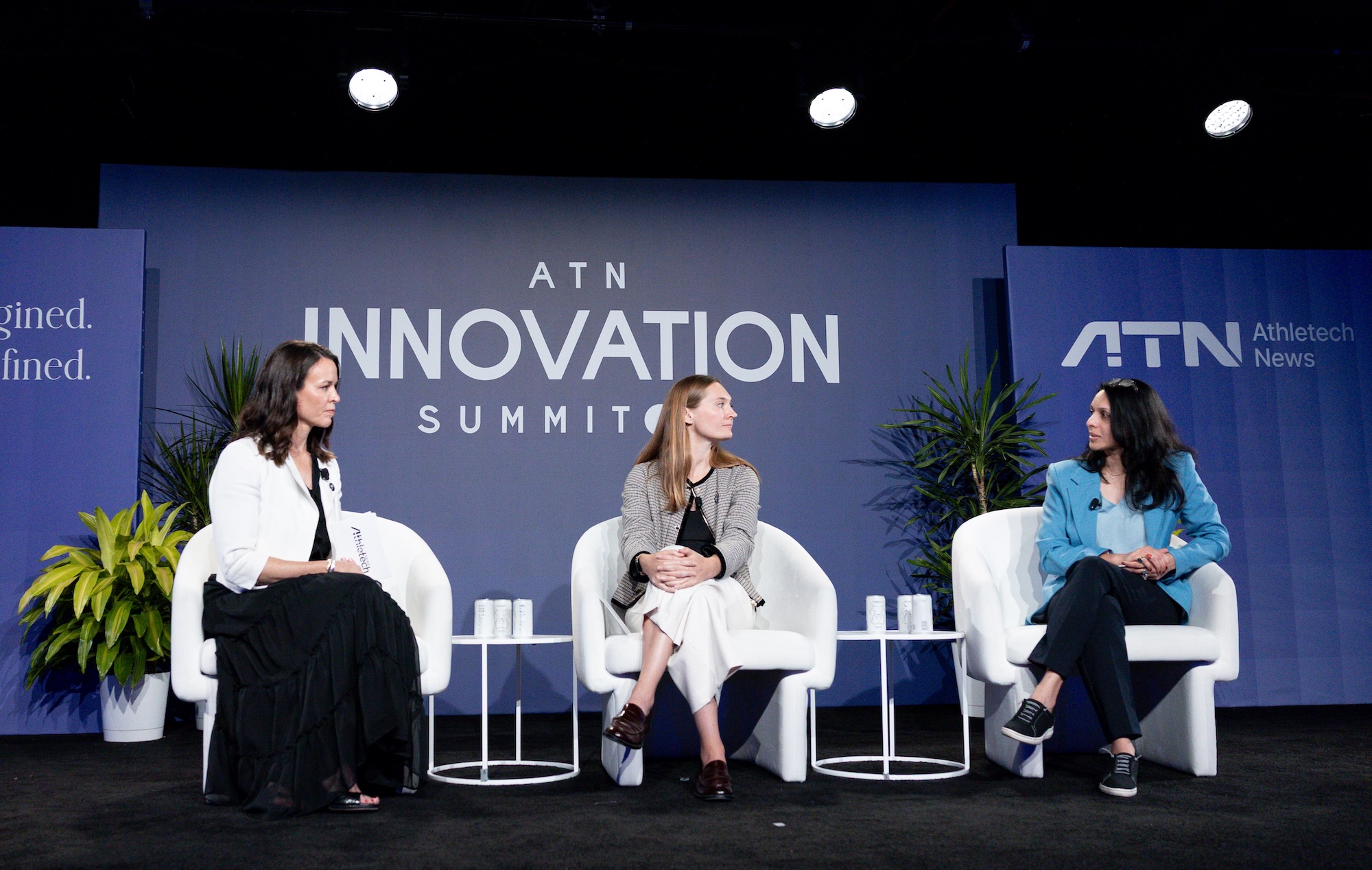
Artificial intelligence has given every technology company a fresh excuse to confuse velocity with direction. Ford's position is more exacting. At the 2026 Athletech News Innovation Summit in New York, she joined colleagues Rachana Jain and Madeline Verbeten to discuss the move from AI curiosity to AI capability. Her warning was brisk: there is a fine line between speed and intentionality. It does not matter how quickly engineering ships if the company has not defined the customer outcome or how it will be measured.
She also framed AI adoption as a people exercise. “Don't underestimate the power of bringing your people along,” she told the audience. Teams need permission to test, fail and try again. The point is not to collect shiny tools. It is to remove repetitive work, surface useful signals and help employees act with better context.
Ford's recent commentary on ABC Fitness's acquisition of Replify makes the test concrete. An unanswered call after hours, a lead waiting too long, or a front desk buried in repetitive questions can all weaken a business. Automated systems can manage routine calls, texts, emails and chats, leaving staff more available for the human experience. The ambition is not technology for its own amusement. It is a faster response and a better conversation.
Ford advances through senior marketing and sales roles at LexisNexis, working across digital strategy, demand and revenue.
At insightsoftware, she helps integrate 14 acquisitions and builds the foundation for a larger demand engine.
CMO chapters at Crownpeak and TrueCommerce broaden her work across digital experience and global supply-chain software.
As ABC Fitness CMO, she connects brand, demand, retention and practical AI across a global fitness platform.
The marketer in training
There is a tidy personal rhyme in Ford's arrival at ABC Fitness. She enjoys bodybuilding and hiking with her family, and describes herself as living the hockey-mom life. The gym business is not an abstract vertical viewed entirely through a segmentation deck. She knows the rhythm of showing up, the value of a routine and the family logistics hidden behind an hour on the ice.
She earned her bachelor's degree at Texas A&M and an MBA from the University of Texas at San Antonio. Her professional education looks more peripatetic: start-ups and Fortune 100 scale, creative agencies and software companies, sales leadership and advisory work. Former colleagues have described someone who can move between detailed analysis and the larger creative picture, negotiate firmly, protect the work and keep the commercial result visible.
That combination suits a moment when the CMO is expected to be narrator, mechanic, translator and occasionally referee. Ford's work suggests that these are not four jobs. They are four views of the same one. A narrative without operational truth becomes decoration. A machine without a narrative becomes busywork. Translation without trust becomes another meeting. And a referee who never checks the score is merely fond of the whistle.
At ABC Fitness, the score is growth, but the game is recurrence. The operator needs members to return. The trainer needs clients to stay engaged. The software company needs customers to see value after the contract is signed. Ford's instinct is to make those loops visible and let evidence travel across departmental borders.
Her career's most instructive metric may still be the simplest: 25 percent became 50 percent only after the foundation could carry the load. In an era devoted to acceleration, Ford keeps making the case for alignment first. The glamorous promise is scale. The durable craft is giving scale a memory, a measure and a human voice.