The first thing to understand about a startup marketing problem is that it rarely introduces itself as one. It arrives wearing the costume of a hiring problem, a traffic problem or a founder who has suddenly decided the company needs to be “everywhere.” The CRM fills with motion. The editorial calendar fills with words. The sales team asks for a new deck. Nobody can quite say which customer the company is for, or why that customer should care this Tuesday.
SalientMG has spent thirteen years working inside that moment. The New York strategic marketing firm serves early- and growth-stage B2B technology companies, often as an extension of their marketing team and sometimes as the whole thing. Its employees prefer the phrase “senior doers.” They plan, but they also write, configure, test, pitch and measure. The point is less semantic than economic: a young company may need the judgment of a veteran CMO, product marketer and demand lead well before it can sensibly put all three on payroll.

The expensive habit of starting in the middle
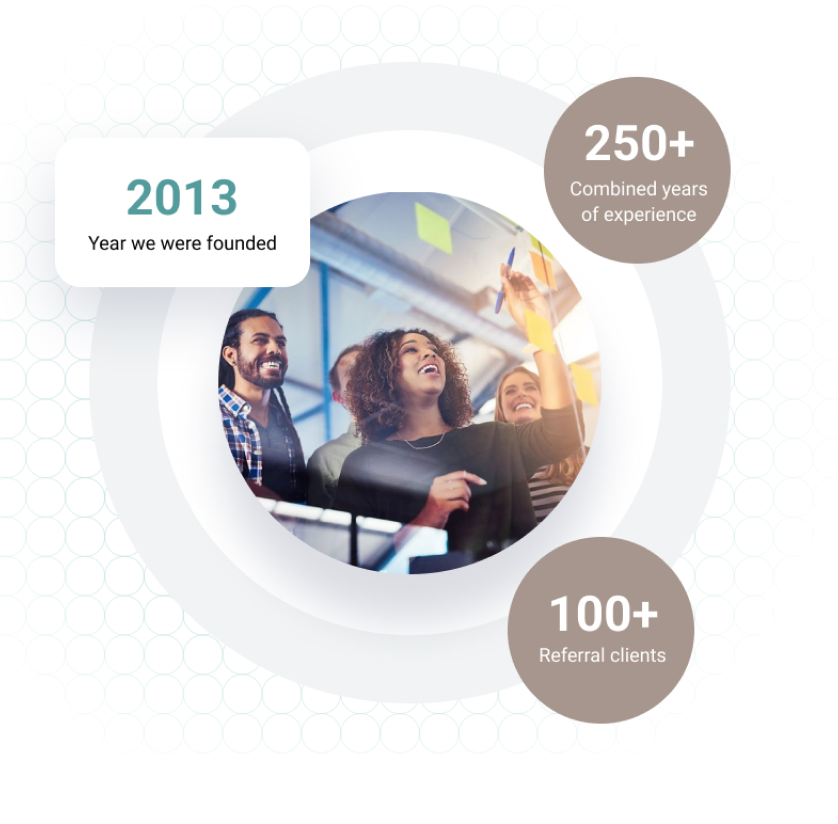
Mack McKelvey founded SalientMG in 2013, the year after guiding marketing at mobile advertising company Millennial Media through its IPO. Before that came SIRIUS XM, VeriSign, CGI, British Telecom and Lucent. The useful residue was not a love of big-company process. It was pattern recognition - an instinct for which piece of the machine was missing, and which impressive-looking lever was not yet attached to anything.
The firm now works across positioning, product marketing, market intelligence, demand generation, content, marketing operations and executive visibility. That list can resemble the menu of any integrated agency. The difference is where SalientMG puts the hinge. Positioning is not decoration applied before launch. It is the operating premise. A company defines the audience and the problem, gives sales a story it can repeat, builds the systems to detect response, then earns attention. Reversing the sequence buys beautifully targeted confusion.
The published case studies are refreshingly small-bore. There is no fog machine, only maintenance records. For one technology startup, a four-week search audit eliminated $3,000 in annual waste, repaired nine foundational problems and identified 11 weak ads. For an adtech company, the team inspected 193 SEO elements and discovered that mobile pages loaded five times slower than the industry standard. These are not world-changing numbers. They are the sort of numbers that change what happens at Monday’s budget meeting.
A four-week SEM audit / what was hiding in plain sight
A warmer audience changes the arithmetic
The most revealing SalientMG case is about an annual event. A B2B startup had been asking cold LinkedIn audiences to register. The ads were expensive and ineffective. SalientMG changed the audience rather than polishing the invitation: people who had already visited the website saw the new campaign. Click-through rate rose 118 percent; cost per conversion fell 84 percent. The client adopted remarketing as the standard for future events.
Cost per conversion after switching from cold acquisition to remarketing.
The creative mattered, but familiarity changed the economics first.
That is the SalientMG thesis in miniature. Marketing failures are often sequence failures. You can hire a terrific person into a role the company does not yet understand. You can accelerate a message nobody has tested. You can pour money through a funnel whose seams are open. In each case, effort makes the mistake more expensive.
“Startup marketing will always be hard, but it shouldn’t be lonely.”Mack McKelvey, writing about The StartUp Marketer
The consulting firm develops a memory
By 2024, SalientMG said it had worked with more than 100 startups and scaleups. The roster has included Etsy, Verizon, Rovio, Transfr, Sparkfly, KERV and out-of-home specialist billups. The firm’s range covers adtech, fintech, edtech, ecommerce, cybersecurity, AI, SaaS and gaming. Its team claims more than 250 combined years of experience. Those years matter only if one client’s lesson can survive long enough to help the next.
This was the frustration that changed McKelvey’s mind about the limits of an agency. Inside client work, the same errors kept returning: founders hired before the role was clear; teams scaled tactics before fundamentals; marketers were left alone to invent answers already learned elsewhere. One-to-one consulting could fix the company in front of them. It could not stop the ecosystem from repeating itself.
The answer became The StartUp Marketer, launched in 2024 and later formalized as a separate SalientMG division. It offers startup marketers and founders a community, training, downloadable resources, expert access and hiring infrastructure. Membership is promoted as free. The model turns private pattern recognition into a public utility - or, more precisely, into the top of an ecosystem whose deeper advisory work still belongs to SalientMG.
A second offer, The Credentialed, addresses a narrower market: founders and executives who want bylines, speaking opportunities, awards and strategic media visibility. Meanwhile, partnerships extend the operating range. A 2024 alliance with London’s Bluestripe Group added communications, content and events reach across EMEA and beyond. In 2026, a partnership with Hivekind AI joined SalientMG’s positioning and demand work to an adaptive “pre-pipeline” system that decides which accounts to pursue and when.
What the client is actually buying
SalientMG does not publish prices, and no credible public revenue or funding figures are available. That omission is worth respecting. This is a private services business, not a venture-backed software company with a neat price per seat. The bill buys a mix of senior time, deliverables and execution matched to the engagement. The alternative is also the real competitor: a fractional CMO, several specialist agencies, independent consultants, or an internal team assembled before the company knows precisely what that team should do.
Its best differentiation is not that SalientMG can perform all these tasks. Plenty of firms can. It is that the firm treats marketing as a capability the client must eventually own. That makes the work oddly self-erasing. A good engagement leaves behind sharper judgment, a shared message, cleaner systems and people who can operate them. The agency becomes less necessary because the company becomes less confused.
Borrow this on Monday
The useful part of the SalientMG playbook fits on a note card.
- Write the customer, problem and promised change in one sentence before choosing a channel.
- Audit the existing machine before increasing budget. Look for waste, slow pages, weak handoffs and stale assumptions.
- Test language with real buyers. A message is evidence only after somebody acts on it.
- Warm the audience before asking for the expensive action.
- Document what worked so the capability stays when the expert leaves.
There are limits. This model needs access to founders, sales data, customers and decisions. It will struggle when leadership wants outsourced activity but will not revisit positioning, or when the product has not found a credible market and “marketing” has been assigned the job of manufacturing one. It is also likely to be more expensive than a junior generalist for routine production. Senior judgment pays when the decision is consequential; it is wasteful when the brief is already clear and the task is simply to execute at volume.
A consequential launch, pivot or growth inflection point; leadership willing to share evidence; a team that wants to learn.
A demand for instant leads without strategic change; no access to customers or sales; a mature playbook needing only cheap production.
The interesting thing about SalientMG is not its long service list. It is the pause the firm puts before that list. Who are we for? What is failing first? What does the evidence say? In a startup, pausing can feel like an intolerable luxury. It may be the least expensive thing on the plan.
Go further