There was a dog somewhere on the other end of the sales call. Kris Rudeegraap heard it barking. Plenty of sellers would have carried on through the demo, perhaps noting the interruption only as a gap in the prospect's attention. Rudeegraap treated it as information. He sent a dog toy. The gesture was small, specific and slightly mischievous. It also did something a tidy email sequence could not: it proved that a person had been listening.
The toy belongs in the origin story of Sendoso, the company Rudeegraap co-founded with his college friend Braydan Young. So do handwritten notes, coffee cards, quirky Amazon finds and the branded odds and ends he pulled from marketing closets. They were all improvised answers to the same problem. Software had made digital outreach easy enough to become exhausting. Physical outreach still earned a pause, but sourcing, packing, shipping and measuring it was a nuisance.
That is the useful tension in Rudeegraap's career. He does not romanticize manual work. He notices where the manual work preserves judgment, then tries to automate everything around it. Keep the bark. Lose the trip to the post office.
The founding loop
- Notice a human detail
- Choose a relevant gesture
- Remove the shipping friction
- Connect the result to revenue
First, learn to sell the rent
Rudeegraap grew up in California, about an hour north of San Francisco. His father worked as an engineer for a local water department for 35 years. His mother worked at home. Entrepreneurship was not a family trade handed down with a ledger and a lecture. Yet he remembers selling lemonade, mistletoe and Christmas trees. The instinct appeared early: find something people want, make the exchange happen, repeat.
At California State University, Chico, an inspiring marketing class gave that instinct a direction. He majored in business administration with a marketing focus, founded the campus Innovation Association and received a $25,000 award from the university's Center for Entrepreneurship. He also experienced the founder's two most clarifying outcomes while still a student. One startup failed after he put student-loan money into it. Another, AllStudentRentals.com, helped students find housing, roommates and ways to pay rent. It grew to roughly ten employees and was sold.
The sale did not produce an early retirement. It produced an apprenticeship. Rudeegraap wanted to see how startups grew from a handful of people into much larger organizations, so he joined them. Over roughly a decade, his software-sales path ran through YapStone, Piqora and Talkdesk. He learned the mechanics from inside the quota: Salesforce reports, account research, cold calls, new tools and the delicate business of making a stranger care before the calendar invite ends.
“Being in sales helped me go get our first customers very quickly.”Kris Rudeegraap, on building before the platform was live
His timing was educational. Early mail merges could feel like leverage. He has recalled periods when a hundred emails might attract ninety replies. Then sequencing tools multiplied. What had looked like a clever system became the default system. The marginal cost of sending fell, the volume rose and the reply rate sank. The inbox became a conveyor belt whose most efficient operators helped make it less effective.
The marketing closet becomes a laboratory
Rudeegraap began looking for other surfaces on which to earn attention. A handwritten note took effort. A package created anticipation. A coffee card offered an easy little pleasure. Swag, liberated from the marketing closet and sent to a particular person for a particular reason, behaved differently from swag fired into a conference crowd.
The experiments worked, but success made the inconvenience obvious. His manager could see Amazon charges and shipping expenses without seeing a clean line to the deal. Rudeegraap could personalize a send, but then he had to find the object, obtain an address, pack a box, ship it and remember what happened. The customer-facing moment lasted seconds. The backstage work sprawled.
CoffeeSender began as a compact answer: let a seller send a small coffee reward from within the tools already used for selling. Rudeegraap initially saw it as a feature. Young saw a broader product. Together they turned the idea into Sendoso in 2016, building a software and logistics layer for gifts, direct mail, branded merchandise and other physical sends.
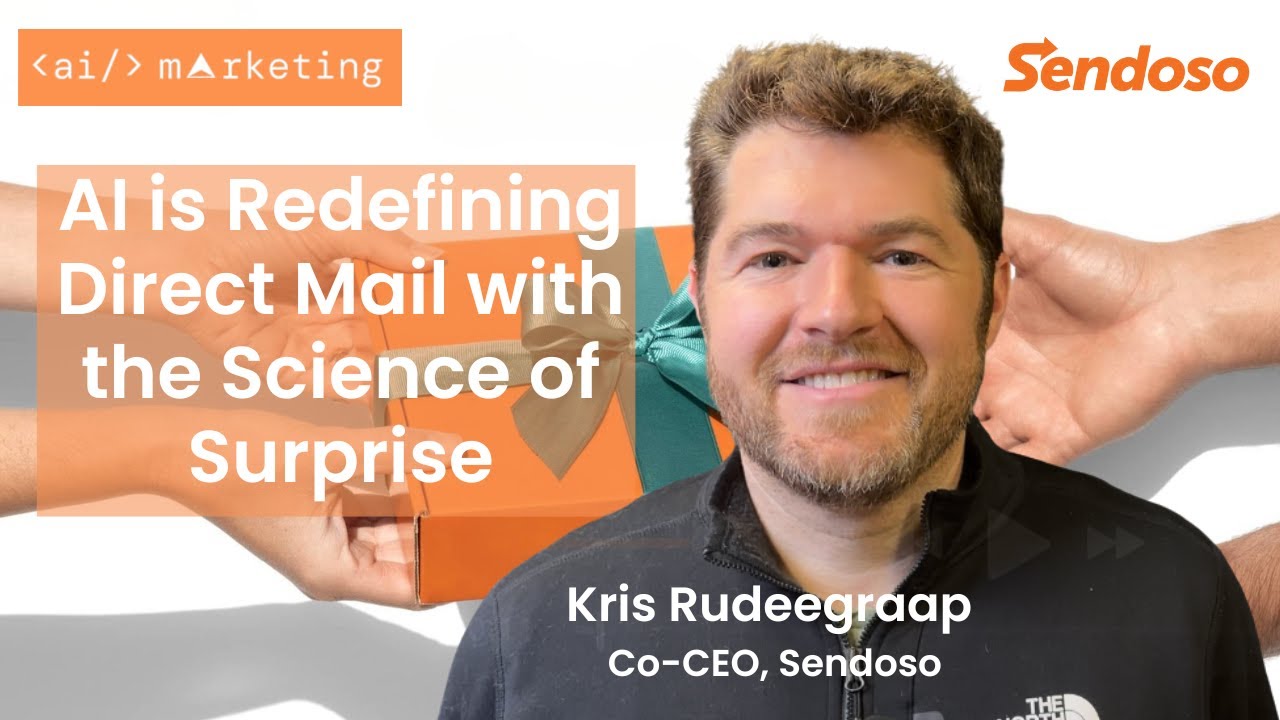
The first customer arrived in 2017. Rudeegraap showed an early version to Ben Coffey, then a director of marketing operations at LiveRamp. The product was raw. The problem was not. LiveRamp already knew the pain of getting swag and gifts out the door, which meant the sales conversation could begin with recognition instead of evangelism. Years later, Rudeegraap still remembered the contact and invited him to a Warriors game. First customers have a way of becoming part customer, part witness.
A gift is a medium, not a personality
Corporate gifting invites bad comedy because it so often deserves it. A generic bottle, a logo where no logo was wanted, a perishable arriving during a holiday absence. The object is not automatically thoughtful merely because it occupies three dimensions. Rudeegraap's better anecdotes rely on observation. Hear a dog, send a toy. Learn that a prospect broke a rib skiing, send Kansas City barbecue ribs. The pun is groanable. The memory is durable.
The practical idea underneath the jokes is relevance. Rudeegraap has argued that personalization is not a first-name token pasted into a message. It is choosing a moment and an object that reflect something true about the recipient. Sendoso's job is to let marketing set budgets and rules, let sellers act at the right moment, and let both sides track what happened through the systems they already use.
This is also why Rudeegraap's story is less about gifts than about channel economics. Email remains useful, but abundance changes behavior. A physical send carries cost, and cost imposes selection. You cannot ship fifty million boxes for practically nothing. The constraint encourages a question that cheap channels let people avoid: who is worth contacting, and why now?
Growing up without losing the observation
Sendoso raised more than $150 million, including a $100 million Series C in 2021. Capital brought people, warehouses, integrations and a more complicated organization. In 2024, Rudeegraap moved into a co-CEO structure with Abhay Rajaram. The division was explicit. Rajaram would concentrate on day-to-day operations and alignment; Rudeegraap would spend more time on the brand, education and the future of AI-enhanced personalization.
The company also began assembling more of its category. It acquired assets from gifting platform Alyce in 2024, acquired Postal in 2025 and added Merch in 2026. The last deal brought access to a network of more than 100 production facilities and moved Sendoso further into branded-merchandise supply chains. What started with a seller carrying a box toward a shipping counter had become an argument for owning the path from idea to delivery.
The category bet, drawn simply
SmartSuite, introduced in 2025, extended the logic into AI-assisted gift recommendations, messaging and delivery. In public appearances during 2026, Rudeegraap described AI agents taking on operational work across marketing teams. This introduces a neat danger. The first wave of sales automation helped create the digital saturation that inspired Sendoso. AI can repeat the cycle at astonishing speed if it is used only to produce more.
Rudeegraap's original practice offers a safeguard. Begin with the clue, not the capacity. A recommendation engine can help sort options. Conversational data can surface a relevant detail. Logistics software can confirm an address and route a package. None of those tools improves the gesture if the sender has nothing particular to say.
Curiosity, with a tracking number
Outside the office, Rudeegraap gravitates toward camping, hiking, backpacking and mountain biking. The preferences fit the biography almost too neatly: movement, terrain, the occasional harder route. He has also described following about 150 industry blogs through Feedly. The collecting instinct travels well. Listen widely, notice a detail, put it to work.
His advice to founders is similarly unornamented. Work smart instead of merely working long. Delegate. Preserve time for the people who matter. Creativity, execution and optimism recur in his descriptions of what a founder needs. They sound generic until placed beside the dog toy, the college housing site and the early LiveRamp demo. In his case, they are behaviors: see an opening, make the thing, call the customer.
There is a temptation to turn the Sendoso story into a tidy duel between robots and relationships. Rudeegraap's actual position is more useful. Software can carry consideration farther. Logistics can spare a seller the tape gun. AI can help identify timing and relevance. The human work is to remain awake enough to hear the bark.