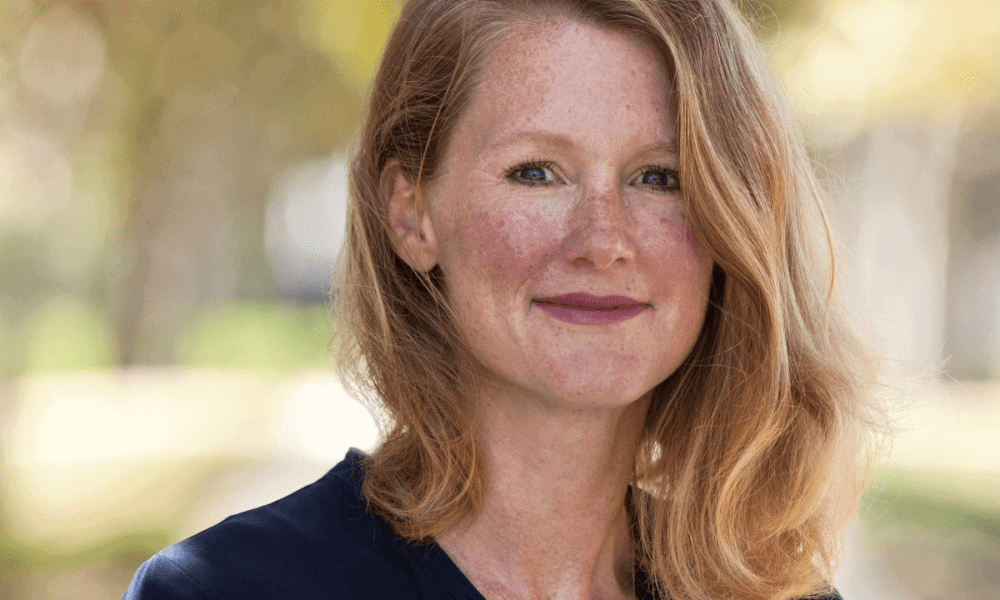
A Career Built on Leaving Rooms She Had Already Won
There is a comfortable route through the marketing profession, and Jenny Campbell has spent a quarter of a century declining to take it. The comfortable route asks you to choose a side early. You go agency, where you make the work and complain about the client, or you go brand, where you approve the work and complain about the agency. You pick one, you ascend, you retire to a board seat and a decent view. Campbell picked one, ascended, and then walked across the aisle. Then she did it again. The effect on an outside observer is faintly dizzying. The effect on her judgment appears to have been excellent.
She started at Wieden+Kennedy, the independent Portland shop with a reputation for treating advertising as a form of argument rather than a form of decoration. She stayed roughly eight years, which in agency time is closer to a geological era. Then she went client-side to Nike, spending more than seven years across Nike Women's, brand innovation, and the technology corner of the business that was then still called Nike+. As senior global brand director for Nike+ and Member Services, she worked on NikeFuel, the company's attempt to convert every conceivable human movement into one comparable number.
It is worth pausing on NikeFuel for a moment, because the idea now looks either quaint or prophetic depending on your wrist. In 2012, telling people that their walk to the bus and someone else's spin class could be measured on a single scale sounded like a marketing conceit. Today the entire wearables industry runs on the premise, and closing a ring has become a minor moral obligation. Campbell was in the room where a brand tried to invent a unit of measurement and get the public to adopt it. Very few marketers can say that. Fewer still can say it worked.
Back Across the Aisle
Having reached the top of the client side, she went back to the agency side. At 72andSunny in Los Angeles she served as managing director, presiding over a client roster that included adidas, Google, Starbucks, Uber and eBay. Anyone who has worked in advertising will recognise the particular comedy of that list: it contains at least two pairs of companies who would have been mildly unsettled to learn how much the same people knew about both of them. Managing that requires discretion, stamina, and a talent for keeping several truths in the air at once without dropping any of them on a client's foot.
The whitewashing has just gone on way too long. You need to build values around what is true to your product.Jenny Campbell, speaking to Forbes, 2019
Then, in September 2018, Tinder announced her as chief marketing officer. It was a curious hire and an interesting bet on both sides. Tinder at that point was a company with enormous usage and a somewhat embarrassed relationship with its own reputation. Everyone used it. Almost nobody praised it. That is a specific and difficult kind of brand problem, one that no amount of media spend can solve, because the issue is not awareness. The issue is affection.
Campbell's public thinking from that period holds up unusually well. She talked about Gen Z as a cohort that was, in her phrase, incredibly social, dating in groups and hunting for experiences rather than broadcasting their lives at maximum volume. She noted that younger users were smarter about privacy than the millennials before them, retreating into smaller groups instead of performing for everyone. And she pointed out that the boundary between online and in-person had stopped being a boundary. For Gen Z, she argued, the digital and the physical simply bleed into each other. Marketers have since spent years catching up to a description she offered in 2019.
Micro influencers just look like hired shills because no one believes it.Jenny Campbell, Forbes, 2019
That last line was, at the time, close to heresy. The influencer economy was in its optimistic adolescence and every deck in every agency contained a slide promising authenticity at scale. Campbell's objection was not moral but arithmetical: authenticity does not survive multiplication. Her alternative was to look for advocates with genuine credibility, people who had actually lived the thing being sold. It is a harder brief, it produces fewer names, and it happens to be roughly where the industry landed several expensive years later.
From Swipes to Spades
In November 2020 she made what looked, on paper, like the widest leap of her career. Kate Spade New York named her chief marketing officer, effective the ninth of that month, taking over a role previously held by Mary Renner Beech. The trade press had a small, enjoyable identity crisis over how to frame it. Was this the dating-app executive arriving at a heritage fashion house? Or was this a Nike alumna returning to apparel after a detour? FashionNetwork went with the Nike framing, which was tidier and also more accurate. Campbell's remit covered brand marketing, direct-to-consumer engagement and digital, arriving at precisely the moment when physical retail had gone quiet and direct-to-consumer was the only door left unlocked.
The category changed. The work did not, particularly. Sneakers, dating and handbags are all, in the end, businesses built on the same proposition: that owning or using this thing says something about you that you would like said. The vocabulary shifts. The problem is stubbornly consistent.
She has since served as interim head of creative at Athleta and now holds the interim chief marketing officer post at Frank & Eileen, the woman-owned, B Corp-certified shirtmaker headquartered on South Los Angeles Street. It is a company of roughly eighty-three people, which is smaller than some of the teams she has previously run. There is a reading of this that sounds like a step down, and it is the wrong reading. Executives who have already proved the point tend to start choosing rooms rather than titles.
The Year She Disappeared
Somewhere in this sequence, Campbell did the thing that every career-advice column warns against and every exhausted professional privately fantasises about. She took a year off and travelled around the world with her husband and their two young children.
The conventional wisdom on such an interval is grim and well-rehearsed. You lose your network. You lose your momentum. You return to find your seat occupied by someone with fewer opinions and better availability. Campbell returned and became chief marketing officer of one of the most discussed applications on the planet. This does not prove that a sabbatical is a career accelerator, and she has never claimed it is. But it does suggest that the profession's terror of the gap year is less about capability and more about the industry's conviction that it must never be left alone in case it does something foolish.
Sometimes, you just have to make the jump, and have it come along with you.Advice Campbell gave a Morehead-Cain mentee, recalled by Caroline Durante '21
The Journalism Degree Explains a Lot
Campbell arrived at all this from the University of North Carolina at Chapel Hill, where she graduated in 1995 with a BA in journalism as a Morehead-Cain Scholar. The scholarship is UNC's flagship merit award and it is unusually keen on people who do things rather than merely study them. The degree is worth noting because it is not the degree one expects. She is described professionally as a brand, performance and growth marketing leader, three phrases that in most people's mouths are mutually exclusive and in hers appear to be sequential. But the journalism training keeps surfacing in her public commentary, which returns again and again to a reporter's question rather than a marketer's: does anyone actually believe this?
She has served on the board of MAKERS, the media platform built around the stories of women leaders and creators. She was named to PRovoke Media's Influence 100 in 2019. She has kept a long relationship with the Morehead-Cain programme, delivering the keynote at its first Final Selection Experience for sophomores and mentoring scholars through the years that follow. One of them, Caroline Durante, described her as warm, genuine, selfless, and a patient listener - and, more usefully, as someone who did the unglamorous parts: monthly Zoom calls, interview preparation, direct introductions to people who could actually help.
I want to help as many future female leaders as I can get a toe hold in this industry.Jenny Campbell, on mentoring Morehead-Cain scholars
The phrase to notice there is "toe hold". Not a corner office, not a seat at the table, not any of the other furniture metaphors that get printed on conference tote bags. A toe hold is the smallest possible amount of purchase on a wall, offered by someone who has already climbed it and remembers exactly which bit was slippery. It is a modest ambition stated precisely, which is a rarer thing in marketing than one might hope.
What the Pattern Actually Says
Read the resume quickly and it looks like a series of unrelated categories: running shoes, a dating app, a fashion house, activewear, Italian-fabric button-downs. Read it slowly and it looks like one continuous argument about where brand meaning comes from. Her consistent position - stated in 2019 and not obviously abandoned since - is that values borrowed from the culture will be detected and rejected, and that the only durable ones are the ones already sitting inside the product waiting to be noticed.
This is not a comfortable belief to hold in an industry that sells the opposite service. It requires telling clients that the thing they want to say about themselves is not available. It requires resisting, in her words, the checking-the-box actions that look decent in a press release and hollow everywhere else. Campbell has made a career of moving between the two sides of that transaction, which means she has heard the argument made badly from both directions and knows precisely how it sounds.
At Frank & Eileen she has landed at a brand whose product story is unusually literal: Italian fabrics, shirting, made in the USA, a founder who named the label after her grandparents. There is not much to invent. Which may, for a marketer who has spent twenty-five years insisting that invention is the problem, be the entire appeal.