Jason Weingarten wanted a spring break. He had a job at Capital One, friends to meet in Florida, and a flight from Washington that was going nowhere quickly. In 2000, a delay was an invitation to negotiate with a gate agent. He found another flight and helped a fellow traveler get aboard. They ended up next to each other. The stranger opened a business plan. Weingarten asked about it.
By the end of the flight, the conversation had turned to Weingarten’s own idea: helping college students find jobs online. His seatmate was Fred DeLuca, co-founder of Subway. A holiday had acquired an investor meeting. Most travelers settle for a better seat.
Twenty-four years later, Weingarten became CEO and co-owner of The Alinea Group, working alongside chef Grant Achatz. Between those two encounters came campus recruiting companies, a venture fund, and a meal-delivery business that became a restaurant. Food kept appearing in the margins until it occupied the whole page.
A business plan, a boarding pass
Weingarten had graduated from Miami University in Ohio in 1999. He and Dan Bartfield had an idea for a business, and DeLuca gave it a hearing. Bartfield came to Florida; they discussed customers, sales, and the money required to start. DeLuca subsequently financed eCampusRecruiter.
Jon DeLuca, Fred’s son, became part of that first venture. The software helped university career centers manage their connections with employers and students. In 2008, the founders sold the business to Symplicity. The relationships survived the transaction.
There is a pleasing circularity to what followed. When Weingarten and Jon launched Subconscious Ventures in 2020, they named it after Fred’s yacht, where the first fundraising pitch had taken place. The name sounds like an investment thesis. It is also a souvenir.
Weingarten’s account of his mentor emphasizes the usefulness of approaching people without being overawed by them. A conversation could become an introduction; an introduction could become years of advice. He later put that lesson into practice by walking up to Mark Cuban at an event. The habit began before he knew his airline companion’s surname.
The paperwork had a sequel
After the sale, employers familiar with the founders’ work wanted help with their own recruiting. There were applications, certainly, but also career fairs, follow-up, relationships with universities, and the small logistical obstacles that turn a promising introduction into a lost contact. Weingarten and Bartfield started Recsolu in 2008. In 2015, it became Yello.
The business grew around the work that surrounds hiring. Its tools covered scheduling, events, candidate relationships, and evaluation. That list can sound dry until you are the applicant waiting for an answer or the recruiter trying to coordinate several calendars. Friction is wonderfully abstract when it is happening to somebody else.
Yello’s Series C, led by JMI Equity with participation from First Analysis.
In 2017, the company closed that funding round to develop its platform. Weingarten’s explanation began with the applicant: “The candidate experience should be at the forefront of every recruitment process.” The software was meant to improve the interval between expressing interest and knowing where you stood.
He also connected the company’s hiring practices to the people its customers served. In a discussion of workplace diversity, he argued that representation belonged among an employer’s basic expectations. As Yello became able to choose among more applicants, he believed it acquired a corresponding responsibility to build a workforce that reflected its customers. Growth, in that telling, changed the obligations as well as the options.
By October 2020, Weingarten was ready to leave daily operations. Corey Ferengul became CEO, while Weingarten remained on the board. After twelve years, he thanked employees and customers and moved toward investing. Stepping away from a company he had helped start left room for another kind of work.
- 2008First venture sold.
Recsolu begins. - 2015A new name:
Yello. - 2020From daily operations
to the board. - 2024The Alinea Group:
CEO and co-owner.
Dinner was already on the agenda
Restaurants had been an interest well before they became an investment. After selling his first business, Weingarten spent time in Paris, took culinary lessons, and made a personal map of places to eat around Europe. Some people return from a sale with a new watch. He returned with homework involving lunch.
Back in Chicago, the interest had a practical use. Visiting Yello customers went to Roister and The Aviary. Weingarten was learning those rooms as a host: how an evening could give a business relationship space to become less formal. His eventual move into hospitality had years of rehearsal.
One later reunion makes the connection especially clear. He described a partnership with Adam Godson at Cielo that had helped Yello grow, and the work of Sam Spitz, who managed that relationship before moving on to Workday. Eventually Godson and Spitz celebrated their birthdays at Oliver’s, Weingarten’s restaurant. “Meanwhile, I opened a restaurant,” he wrote. The shrug practically supplies its own stage direction.
Getting to Oliver’s involved a change of plan. Weingarten and fellow technology entrepreneur Jon Bell had launched Entrée, a meal-delivery business. It lasted about a year before the operation pivoted. The space and culinary team became the foundation for a supper club in Chicago’s South Loop.
Oliver’s opened in 2024, with chef Alex Carnovale, whose experience included the French Laundry. A meal delivered to a home and an evening spent in a restaurant require different arrangements. Keeping the kitchen while changing the way customers encountered it was a concrete adjustment, with a dining room attached.
A different sort of due diligence
The move also sits comfortably beside advice Weingarten published for founders in 2021. He urged them to keep the learning that mattered close to the founding team. Before handing work to outsiders, identify the assumptions that could make or break the business. Spend time with potential customers. Test the idea.
That approach leaves room for delegation, but it asks founders to know what they are learning and why. A prototype, a conversation, or an early demand test can reveal more than a polished presentation. The practical question is how quickly an uncertain belief can meet a customer.
His investing followed a related impulse. When he began helping new founders in 2020, their questions recalled those he had once taken to DeLuca. Subconscious Ventures gave him and Jon a way to supply both money and operating experience. Mentorship was becoming something he could offer in return.
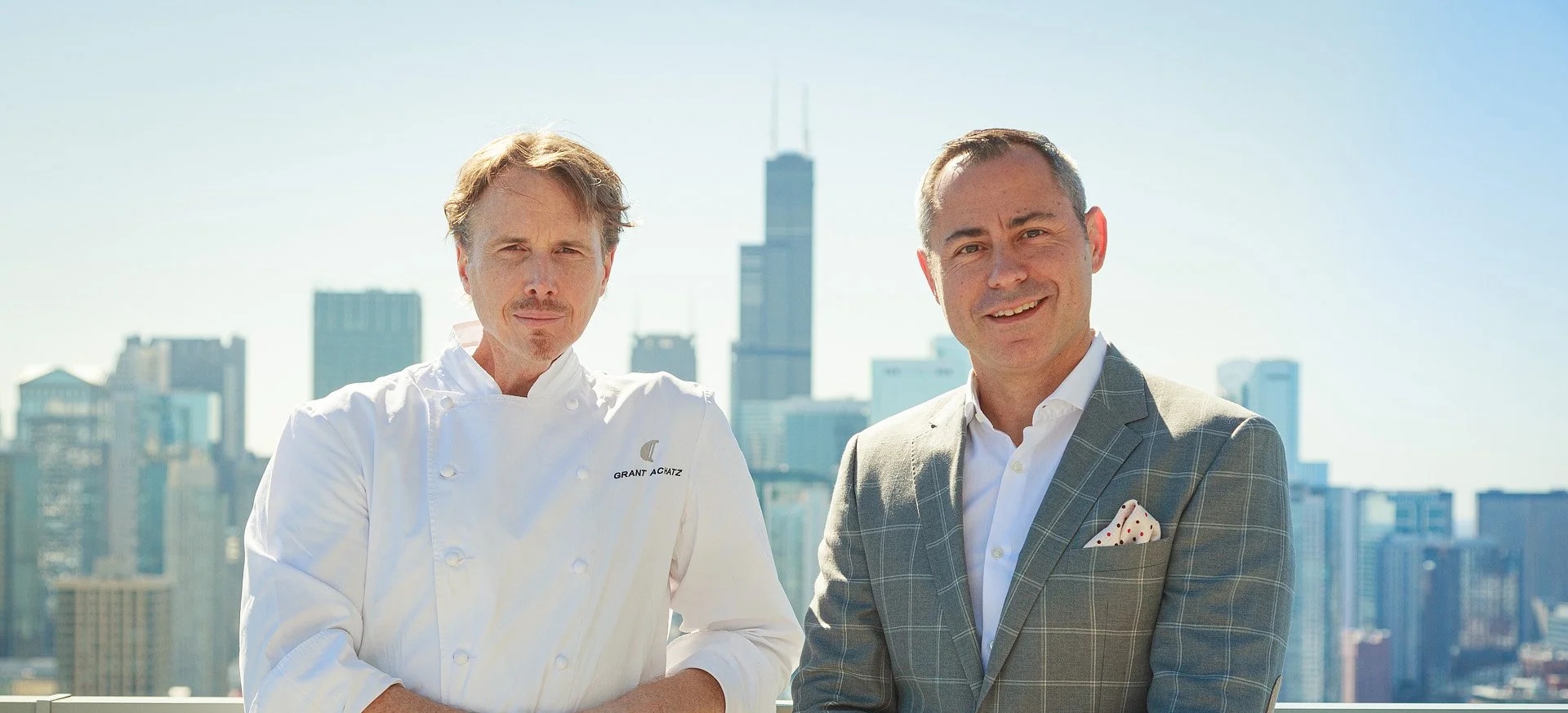
In October 2024, The Alinea Group announced a majority investment by a group Weingarten led. He became CEO and co-owner, joining Achatz as Nick Kokonas moved away from day-to-day involvement. The acquisition put Weingarten inside an organization whose work he had already enjoyed as a customer.
His relationship with Kokonas reached back years, including through the restaurant reservation platform Tock. He had even bought out The Aviary for a Yello celebration in 2016. Becoming responsible for the business was a substantial promotion from booking the party.
The kitchen meets the lease
The acquisition announcement paired creative ambition with selective growth. There were possibilities in events, hospitality, and experiences beyond a conventional restaurant visit. For Weingarten, the task involved finding places the group could go while respecting the work Achatz and his colleagues had already built.
The operating decisions arrived quickly. Fire, which replaced Roister in Fulton Market, closed in June 2025. Weingarten attributed the closure to real estate economics. He pointed to rent increases and a layout with a large kitchen that left less space for paying seats.
He also described a change in when people wanted dinner: fewer late evenings, more pressure on the popular earlier hours. A room can only accommodate so many guests at once. The arithmetic gives even an imaginative restaurant a fairly stern set of instructions.
That episode complicates the neat version of a technology founder moving into restaurants. A software product can reach another customer without adding another chair. A dining room has walls. Weingarten’s explanation dwelt on the room, the lease, and the hours when customers actually wanted to use it.
Another public setback followed in November 2025, when Alinea moved from three Michelin stars to two. Its long record did not exempt it from reassessment. The distinction matters to the story because stewardship includes being judged on work that continues after the acquisition photographs have been taken.
Back on the other side of the software
In May 2026, The Alinea Group selected Toast as its preferred technology platform for Alinea, Next, The Aviary, and The Office. The agreement also included eligible future locations and residencies. Consistent systems would accompany the group beyond a single room.
“At Alinea, we’re constantly refining how we deliver the experience, both in the dining room and behind the scenes.”
Jason Weingarten · May 2026
For the former recruiting software CEO, the announcement had a familiar shape. Teams needed tools that supported their work; customers experienced the result. He was now buying the software, responsible for how it functioned during an evening somebody else had been looking forward to.
His career has passed through university offices, enterprise sales meetings, investor conversations, and dining rooms. Across those settings, he has repeatedly found work in the details around an encounter: arranging it, following through, making it worth somebody’s time.
The delayed flight supplied an unusually good opening. The decades afterward supplied the follow-up. These days, when Weingarten gets people around a table, he is responsible for rather more than the conversation.