Sixteen senior living communities can generate an impressive quantity of hiring work. At EPOCH Senior Living, that work landed with one corporate recruiter, Jessica Kennedy. Applications, messages and managers were scattered across a manual process. The problem began before an interview: keeping track of who needed attention, and getting the right person to respond.
- Hireology connects hiring across dealerships, care facilities and hotels.
- Its useful trick is making slow handoffs visible to the people responsible.
- Software helps; manager adoption decides whether the process moves.
This is the territory Hireology has chosen. A company can advertise a vacancy and attract applicants, yet still leave a candidate waiting between steps. For an employer with many locations, the awkward question is who notices. Hireology builds recruiting software around making those steps observable and actionable.
The manager is already busy
Founded in Chicago in 2010, Hireology counts Adam Robinson, Michael Krasman and Jeff Ellman among its co-founders. Robinson, its CEO, comes from recruiting and wrote The Best Team Wins. His company serves employers where hiring often shares a calendar with running the operation: automotive dealerships, healthcare businesses and hotels.
The common denominator is a distributed workforce and a local manager with other things to do. Headquarters needs consistent standards. The manager needs to fill a shift or staff a department. A recruiting process has to survive both demands.
Hireology brings job distribution, branded career sites, applicant tracking, texting, email and scheduling into a shared workflow. Managers can review candidates from a mobile app. Recruiters can see pipelines across locations. Interview guides, checks, offers and onboarding extend the process beyond collecting resumes. Analytics show where hiring stalls and which recruiting channels produce hires.
Alternatives include Workable, Greenhouse and ClearCompany; broader HR suites also compete for the budget. Hireology’s distinction is its concentration on these operating environments and the details around them. Integrations with AxisCare and AlayaCare, for example, connect hiring with caregiver scheduling. A hire needs to reach the system that puts someone to work.
- 01AttractFind the applicant
- 02RespondStart a conversation
- 03EvaluateGather the evidence
- 04OnboardGet ready for work
There is a useful tension in that product design. More control at headquarters can mean more work for the person at the branch. Hireology offers location hierarchies and configurable permissions so visibility does not require every action to pass through one central recruiter. The design question is whether shared rules can make the next step easier for the manager carrying them out.
A smaller wait, a different result
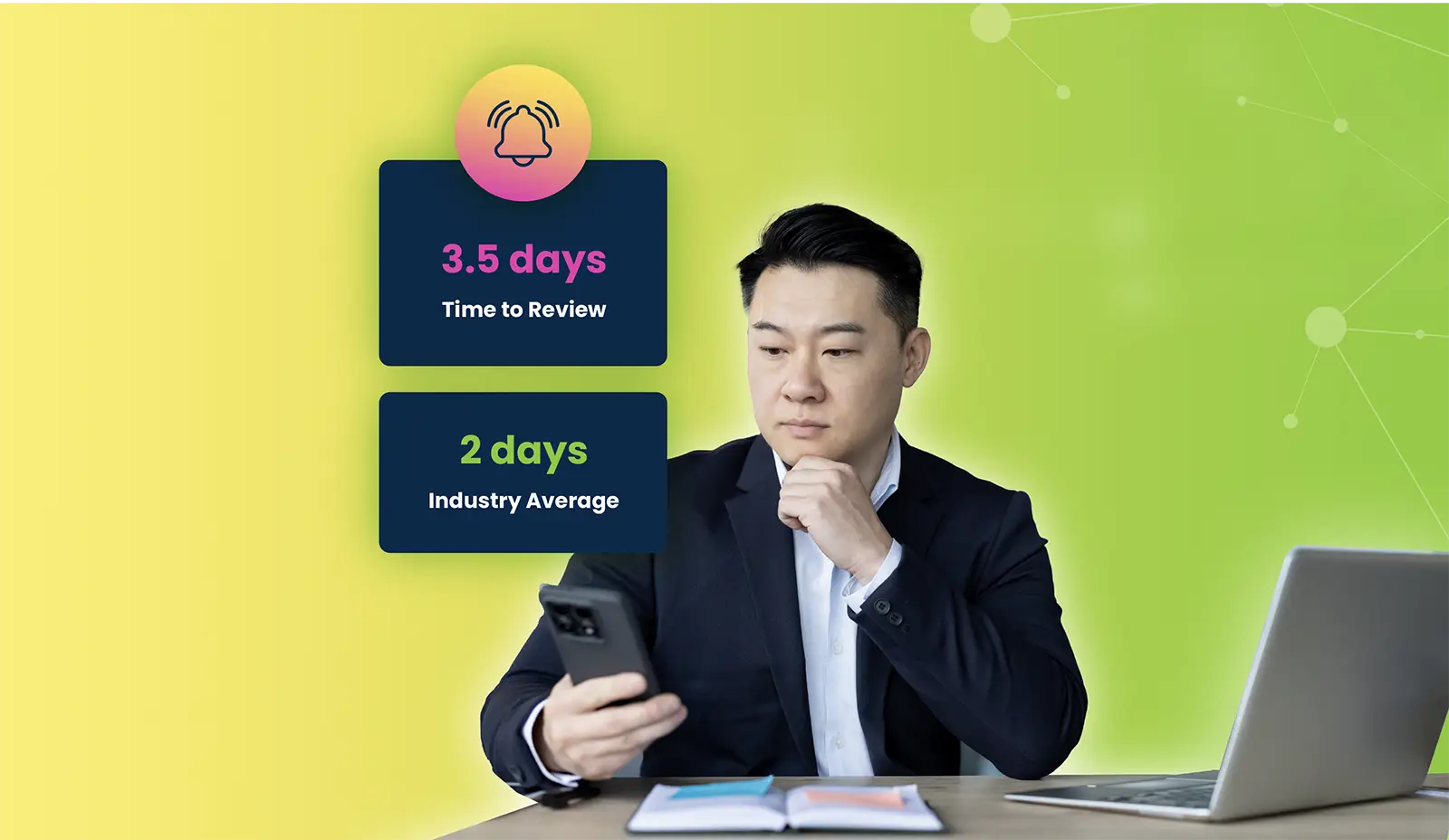
At EPOCH, the response involved a unified candidate database, automated communication and manager training. Some managers preferred familiar methods. Kennedy’s guidance and continuing support helped them adopt the system. The published customer story reports average candidate review time falling from 3.3 days to two, a 19-day average time to hire and a 79% reduction in staffing-agency use.
Average time to hire
Less staffing-agency use
Those figures describe one customer’s experience. They do not isolate the software from the people changing the process. The adoption story matters as much as the headline result: a recruiter made the new routine stick.
Other customers expose the same underlying friction. By The Sea Resorts described property managers using fragmented communication methods and HR teams rebuilding job descriptions. Its solution combined centralized messaging, shared workflows and AI-assisted job creation. The company reported a 40% increase in recruiting-team output. The bottleneck was partly the coordination around the vacancy.
“The texting feature has been incredibly helpful.”Aaron Goodwin, Vice President, MHG Hotels
The price of getting organized
Hireology sells subscriptions. Its current packages are Core and Perform, with prices provided through a quote. Core covers the central hiring workflow; Perform adds AI capabilities. Onboarding, background screening, references and payroll can add to the scope. Buyers need to price the package they will actually use, including service and usage assumptions.
The subscription terms allow pricing tied to employee numbers or expected usage. Background screening is powered by Accurate Background, references by SkillSurvey and payroll and HR by Netchex. These connections make Hireology a recruiting hub with surrounding services, rather than requiring an employer to replace every existing HR system.
Building that breadth took capital. The company announced a $27 million financing package in April 2019, led by Blue Cloud Ventures with existing backers participating. Contemporary reporting separated it into $12 million in equity and $15 million in debt. The stated plan was to expand products and markets. In 2021, Hireology bought referral platform EmployUs, adding another way to reach candidates through employees’ networks.


Distribution also runs through industry relationships. In May 2026, Hireology announced that GM dealers could use Parts/Service iMR funds for its suite, extending earlier eligibility. For a dealer considering a purchase, that changes the budget conversation: an existing co-op allocation may help fund hiring infrastructure. Eligibility and available funds still need checking against the dealership’s own circumstances before anyone counts the savings.
Give the machine the first draft
The newer product direction puts AI inside that workflow. Candidate Summary prepares a brief of strengths, gaps and questions. AI Match compares applicants with role attributes. AI Interview offers voice-based first-round screening that candidates complete on their own schedule, producing structured evaluations for recruiters.
Hireology says these tools support human decisions and describes third-party monitoring through Warden AI. Buyers should test the system against their actual roles and review the evidence behind recommendations. A useful summary still depends on useful information and sensible criteria.
Customer feedback is shaping the surrounding product as well. In its January 2026 retrospective, Hireology’s customer-success team emphasized the need to combine central visibility with local speed, and to make workflows flexible. That is a revealing priority for a software company: the challenge keeps returning to how people work across locations. Adding another feature only helps if it reduces the effort required to do the next useful thing.
The part you can borrow
There is an operational lesson here even for a business that never buys Hireology. Give each hiring step an owner. Measure how long applicants wait. Review the delays by location. Standardize the steps that need consistency and leave room for local circumstances.
That approach assumes managers will use the process and someone will act on the measurements. A dashboard cannot repair an unattractive offer or create qualified applicants where there are none. The company’s own culture includes a blunt value, “Own the Result.” It is a fair instruction for the buyer, too. Once the waiting becomes visible, somebody has to pick up the phone.
Hireology · Product packages · Company blog · Customer stories
LinkedIn · X · Instagram · Facebook
YouTube · Watch: Robinson on hybrid staffing · Watch: product preview