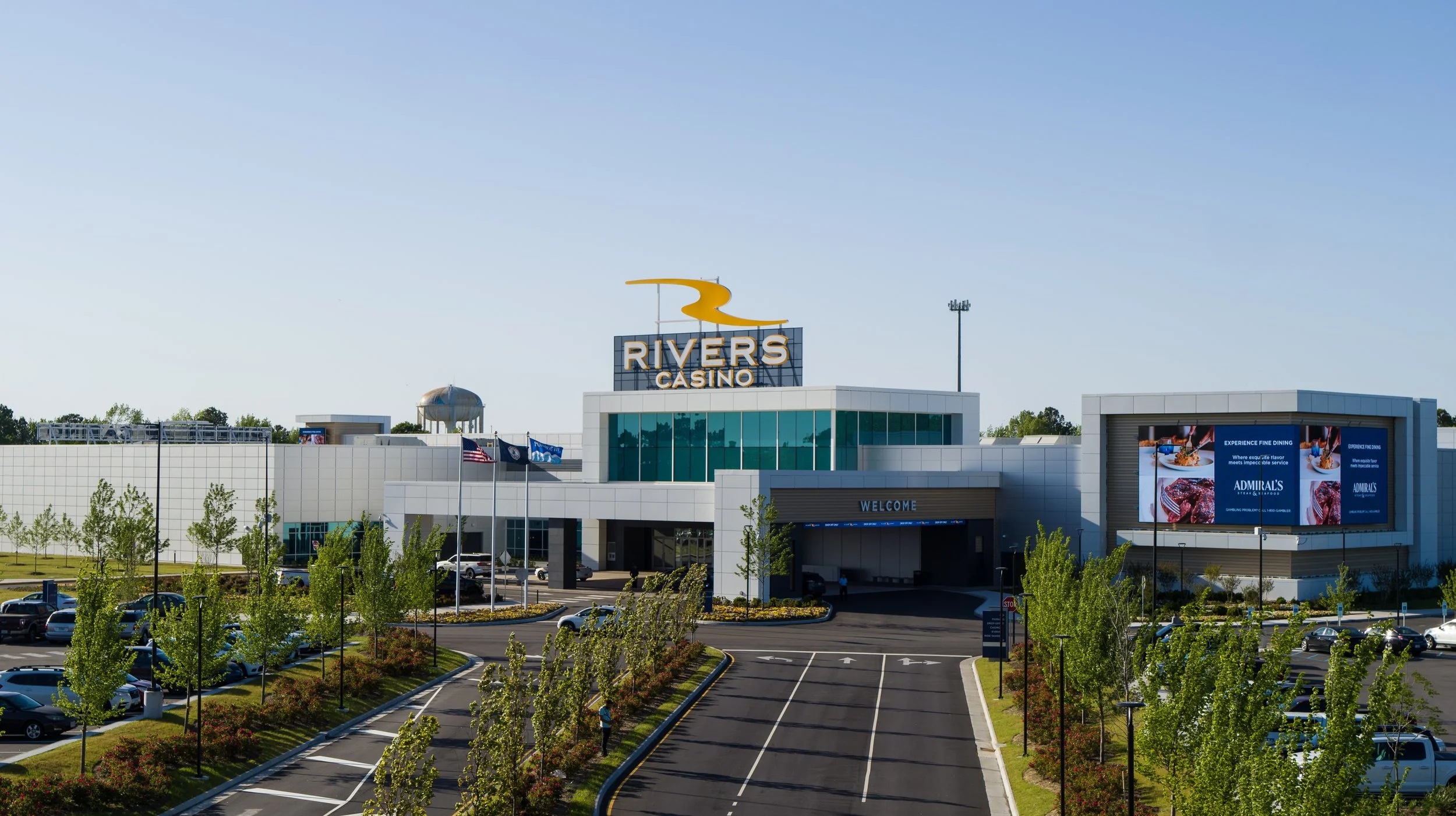
The first lesson arrived through the ventilation. In January 2023, Rush Street Gaming opened Rivers Casino Portsmouth, a $340 million complex in Virginia. There were slot machines, restaurants, a sportsbook and crowds. Within days, there were complaints about cigarette smoke. The company responded by designating half the gaming floor nonsmoking. After all that planning and construction, guests were making a simpler calculation: could they enjoy being in the room?
- Five operating Rivers casinos pair gambling with dining, entertainment and hospitality.
- Portsmouth opened with a $340 million investment; a separate $65 million hotel is planned.
- Local approval can decide a project’s fate before anyone places a wager.
That opening-week adjustment is a useful way into Rush Street Gaming. The Chicago company develops and operates regional casinos through affiliates and joint ventures. Its business depends on buildings, financing, regulation and the decidedly human business of getting people to come back. The roulette wheel is only one moving part.
01 / A property developer walks into a casino
Co-founder Neil Bluhm came from real estate. He co-founded JMB Realty in 1970, with a career encompassing shopping centers, offices, hotels and mixed-use developments. Alongside co-founder Greg Carlin, he brought that property background into casino development. Rush Street’s operating origins reach into the mid-1990s; its corporate LinkedIn profile lists 2009 as its founding year.
The distinction matters less than the inheritance. A mixed-use developer thinks about how different reasons to visit reinforce one another. A restaurant, hotel and entertainment venue can share an address and a customer. Rush Street applies that logic to gambling destinations in regional markets outside Las Vegas.
Its current operating portfolio spans Pittsburgh, Philadelphia, Des Plaines near Chicago, Schenectady and Portsmouth. The customer might want poker, a concert, dinner or a conference venue. Combining those options solves an ordinary planning problem: organizing an evening without negotiating a succession of separate destinations.
02 / The evening is the product
The money starts with gaming. Slots, table games, poker and sportsbooks sit alongside food, beverages, events and lodging. Rush Rewards adds free-play offers and amenity benefits to the relationship. For guests, the appeal is convenience and variety. For the operator, our reading is that each additional attraction creates another reason to choose the property.
Rush Street Interactive needs its own name tag here. The publicly traded online gaming company behind BetRivers is a separate business. A BetRivers sign at a Rivers sportsbook does not make every online result or technology announcement a Rush Street Gaming achievement.
Regional competitors include operators such as Penn Entertainment, Boyd Gaming and Caesars. Restaurants and concerts are familiar tools across the industry. Rush Street’s more specific pitch combines its property development background with local hiring, suppliers and civic commitments. Whether that earns a durable advantage must be judged market by market.
For a local business, there is another way into the operation: becoming a supplier. Rush Street says it holds vendor fairs and helps businesses understand the regulatory requirements governing casino purchasing. That is a less photogenic form of neighborhood participation than a grand opening, but a useful one. A nearby supplier needs to understand what the casino buys and how to qualify before proximity can become a commercial advantage. The company reports more than $20 million in annual spending with qualified minority, women, disadvantaged and veteran-owned businesses across its properties.
03 / First, build the room. Then add the night.
Portsmouth makes the sequence tangible. The casino opened on January 23, 2023, becoming Virginia’s first permanent full-service casino. Its $340 million development included gaming, dining and event facilities. In July 2025, Rush Street selected S.B. Ballard Construction for a separate $65 million Landing Hotel, with 106 rooms. The property’s website advertises an early 2027 opening.
The hotel extends the possible visit into an overnight stay. S.B. Ballard also helped construct the casino, so this expansion reuses an existing local relationship. Meanwhile, Tim Drehkoff, CEO since 2022 and previously CFO, supplies financial experience: his company biography credits him with more than $2 billion in capital investments and $8 billion in debt financings during his tenure.
04 / The unglamorous things compound
Consider the parking garage. At Rivers Des Plaines, Development Management Associates describes LED lighting that cuts garage energy costs by 40 percent and efficient plumbing saving 920,000 gallons annually. The casino received LEED Gold certification in 2012. These are building-system choices, with consequences that continue after the ribbon-cutting photographs disappear.
“Achieving LEED Gold was challenging and expensive”
Neil Bluhm / March 2012
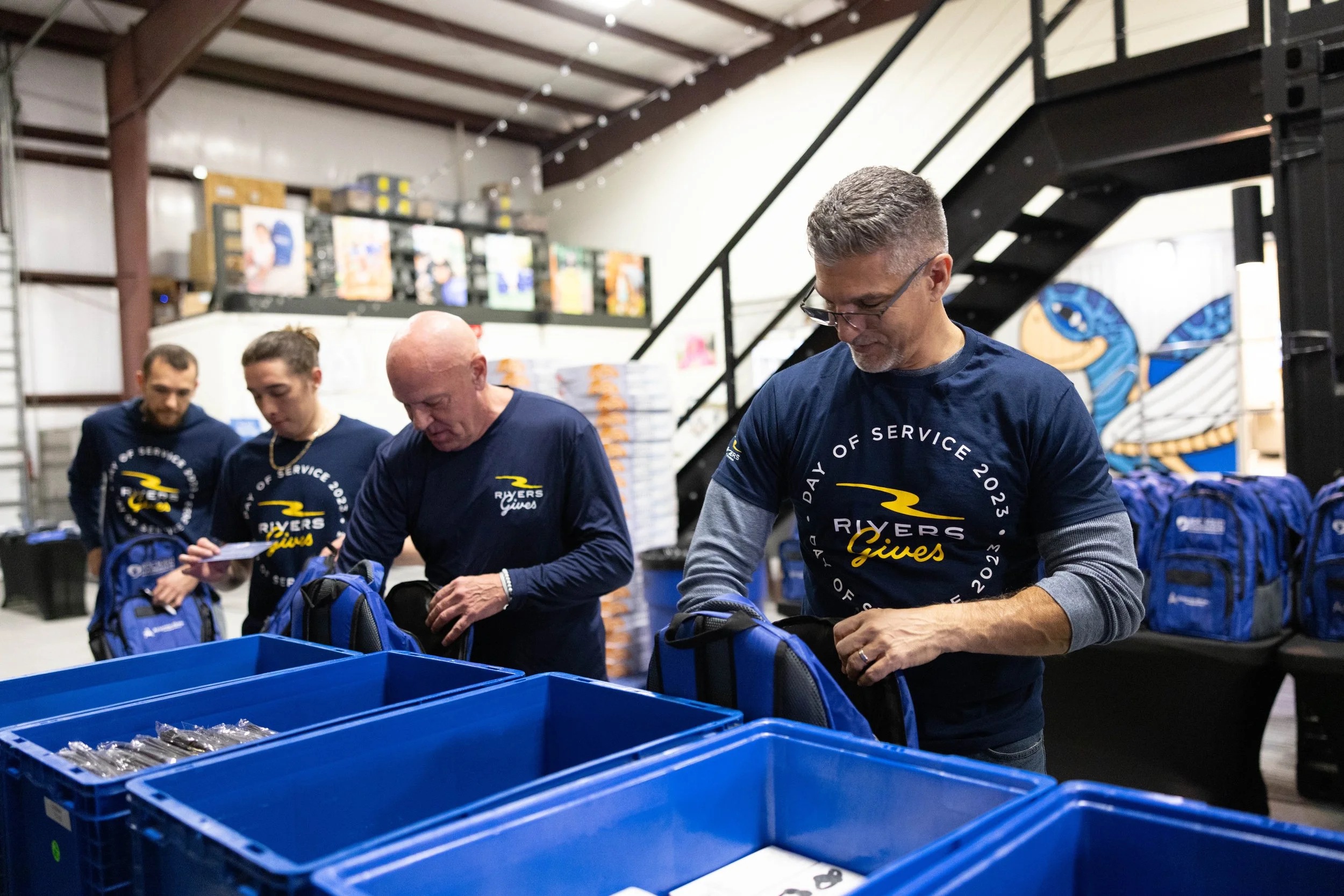
Staffing requires similar attention. In May 2025, Rush Street announced up to $1,000 annually toward qualifying student debt for eligible full-time employees, alongside tuition assistance and free dealer training for accepted candidates. A hospitality operation needs people capable of delivering the evening its architecture promises.
05 / Four votes can stop seven billion dollars
Then comes the limit. Rush Street joined Silverstein Properties and Greenwood Gaming on The Avenir, a proposed $7 billion Manhattan development. On September 17, 2025, its community advisory committee voted 4-2 against advancing it. The developers had revised their housing commitments before the vote. Those changes did not secure approval.
Here, the approval process stopped the project before a gaming floor could demonstrate anything. Portsmouth’s smoke complaints had prompted an operating change; Manhattan presented a different problem. A development budget and a record elsewhere could not supply the missing local votes.
For another operator, the copyable lessons are practical: combine complementary reasons to visit, examine building costs over time, train the staff and respond quickly to specific complaints. The approach needs sufficient demand, financing and permission. More amenities cannot rescue a project that lacks those foundations.
The neighborhood relationship also lasts. In October 2026, Rivers Casino Pittsburgh reported cumulative arena-financing payments of $132.2 million after a new installment. Rush Street’s story is therefore measured in more than openings. It is measured in what the company keeps doing once the guests, employees and neighbors have had time to form an opinion.