Tim Drehkoff had paid for his hotel at a kiosk. In January 2019, while discussing a possible casino resort in Japan, the detail surfaced almost as an aside. He had noticed something ordinary about the previous evening and carried it into a conversation about the future of casino payments. A machine in a hotel lobby had become a business question. Even on a trip involving a proposed resort, there was room to inspect the checkout.
Drehkoff was Rush Street Gaming’s chief financial officer then. Three years later, he would become chief executive. His career offers a way into an industry usually photographed from the other side of the table: through the money that builds the room, the people who run it and the reasons a visitor might stay until tomorrow.
The capital before the casino
Chicago is the starting point. Drehkoff earned an economics degree at the University of Chicago and returned for an MBA. His class years are 1999 and 2006. Before Rush Street’s finance leadership, he worked as a vice president at LAMB Partners, the family office of Neil Bluhm. By 2005, he was working with the Bluhm companies and Rush Street.
The relationship matters. Bluhm’s businesses brought together property development and gaming, and Drehkoff’s work developed inside that intersection. He became CFO in 2012. The executive title made the financial responsibilities explicit; the association with the wider group was already established.
By the time he became CEO, his record included more than $2 billion in capital investments and $8 billion in debt financings across different gaming jurisdictions. These are separate measures of activity over his tenure. They describe money put into projects and financing arranged around a business, rather than a personal fortune or a single pot waiting to be spent.
Different measures of cumulative activity across his Rush Street tenure.
On May 1, 2022, Drehkoff succeeded co-founder Greg Carlin as chief executive. The appointment followed ten years as CFO. His new brief included land-based operations, capital-market strategy, new developments and acquisitions. The person who had worked on financing the properties was now responsible for a much wider set of decisions inside them.
A destination needs a willing address
The Japanese proposal exposed another side of the job. In Hokkaido, Drehkoff discussed a resort that could draw on the surrounding landscape, with outdoor activities, an equestrian center and art exhibitions. The proposed experience reached well beyond the gaming floor. His hotel-kiosk observation fitted that wider attention to how people might use a destination.
“I paid for my hotel in a kiosk last night”
Tim Drehkoff, discussing payment technology in Japan, 2019
Rush Street also sought ideas from residents through a bilingual online platform, My Tomakomai. At the January 2019 Hokkaido showcase, visitors could describe what they wanted a local resort to contain. Drehkoff welcomed that exchange and the chance to keep talking with local stakeholders. Asking people to imagine a project gave the company something a rendering alone could not: responses from the people who would live near it.
The calendar ultimately supplied a harder answer. Later in 2019, Hokkaido shelved its integrated-resort bid amid environmental concerns and the time needed for assessment. The proposal stayed on paper. Any account of Drehkoff’s development work has to leave room for that outcome. A plan can gather architects, consultants and attention while still depending on a public decision beyond the developer’s control.
The room where the plan meets the public
In April 2022, shortly before becoming CEO, Drehkoff represented Rush Street at a public meeting about the Rivers 78 proposal in Chicago. Related Midwest was its development partner. The pitch placed a casino within a proposed new neighborhood; residents raised objections about traffic, public safety and whether the project fitted their vision for the area.
It was a different setting from a financing transaction, with a different audience to satisfy. The people asking questions were considering the streets around their homes. For an incoming chief executive, the meeting made the distance between a development presentation and neighborhood consent quite visible.
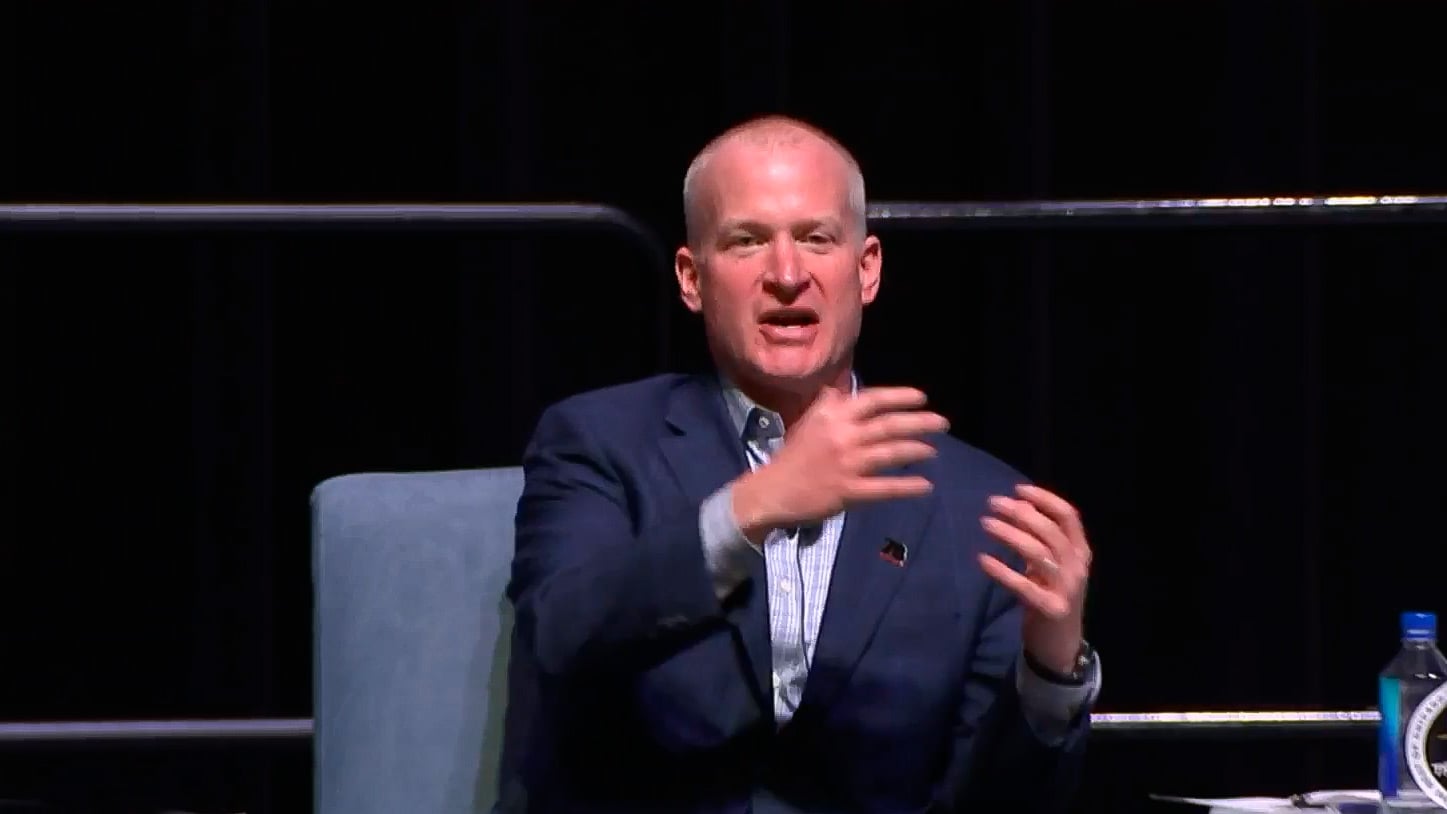
That November, appearing before Virginia’s Lottery Board, he described Rush Street as an oversight organization sharing practices among affiliated properties and seeking development opportunities. He emphasized local customers and employees, along with equitable participation in hiring and contracting. The description put the corporate office in relation to the places around its casinos. Each property had an address, and each address came with obligations.
Software with a job to do
His operational priorities also appeared in a December 2022 technology agreement. Rush Street entered a three-year partnership with OPTX for player-development software. Drehkoff wanted functionality that helped hosts and managers while remaining “simple to install and easy to use.” The requirements were practical enough to fit on a short shopping list.
The software covered player development, AI-supported player development and communications. The announced purpose was to help host teams work efficiently and serve guests. No public purchase announcement can establish the results by itself. What this one does show is the problem Drehkoff said he wanted solved: useful tools for the employees dealing with customers. The hotel kiosk and the casino host’s software belonged to different settings, but both concerned the mechanics of a visit.
A power station learns hospitality
Philadelphia supplied a more tangible extension of the business. In July 2023, Rivers Casino announced plans for Riversuites, a hotel inside The Battery, a redevelopment of the former Delaware Power Station. The project occupied part of an existing complex in Fishtown. For Drehkoff, its location allowed a longstanding hotel plan to connect with a neighboring redevelopment already underway.
The hotel opened in December with 62 suites, including one-, two- and three-bedroom layouts. Kitchenettes, patios in some units and loft arrangements made these accommodations more like apartments than a row of identical overnight rooms. The Battery also offered an indoor basketball court. A guest could arrive with a suitcase and discover that the building had allowed for a jump shot.
Drehkoff connected the opening with Fishtown’s growth and revitalization. The setting gave that claim a physical shape: an industrial building with another use, a waterfront neighborhood and a casino nearby. Hotel development here meant joining an existing place, with its own architecture and history, rather than constructing every part of the visit from scratch.
Eight stories, and a market moving around them
In Portsmouth, Virginia, the next hotel took a different form. Rivers Casino had opened in January 2023. The Landing Hotel was planned beside it, an eight-story, privately funded development costing $65 million. In May 2025, Drehkoff explained that a hotel had always belonged in the property’s master plan. Overnight accommodation would extend what the casino could offer.
Rush Street selected S.B. Ballard Construction Company as general contractor in July 2025. The plans called for 106 rooms, including 32 suites, plus a lobby bar and executive boardrooms. The company projected roughly 200 temporary construction jobs and 60 permanent positions. Those were project expectations, with the permanent roles tied to a hotel still being built.
32 of the 106 planned rooms are suites. The opening remains a projection.
By May 2026, the project had reached its steel-frame topping-off celebration. Drehkoff discussed the lobby bar, boardrooms and design work while city officials marked the construction milestone. The early 2027 opening remained ahead. The event offered a useful intermediate picture of development: the building was visible, the rooms were promised, and the guests had yet to arrive.
The surrounding market was moving too. Across the water, Boyd Gaming and the Pamunkey Indian Tribe were developing a permanent Norfolk casino. September 2026 reporting put that site less than seven miles from Rivers Portsmouth. The new hotel would enter a region adding another substantial gaming destination. Completing the building and earning the visit were separate pieces of the task.
The work after the ribbon
The operating properties also brought environmental responsibilities. In April 2023, Rivers Casino Portsmouth received Two Green Globes certification for new construction. The assessment recognized energy savings, water reduction and an integrated design process. Drehkoff credited the development team. The useful details were in the systems: plumbing, equipment and design choices that would keep working after the opening photographs.
Leadership appointments placed experienced operators around him. Cliff Ehrlich became COO in August 2024, succeeding Bill Keena. Scott Lokke was named Philadelphia’s general manager in July 2025. Antonio Perez Jr. took the Portsmouth general manager role that September. In discussing the hires, Drehkoff pointed to casino development, operations, restaurants, entertainment and hotel experience. His finance background sat alongside people whose careers had been built around running properties.
In September 2025, Rivers Gives organized its annual service day around workforce development and economic opportunity. Activities included job readiness and financial-literacy guidance, working with local nonprofit partners. Drehkoff publicly connected the effort with helping people build careers and financial stability. The connection to the business was direct: a regional hospitality company depends on the same communities in which it recruits and operates.
Back to Chicago, with more buildings to discuss
By autumn 2026, Drehkoff appeared on the American Gaming Association’s board roster. He was also listed as a confirmed speaker for the University of Chicago’s real estate alumni conference that November. His two degree years sat beside his name. The return engagement linked the economics student and MBA graduate with an executive now managing properties, people and the capital behind them.
There is a through-line from that hotel kiosk to the rooms taking shape in Portsmouth: attention to what makes a visit work. Drehkoff’s responsibilities have widened considerably since the observation in Japan. The practical questions remain close at hand. How does the guest arrive? Who runs the place? And what gives someone a reason to stay?