The clue was a trademark application. Somewhere between the familiar machinery of intellectual property and the rather less predictable interests of Bob Dylan, Marc Bushala saw a whiskey business beginning to take shape. The proposed name was Bootleg Whiskey. Bushala, a Dylan fan who had already helped build Angel’s Envy, wanted to know what the musician had in mind.
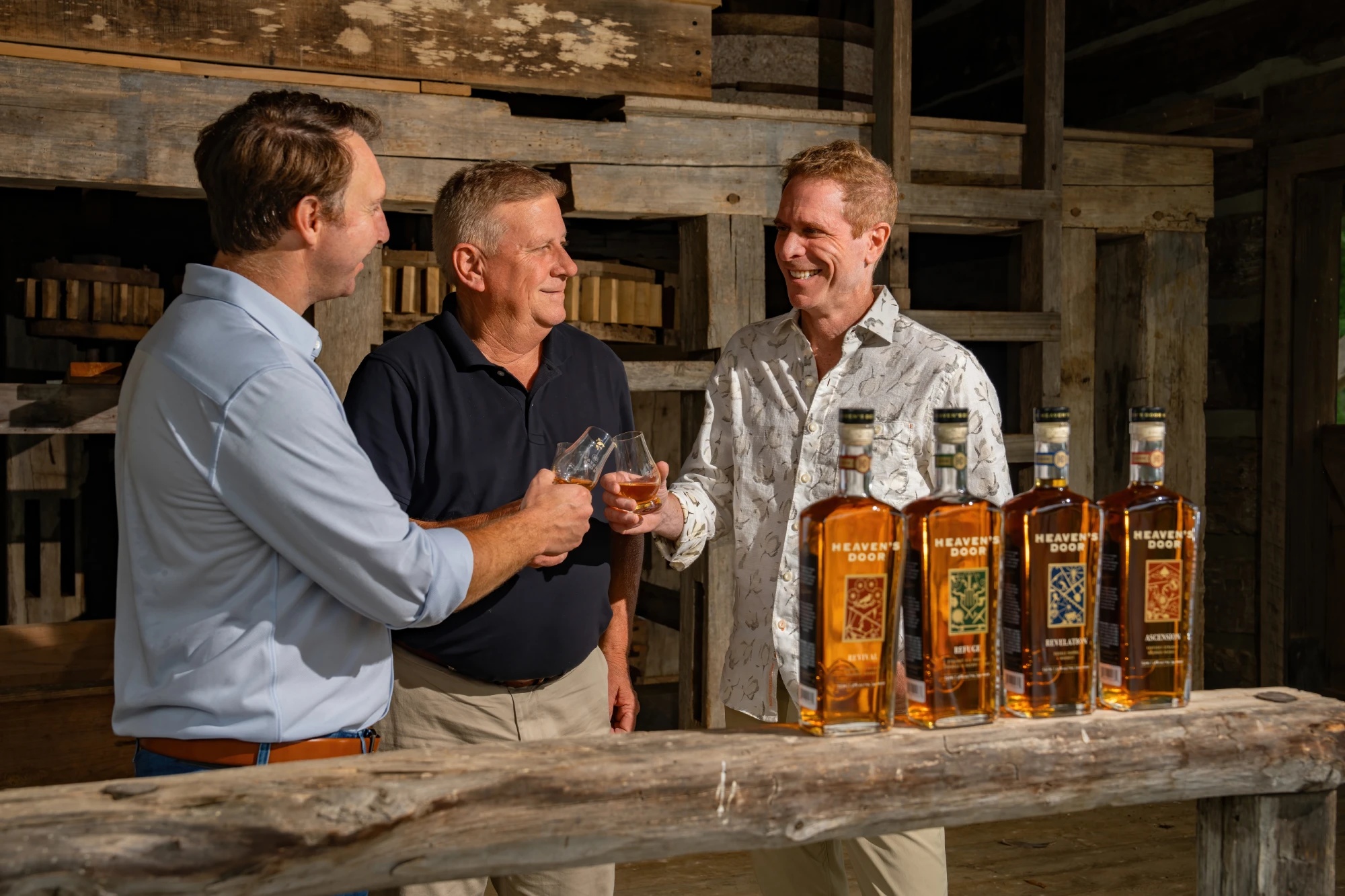
He got in touch with Dylan’s manager, Jeff Rosen. The conversation moved toward a part of Dylan’s working life that offered plenty to look at: his paintings and metal sculptures. A whiskey bottle could carry that visual world into a bar or shop. A collection could keep changing. Heaven’s Door eventually emerged from the partnership, with images of Dylan’s iron gates on its bottles and the Bootleg name reserved for special releases.
When Rosen called back with Dylan’s approval and a question about when to begin, Bushala recalled answering: “Well, we’ve already started.” It is an efficient little introduction to an entrepreneur. The permission had arrived. So had the work.
Before the bottles, a television channel
Bushala’s career had been crossing borders and business categories for years. A marketing graduate of Miami University in Oxford, Ohio, he founded National Facilities Group in 1989. The business handled databases for corporate commercial-property portfolios. It is an unromantic opening for someone whose later ventures would involve burlesque performances and collectible whiskey, which is part of its appeal.
Between 1990 and 1994, he worked on the development, marketing and leasing of office buildings in Central and Eastern Europe. In 1994, he co-founded Atomic Entertainment Group and United Entertainment Co. with Bob Geldof. Their interests included Atomic TV in Poland and Romania, a magazine, restaurants and family entertainment centers.
By December 1999, a report from Warsaw described an Atomic entertainment center opening in the Promenada shopping complex. It placed Bushala among the owners of a business whose activities also included the Ground Zero nightclub, Blue Cactus restaurant and Machina publishing operation. Music, premises and places to spend an evening were already sharing the same business address.
Another chapter followed in 2000 with The Radiate Group, a marketing-services holding company. Bushala’s responsibilities included global strategy and acquisitions. Later came MAB Capital Management and investments in Chicago properties. Seen together, these ventures give the whiskey career some useful context: he arrived with experience assembling businesses and working on the surroundings in which people encounter a product.
National Facilities Group
Atomic entertainment ventures
Angel’s Envy reaches the market
Bacardi acquisition; SIP founded
Heaven’s Door launches
A little extra time in the barrel
Angel’s Envy gave him a business in which the contents and the presentation could be developed together. Among the founding partners were Lincoln Henderson and his son Wes, alongside Bushala and Steve Groth. The Hendersons brought the whiskey experience. Creative agency Crispin Porter + Bogusky helped develop the distinctive package, including the wings on the bottle.
The bourbon spent additional time in port barrels after its initial maturation in American oak. The extra stage gave the product a particular identity. The name played with the “angel’s share,” the spirit lost to evaporation during aging. Calling the remainder Angel’s Envy supplied a small joke with the pour. Even the celestial workforce was apparently susceptible to professional jealousy.
The whiskey launched in 2011. In March 2015, Bacardi acquired Angel’s Share Brands, its Louisville Distilling subsidiary and Angel’s Envy. The transaction closed on March 27; financial terms were undisclosed. For Bacardi, it marked an entry into bourbon. For Bushala, it completed a chapter short enough to fit between two presidential elections.
The distinction between founding a business and making its whiskey matters here. Angel’s Envy brought together distilling knowledge, sales experience, design and capital. Bushala’s part makes more sense inside that group. A bottle can carry one name while containing the work of quite a few people.
From Angel’s Envy’s market launch to its acquisition by Bacardi.
Downstairs, the setting mattered
While Angel’s Envy was finding customers, Bushala was also helping create somewhere they might spend an evening. Untitled opened in Chicago in 2012. Its entrance on Kinzie Street led downstairs into a large venue combining a restaurant, bars and live entertainment. The speakeasy premise began before a guest reached the room.
“We’ve done a good job of keeping it quiet,” Bushala said before the opening. The joke came with substantial scenery. A repurposed bar from the 1920s served as a reception desk. There were tufted leather walls, Chesterfield couches and a private dining area with a sliding picture through which drinks could be passed from the bar.
These details suggest how much thought he gives to the moment around the purchase. A drink arrives through a hidden opening. A visitor descends a staircase. The room has already started telling its story before anyone has ordered dinner.
In 2015, Brass Monkey took another decade as its subject. Bushala’s Fulton Market restaurant drew on the 1970s, with records, period references and comfort food alongside brasserie dishes. Watching American Hustle had helped set the idea moving. The menu included a TV dinner on a divided tray. Nostalgia, in this case, came with compartments.
“We’ve done a good job of keeping it quiet.”
Marc Bushala, on Untitled’s speakeasy premise, 2012
The unglamorous work behind the label
Bushala founded Spirits Investment Partners in 2015. The business supplies capital and practical help across product development, packaging, procurement, marketing, sales, distribution, compliance and finance. The list has considerably fewer romantic associations than a whiskey barrel. It also describes much of what a young drinks business needs.
That same year, Liquid Asset Brands, led by Bushala, invested US$14 million for a majority stake in New Zealand’s Stolen Spirits. The investment supported expansion, including plans for the American market. It added another geography and another category to his spirits interests.
SIP gives this work a continuing home. Its published capabilities extend from trademarks and filings to getting products into distribution. The business has to make the proposed experience repeatable: another production run, another shipment, another market. An arresting label is one decision among many.
Behind a bottle / SIP’s operating remit
A catalog with room for surprises
Heaven’s Door reached the market in 2018 with bourbon, double-barrel whiskey and rye. The collection gave the partnership several ways to introduce itself. Dylan’s artwork provided a recognizable visual connection across the bottles without requiring a portrait of the musician to do the explaining.
The Bootleg series then gave the brand room to move. Its first release, in 2019, was a 26-year-old Canadian whiskey. Later editions took different directions. By the fifth release in 2023, the series had arrived at an 18-year-old bourbon finished in Spanish sweet-vermouth casks. A ceramic bottle carried Dylan’s painting No Vacancies.
There is an intelligible rhythm to that arrangement: familiar bottles remain, while limited releases offer something else to investigate. The music connection becomes a way of organizing a collection. A customer can recognize the catalog and still be surprised by its next entry.
Rare Hare brought another version of the naming problem. Playboy’s Ben Kohn approached Bushala about spirits, and their collaboration developed a separate identity for rare releases. The 1953 expression nodded to Playboy’s founding year. Its initial allocation included 1,953 bottles for the United States and another 1,953 for international markets. The reference was tucked into the arithmetic.
Bushala’s public humor is less discreet. When his friend and collaborator Andrew Razeghi praised him on LinkedIn, he responded by teasing the extravagance of the compliment and joking about the impossibility of retrieving something once it was out on the internet. A useful corrective, perhaps, for anyone working in a business so fond of elaborate praise.
A place to walk into
The Kentucky chapter puts his interests in property, hospitality and spirits close together. Heaven’s Door developed a distillery project in Pleasureville, while The Last Refuge opened in Louisville’s NuLu neighborhood in 2024. The latter occupies a former church, giving the brand a setting for food, whiskey and live events.
Its name has a pleasingly local explanation. Bushala said the church’s basketball team had been called Last Refuge. A piece of the building’s earlier life survived in the new business. For an entrepreneur who once put a reception desk behind a repurposed bar, it feels like familiar territory.
In July 2025, he joined the brand’s Beyond the Door podcast to revisit its founding. A September appearance on The Circuit of Success ranged across Angel’s Envy, Heaven’s Door and the wider portfolio, including Rare Hare, tequila and seltzers. His stated interest remains products with a reason to exist, supported by both their quality and their story.
The trademark application makes a good beginning because it contains so little of what followed. There was no finished collection in those words, no gate on a bottle, no Louisville room waiting for an audience. Bushala saw something worth asking about. The next part required other people, a succession of decisions and the willingness to begin before the story sounded complete.