At Friendship Village, a senior living operator in St. Louis, the fall report used to begin with a reconstruction. What did the resident remember? What could the nurse infer? Staff chose interventions from the evidence available, which sometimes amounted to a guess. The missing witness was the room itself. Inspiren, a company founded by people who understood bedside care, has spent years trying to give that room a useful voice.
- Room sensors and mobile alerts help caregivers spot risks between rounds.
- Care-time records connect resident needs to staffing and care plans.
- Clinicians help interpret the data; customer results need careful reading.
Its pitch has an appealingly ordinary premise: a caregiver cannot be everywhere. A resident can attempt an unsafe transfer, spend unusually long in the bathroom, or need more assistance while the paperwork remains unchanged. Inspiren sells assisted living and memory care operators hardware, software and clinical support that make those changes easier to notice. The ambition is to move the decision closer to the event.
Two sides of the bedside
Michael Wang, Inspiren’s founder and chief clinical officer, had been a Green Beret and a cardiothoracic nurse. Co-founder Paul Coyne had experienced the other side of care. A stroke at 22 interrupted his life shortly before a financial analyst job; recovery eventually led him toward nursing, business studies and healthcare technology. With Wang and Vincent Cocito, he helped build Inspiren in 2016.
Early coverage described iN, a device mounted in hospital rooms to observe activity and help nurses understand patient needs. By 2022, Providence College was describing AUGi, named for augmenting care, and a metric called nursing intensity that considered visits and minutes spent with patients. The question beneath the machinery was already familiar: does the care someone receives match the care they need?

“AUGi provides peace of mind when you cannot be in the room with a patient.”Paul Coyne · Providence College, 2022
A sensor is only the first sentence
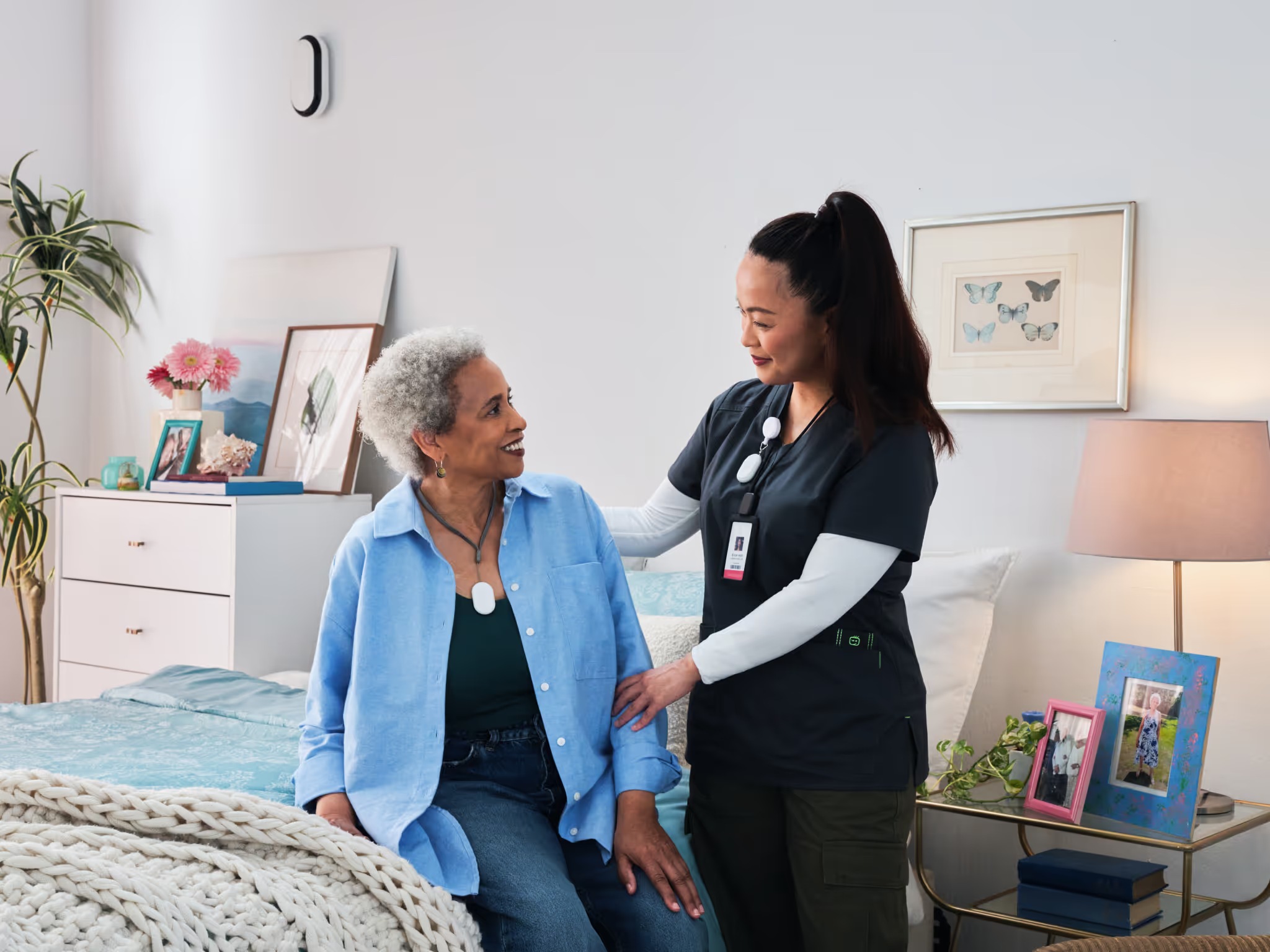
Today, AUGi is the connecting hub of a senior living system. It provides privacy-protected visual context, bed and chair alerts, and event replay. Sense monitors bathrooms without cameras. Staff Beacons record caregiver presence and time in rooms. Pendants and Help Buttons let residents summon assistance. These are different instruments, assigned to different problems; bathroom dignity deserves a different answer from incident reconstruction.
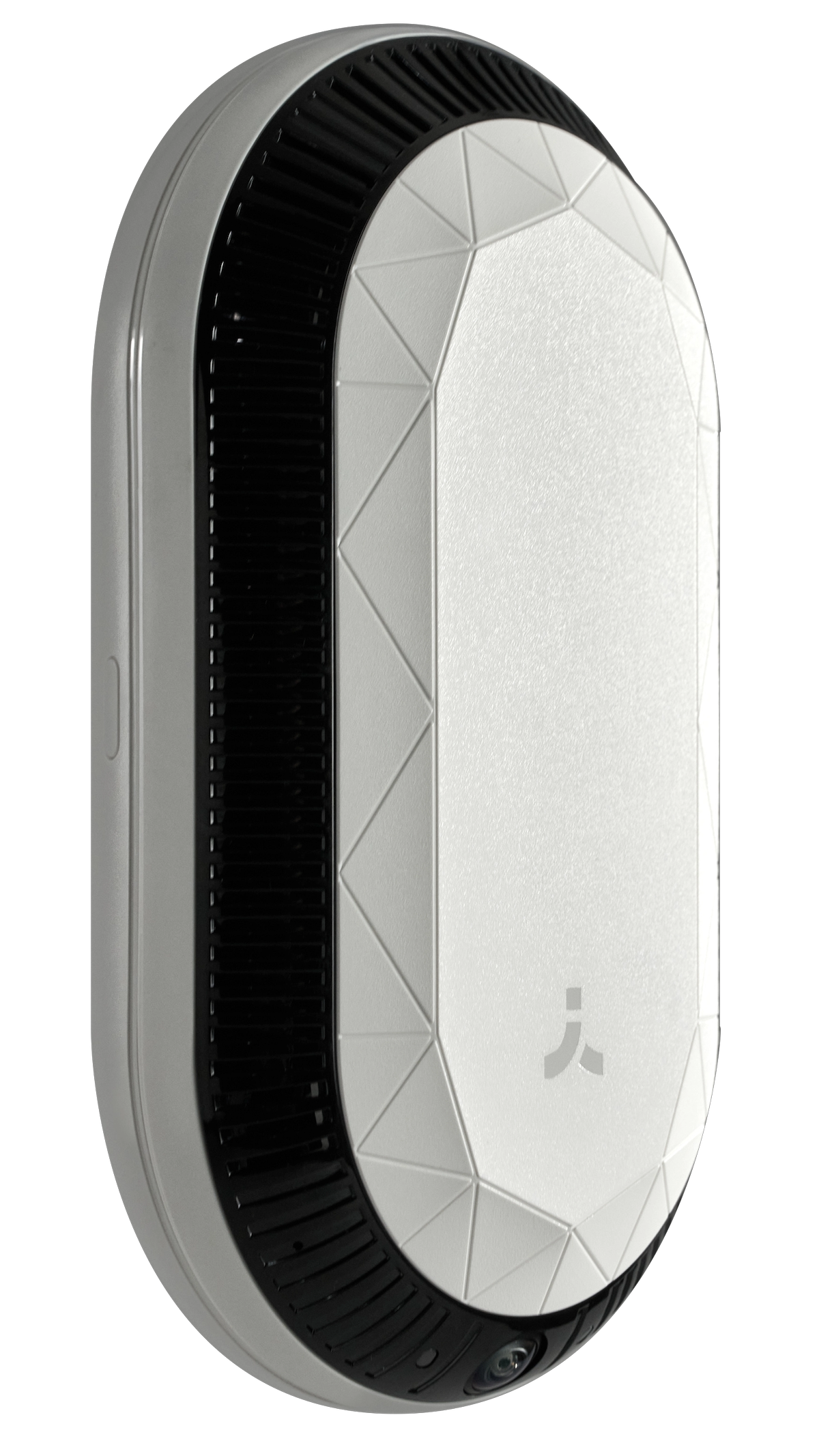
The mobile app gives frontline teams alerts and context. Inspiren HQ gathers trends, falls information and care-planning data for managers. Each community is assigned a clinical specialist. That combination matters: observing someone stand up is relatively simple; deciding whether their pattern warrants a care change requires judgment. Inspiren’s stated success team consists entirely of clinicians, including registered nurses and physical therapists.
- 01ObserveDevices capture activity
- 02RespondStaff receive context
- 03ReviewClinicians examine patterns
- 04AdjustTeams update care plans
Integration addresses the less photogenic obstacle: entering the same information twice. With August Health, a fall validated in Inspiren HQ can become an EHR incident with a link back to the event. ALIS connects resident information, device activation and staff access. ECP synchronizes resident records. These features require the corresponding platforms; a connection diagram is only useful when the systems at both ends are present.
The night shift gets its own lesson
Friendship Village had already used fall detection. Its account says Inspiren’s familiarity with clinical workflows, regulatory responsibilities and care reassessment helped persuade the team. The rollout across two communities included AUGi, Sense and Staff Beacons. Then reality supplied its own agenda. Night staff could not reasonably leave the floor for 10:30 a.m. training, so another session was added. An internet outage at Chesterfield briefly halted implementation.
Those details belong beside the performance claims. They explain what adoption actually demands. The case study reports a caregiver responding to an early lying-on-floor alert in 38 seconds, with Live View available on the way. Someone still had to carry the device, receive the alert and go to the resident. A sensor can shorten uncertainty. The last few metres remain a human responsibility.
Read the small print beneath the big number
At Solera’s Lumina Las Vegas, a 53-apartment memory care community, a ten-month study reported 48% fewer falls, 54% fewer hospitalizations and 50% faster staff response. The care model included Inspiren, Solera, Senior Doc, EmpowerMe Wellness and ALIS. It offers an example of coordinated practice. It also makes assigning every improvement to one vendor difficult.
Aegis Living supplies another intriguing comparison: residents who consented to Inspiren stayed 34% longer than those who did not, using data from September 2024 through December 2025. Consent groups can differ before technology enters the room. The comparison supports further investigation; it cannot by itself tell an operator what will happen in another building. The sensible response is curiosity with a baseline, rather than a percentage pasted into a budget.
The care plan has a balance sheet
Inspiren’s buyer is the operator. Better visibility can inform care-level conversations, staff allocation and billing as well as fall response. Its competitors include SafelyYou, which also combines AI and clinical support, and Vayyar Care’s contactless sensing. Inspiren emphasizes connecting emergency call, observation and operations in one system. The purchasing question is how much disconnected work that system removes.
Investors have paid for the expansion: a $35 million Series A in March 2025, a $100 million Series B that September, and a $70 million Series C led by NewView Capital in September 2026. The latest announcement reports $225 million raised cumulatively. August’s addition of Two-Way Voice and Alert Claiming gives emergency calls resident communication and a clearer owner.
An operator can copy the practical discipline: train every shift, establish reliable connectivity, define who answers, then review incidents against care plans. Evaluate total implementation expense alongside response time and resident outcomes. Where consent, staffing or follow-through is weak, more observations may simply become more unattended alerts. Inspiren’s proposition ultimately depends on what someone does with the information when the room begins to speak.