The Danish startup teaching a ceiling sensor to watch grandma - so nurses don't have to
Teton wraps a camera in enough AI that it never has to save a single frame of video - and uses it to cut falls in elder care by up to 82%. Now it is betting American nursing homes will pay for a night nurse that never blinks.
The oldest problem in a nursing home is also the simplest: someone gets up in the night, loses their balance, and hits the floor before anyone knows they moved. Falls are the leading cause of injury-related death for people over 65. The traditional fixes - hourly rounds, bed alarms, a nurse's intuition - all depend on a human being in the right room at the right second. There are not enough humans. There have not been enough for years, and the demographics are getting worse, not better.
Teton, a company founded in Copenhagen in 2020, decided to solve this with a camera. That is the uncomfortable part, and the company knows it. A camera in an elderly person's bedroom is the kind of idea that gets you thrown out of a procurement meeting. So Teton built the camera to do something unusual: understand everything, and show a human being nothing.
The trickA camera that legally can't show you the tape
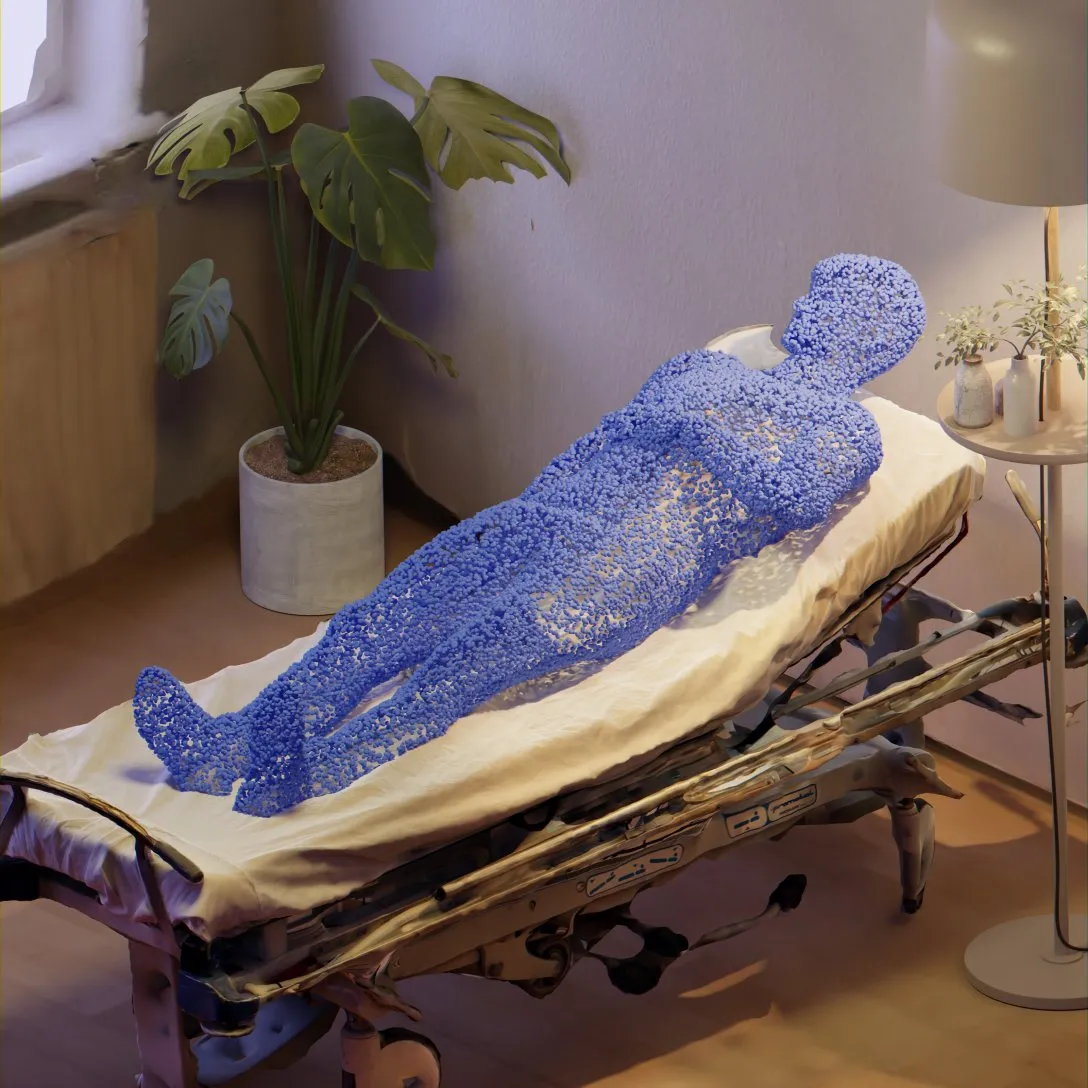
Here is the core of it. Teton installs a single optical sensor in a room. On-device, next to that sensor, a small computer runs computer vision that interprets what it sees - a person sitting up, swinging their legs over the bed's edge, standing, listing sideways. The company builds this into what it calls a "digital twin" of the room: a live, three-dimensional model of movement and posture. What it does not do is store the video. Staff never open a feed and watch a resident. As Teton puts it, the sensor and computer "autonomously understand what the sensor sees, without anyone having access to video material."
That single design choice is why Teton gets installed at all. Privacy officers can approve a system that keeps no footage. Families can accept a monitor that produces alerts, not recordings. And because the processing happens on the edge rather than streaming to a server somewhere, there is simply no tape to leak, subpoena, or hack. The company has now logged more than 10 million hours of in-room monitoring this way.
The resultsWhat actually happens in the rooms
The numbers Teton reports are the kind that make an operator's CFO sit up. Care homes running the system report fall reductions in the range of 48% to 82%. Response time to a fall - the gap between the floor and the nurse - drops by as much as 96%. Because staff no longer have to physically open a door every hour to check on a sleeping resident, nighttime workload falls by about a quarter, and residents, undisturbed, sleep roughly 21% better.
The retention figure is the sleeper. In a sector defined by burnout and turnover, staff who feel less overwhelmed on the night shift tend to stay. One care-home worker put it plainly in a testimonial: "I think it's brilliant, our falls have decreased by 83%, it's changed the way we work." Teton frames the whole product not as surveillance of residents but as backup for staff - a second set of eyes that never gets tired at 4am.
Shifting care from reactive to predictive changes the equation.
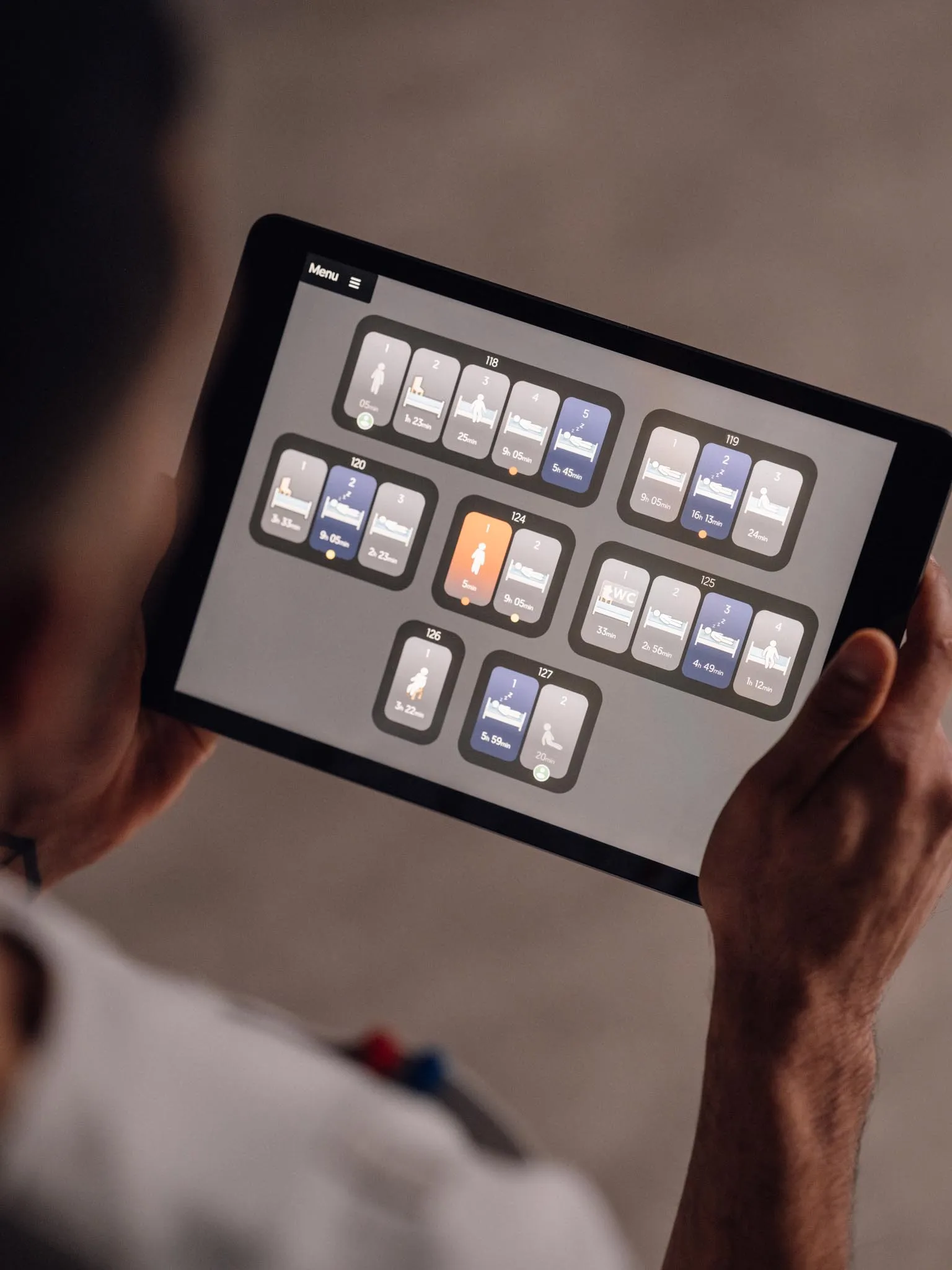
Mikkel Wad Thorsen, CEO & Co-founderHow it worksFrom one sensor to a night nurse's dashboard
The foundersA lawyer and an AI researcher walk into a nursing home
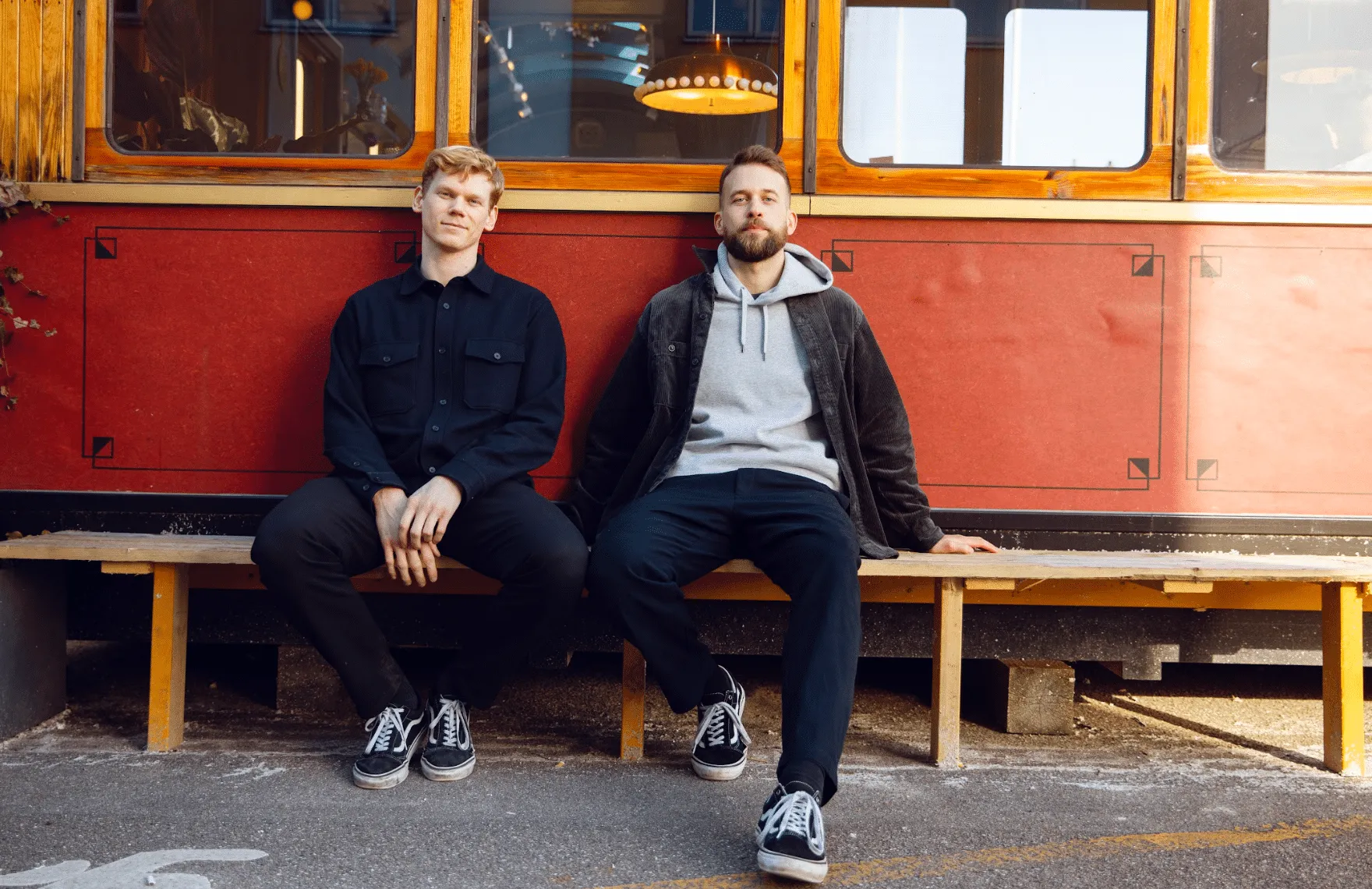
Teton's two founders make an odd pair on paper. CEO Mikkel Wad Thorsen studied law before switching to engineering - a background that turns out to be useful when your entire product lives or dies on privacy regulation. CTO Esben Klint Thorius came the other way, with an MSc in Human-Centered Artificial Intelligence from the Technical University of Denmark. One learned the rules; the other learned the models. Between them, they picked a market that most AI founders avoid: the unglamorous, heavily regulated, chronically understaffed world of elder care.
Their thesis has a name inside the company: "deflationary" care. The argument is that quality healthcare is assumed to get more expensive forever, but AI that quietly absorbs routine observation and paperwork can bend that curve the other way - better care that costs less, not more, as the software improves. It is an unusually optimistic claim for a sector where "efficiency" is often a euphemism for cuts. Teton's bet is that the efficiency comes from the machine doing the watching, not from fewer nurses doing more.
The money$20M to cross the Atlantic
In September 2025, Teton closed a $20 million Series A led by Plural, the European firm that also led its seed round, with Bertelsmann Investments, Antler Elevate, Nebular, and follow-on money from PSV Tech. That brings total funding to around $25.3 million, on the back of a 2023 seed of roughly $5.3 million. Between the two rounds, the company says annual recurring revenue grew 13x.
The round is explicitly a war chest for the United States. CEO Thorsen has said Teton expects to be live in 10 US states by the end of the year, running pilots with major American senior-living asset owners and aiming to eventually serve hundreds of thousands of residents. The company pegs its total addressable market at roughly $220 billion across the US, Europe, and Asia, and pitches operators on a 5x return on investment within the first year of installation.
The computer sees everything. The humans see nothing but the signal - and that is exactly what gets it through the door.
The Teton design principle, in plain termsThe edgeWhy not just buy a webcam?
Plenty of companies point cameras at patients - SafelyYou, Oxevision, Sensi.ai, and a field of "virtual sitting" vendors all compete for the same wards. Teton's differentiation is less about seeing more and more about keeping less. The anonymized, on-device architecture is the wedge that gets it past privacy review, and the data flywheel is the moat: working with NVIDIA, the company has built what it calls the largest point-of-care dataset in senior care, running on NVIDIA's edge hardware. More rooms produce more anonymized movement data, which sharpens the models, which sells more rooms. The traditional alternatives - bed mats, pull-cord alarms, hourly manual rounds - do not get smarter with scale. Teton claims to.
Where it fitsA quiet answer to a loud crisis
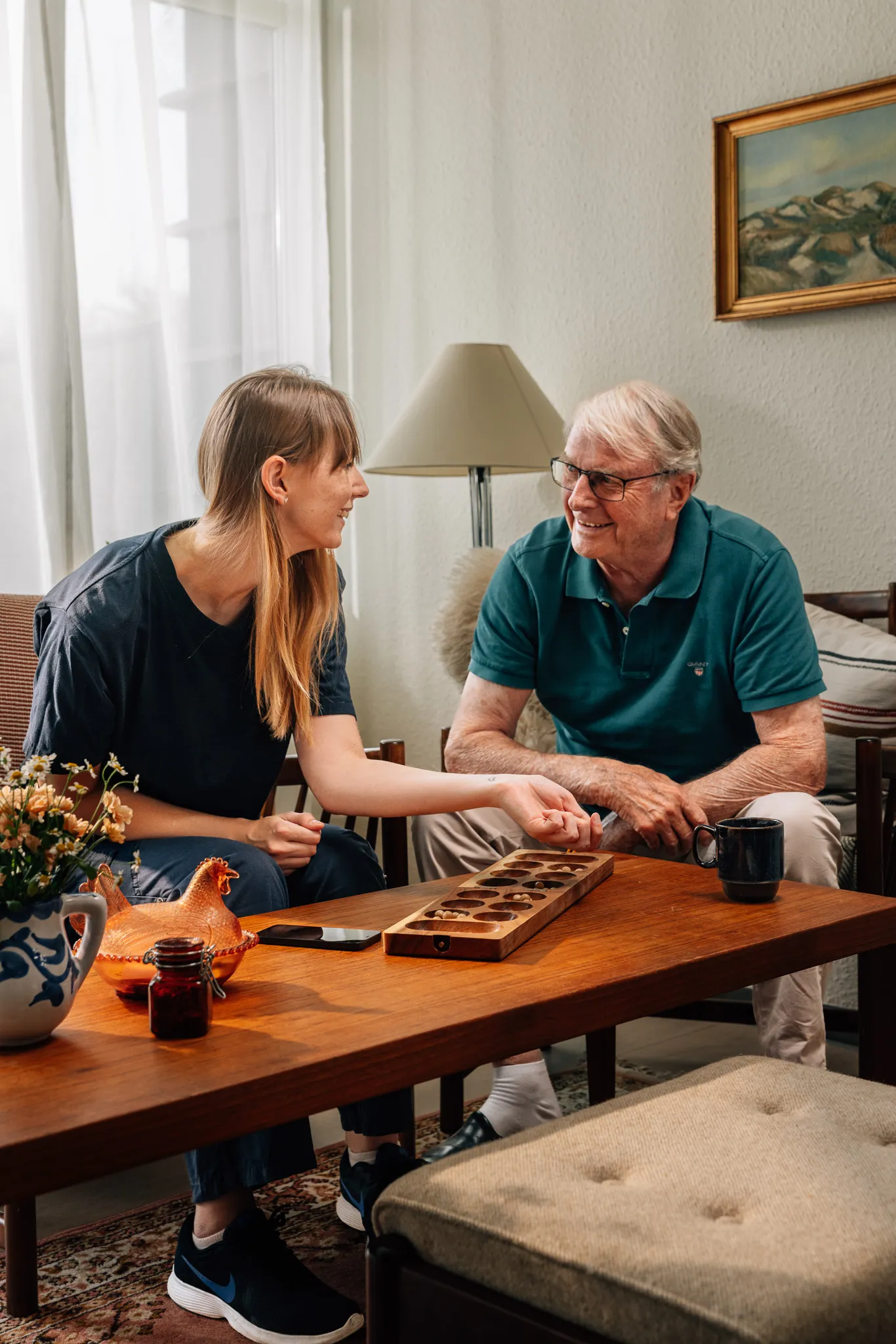
The care-labor shortage is not a future problem; it is the defining constraint of the sector right now, across Denmark, the UK, and the US alike. Teton's customers - among them All Seasons Residential Senior Living, VitaCare Living, Sagora Senior Living, HC-One, Cedar Care Homes, and a set of Danish municipalities and hospitals - are not buying novelty. They are buying coverage they cannot hire. Around 10,000 managers and care staff now use the system. Whether Teton becomes the default layer for that coverage, or one of several, will be decided in American nursing homes over the next couple of years. For now, its most persuasive argument is also its strangest: the safest camera in the building is the one nobody can watch.