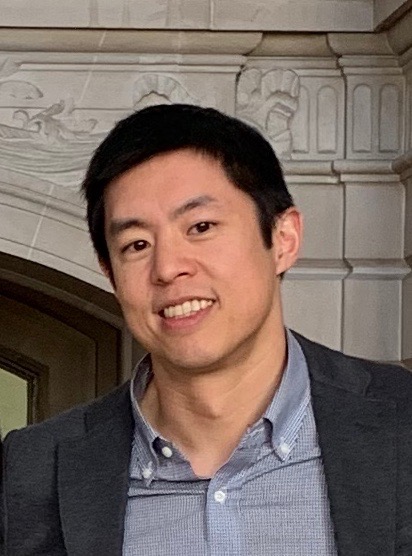
The Story
The man who keeps showing up at the start of things
In August 2012, a press release announced that AdMob's senior manager Herman Yang was joining MoPub as VP of Product - just as MoPub had grown its publisher base by 24 times in a single year. That timing was not a coincidence. Yang has a pattern: he walks into categories right before they explode, and he builds the infrastructure to handle the blast.
AdMob. Google. MoPub. Twitter. AppLovin. Moloco. Each stop a wave. Each wave bigger than the last. And now, at Upscale AI, Yang is betting that streaming television is about to do to performance advertising what smartphones did in 2010: collapse the distance between creative production, media buying, and measurable outcomes into one fast, accessible loop.
The setup for that bet is unusually clean. Streaming audiences have reached scale. Generative AI can produce professional video in minutes. Machine learning can optimize toward purchases in real time. What was missing was someone who had worked inside all three of those categories, understood the gaps between them, and had the technical depth and the business sense to close the gap. That's the job Yang gave himself.
With streaming platforms like Netflix, Amazon, Disney, and even Walmart (Vizio) going all-in on advertising, we believe it's time for a new generation of AI-native tools that help brands meet this moment. Upscale Studio is our answer: a full-stack creative and media engine for streaming video that's designed from the ground up for performance marketers.
- Herman Yang, CEO & Co-founder, Upscale AI
Career Arc
Stanford code, Harvard strategy, and fifteen years of pattern recognition
Yang's path reads like a deliberate tour of every major infrastructure layer in digital advertising. He started with a B.S. in Computer Science from Stanford - the technical foundation. Then an MBA from Harvard Business School - the commercial translation layer. Then the tour began.
He joined AdMob, the mobile advertising pioneer, when mobile advertising was still a punchline. Then Google bought AdMob for $750 million, and mobile stopped being a punchline. Yang moved to MoPub, the mobile ad serving platform, as VP of Product in 2012 - meeting Kevin Weatherman, who would become his Upscale AI co-founder a decade later. Twitter acquired MoPub. AppLovin eventually acquired that. The pattern repeats.
After MoPub, Yang moved through Facet Data (Chief Strategy Officer), co-founded Chatgrid, and eventually landed at Moloco as Head of Cloud Enterprise - Moloco being one of the most technically sophisticated ML-driven performance advertising companies in existence. That's where he watched the same dynamics that rewired mobile advertising beginning to stir in streaming TV: the audience scale was arriving, the creative tooling was improving, and nobody had built the right full-stack platform to collapse it all together.
He had seen this movie before. He decided to direct the sequel.
Failure is data. Campaigns don't always work, creative doesn't always perform - but the insights they generate often lead to that next performance unlock.
- Herman Yang
The Company
Upscale AI: the streaming TV ad machine that didn't exist until now
The core insight behind Upscale AI is simple and inconvenient: streaming TV advertising was still operating like it was 2005. Long production timelines. High creative costs. No performance feedback loop. Brands with $5,000 to spend on ads couldn't touch it. Brands with $50,000 to spend couldn't measure it. And everyone was buying blind.
Upscale Studio, the company's flagship product, eliminates all three problems simultaneously. The platform ingests a brand's existing social and website assets, uses a stack of AI tools - OpenAI's Whisper for transcription, Google's Gemini for generation, ElevenLabs for voice - and produces TV-quality video creative in minutes. Then it places that creative programmatically across Netflix, Amazon Prime, Disney+, and other streaming platforms, using proprietary ML models to optimize for actual outcomes: purchases, sign-ups, new customers.
The numbers are not subtle. 95% cost savings in creative production (from $10,000 to roughly $500 per spot). 85% faster campaign launches (from 6-7 weeks to 6 days). 4x ROAS improvements on early campaigns. Clients like Lalo, Branch Furniture, DudeRobe, and KitNipBox are already in.
The founding team is not a group of first-timers. Seth Yates founded an early ML-driven programmatic DSP. Mike Chang led product at MNTN, one of the first serious CTV buying platforms. Kevin Weatherman has been in performance advertising longer than most of the industry has existed. And Herman Yang has been in every major paradigm shift for fifteen years. The team has collectively been through 12 startup founding roles, 8 M&A transactions, and 4 IPOs. They are not learning the market. They built the market.
Herman Yang was at AdMob before Google bought it. At MoPub before Twitter bought it. The track record on picking the right train before it departs is extraordinary.
Philosophy
On failure, speed, and the final unlock
Yang's operating philosophy has a particular quality: he refuses to treat bad outcomes as bad news. In the M12 founders interview, he described his approach to campaigns that underperform: "failure is data." Not a setback. Not a reflection of the product. A data point. The next performance unlock is usually hiding in the campaign that didn't convert.
He's built Upscale AI's culture around five values that feel unusually concrete for a startup: Accountable, Transparent, Customer Driven, Collaborative, Resilient. These aren't aspirational brand words. They are a checklist derived from watching what actually kills young companies - and what keeps the ones that survive honest with themselves and with the brands depending on them.
On the market itself, Yang has a specific frustration: the streaming platforms are not moving fast enough. "I'd love to see more speed of innovation - especially from the streaming platforms themselves." That sentence contains his entire business model. He isn't waiting for Netflix to build the performance advertising layer. He's building it himself, and placing it on top of every streaming platform simultaneously.
The aspiration is direct: Upscale AI becomes what Facebook Ads Manager became for social advertising. The default. The infrastructure. The place you go when you want to reach a streaming audience and actually measure whether it worked. Yang has seen this script play out in mobile. He knows how the second act goes.