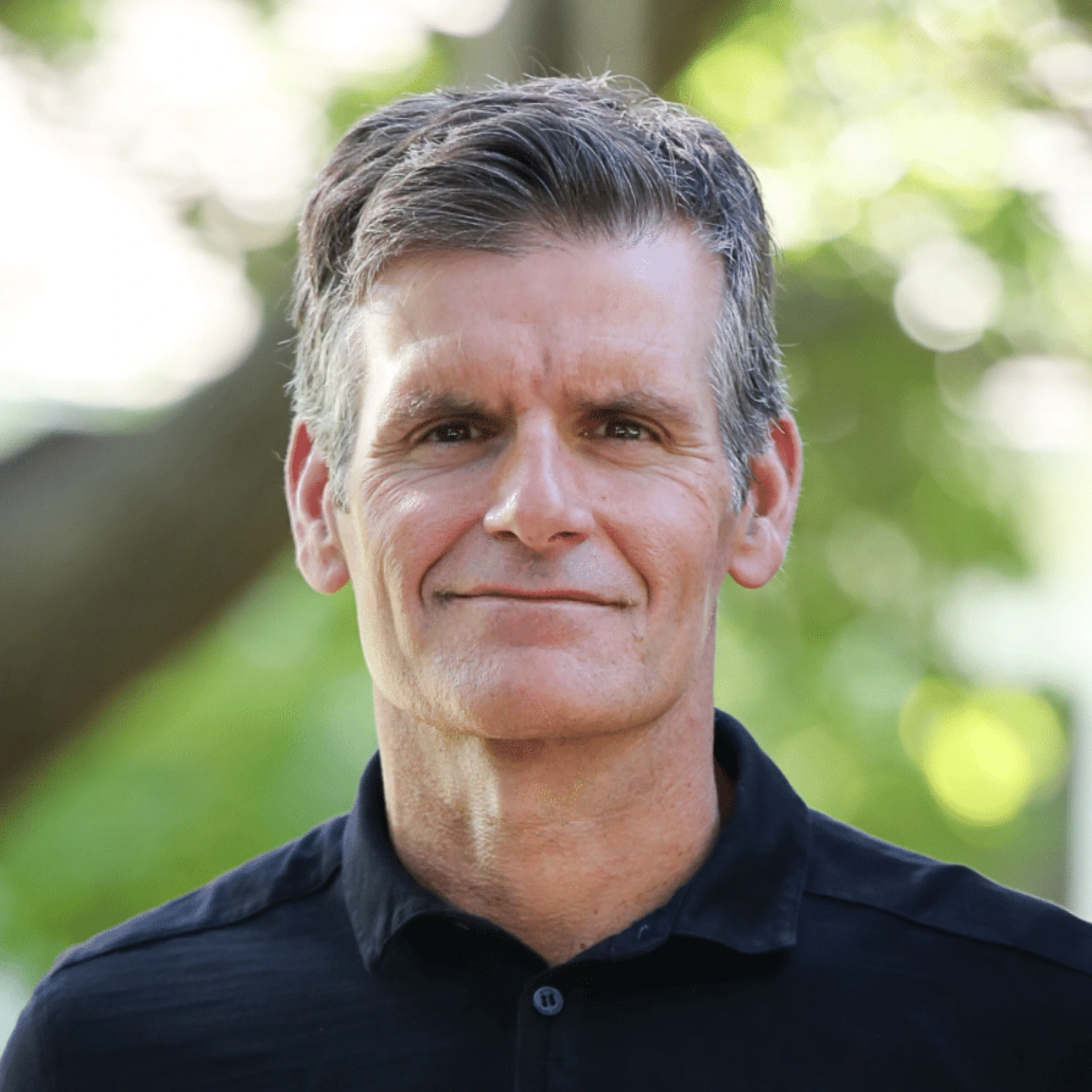
Dennis Woodside, CEO of Freshworks
Profile  /  Executive  /  SaaS & AI

Dennis
Woodside

CEO & President, Freshworks  |  Menlo Park, California

He qualified for the Ironman World Championship in Kona and still ran one of Silicon Valley's most disciplined product companies. A Cornell rower turned Stanford lawyer turned McKinsey consultant turned Google SVP turned Motorola CEO turned Dropbox COO turned Impossible Foods President - and now the person steering 75,000 companies into the AI era at Freshworks.

Freshworks CEO SaaS AI-First Enterprise Software Ironman NASDAQ: FRSH
Customers worldwide
75K
Companies using Freshworks products - from startups to global enterprises
Ironman finishes
15+
Personal best of 9:22 at Arizona 2016. Qualified for Kona World Championship.
Freshworks net income (2025)
$191M
First full year of profitability under Woodside's leadership

The operator who keeps picking hard problems

In 2003, Dennis Woodside's colleagues told him he was making a mistake. The dot-com crash had scorched Silicon Valley, and joining a 1,000-person search company called Google felt like bad timing. He joined anyway. "Sometimes the people around you are biased by the experiences they've had," he said later.

That instinct - trusting conviction over consensus - has been the constant across a career of deliberate reinventions. Nine years at Google building out EMEA, opening 13 international offices. Then CEO of Motorola Mobility when Google bought it for $12.5 billion. Then COO of Dropbox, where he watched the revenue counter climb from $250 million to $1.3 billion before ringing the bell at the Nasdaq in 2018. Then President of Impossible Foods, betting on plant-based protein. Then, in September 2022, Freshworks.

The pattern isn't random. Each move takes Woodside somewhere genuinely different - a new industry, a new problem, a new stage of company. What travels with him is the operational rigor of a lawyer turned McKinsey partner, the sales instincts of someone who built one of the world's largest enterprise sales organizations, and the physical discipline of someone who crosses Ironman finish lines as a hobby.

If you hired a mercenary, it didn't work. If you hired a missionary, it worked really well.

- Dennis Woodside, on building great teams

He became CEO of Freshworks in May 2024, taking the helm from founder Girish Mathrubootham who transitioned to Executive Chairman. The company had a clear opportunity and a clear problem: tremendous reach - 75,000 customers in 120 countries - but uneven growth and mounting pressure from AI disruption that was about to rewrite the rules of customer service software.

Woodside's first major strategic move was to simplify. Cut the product portfolio. Focus on fewer things, faster. "Simplicity isn't a constraint. It's clarity." He made profitability a priority, not just a destination. By the end of fiscal 2025, Freshworks had reported $191.4 million in net income and $223 million in adjusted free cash flow - its first full year in the black.

Attacker. Not incumbent.

On Freshworks' Q4 2025 earnings call, Woodside offered a sentence that cut through all the enterprise software noise: "We're not the incumbent that has a lot to lose. We're the attacker who's taking share."

It wasn't bravado. It was positioning. Salesforce, ServiceNow, and SAP are the incumbents he's pointing at - platforms so deeply embedded in their customers' operations that switching costs have historically felt prohibitive. Freshworks' strategy is to make those costs irrelevant by deploying AI that delivers results in weeks, not years. The company's Freddy AI platform crossed $25 million ARR in 2025, doubled year-over-year, and hit a 5x price increase to $0.50 per interaction. The target: $100 million in AI ARR by 2028.

At Davos in January 2026, Woodside made a claim that turned heads: Freshworks customers were deflecting 50 to 60 percent of support queries through AI while simultaneously achieving higher customer satisfaction than human-only support. "AI beats humans at keeping customers happy," he said. It's the kind of line that makes the enterprise software world uncomfortable - because the data behind it is hard to dismiss.

He has also been unflinching about what AI transformation actually looks like internally. In early 2026, Freshworks announced it was cutting 500 jobs - about 11 percent of the workforce - as AI reshaped how the company operated. And in the same breath, Woodside disclosed that over half of Freshworks' code is now written by AI. Not assisted. Written.

The layoffs were not contradictory to the mission. They were the mission: a leaner company moving faster, spending less on overhead and more on product. The biggest barrier to AI at scale, Woodside argues, isn't the technology - it's the organizational complexity around data, decision-making, and willingness to change habits.

The most effective leaders focus on doing fewer things, faster.

- Dennis Woodside, one-year Freshworks reflection

What's happening now

May 2026 - Fortune
Why agile enterprises are winning the AI race - and what they did differently
Woodside makes the case that mid-market companies are actually better positioned for AI transformation than large enterprises - smaller decision-making loops, less legacy debt, faster habit change.
May 2026 - Freshworks
Freshworks restructures, cutting 500 jobs as AI reshapes operations
Over half the company's code is now AI-generated. The workforce reduction accelerates the shift toward a smaller, faster, AI-native organization.
January 2026 - Davos
Freshworks CEO at World Economic Forum: "AI beats humans at keeping customers happy"
Speaking at Davos, Woodside unveiled data showing AI agents deflecting 50-60% of support queries with higher satisfaction rates. 6,000 customers now paying for AI capabilities.
2025 - Earnings
First full year of profitability: $191.4M net income, $223M free cash flow
Freshworks achieves a milestone under Woodside's focus on simplicity, speed, and execution discipline.

From clerkship to CEO

1991
Graduates Cornell University. Two varsity letters in rowing. Grows up in Washington Crossing, Pennsylvania - the town where George Washington crossed the Delaware.
1995
Stanford Law School. Clerks for Judge Dennis Jacobs on the US Court of Appeals, 2nd Circuit. Meets his future wife Laura at Stanford.
1996-2003
Corporate law at Munger, Tolles & Olson, then McKinsey & Company. Leads strategy, technology, and media projects from the LA office.
2003-2012
Google. Ignores the skeptics. Builds out EMEA sales across 13 international offices. Leads thousands-strong teams through the 2008 financial crisis. Rises to SVP of Americas.
2012-2014
CEO of Motorola Mobility after Google's $12.5B acquisition. Described as blunt and intense. Learns the hard lessons about aligning teams on vision before demanding execution.
2014-2018
COO of Dropbox. Grows revenue from $250M to $1.3B. Leads the company to a $1B+ IPO on Nasdaq in 2018. Four years of building at a founder-led, high-velocity company.
2016-2017
Sets personal Ironman best of 9:22 at Arizona. Finishes 2nd in age group. Qualifies for the Ironman World Championship in Kona, Hawaii. Competes in October 2017.
2019-2022
President of Impossible Foods. A departure from tech - a bet on food systems and climate. Builds out the commercial operation for the Impossible Burger.
Sept 2022
Joins Freshworks as President. Begins overhauling global business operations and strategy alongside founder Girish Mathrubootham.
May 2024 - now
CEO and President. Leads the company to its first full year of profitability. Targets $100M AI ARR. Declares Freshworks "the attacker who's taking share."

Quotes worth remembering

Business software could be powerful and easy to use.

We're not the incumbent that has a lot to lose. We're the attacker who's taking share.

Simplicity isn't a constraint. It's clarity.

Speed isn't about moving recklessly - it's about removing unnecessary obstacles.

The biggest barrier to scaling AI isn't the technology itself, but organizational complexity around data, decision-making, and change management.

Sometimes the people around you are biased by the experiences that they've had.

Three career reinventions that shaped the CEO

2003-2014
Google

He joined when it was still a startup by fortune-500 standards. He left running the Americas region for one of the world's most valuable companies. In between, he built sales operations across 13 countries and learned to lead through the 2008 financial crisis. When Google bought Motorola for $12.5B in 2012, Woodside got the keys. He ran a hardware company with 20,000 employees - a very different job from managing a sales org.

2014-2018
Dropbox

"I liked the idea of helping a founder scale a business from an early stage." Dropbox was already past early stage - $250M in revenue - but it needed the kind of operational architecture that turns a fast-growing product company into a durable public business. Woodside built it. He grew the revenue to $1.3B, restructured the go-to-market engine, and in 2018 helped Drew Houston take the company public. The IPO raised over $750M.

2019-2022
Impossible Foods

The outlier. A food company. A climate bet. Impossible Foods made plant-based protein, and Woodside joined as President to scale the commercial side at a critical moment in the company's growth. Three years building a consumer brand, navigating supply chains, and convincing restaurant chains and grocery stores that the Impossible Burger was worth the shelf space. Then Freshworks called.

Things you probably don't know

🏊 His Ironman personal best of 9:22 placed him 2nd in his age group at Arizona 2016 - fast enough to qualify for the World Championship in Kona, Hawaii.
🏛️ He grew up in Washington Crossing, Pennsylvania - the exact town where George Washington crossed the Delaware River on Christmas Day 1776.
⚖️ Before tech, he was a corporate lawyer and then a federal law clerk. He clerked for Judge Dennis Jacobs on the US Court of Appeals for the 2nd Circuit.
🚣 He was a competitive rower at Cornell University, earning two varsity letters. The endurance athlete was already in there early.
🌍 He personally opened 13 international offices across Europe, Middle East, and Africa during his Google years - building one of the world's largest enterprise sales operations.
🤖 Over half of Freshworks' code is now written by AI - a number Woodside revealed publicly in 2026 as part of the company's restructuring announcement.
🐱 He has two cats at home in Atherton, California, with his wife Laura - who he met at Stanford Law School.
He trains 1-2 hours every weekday and 5+ hours on weekends. He calls endurance training his thinking time.

The unconventional foundation

A Cornell rower who went to Stanford Law doesn't sound like the prototype Silicon Valley CEO. But the detour through law and consulting gave Woodside something that most tech executives don't have: a rigorous framework for decision-making under uncertainty, combined with deep experience advising companies across industries.

After his clerkship with Judge Dennis Jacobs on the US Court of Appeals - one of the most rigorous apprenticeships in American law - he took a job at Munger, Tolles & Olson, the famously selective LA firm known for producing unusually disciplined thinkers. Two years there, then McKinsey.

At McKinsey he led strategy for technology and media clients for five years before making the move to Google in 2003. The lawyerly precision and the consultant's systems thinking never left. You can see it in how he talks about simplicity as a strategic choice, not just a design preference.

Education timeline
Cornell University
Ithaca, New York
Class of 1991
Earned two varsity letters in rowing. Grew up competing.
Stanford Law School
Palo Alto, California
Class of 1995
Met his wife Laura here. Went on to clerk for Judge Dennis Jacobs.

The numbers that matter

Annual revenue
$838M
Freshworks total revenue, heading toward $1B milestone
AI ARR target
$100M
Freddy AI revenue goal for 2028. Currently at $25M+ and growing fast.
AI paying customers
6,000+
Companies now paying for Freshworks AI capabilities
AI deflection rate
50-60% of support queries deflected by AI
Freshworks customers using AI agents are resolving more than half of all incoming support tickets without human intervention - and reporting higher customer satisfaction scores than before.
50-60%
Query deflection rate
Higher
CSAT vs human-only