BREAKING
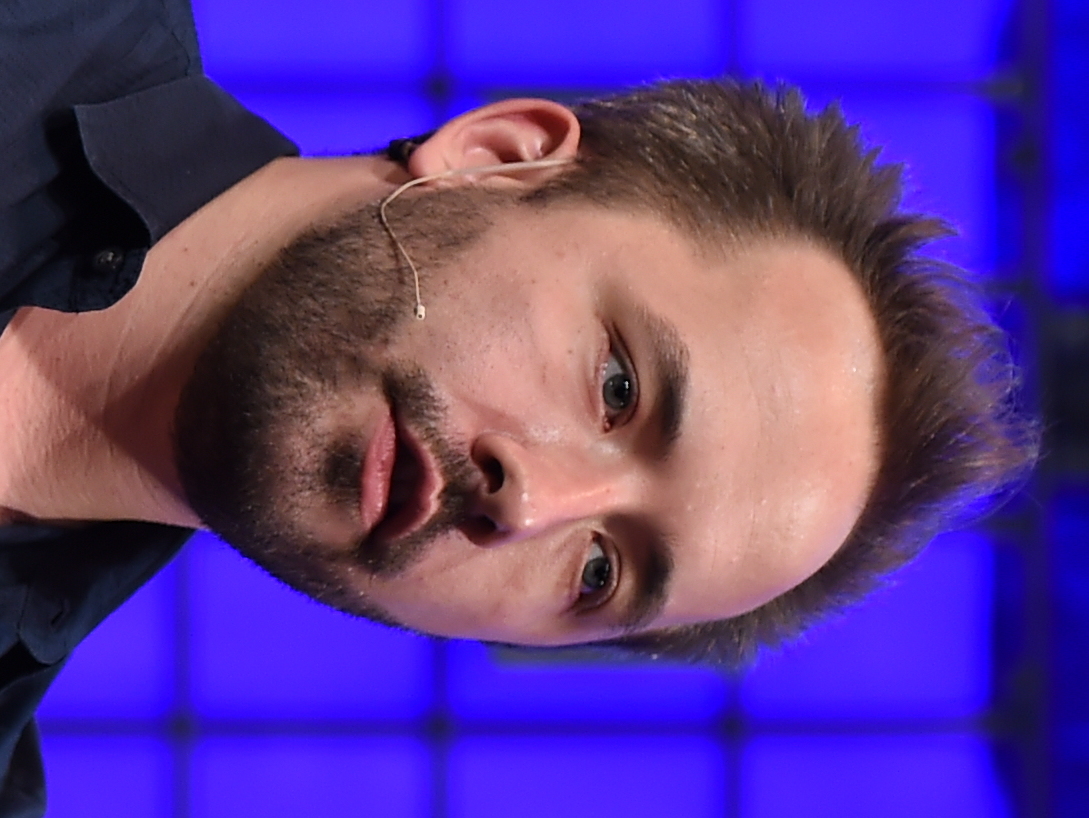
Drew Houston, Dropbox co-founder and CEO
YesPress Profile
Co-founder & CEO, Dropbox

Drew Houston

"The man who forgot his USB drive, said no to Steve Jobs, and coded his way to $12 billion - not necessarily in that order."

700M+
Dropbox users
$2.5B
Annual revenue
Age 5
Started coding
Full Name
Andrew W. Houston
Born
March 4, 1983
Hometown
Acton, Massachusetts
Education
MIT, B.S. Computer Science
Net Worth
~$2.0-2.4 Billion
Current Role
CEO, Dropbox

The Man Running the Silicon Brain

The Dropbox pitch deck from 2007 is studied in business schools now. At the time, it was a 3-minute video Drew Houston shot at 3 a.m. from his bedroom, uploaded to Hacker News and Digg, watched by insomniacs and early-adopter engineers. The beta waitlist went from 5,000 to 75,000 overnight. He never paid for the camera setup - it was whatever he had.

That instinct - solve the real problem, skip the theatre - is the through-line in everything Houston has done. He wasn't trying to build a billion-dollar company. He was annoyed about forgetting a USB drive on a Boston bus in November 2006. Four hours later, riding that same bus to New York, he had a working prototype. The company came later.

Today, Houston runs Dropbox with a kind of calm deliberateness that looks almost out of place in modern Silicon Valley, where every CEO either plays CEO-as-influencer or retreats entirely. He does neither. He still writes hundreds of hours of code every year. He practices "think weeks" - periodic retreats away from daily operations, inspired by Bill Gates. He reads extensively about business history from the dot-com era to the semiconductor revolution. His thesis: "History doesn't repeat. It rhymes."

The company he runs now barely resembles the one he founded. Dropbox 1.0 was storage. Dropbox 2.0 was a Smart Workspace. Dropbox 3.0 - the version Houston is building now - is something he calls a "silicon brain." Not a replacement for human intelligence. A complement to it. A universal organizing layer that sits on top of Slack, Google Drive, Teams, Zoom, and 100 other apps, and can actually answer questions about your work life.

He frames the problem the same way he's framed problems his whole life: with unusual specificity. "It's really hard to find and organize and share my information at work," he told audiences in 2025, "because it's scattered across all these 100 tabs." Not a manifesto about the future of AI. The actual problem, stated plainly. Classic Houston.

"What scares me the most is that both the poker bot and Dropbox started out as distractions. That little voice in my head was telling me where to go, and the whole time I was telling it to shut up so I could get back to work." - Drew Houston

Before Dropbox, Houston built a real-money poker bot. His mother thought he was going to jail. The bot roughly broke even. He had already co-founded Accolade, a profitable SAT prep company, during his MIT years. He had scored a perfect 1600 on the SAT himself. He wrote his first program at age 5 on an IBM PC that his parents let him stay up late to use.

None of this was a plan. It was a habit of mind: find a problem, build a thing, see what happens. The habit scaled. By 2008, Dropbox had its first million users. By 2012, it had a hundred million. By the time of its 2018 NASDAQ IPO - priced at $21 per share, 25 times oversubscribed, opening at $29, briefly touching a $12 billion market cap - it was one of the most successful SaaS companies in history. And Houston had been running it for 11 years already.

The Apple story is the one everyone wants to tell. In December 2009, Steve Jobs invited Houston and his co-founder Arash Ferdowsi to Apple headquarters and offered to buy Dropbox for what people believe was around $250 million. Jobs told them Dropbox was "a feature, not a product." Houston said no. He reportedly spent a significant portion of that meeting asking Jobs for career advice rather than negotiating. Jobs followed through on the threat - iCloud launched, iCloud won some users - but Dropbox didn't just survive, it became the benchmark.

Origin Story
November 2006. Boston bus. Forgot USB drive. Spent 4 hours writing code instead of sleeping. Named the resulting file "evenflow.zip" after a Pearl Jam song.
The Y Combinator Moment
Paul Graham accepted Dropbox but told Houston he needed a co-founder. Houston recruited Arash Ferdowsi, an MIT classmate so convinced by the demo that he dropped out of college within two weeks. YC gave them $15,000. It remains YC's most valuable investment to date.
The SAT Score
Perfect 1600. Houston then co-founded a profitable SAT prep company (Accolade) while in college. He is constitutionally incapable of encountering a problem without solving it.
The Giving Pledge
In 2024, Houston and his wife Erin signed The Giving Pledge, committing the majority of their estimated $2.4 billion fortune to education and entrepreneurship causes. He was 41 years old.

The Dropbox Scorecard

700M+
Registered Dropbox users worldwide
$2.5B
Annual revenue as of 2025
41%
Non-GAAP operating margin, late 2025
25x
Times the 2018 IPO was oversubscribed
$1B
Annual free cash flow generated
~75%
Voting power held by Houston via dual-class shares

How He Actually Operates

There is a version of the Drew Houston story that is just a greatest-hits reel: coding prodigy, MIT grad, YC alumni, IPO billionaire, Meta board member. That version is accurate and almost entirely useless for understanding how he thinks.

The more useful version starts with his reading list. Houston models his leadership on Andy Grove's "strategic inflection point" theory and Bill Campbell's coaching philosophy - both men who ran companies through moments where everything they had built could become worthless if they didn't recognize the shift. He keeps returning to Apple's multi-era reinvention, from Mac to iPod to iPhone, not because it's inspiring but because it's instructive. When is it time to make a company unrecognizable?

He answers the question with what he calls "healthy paranoia." Not anxiety - he has done significant work on separating his personal identity from Dropbox's performance, using therapy, coaching, and the Enneagram framework. Healthy paranoia is strategic: constantly probing for what you don't know you don't know. His mentors are Peter Drucker, Andy Grove, Bill Campbell - all people who built lasting organizations through inflection points.

The AI pivot at Dropbox is that inflection point. Houston started announcing the repositioning years before the current AI wave crested. In 2020, he set Dropbox on a "Virtual First" path, making 90% of employees fully remote - not in response to COVID but because he believed it was structurally the right way to build. When other tech CEOs started mandating office returns in 2023 and 2024, Houston called it "mashing the go-back-to-2019 button" and said it created "really toxic relationships" with staff. He kept Dropbox remote.

The parallel bet was Dropbox Dash - an AI-powered universal search engine that works across Dropbox, Slack, Google Drive, Teams, Zoom, and 100+ other apps. By early 2026, the "Answers" feature uses generative AI to respond to complex work questions using context from across a user's entire digital workspace. Houston describes this as the product that will make "Dropbox 1.0 look like a footnote."

To get there, Dropbox laid off 16% of its workforce in 2023 and 20% in 2024. These were real costs, not just numbers. Houston has been public about the difficulty of those decisions. What he has also been consistent about is why he made them: not to cut costs for a quarter, but to rebuild the company around a fundamentally different architecture. He is betting that the AI workspace is a bigger opportunity than cloud storage ever was.

"The most important thing for a founder is the rate of learning. You have to learn things faster than the company is growing." - Drew Houston
Virtual First
In April 2020, Houston made Dropbox 90% remote - not as emergency response but as deliberate strategy. Dropbox offices became optional "studios" for collaboration. He has maintained this against significant industry pressure.
The Code Habit
As CEO of a 3,000+ person company with $2.5B in revenue, Houston writes hundreds of hours of code per year. His reason: "The way I really understand any technology is getting under the hood. It lets me live a couple of years in the future."
Think Weeks
Inspired by Bill Gates, Houston takes periodic retreats from daily operations to maintain strategic clarity. He describes the alternative as "firefighting mode" - reactive, underpowered, unable to see inflection points coming.
The Houston Quotebook

The happiest and most successful people I know don't just love what they do, they're obsessed with solving an important problem. They remind me of a dog chasing a tennis ball: their eyes go a little crazy, the leash snaps and they go bounding off.
MIT Commencement Address, 2013
Culture is what happens when the CEO isn't in the room. You have to 'code' it into the company's DNA.
On building Dropbox culture
One misconception is that entrepreneurs love risk. Actually, we all want things to go as we expect. What you need is a blind optimism and a tolerance for uncertainty.
On entrepreneurship
What worked at 10 people will break at 100, and what worked at 100 will break at 1,000.
On scaling companies
We're building this silicon brain that's not really a replacement for the human brain, but it's a complement.
On Dropbox's AI vision, 2025
I want to be building things like Dash that sort of make Dropbox 1.0 look like a footnote.
On Dropbox's future, 2025

The Long Game

1988
Starts coding at age 5 on an IBM PC. Parents let him stay up late.
~1998
Works at an industrial robotics startup at age 15. Learns what real engineering looks like.
2001
Enrolls at MIT for Computer Science. Scores a perfect 1600 SAT. Founds Accolade, an online SAT prep company, while still a student.
2006
Builds a real-money poker bot. Briefly works at HubSpot. Forgets a USB drive on a Boston bus. Builds Dropbox on the ride home.
2007
Co-founds Dropbox with Arash Ferdowsi. Accepted into Y Combinator with $15,000. Viral demo video changes everything overnight.
2008
Dropbox publicly launches. $1.2M seed from Sequoia. Named one of BusinessWeek's "Most Promising Under 30."
2009
Declines ~$250M acquisition offer from Steve Jobs/Apple. Spends much of the meeting asking Jobs for career advice instead.
2012
Dropbox hits 100 million registered users. Fortune 40 Under 40. MIT Technology Review TR35.
2013
Delivers MIT commencement address - "Finding Your Tennis Ball." Co-founds FWD.us with Mark Zuckerberg.
2018
Dropbox IPO on NASDAQ at $21/share. 25x oversubscribed. Day-one market cap exceeds $8B.
2020
Launches "Virtual First" remote model. Joins Meta's Board of Directors.
2023-2024
Launches Dropbox Dash with $50M AI fund. Two rounds of layoffs to accelerate AI pivot.
2024
Signs The Giving Pledge with wife Erin, committing majority of $2.4B fortune to philanthropy.
2026
Dropbox Dash 2.0 "Answers" - generative AI across user's entire cloud ecosystem. The silicon brain is taking shape.

The Honors

TIME 100 Most Influential
Fortune 40 Under 40 (2012)
Forbes 30 Under 30
MIT TR35 Innovator
TechCrunch Crunchie 2014
Economist Innovation Award 2015
BusinessWeek Top 30 Under 30
The Giving Pledge (2024)
MIT Commencement Speaker 2013
Meta Board Member
YC Alumni Hall of Fame
NASDAQ IPO 2018
"Give yourself the freedom to make it an adventure, and go ever upward." - MIT Commencement Address, 2013

Fun Facts

01
Coded his first program at age 5. On an IBM PC. Parents let him stay up late. It escalated quickly.
02
Perfect 1600 on the SAT, then immediately built a profitable SAT prep company to help others. Classic overachiever move.
03
Built a real-money poker bot in college. It roughly broke even. His mother thought it was illegal. It wasn't.
04
Turned down Steve Jobs. Then reportedly spent much of the meeting asking Jobs for personal career advice instead of negotiating.
05
Dropbox's original name was Evenflow, Inc. - after a Pearl Jam song. Renamed in 2009. Better call.
06
His 3am bedroom demo video grew the Dropbox waitlist from 5,000 to 75,000 overnight. No marketing budget. Just good engineering.
07
Still personally writes hundreds of hours of code per year as CEO of a $2.5B business. Calls it "living a couple years in the future."
08
Controls ~75% of Dropbox's voting power through dual-class super-voting Class B shares. Calls it "the ability to focus on the long term."
09
Practices "think weeks" inspired by Bill Gates - periodic retreats to escape firefighting mode and maintain strategic clarity.
10
His MIT commencement speech "Finding Your Tennis Ball" introduced the "30,000 days" framing for a human life. Now widely referenced in startup culture.
11
Prefers the Enneagram over Myers-Briggs. Credits therapy and coaching as core parts of his leadership practice. Not typical CEO disclosure material.
12
Committed the majority of his ~$2.4B fortune to philanthropy via The Giving Pledge in 2024. Education and entrepreneurship. He was 41.

Finding Your Tennis Ball

In June 2013, Drew Houston stood in front of MIT's graduating class and gave a commencement speech that people still cite. The core metaphor was the tennis ball: the happiest people he knew weren't just passionate about what they did - they were obsessed. They reminded him of a dog chasing a tennis ball, eyes going a little crazy, leash snapping, bounding off.

The framing he built around it was the "30,000 days" concept: that's roughly how many days a human life contains. He told the graduates to figure out what their tennis ball was - the problem they couldn't help chasing - and to organize their life around it.

He also gave them three things he wished someone had told him: find your tennis ball, join a tribe of people who make you better, and always be building something. The speech worked because it wasn't a graduation speech. It was Houston telling his own story - the poker bot, the USB drive, the 3am demo video - and asking the graduates to notice their own equivalent moments.

The "30,000 days" framing has since spread across startup culture in a way that most commencement speeches never do. It shows up in blog posts, podcasts, and pitch decks. It survived because it's specific and mathematical. Not "live your best life." Just: you have about 30,000 days. Use them.

30K
Days in a human life
How you spend them is the only question that matters.

Building the Silicon Brain

There are roughly 700 million people with Dropbox accounts. Most of them use it as a place to put files. Houston is trying to make them use it as a place to think.

Dropbox Dash is the product. It started as a universal search tool - type a query, get results from Dropbox, Slack, Google Drive, your email, your calendar, your Zoom recordings. By early 2026, it had grown into something more ambitious: a generative AI "Answers" layer that doesn't just find relevant files but synthesizes them into actual responses to work questions.

Houston describes the underlying problem as information fragmentation. The average knowledge worker in 2025 has their data scattered across dozens of applications. Finding anything requires knowing where to look, which requires remembering where it was put, which requires time nobody has. He wants Dropbox Dash to make that cognitive overhead disappear.

The analogy he keeps returning to is the calculator: it didn't replace mathematicians, it made them vastly more capable. The "silicon brain" is his version of that - not a replacement for human judgment, but a tool that removes the friction between what you want to do and the information you need to do it.

To fund the build, Houston launched a $50M AI venture fund in 2023. To focus the workforce, he made the difficult decision to cut 36% of headcount across 2023 and 2024. Dropbox's non-GAAP operating margins reached 41% in late 2025. The company generates roughly $1B in annual free cash flow. Houston has the resources and the runway.

Whether the bet pays off is the open question. Microsoft, Google, and Apple all have AI workspace products now. Houston's counter-argument is the same one he's been making since 2009: his competitors are distracted by platform scope. He can go deeper on the specific problem - organizing and surfacing knowledge work - than any of them will. It worked once. He is betting it works again.

Dropbox Dash
AI-powered universal search across Dropbox, Slack, Google Drive, Teams, Zoom, and 100+ apps. The "Answers" feature uses generative AI to respond to complex work queries using context from a user's entire digital workspace.
The $50M AI Fund
Launched June 2023 alongside Dropbox Dash. Invests in AI startups building productivity and knowledge-work tools. Houston placing multiple bets on the AI workspace thesis.
The Apple Parallel
Houston frames Dropbox's AI pivot explicitly through Apple's multi-era reinvention: Mac to iPod to iPhone. Each transition made the previous version look like a footnote. That's his stated goal for Dropbox.
"History doesn't repeat. It rhymes." - Drew Houston's operating philosophy

Notable Connections

Arash Ferdowsi
Dropbox co-founder and former CTO. Met Houston at MIT. Dropped out of college in two weeks after seeing the demo. One of Silicon Valley's most famous co-founder pairings.
Paul Graham
Y Combinator founder. Accepted Dropbox but required Houston to find a co-founder. That condition produced the Ferdowsi partnership. Graham later called it YC's most valuable investment.
Steve Jobs
Made a ~$250M acquisition offer in 2009 and told Houston Dropbox was "a feature, not a product." Houston declined, asked Jobs for career advice, and built a $12B company anyway.
Mark Zuckerberg
Co-founded FWD.us immigration reform advocacy org with Houston in 2013. Houston also serves on Meta's Board of Directors.
Sequoia Capital
Led Dropbox's $1.2M seed round in 2008. One of Silicon Valley's most successful seed investments in the cloud era.
Andy Grove / Bill Campbell
Houston's cited intellectual mentors (through their writing and legacy). Grove's "strategic inflection point" theory and Campbell's coaching philosophy shape how he runs Dropbox.

Links & Sources