Daniel Cane’s first lesson in business came with an ingredient bill. As a boy selling lemonade, he discovered that he could sell the packets themselves, offering convenience and a price his customers liked. His parents supplied the stock. Then they stopped. The enterprise had encountered a difficulty that would be familiar to any founder: someone had to pay for the inputs.
Years later, a different kind of supply problem appeared at Cornell. Professors had materials to distribute. Students needed access. Cane could write software. A modest arrangement between a student and a teacher began to acquire customers, colleagues and a corporate identity. Eventually, it acquired the name Blackboard.
Today, Cane is co-founder and co-CEO of ModMed, based in Boca Raton. His career connects two software companies with a less conspicuous undertaking: helping students find room to experiment. Follow the money back toward classrooms, and a pattern appears. He keeps returning to the conditions that allowed him to begin.
A customer at the front of the classroom
Before there was a platform, there was a job to do. Cane’s early CourseInfo work involved digitizing course material and making class websites. Professors wanted more of them than he could comfortably produce. He explained that the work would have to cost something. They were willing to pay.
This is an unusually useful detail in a founder’s origin story. A paying customer had arrived before a polished theory of the market. Cane recruited friends as demand grew. The group built tools to automate the work, then saw that those tools could be licensed to other universities. A service they performed themselves was becoming software other people could operate.
He later described his Blackboard responsibilities as technology and research and development. The initial business joined forces with another company in Washington, D.C. The path from class websites to a larger enterprise depended on colleagues who could carry different parts of the work. Even the early story has a crowded cast.
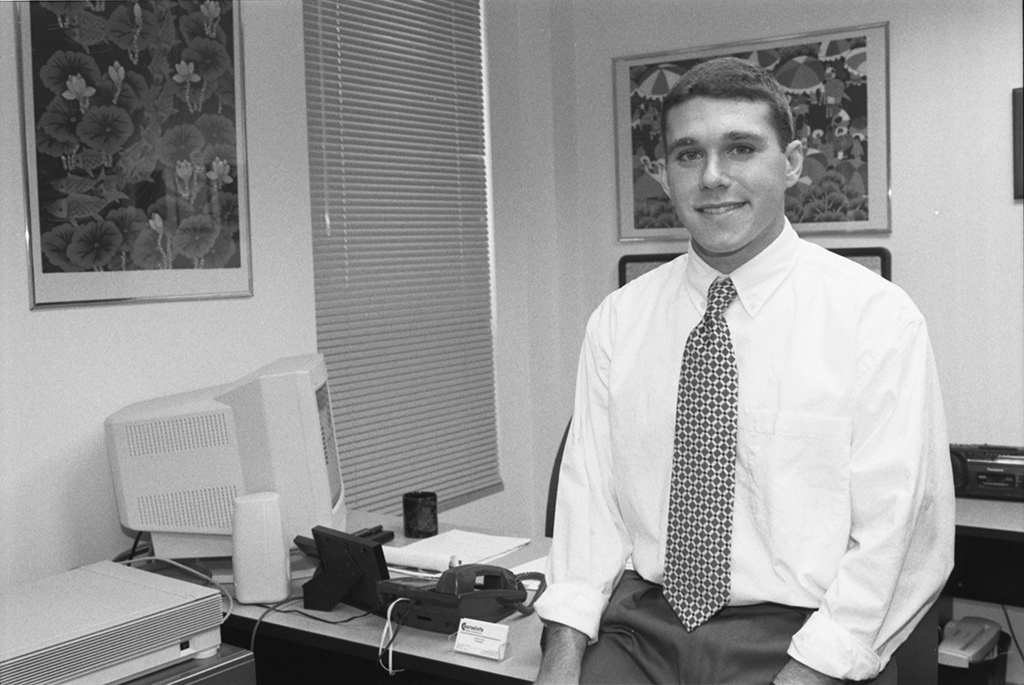
The housemates had other offers
The familiar version of a startup story gives one person an idea and lets everyone else enter after the applause. Cane assigns the risk more generously. His housemates had jobs waiting in consulting, computer science and materials science. They chose the business instead. Their decision, he has said, changed his own path.
On June 18, 2004, Blackboard went public on Nasdaq. For Cane, the occasion mattered because the equity held by employees and friends became tangible. The people who had accepted uncertainty could see what their choice had produced. A stock-market ceremony can look like financial theatre from a distance. Up close, in his telling, it was a reckoning with promises made to other people.
That emphasis helps explain a line he later posted publicly: “there is no such thing as a solo entrepreneur”. It is a useful corrective to the portrait of the founder as a person who somehow did the hiring, programming, selling and worrying entirely alone. Cane’s preferred account leaves room for the housemates.
The sale was the quiet part
Blackboard sold for $1.6 billion in 2011. The number supplies an obvious ending, complete with enough zeros to discourage further questions. Cane’s own description of an exit was rather less triumphant. “It’s very anticlimactic,” he said in 2012.
He was interested in the people and culture accumulated while building. In the same conversation, he pointed out that several of his fellow founders had gone on to lead other companies. The experience had created people capable of starting again. Selling a business could settle a transaction without exhausting that capacity.
There is something reassuringly awkward about an entrepreneur refusing to make the sale the emotional climax. It complicates the tidy success story. If the absorbing part is building, a completed deal leaves a practical question hanging in the room: what will occupy tomorrow? Cane had already begun answering it. ModMed was founded in 2010, before Blackboard’s sale.
South Florida, with another company to build
Cane grew up in Lake Worth and attended Lake Worth High School. His later return to South Florida put his next ventures near the community he knew. ModMed joined the Research Park at Florida Atlantic University in 2012. The park subsequently recognized him with its Distinguished Entrepreneur Award for 2018.
The connection was useful in both directions. Cane promoted the park’s relationships with faculty and students, and the value of putting researchers and entrepreneurs within reach of one another. His career had already supplied a convincing example of what can happen when a university becomes a company’s first working environment.
There was an intervening venture, too. After leaving Blackboard in 2007, he started Kadoo, a private video-cloud company. It raised $5 million and was sold in 2009. That chapter makes his route less like a single leap between two familiar company names. He tried another kind of product, assembled another business, and kept moving.
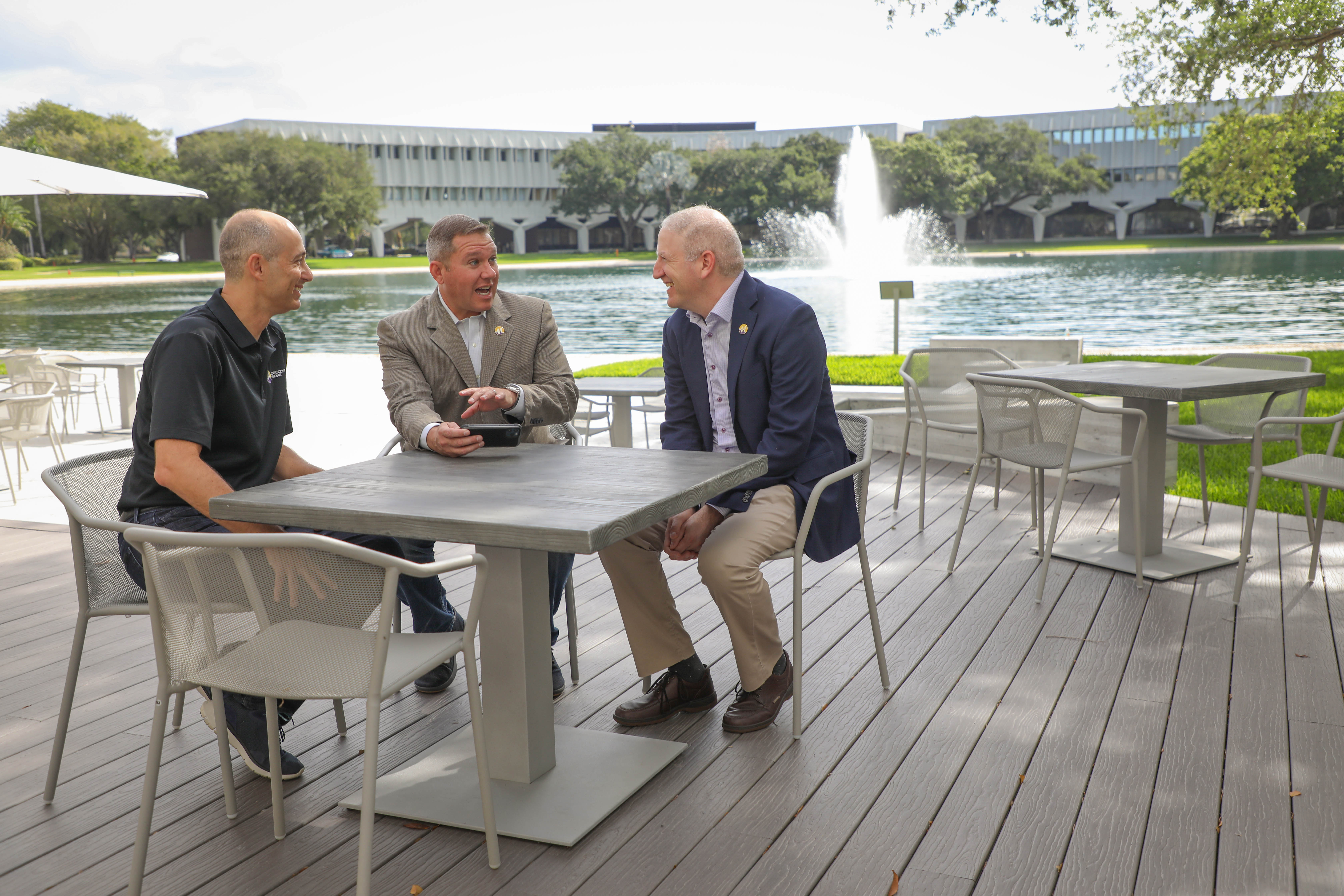
Two CEOs, one acknowledgment
Cane founded ModMed with Michael Sherling. In February 2024, the company appointed Joe Harpaz co-CEO alongside Cane. Harpaz had been president and chief operating officer since 2018. The announcement formalized a contribution already extending beyond his original responsibilities.
Cane praised Harpaz’s operational experience and his commitment to helping colleagues. The promotion offers a concrete example of how Cane’s remarks about shared work translate into an organization chart. Another executive’s expanding contribution was recognized with expanding authority.
A title cannot tell us how every decision gets made. It can tell us that Cane is prepared to share the most visible one. At ModMed, his current title contains two reminders of collaboration: co-founder and co-CEO. For someone who repeatedly returns to the people around him when describing success, the wording is apt. The company’s leadership structure gives that preference a public form.
A million dollars, pointed toward the beginning
In April 2018, Daniel and Debra Cane gave $1 million to A.D. Henderson University School and Florida Atlantic University High School. Their gift established the Cane Institute for Advanced Technologies. Its remit included research, education and technology transfer.
The educational ambitions were specific. Students would explore fields including robotics, cybersecurity, autonomous vehicles, automation and artificial intelligence. These are subjects in which an idea becomes more interesting when someone can build and test it. The gift helped provide a setting for that work before students had even reached university.
The location matters. This was a contribution to public education in Cane’s own region. Having built a business while surrounded by Cornell’s people and facilities, he was helping create opportunities much earlier in a student’s life. The parallel does not require every pupil to become a founder. Access to tools and a serious problem to investigate are worthwhile beginnings in themselves.
“Entrepreneurs are built, not born.”
Daniel Cane
Buying students some time
At Cornell, his support became the Cane Entrepreneurship Scholars program. Announced in 2021, it combined financial help, mentoring and practical learning. Cane had been a full-time student with two jobs while building the business that became Blackboard. The program addressed a constraint he understood firsthand: a promising venture still has to compete with the rest of a student’s day.
He also wanted to take part. Faculty collaborator Robert Karpman described Cane’s interest in contributing experience, relationships and time alongside the funding. Mentorship would involve examining what came next, how a business might grow, and which obstacles needed attention. The encouragement came with homework.
The published 2026 application terms make the bargain concrete. Scholars could receive up to $6,000 per year, depending on their application. They were expected to provide quarterly progress updates and devote at least 90 percent of their summer to their startups. Preference went to ventures with strong social impact and Dyson students concentrating in entrepreneurship.
Annual support for selected undergraduate founders, with quarterly updates and a summer commitment to building their ventures.
These conditions treat an undergraduate’s project as work deserving both resources and accountability. A summer is a finite stretch in which to find customers, test assumptions and discover that the original plan needs revision. A grant cannot supply a market. It can give someone the hours to go looking.
Still a student of possibility
Cane says his alternate career would be science-fiction author or futurist. The answer fits his interest in what technology might allow, but his mentoring stories are grounded in smaller acts. He has described helping an engineer work on a pitch, raise capital and make the transition into founding a company. Years later, that person told him the encouragement had arrived at a consequential moment.
His public manner also leaves space for play. One LinkedIn post marked May the Fourth with a distinction between taking work seriously and taking oneself seriously. It is a modest joke, but a welcome one in a profession where even a coffee break can acquire a mission statement.
In January 2026, Cornell named him its Entrepreneur of the Year. He credited professors who had made time for him and remembered that entrepreneurial resources were sometimes difficult to discover. By April, he was discussing his path on the Startup Cornell podcast. The recognition brought the story back to the university where the first customers had been his teachers.
There are several ways to read that return: an alumnus being honored, a founder looking back, a donor remaining involved. Taken together, they suggest an unfinished piece of work. Cane has built companies around what people need to get on with their day. Now he helps students get on with the uncertain business of beginning. Somewhere, another class project might be making unreasonable demands on its creator’s time.