A student enters a business competition. Years later, he is working alongside the entrepreneur who helped make the competition possible. By April 2026, Mike Seiman and Alec Polsley were back at Hofstra University judging pitches together: Seiman as founder and CEO of Evermore Games, Polsley as COO of Evermore Arcade. Their acquaintance had begun when Polsley was a finalist. A campus contest had acquired a second life as a place to meet a future colleague.
It is a useful way into Seiman’s career because the familiar description stops too soon. Founder of Digital Remedy. Former CEO. Those words account for a long stretch of work in digital advertising, but leave him standing beside a company he has already built. The more interesting picture has him back at the beginning, dealing with games, developers, players, and the ordinary inconveniences of a new product.
There is a temptation to arrange an entrepreneur’s life as an escalator: university, startup, bigger office, exit. Seiman’s route keeps returning to campus. He started a company there, graduated with it already running, and eventually helped other students try the same thing. One of those students now shares his working world. The escalator appears to have deposited everyone back near the classroom.
Before the diploma, the ad server
Seiman grew up on Long Island and studied computer science at Hofstra, graduating in 2001. With Carlton Hickman, he had been creating entertainment websites and trying to earn money from the audiences they attracted. They built an ad server in 1999. The business that became CPX Interactive, later Digital Remedy, dates its founding to 2000. The original problem was satisfyingly concrete: people were visiting their sites, and advertising could help pay for them.
The publisher’s position mattered. Much of the language of advertising starts with the buyer: the brand, the budget, the campaign. Seiman and Hickman had begun on the other side, with pages to fill and revenue to collect. In 2009, Seiman was still explaining his business through that experience. A network needed publishers’ inventory to have anything to sell. Keeping those publishers paid and interested was part of the product.
He was also learning that a successful sale and money in the bank could arrive on different dates. Early on, he had to borrow from his parents for 30 days while waiting to collect client payments. The media bills came first. He later remembered having assumed that, amid the startup excitement, investment would be easier to obtain. The lesson was cash management, delivered without much ceremonial packaging.
That episode gives some texture to the word “bootstrapped.” It can sound pleasantly self-sufficient in a biography. In practice, it can involve calling your parents because the calendar has become an adversary. Seiman’s account is frank about the help and the mistake. The company had to learn how much business it could actually afford to accept, a question that sits awkwardly beside the more glamorous pursuit of growth.
- 1999An ad server, built with Carlton Hickman
- 2000The business that became Digital Remedy
- 2001A Hofstra diploma, with a company already running
A bigger company means sharing the controls
Growth changed his own job. In 2008, CPX Interactive gave its chief operating officer, Rob Rasko, the additional title of president. Seiman retained the CEO position and became chairman. He described the appointment as another step in handing over responsibilities he had once kept himself. The business was developing a management structure around its founder rather than requiring him to occupy every available chair.
The technology changed shape, too. CPX embraced the Right Media Exchange, then returned to building its own proprietary platform with CPX adROIt. The company’s announcement described that return as a way to handle needs that outside technology could no longer fully accommodate. For a business born from making an ad server, the move had a certain circularity. Sometimes buying the tool gets you started; eventually, the work sends you back to the workshop.
In 2012, CPX announced an incubator for advertising technology startups. Its proposed support reached beyond writing checks to include salaries, sales, ad serving, creative work, and other resources. That list suggests an operator’s memory of the early years. A young business needs money, certainly. It also needs someone to perform all the unromantic jobs that keep the money from disappearing before the product has a customer.
There was room for a less predictable sideline. Seiman became a principal of the independent production company Chaos2, whose first feature was Bloodnight: The Legend of Mary Hatchet. His professional world could accommodate both advertising systems and a slasher film. It is a useful corrective to the bloodless executive biography: somewhere between the campaign reports and the board meetings, there was a movie with a hatchet in its title.
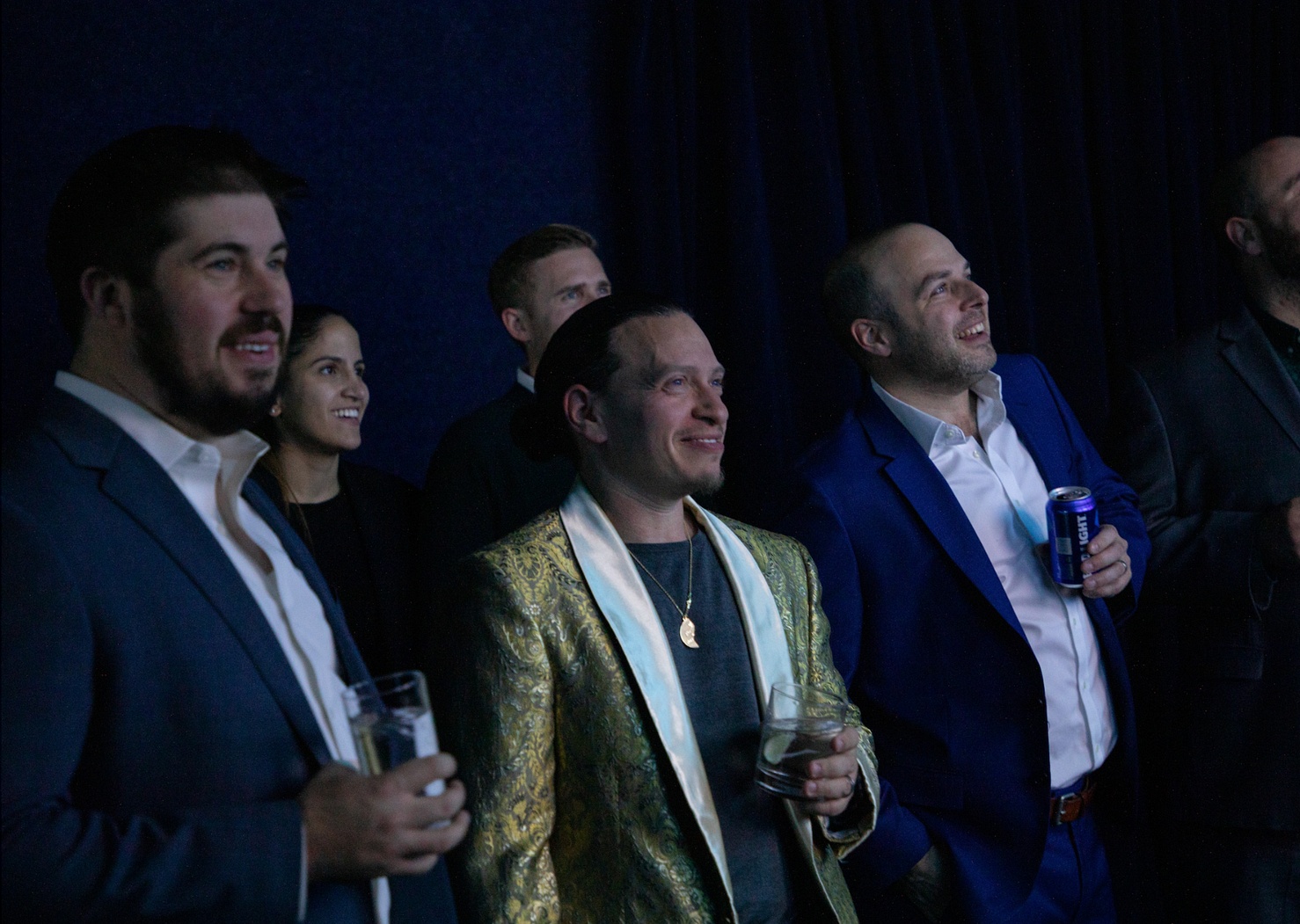
The prize is also a conversation
At Hofstra, Seiman began helping students turn proposals into businesses. The first entrepreneurship challenge offered up to $75,000; the following competition raised the available prize money to $100,000. A cash award gives a student venture something tangible to work with. A public pitch provides a different service: it forces the founders to explain why anyone outside their team should care.
By 2016, the competition included an accelerator with work on customer validation, business models, and pitch preparation. That sequence matters. A polished presentation can conceal an untested assumption. Asking about customers before rehearsing the final pitch gives the assumption a chance to meet an inconvenient fact. Seiman’s own company had started with websites and the immediate business of monetizing them. The competition made room for students to test their ideas in similarly practical terms.
The prizes now put a visible value on time with him. The 2026 information session advertised $15,000 and four mentoring sessions for first place, with smaller cash awards and mentoring allocations for second and third. Money and access sit beside each other on the prize list. An hour with an experienced founder can be spent on the question a team has been avoiding, which may be the most productive item on the agenda.
That makes the Polsley connection especially revealing. A finalist and a sponsor eventually became colleagues. It would be too tidy to treat every student competition as a future hiring pipeline. This particular relationship simply shows how much longer an encounter can last than the event that arranged it. The judges’ table can become a place where people recognize someone they would like to work with again.
Two cities beyond the advertising map
His giving also took a physical form far from the ad network. Seiman helped develop Children International community centers in Guayaquil, Ecuador, in 2010 and Barranquilla, Colombia, in 2014. He had begun supporting the organization at about 18. The dates put that involvement alongside the earliest chapter of his business life, rather than leaving it as a hobby acquired once the company was established.
A community center is an unusually tangible counterpart to digital advertising. An impression disappears almost as soon as it is counted; a building stays where people can return to it. The two kinds of work ask different questions about reach. One concerns how widely something can travel. The other concerns what can be made available, repeatedly, in a particular place.
He also supported causes through CPXample, the company’s philanthropic division, which donated advertising impressions. The arrangement used something the business already possessed: distribution. That is a practical form of generosity for a media entrepreneur. Alongside paying for buildings, the company could help messages find an audience. The mechanism was familiar even when the purpose of the campaign changed.
“If you dwell, you’re screwed.”
Mike Seiman · 2021
The screen changes. The questions persist.
As Digital Remedy’s work expanded into streaming television, Seiman kept discussing how advertising could follow audiences and demonstrate results. In 2021, he spoke with Tech Talks Daily about Flip, the company’s streaming attribution solution. Attribution is the business of deciding which advertising deserves credit for an outcome. The screen may be in the living room, but someone still wants to know what the spending accomplished.
He followed the changes in viewing habits as well. Discussing free, ad-supported streaming, he pointed to younger audiences’ appetite for quick, on-demand entertainment. Discussing live sports, he expected streaming’s role to grow. These observations belong to the same practical territory as the early websites: where people spend time, what draws them there, and how a business supports the experience.
In March 2025, Sinclair Ventures acquired the remaining 75 percent of Digital Remedy that it did not already own. The disclosed consideration was approximately $30 million in cash, net of $5 million in acquired cash. Digital Remedy then joined forces with Compulse under the Digital Remedy name. That transaction marks a new ownership chapter for the business Seiman started as a student.
Seiman’s current project puts him closer to the player. Evermore Games describes its business as mobile experiences through which people can win cash prizes. His public activity has included looking for Unity game developers and inviting friends to try challenges in the app. The tasks have the familiar scale of a founder’s working day: find someone who can build, get people playing, learn what needs fixing.
The interests line up without needing a grand theory. There are entertainment products, audiences, technology, and people willing to try something before the outcome is settled. There is also a continuing attachment to the university where his own attempt began. He has described the danger of becoming trapped in yesterday’s results with a short warning: “If you dwell, you’re screwed.” It is unlikely to be embroidered on a ceremonial university banner. It does have the advantage of being memorable.
Back at Hofstra, the person across the pitch table may need seed money, a difficult question, or an introduction that will matter years later. Seiman has occupied both sides of that arrangement. His next business is still being made, while the student competition keeps producing encounters of its own. For someone whose career began before graduation, returning to a room full of unfinished businesses seems a fairly natural way to spend an afternoon.