Clayton McWhorter wanted a car. His mother wanted him to go to college. He was already accustomed to working and wanted to earn enough to buy one. Gladys McWhorter Franks supplied an amendment: he could work while getting an education. The car would have to share the road with a degree.
It is a small family disagreement to set beside the companies, board appointments and university buildings that came later. Yet it gets close to the question that kept turning up in McWhorter’s life: what should an opportunity make possible? His own career eventually gave him considerable influence over the answer for other people.
Born in Chattanooga in 1933, he grew up with three siblings and a mother whose expectations exceeded the family’s resources. College involved jobs in a grocery store, a dry cleaner and a drugstore, along with newspaper deliveries. Years later, the businessman remembered by Nashville’s founders had already spent plenty of time doing work that came without a corner office.
A degree with several exits
He studied pre-pharmacy at the University of Tennessee, then graduated from Howard College, now Samford University, in 1955. His older brother Fred had graduated from the same institution in 1951. The family connection would remain important long after either brother had finished his examinations.
McWhorter practiced pharmacy for only two years before moving into administration. A qualification that might have defined an entire working life became an entrance to a different kind of responsibility. During the 1960s he worked as an administrator in Georgia; in 1970 he joined HCA. By 1985 he was its president.
The sequence is useful because it keeps the later investor attached to the earlier operator. He had worked inside organizations before advising people who wanted to create them. Payrolls, responsibilities and decisions had occupied him before investment became a central part of his work. Founders meeting him were speaking with someone whose business experience extended beyond choosing which proposal to finance.
A degree from Howard College
Joins HCA
Co-founds HealthTrust
Helps establish Clayton Associates
Founding chair of Nashville’s Entrepreneur Center
In 1987 he co-founded HealthTrust and became its chairman, president and chief executive. The company merged with Columbia/HCA in 1995. He subsequently chaired the combined business. There was ample material here for a conventional account of executive advancement, complete with the changing titles and larger responsibilities that biographies tend to collect.
His next chapter gives those titles a different perspective. In 1996, McWhorter, his son Stuart and business associate Bill Cook founded Clayton Associates. A long corporate career had brought him to the beginning of other people’s companies.
The useful years after the corner office
Stuart would later describe the venture firm years as his father’s best days. That is a revealing choice in a career containing plenty of more conspicuous appointments. He remembered Clayton’s enthusiasm for talented entrepreneurs and the chance to help them build something. The son’s account gives the investment firm an atmosphere that a list of transactions cannot.
He also described a culture of respect, keeping commitments and leaving ego out of the proceedings. These are easy virtues to put on a wall. In a business that asks people to take risks together, they have a practical use. A promise that survives the meeting is worth rather more than an impressive meeting.
Clayton Associates’ early approach included an incubator called the Bullpen. Its combination of mentoring, creativity and business fundamentals gave new enterprises room to develop. The model also helped lead toward the firm’s venture funds as more people wanted to invest in the early-stage businesses emerging around it.
The name has a pleasing lack of ceremony. A bullpen is where people prepare to enter the game. For an entrepreneur with a plan and plenty still to learn, that is a more inviting image than a marble lobby. The actual work was equally practical: help a proposal become a business that could attract investment.
In 2011, Stuart McWhorter and John Ingram partnered with the Nashville Entrepreneur Center on a new Bullpen Ventures mentoring and incubation program. The idea reached back to Clayton Associates’ beginnings. Experience accumulated in one setting was finding another place to go.
“Never forget where you came from.”
Clayton’s advice, recalled by Stuart McWhorter in 2025
A city needs somewhere to begin
McWhorter became the Nashville Entrepreneur Center’s founding board chairman in 2010. The announced board had 26 members. The size matters less than the task behind it: assemble enough experience and relationships to give a new institution a useful start. An organization for beginners needs people who know how to organize.
Michael Burcham, the center’s first chief executive, remembers McWhorter as both a longtime friend and its inaugural chair, serving from 2010 to 2013. Burcham’s recollection places him alongside chief operating officer Sam Lingo. It is a reminder that the center’s early work depended on a group with different responsibilities, rather than a single name on a door.
In 2013, the center opened a permanent home in a former city maintenance garage. Burcham describes a two-year collaborative effort behind the move. There is something apt about the setting: a place once used to keep things running became a place for people trying to get things started.
Institutions make an introduction repeatable. A founder can benefit from knowing one experienced person; a center can create repeated chances for many founders to meet people with experience. McWhorter’s chairmanship put his interest in mentoring inside an organization designed to continue beyond any individual conversation.
After his death in January 2016, colleagues remembered the time he kept giving to others. Former center CEO Burcham spoke of his continued investment in community and startup ideas when retirement would have been available. The point was how McWhorter chose to use a career already full of accomplishments.
The classroom at the other end of success
Education kept appearing in his work, including education for people who had already become executives. Through a partnership with Belmont, he helped establish a peer learning network where leaders could exchange experience and resources. The underlying proposition was modest and sensible: having responsibility does not eliminate the need to learn.
By 2023, Belmont reported that its Executive Learning Networks had involved more than 3,500 executives across more than 160 organizations over the program’s history. The network had grown from eight original members. Those are the program’s results over time, rather than a personal scorecard for McWhorter, but they show how far a shared learning arrangement can travel.
Executives involved in leadership development and peer learning over the program’s history, as reported by Belmont in 2023.
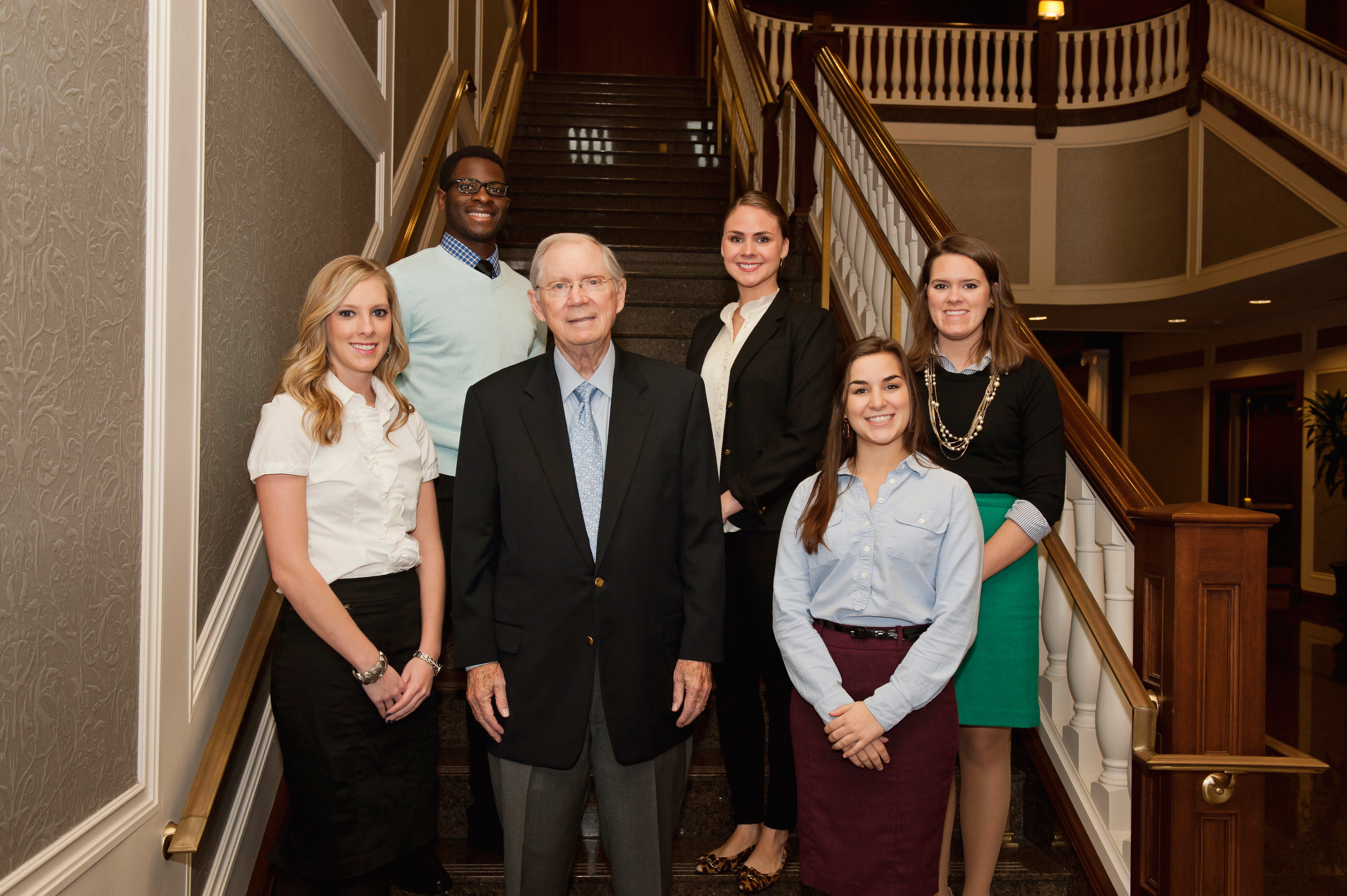
160+ organizations · Executive Learning NetworksAt the other end of the educational ladder were students needing help to get through. Belmont’s McWhorter Scholarship fund received a multimillion-dollar endowment. The photograph of him with scholarship recipients offers an uncomplicated view of that commitment: an older businessman among people whose professional lives were still largely ahead of them.
Samford also remained part of his life. In 1979 he visited with his niece Teresa Beasley, then a prospective student. The detail is small enough to escape a résumé, and useful enough to keep. His connection with the college included accompanying someone else who was considering the same first step he had once taken.
His support eventually helped give the university’s pharmacy school the McWhorter family name. The recognition included Fred and other relatives. For a person whose education had followed his older brother’s example, the family wording fits. Advancement had arrived through relationships; gratitude returned through them too.
Four rules, passed from hand to hand
When Stuart addressed Samford graduates in May 2016, he drew on a commencement speech his father had delivered there in 1989. Twenty-seven years separated the occasions. The advice concerned mentors, preparation, taking responsibility and giving back. It was portable enough to survive both a different graduating class and a different speaker.
Preparation came with a human qualification. Stuart recalled his father telling stories about preparing for the HCA presidency, and about a corporate address for which he had prepared inadequately. The lesson included an occasion when he had fallen short. Even the experienced executive had material for a cautionary tale.
Be prepared
Find a mentor.
Be a mentor.
Act like an owner
Give back
The giving portion was meant to start before a person had reached some comfortable future milestone. Time and attention were available before a large bank balance. That made the advice relevant to graduates sitting at the beginning of their careers, rather than reserving civic responsibility for the speakers at their ceremonies.
In a 2025 Circle Back interview, Stuart returned to his father’s influence and his ability to judge people. Meanwhile, the Entrepreneur Center’s McWhorter Circle continued to put the connection into practice. Its 2024 annual report describes support intended to keep financial need from denying entrepreneurs access to opportunity.
He also helped put management into print, co-authoring Management Dimensions: New Challenges of the Mind with Owen B. Hardy. Robert A. Vraciu later wrote a biography, Leadership to Win. Books offer one way to preserve a business life, although his name acquired a less bookish form of recognition too: an Ingram vessel named R. Clayton McWhorter. Few executive biographies have a namesake that requires a river.
The range is part of the appeal. A management book addresses people looking for guidance; a learning network lets them compare experience; a scholarship helps someone reach the classroom in the first place. Across these different settings, the practical question remains who gets to participate, and who can help them take the next step.
There are buildings, institutions and a biography bearing McWhorter’s name. The recurring work is less ornamental: someone studying, someone learning to lead, someone trying to turn an idea into a company. His mother’s insistence on college had made room for a future he had not yet imagined. Much of his later life went into making similar room for others.
Keep reading & watching
Company history, campus remembrances and a conversation with his son.