Henry Kaestner’s first attractive piece of business arithmetic involved a T-shirt. Make it for five dollars. Sell it for ten. A college student could get attached to a proposition like that, and he did. Tie-dye boxer shorts joined the merchandise. By the time he finished college, he says, there were sales organizations at about fifty schools. Entrepreneurship had made its introduction in cotton.
“I’ve never been great at math, but I could do that math,” he recalled. The complication was copyright. His father eventually suggested that a young man might exhaust the available supply of innocent mistakes and need a real job. Kaestner went to Wall Street. Years later, having helped build a telecommunications company, he would find himself struggling with another calculation: how much of what he had earned could he properly call his own?
The easy arithmetic
Kaestner grew up in Baltimore and attended the University of Delaware. His early business had taught him that he liked selling and being his own boss. For a while, his ambitions came with a cinematic reference. He admired Bud Fox, the young trader in Wall Street, with the phones, apartment and apparently persuasive lifestyle. In retelling it, Kaestner makes himself the joke. Choosing a Charlie Sheen character as a role model offered, he now recognizes, an early warning.
He spent six years on Wall Street, met Kimberley, and moved to North Carolina. There he founded Chapel Hill Brokers, an institutional energy derivatives brokerage. At twenty-eight, he also became serious about Christianity. He describes arriving at a church where the preacher seemed to believe the Bible was actually true, an assertion that demanded more attention than he had previously given it. Business ambition continued. The explanation he gave himself for it began to change.
A college T-shirt business supplied the introduction. Questions about ownership came later.
A phone call with a longer future
The partnership that made Kaestner a telecom founder began with a domain name. David Morken had registered Bandwidth.com and was connecting businesses with providers of faster internet service. Kaestner called from North Carolina, interested in the name. Its price defeated that particular plan. The conversation, however, had other possibilities.
They discussed business prospects and discovered a shared interest in mountain biking. Morken visited Chapel Hill; Kaestner visited Utah. A prospective transaction acquired the ingredients of a friendship. In 2001, Bandwidth International merged into Bandwidth.com, bringing Kaestner into the company Morken had started in 1999. Buying the address had proved unnecessary. They could build at it together.
Kaestner became CEO. In the early division of labor, he led sales while Morken handled product delivery. It was an arrangement grounded in ordinary necessities: find customers, provide what they bought, keep the operation moving. The business that eventually supported software-based communications grew out of those repeated obligations. Its later public-company identity can obscure the practical, telephone-heavy work underneath.
Bandwidth’s founding priorities were faith, family, work and fitness, in that order. The list put commercial ambition inside a larger account of a life. Kaestner could be playful about the last item. Alongside Morken’s endurance achievements, he described himself as a neighborhood-class athlete, with the helpful qualification that his neighborhood contained plenty of retirees. A competitive person can sometimes improve his ranking simply by choosing a more accommodating league.
Forty doors, and a second reading
One episode in the company’s early life became a recurring part of Kaestner’s public story. He and Morken went looking for venture capital and, by his count, went zero for forty. When they explained that their faith mattered to how they intended to run the company, he remembers discomfort. They wanted investors to understand the people they would be joining, including practices such as prayer before board meetings.
His interpretation leaves room for two problems. One concerned how investors understood the founders. The other concerned how the founders understood themselves. He has acknowledged that some potential backers simply did not connect with parts of the business. He also came to believe that he and Morken were pursuing a financing outcome too insistently.
They prayed for a twenty-million-dollar term sheet, he has said, without first asking whether raising the money was the right course. In his religious vocabulary, the distinction was between being faithful and being willful. It is an unusually awkward detail to preserve in a founder’s success story. The rejected entrepreneur is generally offered the starring role; here, Kaestner gives his own certainty a speaking part.
Kaestner’s account of unsuccessful venture raises. A remembered experience, not a measure of every financing conversation in Bandwidth’s history.
Failure to secure that capital required attention to cash flow and a slower pace than the founders had imagined. Bandwidth continued. Kaestner stepped down as CEO in 2009 and later served as chairman. The company went public in November 2017. Those milestones provide an ending to the fundraising episode, although they leave its larger question open: how does someone recognize the moment when persistence has become attachment to a preferred answer?
The other eighty percent
At thirty-eight, Kaestner encountered a question with no term sheet attached. Daryl Heald, founder of Generous Giving, asked why he gave. Kaestner and Kimberley were giving away about twenty percent, he recalls. He had considered that a respectable performance. His later joke about possible rewards included good seats at an Angels game. Even generosity, apparently, could acquire a benefits package.
The question unsettled him. Over roughly six months of reading and reflection, he reconsidered the assumption behind his percentages. He had behaved as though twenty percent belonged to God and eighty percent belonged to him. His conclusion was that God owned all of it. That is a statement of his Christian belief, with consequences for how he thought about the money he retained as well as the money he donated.
A percentage had let him finish the calculation. Stewardship reopened it. Investment choices, company culture, time and influence all belonged in the discussion. Success had increased the number of decisions he could make; it had also enlarged the responsibility he believed those decisions carried. The T-shirt calculation still worked. It answered a smaller question.
“I called it my born-again again moment.”
Henry Kaestner, on reconsidering ownership
Something for the founders outside the portfolio
Sovereign’s Capital became one expression of that thinking. The firm, which identifies 2012 as the beginning of its faith-driven investing work, was co-founded by Kaestner to partner with businesses led by people whose convictions he understood. Its present practice includes early-stage technology, private equity, public equities, real estate and investments in other funds. The ambition combines commercial results with an account of how companies treat people.
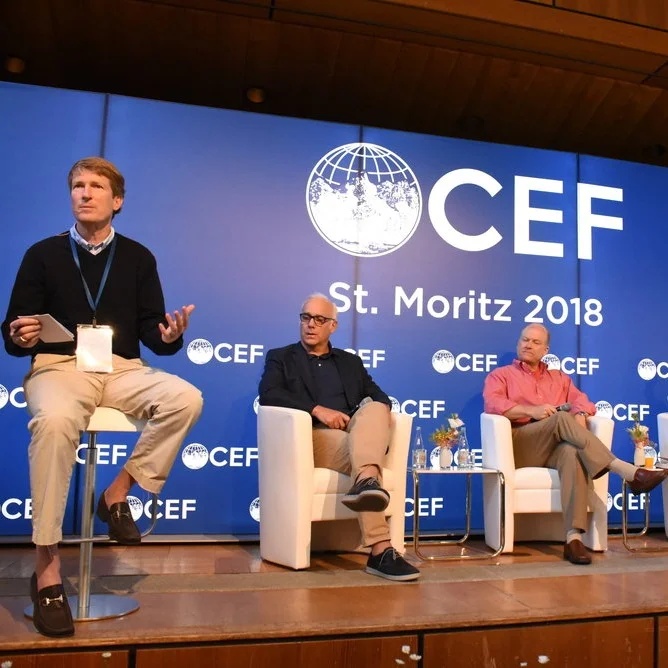
Investing introduced a familiar limitation. Kaestner wanted to encourage founders, but the firm could only back a small fraction of the businesses it saw. He has described investing in about one of every hundred opportunities at that stage. A mission of encouragement was producing a great many conversations that ended in disappointment. Financial selectivity was necessary. He wanted another useful response.
A Moldovan entrepreneur named Anatol helped bring the problem into focus. Sovereign’s could not invest in his real estate business; Kaestner did not know enough about either the market or the industry. He could, however, share the material that circulated among the founders already in the portfolio: talks, writing and other resources. That exchange helped inspire Faith Driven Entrepreneur. The people outside the fund’s mandate could still belong in a conversation.
The later organizations included Faith Driven Investor, alongside podcasts and communities for people thinking through business in explicitly Christian terms. Kaestner also co-founded DurhamCares and was a founding board member of Praxis. Across these efforts, the repeated unit of work is the connection: a founder with a peer, a business with capital, a conviction with a practical decision.
In 2021, he coauthored Faith Driven Entrepreneur with J. D. Greear and Chip Ingram. The book’s package included an eight-session video series, a discussion guide and an invitation to join a group. It was an apt publishing choice for someone concerned about the founders a fund could not reach. A reader could close the book and still have somewhere to go.
An invitation with an address
One later example unfolded in Singapore. At a Faith Driven Entrepreneur conference, Kaestner challenged SOMIN founder Aleks Farseev to plant a local chapter. Farseev took up the task, and the first Foundations Group met at BLOCK71 on August 14, 2024. A September 2026 account described more than two hundred members and a group that had begun in Taipei. The invitation traveled; local people did the organizing.
The chapter’s growth also involved a search for the right partners. Aidan Chan and Yuh Tyng Hsiao became co-builders after joining the sessions themselves. Meetings moved among offices and other venues. That detail brings the idea of a global movement down to a familiar scale: someone has to find a room, gather people and make the next meeting worth attending. Kaestner could issue the challenge. The community needed people willing to keep showing up.
Kaestner’s newer work with Solving the World’s Greatest Problems applies a related approach to giving. In a January 2026 conversation, he described communities and problem-focused philanthropic funds, with managers helping allocate capital through grants or investments. He was quick to acknowledge the scale of the name. “The title solving the world’s greatest problems is at best semi-arrogant.” The ambition is large enough to require some humor before the meeting starts.
There is a recognizable continuity from his college days: he remains interested in what people can build together. The changes concern what he thinks that building is for, who benefits, and who ultimately owns the proceeds. A five-dollar shirt can explain the pleasure of a margin. A successful company leaves its founders with rather more to explain.
Keep the conversation going
Follow Kaestner on LinkedIn, Twitter / X and Instagram, or visit his introduction to Faith Driven Movements.
WATCH ↗His faith story at the Silicon Valley Prayer BreakfastYOUTUBE ↗Henry Kaestner’s channelCONVERSATION ↗The founders a venture fund cannot financeREAD ↗The early Bandwidth partnershipEXPLORE ↗Sovereign’s CapitalREAD ↗How Faith Driven Singapore beganLISTEN ↗His January 2026 conversation on investing and giving