Michael Basch went to Tulsa to visit a friend. The friend had moved there for a woman, a fairly reliable method of choosing a city and a less conventional way to begin an economic-development strategy. Basch had helped introduce the couple. In September 2017, he arrived as a visitor with a coastal résumé and no particular reason to imagine Oklahoma as his next address.
He liked what he found: an Arts District, restaurants, places to work, and people trying to build something together. The visit led to conversations with Tulsa Tomorrow and the George Kaiser Family Foundation. That November, he helped bring 58 people to town. A casual recommendation had become a recruiting expedition. By early 2018, he had moved himself.
There is a familiar story about ambition in America: leave the place where you started, find the place where things happen, and become someone there. Basch had plenty of experience with the itinerary. Born in San Francisco and raised in Los Angeles, he had lived in New York, London and Tel Aviv. Tulsa offered him a different problem. What would it take to make opportunity come to people?
First, keep 22 coffee shops running
His education in business began behind the counter at Coffee Bean & Tea Leaf while he was still in high school. Seven years later, he was overseeing 22 stores, nearly 400 employees and an operation producing about $19 million in revenue. Somewhere in that progression, coffee stopped being an individual beverage and became a rather demanding exercise in coordination.
He was also going through undergraduate study and business school at the University of Southern California. Friends had started a T-shirt business out of their fraternity; Basch joined as its fifth partner. The company, BAMKO, grew into an international product-manufacturing operation with more than 150 people across six countries before its sale to Superior Uniform Group. He had learned to operate businesses whose work involved things that actually had to arrive somewhere.
Angel investing followed. Then he crossed back into operations, becoming president of Spotad, a mobile-advertising company he had backed. Within two years, it had grown to 45 people in four countries and more than $15 million in revenue. The recurring move in his career was to get close enough to a business to help run it. An investment could turn into a job.
In 2016, his attention shifted to politics. He worked on Hillary Clinton’s campaign, including technology and innovation policy and organizing in Madison, Wisconsin. Company building had given him experience with growth. The campaign put him inside a different effort to change outcomes, one involving voters and institutions rather than customers. Tulsa would eventually bring those interests into the same room.
A city you could help make
In explaining his move in 2018, Basch described a growing interest in work that stretched him and could produce positive change. The Kaiser foundation’s focus on intergenerational poverty mattered to him. Its combination of investment, civic institutions and philanthropy offered somewhere to apply the experience he had accumulated in business.
He wanted to connect companies and funds with Tulsa, including businesses that might open an office there. His argument was practical: growing companies needed employees, and a city away from the coasts could give them room to expand. He also saw Tulsa as a place where a useful approach might be developed for other cities facing similar questions about jobs and opportunity.
That ambition had a personal explanation as well. Basch has written about the Jewish principle of Tikkun Olam, repairing the world, as part of his upbringing and the thinking behind Atento. He linked it to giving people access to opportunity and a route toward economic mobility. In his account, earning investment returns and widening access belonged in the same discussion.
On January 6, 2020, he and a four-person founding team celebrated the launch of Atento Capital. Will Gray, Chandler Malone and Marcela Swenson joined him in the early effort. The firm would invest directly in startups and through other venture funds. Its local purpose was equally concrete: help create jobs in Tulsa. A company’s prospects and a city’s prospects were now being considered together.
The work surrounding the check
A founder needs more than an investor with an agreeable expression. Someone must help find employees. Someone must train the next group. People arriving in a new city need reasons to stay after the novelty wears off. Atento and its partners worked on those surrounding conditions as well as on individual companies.
Tulsa Remote offered a $10,000 incentive to eligible remote workers willing to relocate. Basch participated in its early development; Aaron Bolzle led the program at its launch. The attraction was that someone could bring an existing job into a new community. Tulsa could gain a resident without first persuading that person’s employer to establish a local office.
Other projects worked on different parts of the problem. Atento helped recruit Holberton School, now Atlas School, to train software developers. InTulsa helped companies recruit. Build in Tulsa supported underrepresented entrepreneurs. These programs required their own leaders and organizations. Basch’s part in the story runs through partnerships, recruitment and getting initiatives started, alongside colleagues and foundation teams.
By the time his Atento team had grown to about 30 people, it had invested in 66 companies, 31 venture funds and four venture studios. About a quarter of those companies were based in Tulsa or had relocated there. The distinction matters: the firm invested beyond the city while trying to create opportunities within it. A Tulsa ambition could have an international address book.
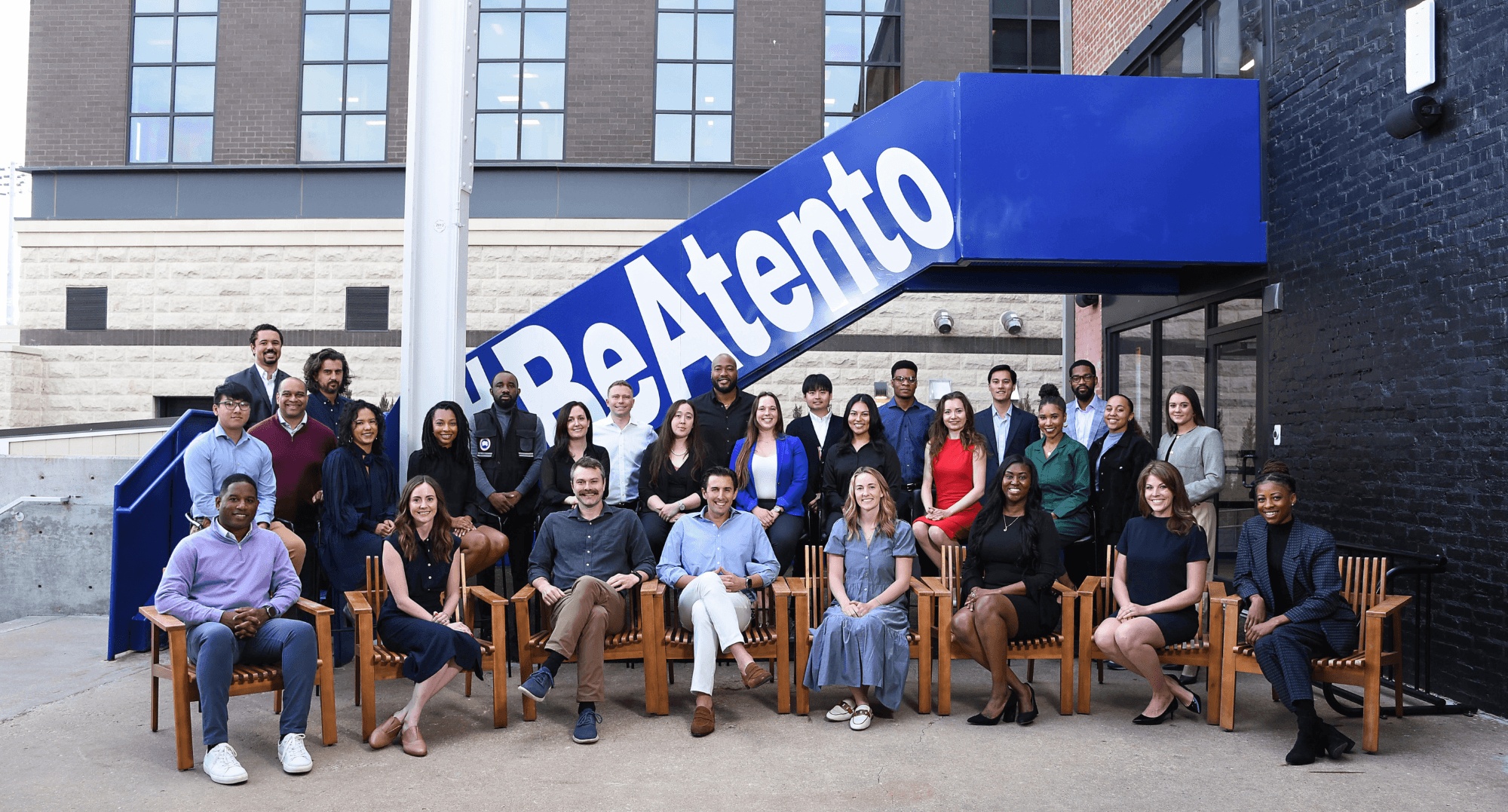
Several routes toward a shared aim: businesses and jobs in Tulsa.
Cold brew, introductions and the people who leave
Basch’s enthusiasm comes with a willingness to record inconvenient results. Looking back on 2021, he acknowledged that two sets of founders had left Tulsa within a year. Recruiting someone and retaining someone are separate achievements. A city can improve its offer; it still has to compete with the lives people want to lead.
He also described the creation of 19 Days, a venture studio involving Gitwit’s Jacob Johnson and Dan Fisher and operator Joey Wignarajah. Atento took office space beside the studio and Gitwit. There was cold brew on tap, a small occupational homecoming for someone whose working life began in coffee. The arrangement placed investors beside people building businesses.
His advice to founders has a similar informality. Asked how to approach an investor, he replied, “As a human.” He encouraged a conversation about the problem, the team, the direction and the help required. He also urged founders to assess their investors carefully. Taking someone’s money creates a relationship that can last far longer than the pitch meeting.
That attention can be visible from the other side of the table. Investor Lauren Roberts has credited Basch as a mentor and advocate during her early venture career. In 2025, when she moved from Tulsa to Forum Ventures in New York, he publicly celebrated her next step. The advocate for staying in Tulsa could also cheer someone leaving it. People have ambitions of their own.
“As a human.”Michael Basch, on how a founder should approach an investor
A bookstore belongs in this conversation
In 2026, another move brought his career into a new configuration. After completing an MPA at Harvard Kennedy School, Basch joined Renaissance Philanthropy as director of fund strategy and regional innovation. He and his family were making Cambridge their home. He continued as a venture partner at Gitwit and an adviser to SourceM.
His stated aim was to work where investment and philanthropy meet, applying lessons from Tulsa to other places. By July, that included leading the Northwest Arkansas Innovation Fund, supported by the Walton Family Foundation. Its two opening programs, Catalyze479 and Launch479, took their names from the region’s telephone area code. Even the names were obliged to know where they lived.
Catalyze479 is a revolving philanthropic fund: investment returns go back into the fund for future regional investments. It can make initial investments of up to $500,000. One strategy supports technology businesses at the idea or validation stage. Another includes community businesses such as bookstores and restaurants. The definition of a business worth helping has room for a neighborhood’s daily life.
Launch479 works with Gitwit on fellowships for entrepreneurs and engineers. Its design puts time and support into people who may become founders or technical leaders. In an August 2026 interview, Basch discussed how smaller teams using AI could build companies, and the importance of founders understanding the problems they tackle. The work still begins with people who can make something useful.
The question follows him
There is continuity beneath the changes in job title. Running shops required people, systems and customers to work together. Building companies across countries required connections. Tulsa asked whether those skills could help a city expand its opportunities. Northwest Arkansas gives him another place to try, with philanthropic capital able to support an earlier, less settled stage of business formation.
His path has also made room for family. Basch and his wife Romi have three children, Leo, Olivia and Sofia. His public reflections place family life beside the professional experiments, rather than somewhere beyond them. Choosing where to live is consequential when the decision includes other people. That is part of the problem any relocation strategy must take seriously.
Basch’s original move began with a friend, a visit and a willingness to reconsider the map. The work that followed became institutional: a fund, recruiting programs, schools, partnerships and people hired to lead them. The next test is whether those arrangements keep giving others useful choices. For someone deciding where to build a business, a good introduction may help. A place where the business can grow helps considerably more.