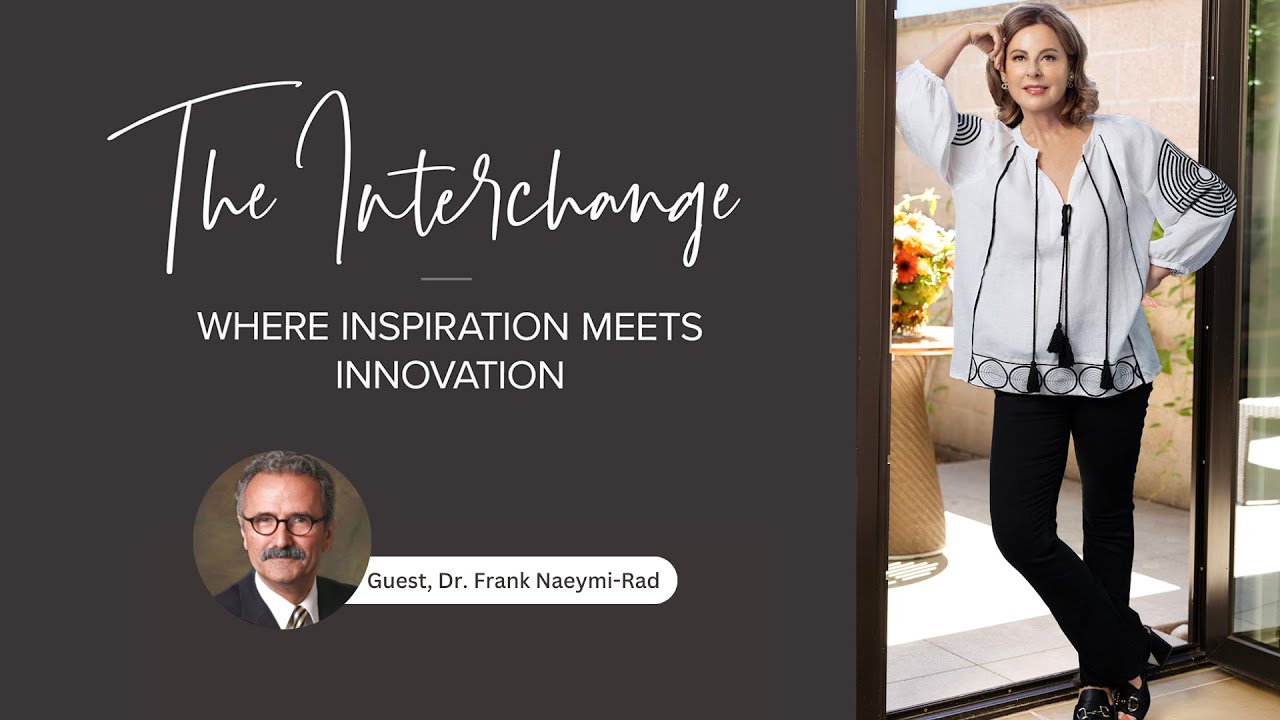
The room has his name on it. Another has the names of the people who welcomed him. At Illinois State University’s Multicultural Center, Frank Naeymi-Rad and Theresa Kepic appear alongside Charles “Jack” and GeJuan Cardwell. One pair made a financial gift. The other had made an international student feel at home. Half a century separates the introduction from the recognition. The relationship is the interesting part.
Naeymi-Rad is a co-founder of IMO Health and a former CEO and chairman of the company. Those are useful credentials, though they leave out much of what makes his story worth following. There is a university dishwashing room, a host family, a long apprenticeship in computer science, and a persistent appetite for putting students to work on actual problems. His career has acquired titles. Its personal geography keeps leading back to a campus.
In 1969, he came to the United States from Iran. He remembers the year through the moon landing, an event that helped shape his sense of what might be possible in his new country. A military family lay behind him. An entrepreneurial future was what he wanted. The distance between those two ways of organizing a life is considerable: one begins with an established chain of command, the other with the uncomfortable business of finding customers.
The dishwashing room comes before the boardroom
Illinois State became a place to study and a place to meet people who would matter. Naeymi-Rad graduated in 1975 with a bachelor’s degree in mathematics. Theresa Kepic was also an Illinois State graduate, from the class of 1973. The story they now tell together begins in a university dishwashing room. It is an agreeable correction to the belief that every consequential introduction needs a conference badge and an expensive reception.
In a public recollection, he places their early connection at Watterson Towers, in the international dormitory community of Van Buren House. It was 1970. Theresa’s roommate remained someone he could address decades later while remembering those days. That small detail gives the episode its scale. This was a student community whose members could still recognize themselves in one another’s stories long after the cafeteria shift had ended.
The couple’s education became a family undertaking. Their children, Ivana and Andrei, appear in the family history alongside the grandparents who helped raise them while Frank and Theresa completed their schooling and began working. A degree certificate has limited space for acknowledgments. Family life is less economical. The people who provide time, attention, and practical help become part of the achievement, whether or not their names fit beneath the university seal.
A mathematician keeps going back to school
His education did not end in Normal, Illinois. He earned a master’s degree in computer science at Southern Illinois University, completed his computer science doctorate at Illinois Institute of Technology in 1990, and added an MBA from Lake Forest Graduate School of Management. Mathematics, computing, and management offer different kinds of discipline. Together, they make a useful itinerary for someone trying to carry a research idea into a functioning company.
There were mentors along the way. Computer scientist Martha Evens remembered Naeymi-Rad as a computer administrator who became interested in her research and later pursued his doctorate with her at Illinois Tech. In her recollection, he helped bring other people into the work. That is a modest but telling form of technical leadership: making a difficult subject interesting enough that someone else wants to join in.
On May 17, 2025, Illinois Tech announced an honorary Doctor of Computer Science for its 1990 doctoral graduate. The honor placed a long professional career back in a university setting. More revealing than the ceremonial symmetry was the accompanying student work. Through Leap of Faith Technologies, he had launched an experiential program with Illinois Tech. The institution that had trained him was now a collaborator in training others.
The names beside his own
In 2020, Illinois State described a $250,000 commitment from Naeymi-Rad and Kepic to its Multicultural Center. The planned support included renovations, upgrades, and technology for connecting students with alumni and other multicultural centers. Their gift honored the Cardwells, the host family assigned to Frank in 1970. The university credited Jack and GeJuan with helping guide the couple and shaping their appreciation of diversity and inclusion.
The recognition has a practical address inside campus life. The center’s multipurpose rooms carry the couple’s names and the Cardwells’ names. Screens, wireless microphones, and a speaker system equip spaces that can be combined for larger groups. These are pleasantly unceremonious details. The usefulness of a named room depends on what people can do in it after the dedication photographs have been taken.
In October 2021, university trustees approved a small wording change: the named spaces would be described as multipurpose rooms. The administrative detail is almost comically plain beside the history attached to the names. It also makes the intention clear. These spaces are meant for use. A tribute to an old friendship can accommodate a new gathering, with the furniture rearranged to suit whoever arrives next.
Jack Cardwell’s family remembered the connection in intimate terms. His obituary included Frank and Theresa among an extended circle of unofficially adopted family. That description says something a donor listing cannot. The host arrangement had become kinship. Reading the gift alongside that relationship suggests a particular kind of gratitude: a welcome received early in life can remain a meaningful obligation long after the original need has passed.
Commitment by Frank Naeymi-Rad and Theresa Kepic to Illinois State’s Multicultural Center.
Give the students something real to do
Naeymi-Rad’s more recent educational work has a brisk name: See One. Do One. Build One. The sequence at Leap of Faith moves from listening to experienced industry leaders, through guided workshops, to projects with company partners. In a January 2025 conversation, he described an internship involving 25 master’s students in computer science. The scale is human enough to picture: a group of students expected to produce something that will survive contact with people outside a classroom.
The three verbs give the approach its logic. Observation supplies context. Experiment offers a place to make mistakes with guidance. Building requires decisions that a demonstration can postpone. What should happen first? What must the product actually accomplish? Who will try it? A prototype has a wonderful ability to convert an impressive conversation into a list of unanswered questions. That is one of its educational virtues.
The program’s stated destination is a commercialization pilot with a company partner. This introduces a second audience for the student’s work. An instructor can judge whether an assignment has been completed; a prospective user can reveal whether the assignment was worth doing. For a founder who has spent years moving between research and business, that encounter is a useful part of the curriculum. Students get to discover the difference while experienced people are still nearby.

An idea still has to pay its way
His advice about entrepreneurship is often concrete. He has described the importance of recurring revenue, the vulnerability of a company before it becomes cash positive, and the need to give the person closest to an operational problem the authority to deal with it. There is little glamour in cash discipline. A spreadsheet has never made a particularly seductive company mascot. It remains remarkably effective at explaining how long an ambition can afford to wait.
“Focus on cash discipline and financial discipline.” The sentence is short enough to remember when a pitch becomes too elaborate. In his account of building IMO, enthusiasm and technical accomplishment had to be joined by attention to the business model. It is a useful admission from a technically trained founder. The invention can be interesting, the team can be committed, and the commercial question can still remain unanswered.
Leap of Faith’s wider organization supplies another, rather more decorative image of entrepreneurship: salmon swimming upstream. Its stated logo symbolism concerns the urge to create and the risks of doing so. Salmon are an amusing choice for a business associated with innovation. They have a destination, considerable resistance, and no apparent interest in holding a panel discussion about either. The company’s account of the emblem makes room for effort as well as aspiration.
“Focus on cash discipline and financial discipline.”Frank Naeymi-Rad
A book, and another beginning
The personal story is becoming a book. Bridging Worlds is credited to Frank Fariborz Naeymi-Rad with Theresa Ivanka Kepic, published by Advantage Books and distributed by Simon & Schuster. The publisher lists January 12, 2027, as the publication date. Its description begins with the couple’s meeting and follows their partnership across decades. For a career full of institutional affiliations, it is a distinctly personal starting point.
A book also changes the audience. A student project can involve a small team; a classroom can gather a cohort; a personal account can reach someone who has never met its author. The most interesting question for this one is how the early experiences illuminate the later choices. A dishwashing room, an assigned host family, and a return to campus are concrete enough to make that connection without requiring the reader to admire a job title.
The rooms at Illinois State provide a fitting place to leave him. They are available for the ordinary activity of university life: people gathering, speaking, listening, and arranging chairs for the next event. His name is there, and so are the Cardwells’ names. The welcome has become a space another student can use. For an entrepreneur accustomed to asking what an idea will produce, that is a result with an appealingly long horizon.