Rizwan Koita went back to IIT Bombay and acquired a title that sits rather well beside entrepreneur and philanthropist: newbie professor. In autumn 2024, more than 55 students signed up for his first B2B Sales and Marketing course. Undergraduates, master’s students and doctoral researchers were in the mix. A couple of senior faculty members attended too. For someone returning to familiar classrooms, that is quite an audience for a first attempt.
He thanked the students for sitting through the classes and giving feedback. The teaching team used it to refine the course. Here was a former chief executive, accustomed to the demands of building a company, describing the ordinary work of getting better at something new. A successful career had supplied the examples. Now he had to make them teachable.
“It is very gratifying to teach in the same classrooms where I was a student a long long time back.”Rizwan Koita, on returning to IIT Bombay
The return provides a useful way into Koita’s story. He has built companies, worked with a long-standing business partner, and established a foundation with his wife, Rekha. More recently, he has been putting that experience into institutions where the work belongs to other people. A classroom is one such place. A nonprofit trying to make its programs run better is another.
A beginner with a long CV
Koita graduated in electrical engineering from IIT Bombay in 1992, then completed a master’s in electrical engineering and computer science at MIT in 1995. IIT Bombay records that he ranked first in both programs. His academic record had already given him a fairly demanding standard to live with. Returning as a teacher would put a different set of skills to work.
Before entrepreneurship, he was a senior consultant at McKinsey & Company, advising businesses on strategy and operations. Then came TransWorks, the business-process outsourcing company he co-founded with Jagdish Moorjani in 1999. The Aditya Birla Group acquired it in 2003. The partnership continued: in 2005, Koita, Moorjani and Bimal R. Naik co-founded CitiusTech.
Koita ran CitiusTech as CEO from 2005 to 2021. Sixteen years is long enough for the word “founder” to conceal a great deal of routine responsibility. Founding gets a date on a timeline. Running a company means returning to the task as the organisation changes around you. His recognition during those years included an Ernst & Young Entrepreneur of the Year Award in 2013.
In his later teaching update, he described the sales course as a synthesis of 25 years spent engaging with corporations around the world, followed by public organisations in India. That is an unusually concrete bridge between the businessman and the professor. There are relationships to understand, decisions to explain and people who need a reason to act. The audience changes; experience still needs translation.
Two companies, then a different assignment
Rekha and Rizwan established the Koita Foundation in 2016. Its early work grew out of Rekha’s background in technology and business transformation. She had worked in management consulting at Accenture and later in corporate training. The couple brought different professional histories to a shared undertaking. Any account of the foundation that turns Rekha into a supporting character would miss how the work began.
Her own account describes NGOs struggling to secure support for technology and organisational capacity. They needed guidance through the process as well as financial assistance. That is a recognisable problem: a new system brings choices an organisation may have little experience making. Someone has to understand the work, decide what should change and help the team through the transition.
Koita moved into philanthropy full time after leaving his CEO role in 2021. By then, the foundation had several years of work behind it. He joined an existing effort with partners, practical experience and lessons of its own. The shift gave him more time to apply his business experience within that effort, alongside Rekha and the organisations they supported.
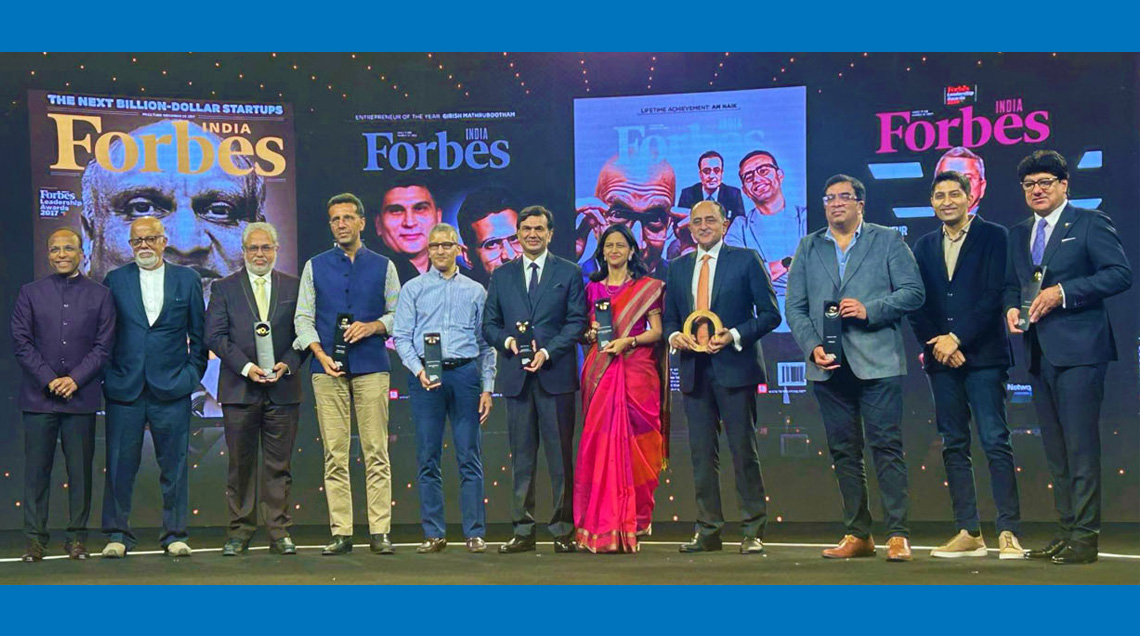
In February 2025, the couple received the Forbes India Leadership Award for Grassroots Philanthropists. It recognised work that had developed over years. Their partnership with India Leaders for Social Sector also created a centre devoted to digital transformation, extending support beyond individual projects into training and shared knowledge. An award produces a ceremony. A centre produces another set of responsibilities.
The work behind the good intentions
At Antarang Foundation, career recommendations for students once depended on manual processing by a small number of people. Koita Foundation helped redesign the workflow. Student booklets became scannable forms. Rules supported the recommendations, and a Salesforce-based platform handled career planning. The reported expansion was from 3,000 students a year to 32,000 across geographies.
That figure describes a specific program’s expansion. The mechanics explain why it matters. A process tied to a few people’s manual work can become difficult to repeat consistently as demand grows. Changing how information moves through the organisation can give its staff room to serve more students. The work begins with the service and follows its constraints.
Srijan Ek Soch offers another view of that approach. It wanted field staff to record information in real time and make program monitoring easier. Previously, manual collection had created gaps in available data. Its EduOps application lets project associates enter attendance and student performance, while teachers can share information with parents through WhatsApp. Leadership gets a view across schools.
Attendance records are unlikely to win a beauty contest among technological inventions. Yet for a team responsible for education programs, they answer questions that matter. Who came to class? How are students progressing? What can a teacher tell a parent? This is the scale at which the foundation’s work becomes intelligible: a specific person has a specific task, and the system helps them do it.
Koita has also described the danger of choosing the wrong problem or attempting too much at once. The couple’s approach includes a delivery team and committed leadership. He has argued for patience in selecting partnerships rather than pursuing a tally. These are practical limits to place around an ambition to grow. More projects would create more activity; each still needs to earn its claim on attention.
A useful system has people in it
In May 2025, Rekha, Rizwan and ILSS founder Anu Prasad jointly argued for more investment in digital transformation across India’s social sector. Their article gave adoption a central place. Even where useful tools exist, organisations can struggle to use them without the ability to manage change and train field teams. Leaders need to understand how the technology serves their mission.
The argument asks a donor to consider the machinery behind a program. An organisation’s ability to use information, coordinate its people and learn from its work affects what its funding can accomplish. The authors called for collaboration and shared infrastructure. Their concern reaches beyond getting one application built: teams need the capacity to make such systems part of everyday work.
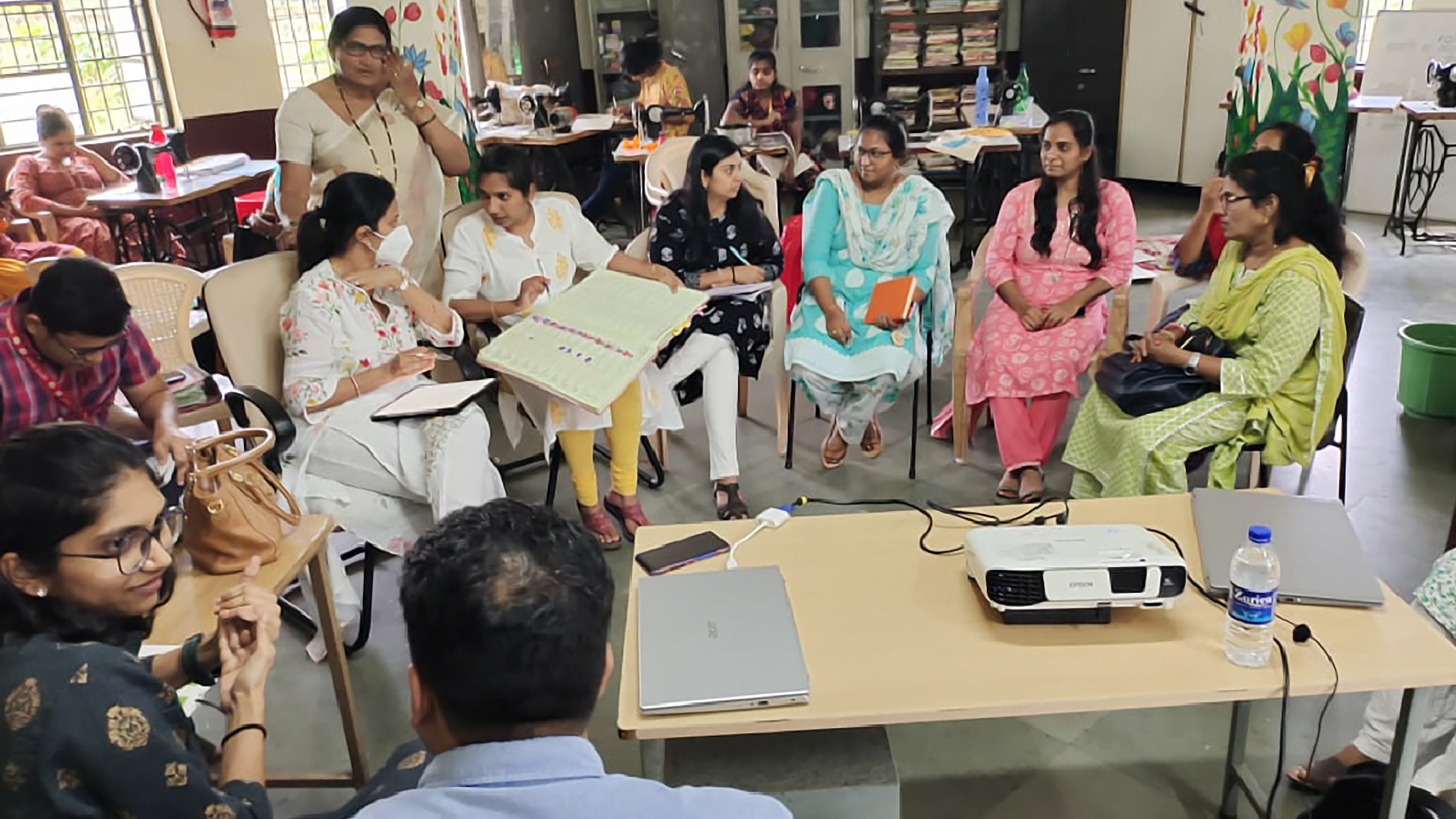
There is a useful test in the foundation’s description of its partnerships. NGOs can graduate from them. The intention is for organisations to carry on with the skills and frameworks developed together. That changes the meaning of a successful engagement. The partner’s continuing ability to run and improve its own systems becomes part of the result.
The emphasis on people also gives Koita’s teaching a place in the same story. A course and a nonprofit partnership both require knowledge to become usable beyond its original owner. The teacher has to explain; the organisation has to practise. Both relationships involve feedback. Experience gains another purpose when someone else can put it to work.
The class keeps getting bigger
In his 2025 teaching update, Koita reported almost 100 students, compared with more than 55 in his first cohort. He credited Sujay Pal and Anuradha Narasimhan as collaborators. The class was growing, and his description still centred on discussion, learning and exchanging ideas. It is a pleasant complication for the familiar founder biography: the experienced executive is enjoying being part of a teaching team.
His public writing also makes room for a father’s humour. Celebrating his younger son Sahil’s Cambridge graduation in 2025, he praised his growing independence and intellectual development, then confessed to parental anxiety about his interest in poker. Years of business experience apparently offer limited protection against a son becoming president of a university poker club. The joke supplies its own modest correction to a polished professional life.
In March 2026, Rizwan and Rekha also appeared among the philanthropists profiled in Turning Points: How Philanthropists Sparked Systemic Change. The book followed the development of giving into work with wider institutions and public systems. Their inclusion places the foundation within a broader conversation about how private experience and resources can serve public purposes. It also brings the couple back into the same frame: two professional histories, a shared foundation, and an approach they have continued to develop together.
By September 2026, Koita was speaking at the launch of a digital and AI toolbook for social-sector organisations. He highlighted the donor community’s responsibility to encourage collaboration. The setting had changed again, from companies and classrooms to a shared resource for institutions. The recurring assignment remained practical: help people acquire the means to do their work better.
That is where the returning professor becomes more than an agreeable anecdote. Koita had a career to talk about. He chose to turn some of it into a course, prepare it with colleagues and invite students to respond. After success came a syllabus. Then came the feedback, and the work of preparing for the next class.