Dan Brettler’s first idea for a store name was Mobile Electronics World. It had the dutiful ring of a place where someone might explain a wiring diagram until closing time. His wife, Cindy, suggested Car Toys. Two words, a little pleasure, and no instruction manual. In 1987, the Bellevue business opened under her name for it. The founder had already received a useful lesson in listening.
He wanted to run a better electronics shop. Over the following decades, that ambition took him from a sales floor in Washington to a retail business spanning four states, and into another Seattle undertaking with a much harder promise: helping people find a permanent home. Both enterprises required money, persuasion and patience. Neither allowed the original plan to remain comfortably intact.
A salesman with an objection
Brettler grew up in New York, attended the University of Vermont from 1977 to 1981, and moved to Seattle in 1981. His early retail education came at Pacific Stereo in Tacoma, where he sold electronics for $4.25 an hour. He became a strong salesman but could not get onto the commission arrangement he wanted. He left.
At Northwest Auto Sound, he rose to vice president of sales and marketing. Promotion did not cure his dissatisfaction. He wanted his own way of doing things. He believed he could improve the business. His first Car Toys store generated $1.5 million in its opening year. That is a fairly persuasive answer to an old employer, though a business must keep answering the question every morning.
“I just felt I could do it better.”
Dan Brettler, on starting his own business
The original inventory now reads like an archaeological dig through the glove compartment: cassette players, pagers, car-mounted phones with cords, even phones built into briefcases. Brettler was among the employees on opening day, April 1, 1987. The products changed; the job of explaining them to a customer remained.
The birthday had a supporting cast
Car Toys learned to make a little theatre out of selling equipment. Its early sound competitions used the name Car Wars, until the resemblance to Star Wars became a problem. Tent sales followed. Beginning in 1990, Dan’s Birthday Bash advertisements featured a studio version of his mother. The commercials continued until 2000. An ordinary promotional calendar had acquired a family character, albeit one hired for the recording session.
There were less comic milestones, too. Colorado and Texas joined the company’s map. By 2017, Car Toys recorded 48 locations and 830 employees. A founder who had worked the opening-day floor was now responsible for a business whose customers might never meet him.
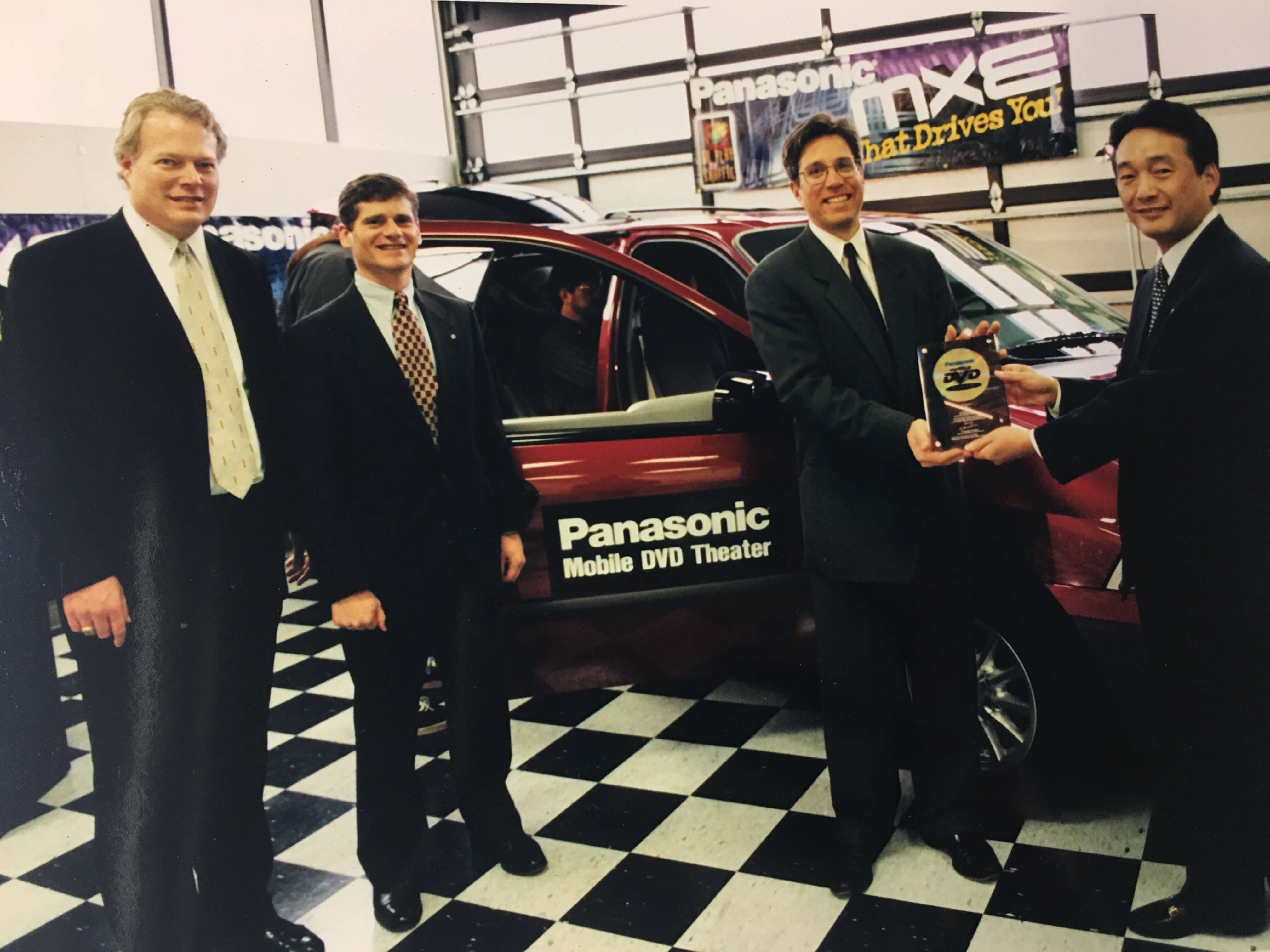
That distance between founder and customer creates a practical problem. A founder can answer one question at one counter. A chain needs other people to answer thousands of them. Installation and knowledgeable service were central to Brettler’s proposition: the purchase had to work after the customer drove away. Advertising could bring a driver through the door; it could hardly reach under the dashboard.
Four things that would keep moving
At an entrepreneur conference in 2005, Brettler gave a keynote called As the Customer Turns. He organized it around four C’s: climate, customer, competition and company. The vocabulary was plain enough to fit on a shop manager’s notepad. Its implications were considerably less tidy.
A company might control its own training and standards while having little say over the wider economy or the next competitor’s arrival. Customers could change what they wanted. The company itself could outgrow the habits that had once made it work. His framework treated adaptation as a continuing responsibility, which is a demanding position for someone whose first success came from trusting his own judgment.
Wireless Advocates extended his retail career into another setting. Founded in 2004, the business operated phone kiosks inside Costco warehouses and military exchanges. In 2016, its reach included a Navy Exchange kiosk at Naval Station Guantanamo Bay, where residents could activate T-Mobile service as LTE coverage arrived at the base. The storefront had shrunk to a kiosk; the task still involved helping someone choose and use technology.
A different kind of installation
Brettler’s involvement in housing began with a provocation on a newspaper page. An opinion piece asked why a region with so much entrepreneurial energy and money could not solve homelessness. Cindy encouraged him to act. He adjusted his work schedule and joined the work of United Way and the King County Committee to End Homelessness.
The family foundation focused on shelter, food and education. Brettler chaired United Way of King County’s board in 2007-2008 and later completed a term leading its governance committee. These were commitments with meeting agendas attached. Giving money was accompanied by giving a portion of the working week, the resource a retail chief could always find another use for.
There was a coalition to build, and a business community to persuade. “You just need enough,” Brettler said of recruiting businesspeople to the effort. The remark is appealingly practical. A project does not require every possible supporter to become enthusiastic at once. It requires enough people to make the next piece possible.
At Magnuson Park, one piece became Brettler Family Place. The 51-unit development provided permanent, affordable housing for families who had experienced homelessness. At its 2011 opening, residents were moving into apartments and townhouses with two, three or four bedrooms. Rents were tied to income. Onsite support and a community centre accompanied the homes.
Permanent family housing at Brettler Family Place, developed by Solid Ground.
A home also meant fewer forced interruptions. At the opening celebration, resident Joy Sparks described the relief of no longer having to pack again in a few months or transfer her children to another school. Those are small sentences with large consequences. Stability can sound abstract in a fundraising appeal; a child staying in the same classroom gives it a timetable and a face.
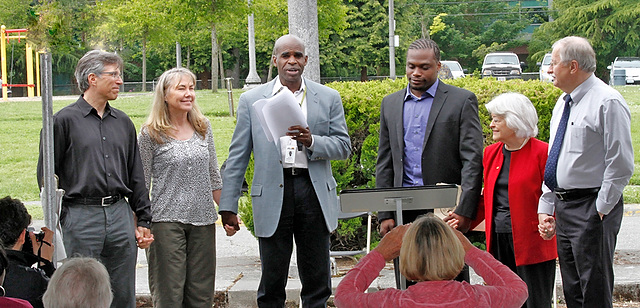
By the dedication of the wider Sand Point campus in 2014, more than 450 people lived in the neighbourhood, over half of them children and young people. Resident Keith Sterling spoke about taking his children into the park and watching them discover the natural world. Brettler shared the occasion with residents, nonprofit leaders and elected officials. The housing belonged to a much larger effort than any one donor.
The uncomfortable arithmetic of doing good
The region’s ambitions ran ahead of its results. In 2015, as King County reached the end of its ten-year plan to end homelessness, the problem had grown. Brettler acknowledged the disappointment. Thousands of people had obtained housing, he said, while more people were entering homelessness than the effort had anticipated.
He also challenged a comfortable assumption about prosperity. A growing economy could coexist with rising poverty. “There’s something inherently wrong with our economic structure,” he said. For someone whose livelihood depended on consumers spending money, that was a pointed observation about what the region’s success was leaving unresolved.
The admission matters alongside the buildings. A completed development can be counted; the wider promise remains subject to rents, wages and the arrival of new households in need. His public work involved living with both facts. The apartments represented real progress for their residents, while the region still had to confront the limits of its strategy.
In September 2019, Dan and Cindy received United Way’s Beacon Award for Visionary Philanthropic Leadership at a gathering at Noreen and Kabir Shahani’s home. Their support had extended to United Way, Plymouth Housing and Solid Ground. Brettler spoke about the friendships his family had gained through the work. A storm arrived as the evening ended. Even a well-connected Seattle gathering must eventually answer to the weather.
When the company became the hard question
The later business story was painful. Wireless Advocates closed abruptly in December 2022. Employees learned that operations were ending immediately. The closure also removed a shared-cost arrangement that had helped support Car Toys’ management and overhead. Two businesses with different storefronts had become financially intertwined.
Car Toys’ audio business was declining, and the company’s revenue fell from $127 million in 2021 to $113 million in 2023. Brettler began lending money to the business in May 2023. By August 18, 2025, his principal loan balance stood at $14.655 million. The founder who had once needed a store of his own was now committing capital to keep a much larger operation going.
On that August date, Car Toys filed for Chapter 11. The subsequent sale process transferred 33 stores and three annexes to five buyers. The completed transactions had a combined purchase price of about $12.15 million after inventory adjustments. Stores could continue with new owners while the original company wound down. Its bankruptcy plan was confirmed in March 2026.
By 2026, Brettler was describing himself as Car Toys’ former chairman and CEO. In a March Reverb podcast conversation, he revisited starting with $30,000, managing growth and building the Costco partnership. The retrospective sat beside an ending that a conventional founder biography might prefer to hurry past. His career contains both the construction of a chain and the loss of the company that operated it.
There is no need to choose one as the whole account. The salesman became an employer. The employer became a housing advocate. His businesses expanded, then encountered problems they could not overcome in their existing form. Families moved into homes he and Cindy helped make possible. Car Toys was the name she suggested for his first shop. Brettler Family Place became another name on the map, with a different kind of permanence to offer.