Marcus Lemonis has a confession that complicates his television résumé. He sometimes falls in love with a business. Or with its idea. Or with the entrepreneur trying to keep it alive. For an investor who asks whether the figures add up, this is an inconvenient weakness. He has a name for it: “romanticizing the business.”
The phrase is useful because it introduces doubt into a career usually presented through decisive interventions. A company has a problem. Lemonis arrives, asks questions, proposes changes and puts money on the table. Yet his own account leaves room for an investor who stays too long, spends too much and mistakes attachment for evidence. The fixer has had to examine the impulse to fix.
That tension gives his story its shape. Across RV dealerships, television programs and home retail, he has made a business out of believing that an operation can improve. He has also learned that belief needs a stopping rule. The difficult part is deciding when to apply it to someone whose hopes you have already agreed to finance.
A childhood between Beirut and Miami
Lemonis was born in Beirut on November 16, 1973. Adopted as an infant by Leo and Sophia Lemonis, he grew up in Miami. His family’s automotive connections gave him an early view of selling, service and the daily work behind a dealership. Long before there was a television audience, there were customers with questions and vehicles that needed buyers.
He went to Marquette University, graduated in 1995 and briefly pursued another route into public life: a run for the Florida House of Representatives. He lost. His degree was in political science, with a minor in criminology. His eventual classroom would be the dealership floor, where explanations tend to be tested against the month’s results.
Lee Iacocca, a family friend, became an influential connection in his move toward recreational vehicles. Lemonis led Holiday RV Superstores before co-founding FreedomRoads in 2003. He became president and CEO of Camping World in 2006. The progression was built around a practical opportunity: bring dealerships together in an industry where ownership was scattered among separate operators.
Consolidation sounds tidy when compressed into a corporate biography. In practice, someone has to persuade a family to hand over a business. There are prices to agree, futures to negotiate and loyalties that do not appear on an inventory sheet. The buyer needs to understand both the operation and the people who regard it as part of their lives.
The greeting desk test
One remembered deal took place at a kitchen table in Akron, Ohio. John Sirpilla recalled Lemonis arriving at his father’s house with cash and equity on offer. It is an appropriately domestic setting for a transaction involving a family business: the future of the enterprise discussed where the family might otherwise have been discussing lunch.
Another glimpse came during a 2014 visit to a Camping World store in Saukville, Wisconsin. Lemonis disliked the arrangement of the vehicles. He wanted better highway signage. He also wanted the greeting desk opposite the entrance. The manager pointed out that the wiring was already in place. Lemonis wanted it moved.
The greeting desk is a small detail with a long shadow. A business can describe itself beautifully while making the first minute of a customer’s visit needlessly awkward. Lemonis’s attention goes to the point where the promise meets the floor plan. The electrician, in this version of business strategy, may have a more consequential assignment than the person preparing the presentation.
Camping World went public in October 2016. By then, Lemonis had also acquired another kind of distribution: television. Viewers could watch him apply the habits of a dealership operator to businesses whose products were small enough to carry home without a tow hitch.
Three words, eight seasons
The Profit, which began in 2013, made his working vocabulary familiar: people, process and product. The three words gave viewers a way into problems that might otherwise have disappeared into accounting language. Who is doing the work? How does it move through the company? Is the thing being sold worth buying?
The program ran for eight seasons. Its premise involved Lemonis investing his own capital in businesses, making the proposed changes more than an exercise in advice. For the audience, a turnaround became something observable: an owner answering an uncomfortable question, a routine being reconsidered, a product being examined with a buyer’s impatience.
People
Who does the work?
Process
How does it get done?
Product
What does the buyer get?
An editorial reading of Lemonis’s recurring business framework.
His teaching puts employees ahead of customers. “The customer is not No. 1 to me,” he says in a lesson on business assets. The reasoning runs through the person making the item, answering the question or handling the handoff. Customers experience a company through the people employed to serve them. An owner who neglects those people eventually sends the consequences out through the front door.
In 2025, The Fixer brought him back to business television. Its companies included a car accessory business, a dog groomer and a gourmet popcorn operation. The merchandise varied; the recurring problems were recognizable. A location could be wrong. A process could be outdated. Spending more money could leave the underlying difficulty exactly where it was.
When affection becomes an expense
The admission about romanticizing matters because it puts a limit on the television premise. An investor can become attached to the person asking for help. Persistence can feel generous. Another cash injection can look like loyalty. Neither feeling settles whether the company can support itself.
In his discussion of business regrets, Lemonis describes becoming caught up in an idea or an entrepreneur and losing sight of business fundamentals. His lesson asks owners to establish a breakpoint: the moment at which continuing ceases to make sense. That is an uncomfortable assignment for someone whose work often begins with persuading another person to keep going.
“romanticizing the business”Lemonis’s description of a business regret
His business education materials offer a plainer discipline: understand the bank balance, the invoices, the spending and the profit-and-loss statement. Check them regularly. The banality is part of the point. A founder’s attachment can be eloquent, while the unpaid bill has only a due date.
There is room for affection in this approach, but it comes with work attached. Learn what the company actually sells. Understand its costs. Ask whether the customer comes back. Those questions can be less flattering than a conversation about potential. They also give a person investing time or money something firmer to hold.
A desk with a different return
In September 2024, Lemonis appeared at another desk. This one was at Marquette, where he and his wife, Bobbi, had donated $15 million to create the Lemonis Center for Student Success. In a photograph from its dedication, he sits on the counter beside students and center director Marilyn Jones. The setting is cheerful, busy and full of university colors.
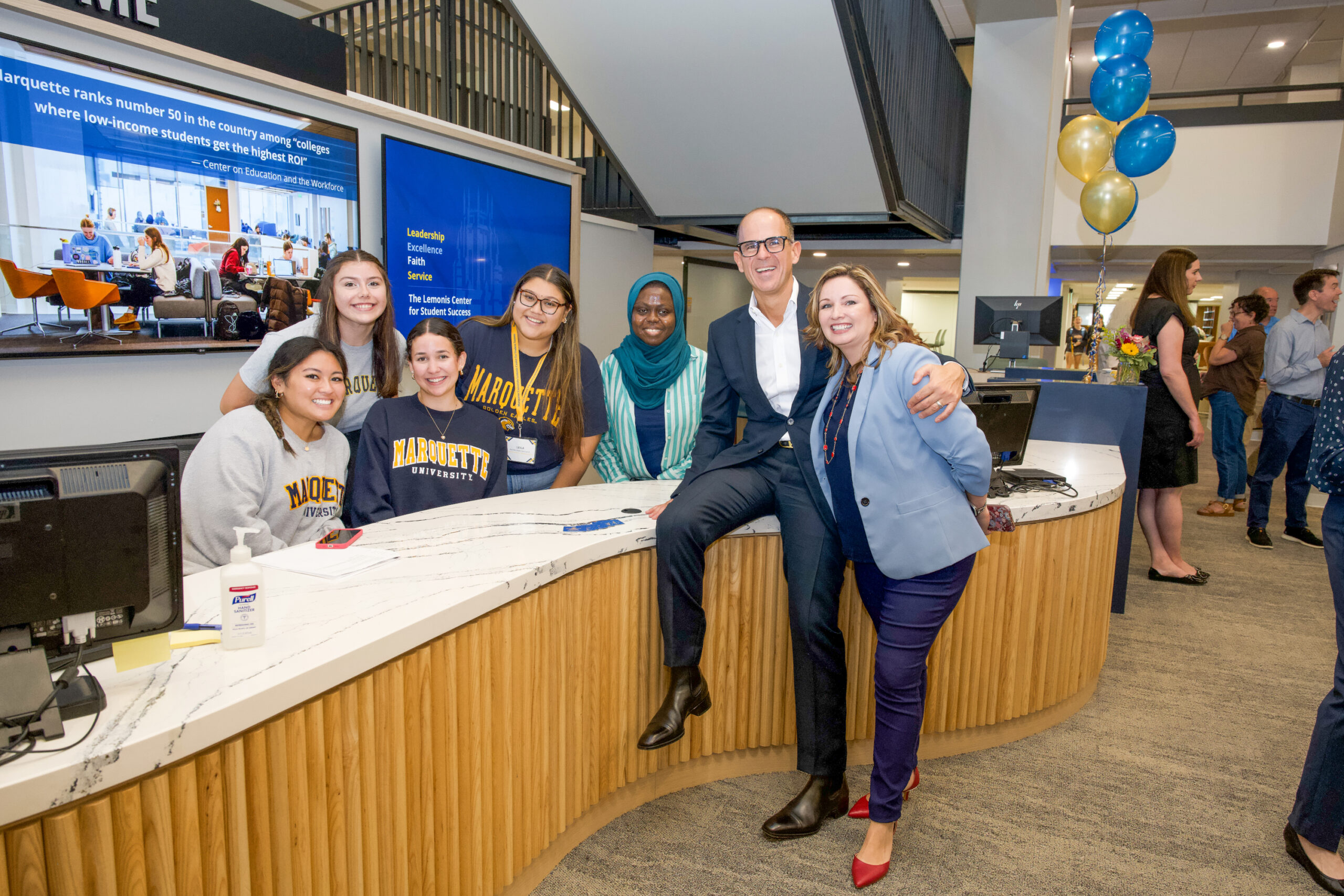
The center opened on the first day of classes in August 2024. It brought together resources that include tutoring, academic coaching and career guidance. A useful detail is the Ask Me Desk itself, staffed by student leaders. It gives a student who does not know where to go a first conversation to have.
The building’s practical arrangements deserve as much attention as the donation. There are additional spaces for tutoring and remote job interviews, along with private pods for calls. Help can exist on a campus and still be difficult to locate. Bringing it within reach requires decisions about rooms, staffing and how someone finds the right person.
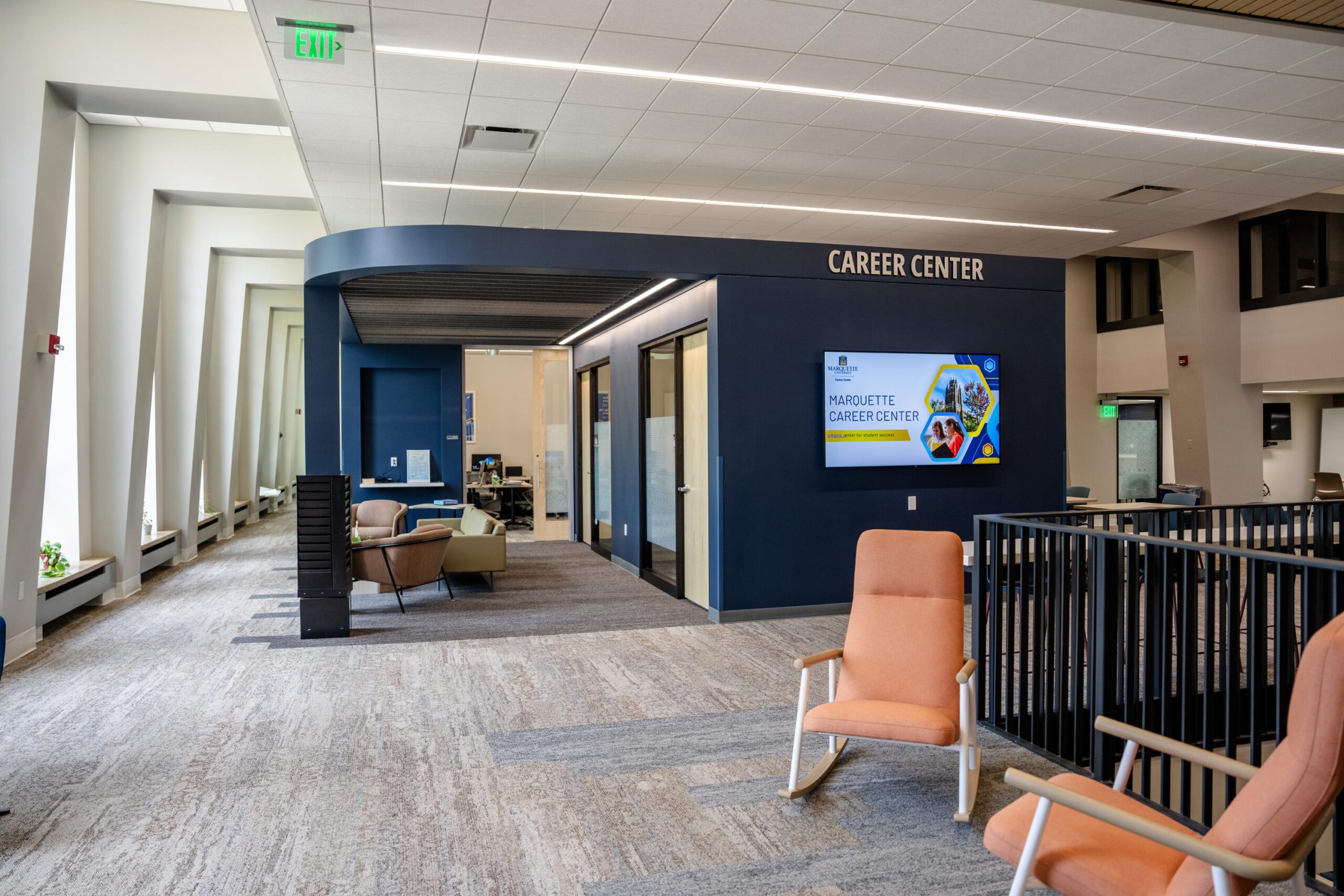
Marcus and Bobbi Lemonis’s gift to create the Marquette student success center.Announced 2022 · Opened 2024
There is also an unexpected college detail in his biography: he competed in javelin at Marquette from 1991 to 1995. The future retail executive spent part of his university life trying to throw an object farther. Years later, he returned with funding for students trying to work out where they wanted to go.
The next business has several front doors
January 2026 changed his corporate responsibilities. Matthew Wagner succeeded him as Camping World’s CEO, while Brent Moody became chairman. Lemonis continued as co-founder and special advisor. He also became CEO of Bed Bath & Beyond’s parent company, retaining the executive chairmanship. Retirement from one chair had left him occupying another.
The new assignment widened his familiar interest in connecting operations. His plan brought home retail together with services and home ownership. In August, the parent adopted the Neighborhood Intelligence identity and announced its move to Nasdaq under NXH. Bed Bath & Beyond remained a consumer brand within the business. The ambition was to follow more of the household’s needs across time.
By October 5, the company was describing a more immediate task: integration and organic growth, with no additional acquisitions anticipated at that time. It announced an equity financing expected to raise roughly $45.5 million before expenses. Lemonis would participate at the same share price as other investors, declining the accompanying warrants. The announcement supplied a concrete capital decision alongside the broader plan.
The outcome remains a business to be operated. A familiar retail name cannot answer every question about costs, service or the next purchase. Those answers arrive through work that is less easily condensed than an episode of television.
Lemonis has spent years asking owners to look closely at what they have built. His current assignment gives him plenty to examine. Somewhere between the affection for an idea and the next operating decision, the figures will need checking again. So will the position of the greeting desk.