A double stroller is an excellent detector of bad retail design. It asks awkward questions of narrow aisles. It makes an expedition of a fitting room. It has very little respect for the mood a merchandising team is trying to create. In the business Mike Tamte built with his wife, Megan, the stroller deserved consideration. So did the woman pushing it.
That small adjustment in attention became a national clothing company. The Tamtes opened their first store in Edina, Minnesota, in 2004. It was called Hot Mama. Mike, an accountant by training, helped turn Megan’s dissatisfaction with shopping into a business that could pay its bills, open another location and keep doing the thing that had made the first one useful.
The origin belongs to Megan: a miserable shopping trip in Northern California, a young child along for the ride, and the feeling that the store had no interest in helping her. Mike’s part begins with taking that experience seriously enough to work on it. The resulting partnership has lasted through a name change, outside investment and an expanding map of stores. A fitting room turns out to contain quite a lot of business.
An accountant meets an idea
Mike and Megan met at North Park University in Chicago. He graduated in 1993 and went into accounting. Long before they became co-CEOs, they enjoyed discussing business ideas and picking apart the experiences they encountered together, including restaurants. An evening out could apparently come with a small, unsolicited management review.
Megan has described Mike as both a maker and a crusher of dreams. It is an affectionate description of a practical role. Ideas kept arriving; he brought a strategic way of testing them. With the store concept, he saw an audience and a reason for the business to exist. Megan developed the vision, and Mike worked on the first business plan at night.
Their division of labor gave the venture two kinds of attention. One concerned the woman entering a store: what she wanted, how she felt, what would make shopping easier. The other concerned whether the store could work as a business. Neither question could be postponed indefinitely. A lovely idea still needs rent money, and a sound budget cannot make an indifferent shopping experience enjoyable.
The first location was at 50th & France in Edina. The couple did not arrive with a history of running shops. They had to learn. Their early proposition was specific enough to guide the decisions: contemporary clothing, help putting it together, and a setting where bringing children would not spoil the visit. The ambition began with a recognizable customer rather than an attempt to please every passerby.
- 2004Edina
The first store - 2005Maple Grove
The second test - 2006Glenview
Across state lines - 2007Cash flow
Funding growth
The second store had to earn its place
The early stores made that customer visible in their layout. There were toys, things to watch, coloring books and room for a stroller. Employees could help with a child while a mother tried on clothes. Animal crackers had a supporting role. Fashion has devoted enormous energy to making people hungry for things; here, somebody also remembered that the children might actually be hungry.
Mike’s financial approach was similarly concrete. The Tamtes set sales targets before deciding whether expansion made sense. A second store followed in Maple Grove in 2005, then a third in Glenview, Illinois, Megan’s hometown, in 2006. Friends and family helped finance the beginning. By 2007, Mike said, the business could fund growth from its own operating cash flow.
“We weren’t going after anybody and everybody,” he said in 2015. In explaining the business, he identified a defined niche, desirable contemporary merchandise, customer service and careful financial management. The list is revealing for its lack of magic. It puts the shopper and the accounts in the same conversation. The concept had to be appealing enough to bring people in and disciplined enough to stay open.
That pairing helps explain his place in the founding story. Megan could name a feeling that stores were failing to address. Mike helped give the response a repeatable form. Opening another shop meant making another commitment to that customer, with another lease and another team attached. Expansion brought the practical question back each time: could the next location support the experience they wanted to offer?
“We weren’t going after anybody and everybody.”Mike Tamte, 2015
A name with the wrong instructions
By 2014, Hot Mama had 48 stores and a problem printed above the door. People mistook it for a maternity retailer. The name that had seemed to identify the audience was sending some shoppers toward a category the company did not sell. A sign can do a surprising amount of mischief while standing perfectly still.
The Tamtes chose EVEREVE and planned a rebrand costing about $1.5 million. Mike recalled considering thousands of names. Trademark availability and a usable web address mattered alongside the meaning. Then came the less glamorous work: explaining the change, replacing signs and helping existing customers recognize the business they already knew.
They used emails, in-store fliers and a video, with signage changes scheduled across the chain. This was a logistical decision as well as a creative one. For Mike, the new name had to travel across locations and screens. A growing retailer could not afford to keep introducing itself in a way that required a correction.
Estimated investment in the 2014 move from Hot Mama to EVEREVE.
Accepting help, then offering it
In April 2015, EVEREVE announced an investment from Winona Capital, the Lewis family and Prairie Management Group. The company then had 52 stores and more than 800 employees. The founders and their management team would continue in their roles. The arrangement brought capital for national growth and new people to the board, including Crate & Barrel co-founder Gordon Segal.
It also changed the circle around a business that had begun with family-and-friends support. Opening stores across the country involves decisions that extend well beyond selecting clothes. Locations, staffing, inventory and investment must line up. A founder who began by assembling a plan now had experienced retail and investment partners at the table.
Years later, the Tamtes were able to take a place on the other side of that early funding conversation. They supplied the first personal investment for Michael Druskin’s menswear retailer Jaxen Grey, which opened in 2019. Mike chaired its board. The interest was in another curated, multi-brand shopping concept, with a different customer and a merchant leading it.
In 2023, EVEREVE itself became an equity investor, taking a 17 percent stake. Mike said he brought the opportunity to EVEREVE’s board once he believed it served the company’s interests. That sequence matters: the couple’s personal backing came first; the corporate investment followed later. It shows the different responsibilities that accompany being a founder, an investor and a steward of somebody else’s company capital.
The office door and the wider map
There is a smaller picture of Mike that sits alongside the investment announcements. In a 2022 workplace post, an EVEREVE colleague described trying to take his photograph through the glass of his office without interrupting a virtual meeting. He paused for the picture. The colleague used the moment to describe his willingness to give people attention. It is one person’s account, but a pleasantly specific one: leadership measured in a few seconds at the office door.
Mike has also talked about the influence of playing sports on his leadership. His public conversations return to the work of building a team: hiring, technology talent, stores, digital marketing and a purpose that employees can carry into daily decisions. The business grew beyond a couple’s ability to deliver the experience personally. Other people had to understand it well enough to make it their own.
There were more ways to reach the customer, too. Trendsend took personal styling into a delivery box. E-commerce gave the company a business beyond its shops. In 2022, online sales passed $100 million for the first time. For the following year, the Tamtes discussed enlarging existing stores to make room for categories such as footwear and outerwear. Growth could mean giving an established address more space.
The founders’ intentions also included giving money away. Opportunity International describes their pledge, made before the first store opened, to donate 10 percent of profits to charitable causes for women. Its partnership with EVEREVE supports women building businesses. That commitment puts another claim on the profits Mike’s financial discipline helped make possible, reaching people far outside the fitting rooms.
In Sioux Falls, the connection between attention and expansion was unusually direct. Before the store opened in 2019, Mike spoke of repeated requests arriving by email, social media and phone, along with customers who lived there but shopped elsewhere in the chain. They had waited for the right location. Listening could identify a market; finding an appropriate space still took time.
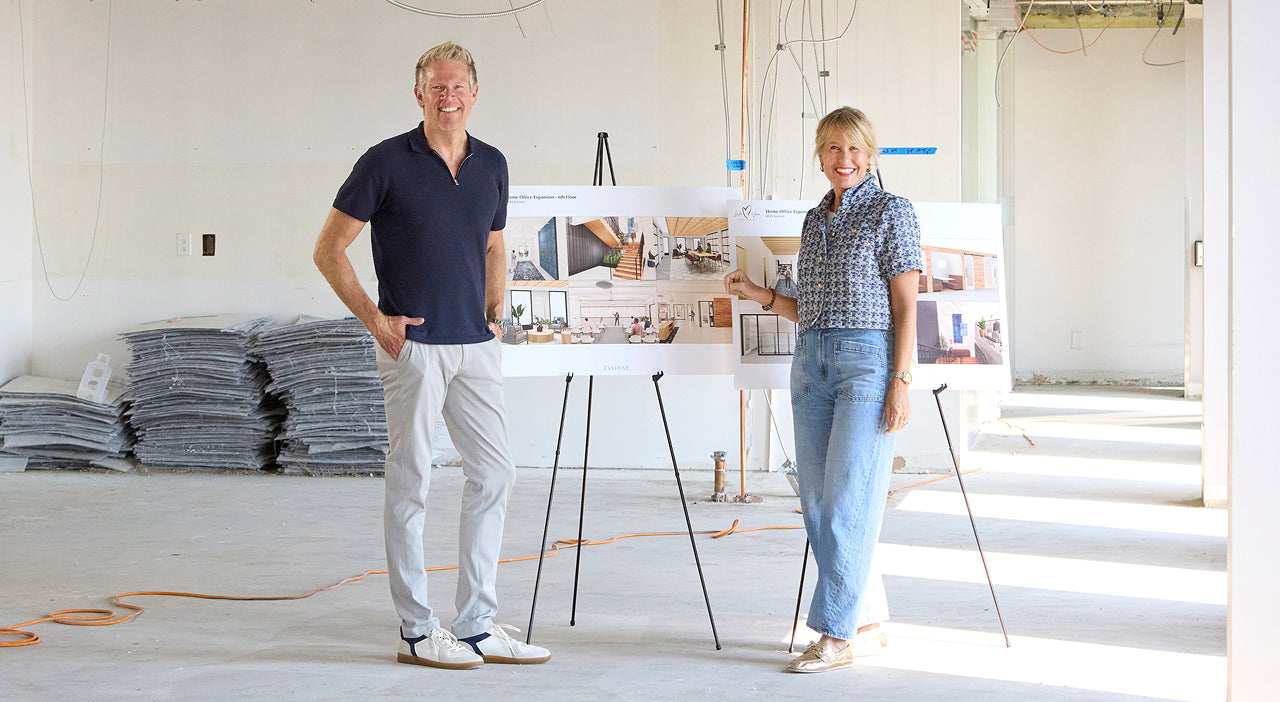
The next chapter has more room in it again. EVEREVE’s 2026 company timeline describes a home-office move that doubles its footprint and plans for a store count above 115. The numbers remain attached to the same partnership: Megan imagining how shopping could feel, Mike helping work out how the company could deliver it. Their story began with a customer who wanted some help. Keeping that request audible as the business grows is still a job for both of them. Every additional store puts their original idea in front of another team and another group of shoppers. The plan has grown considerably since those evenings at work, but its success still depends on what happens when someone asks for help.