Megan Tamte wanted help getting dressed. The request sounds modest enough to fit between errands. She was a new mother, trying to find clothes that belonged to the life she was living. Instead, a shopping trip ended with her crying in a dressing room and going home empty-handed. A retailer had offered things to buy. What she wanted included another person’s attention.
The trip stayed with her. On the drive home, she began imagining a different experience: modern clothes she could actually wear, someone who understood what she was looking for, a place where asking for assistance felt ordinary. Much later, that idea would become EVEREVE. At the beginning, it was one woman considering why an afternoon that should have been enjoyable had gone so badly.
There is a particular indignity in being surrounded by merchandise and still feeling that nothing is meant for you. The racks are full; the choices are abundant; the customer remains stranded. Tamte’s response was to take that feeling seriously enough to work on it. She would eventually build a company around the conversation missing from that first fitting room.
Seven years, then a signature
The familiar version of an entrepreneurial beginning moves quickly. Someone notices a problem, starts a company and acquires a respectable photograph. Tamte’s beginning took seven years. The distance between imagining the store and opening it contained uncertainty about whether a former teacher could run a business, as well as the practical demands of raising children. An idea can be persistent without being immediately executable.
One evening supplied an unexpected nudge. Watching the season-two finale of American Idol, Tamte realized she was spending time watching other people pursue their ambitions while leaving her own untouched. She gave up evening television and began writing about the store she wanted to create. The entertainment industry had inadvertently acquired a competitor for her attention: a blank document.
Her husband, Mike, became her business partner. The written dream developed into a business plan, and in 2004 they opened their first store in Edina, Minnesota. Its name was Hot Mama. Before customers could come through the door, the couple signed a lease with a million-dollar personal guarantee. They did not have a million dollars. The signature was a more exacting expression of confidence than any pep talk.
Between the idea and the first store. The door opened in Edina in 2004.
The early proposition took a mother’s shopping circumstances seriously. Toys in fitting rooms gave children something to do while their mothers tried on clothes. Warm service and help assembling outfits were part of the offer. Those choices made the original frustration tangible. Someone had considered what bringing a child into a store actually required, down to the minutes spent behind a fitting-room door.
The teacher goes back to school
Tamte had taught third grade. Her earlier career did not provide a ready-made map for opening a clothing boutique. After signing the lease, she and Mike went to the library and borrowed books to learn how to do it. It is a pleasantly unglamorous detail. They had accepted an enormous obligation, then sought instruction through the same civic institution that helps people mend bicycles and identify birds.
She became a student of the business and sought expertise she lacked. An early buyer brought experience from Nordstrom. Learning also involved deciding which opportunities to refuse. Hot Mama briefly sold maternity clothing, a seemingly sensible addition for a store associated with mothers. Tamte removed it despite its profitability because it pulled the business away from her intended focus. A plausible extension could still send the store in the wrong direction.
Another connection came from an earlier part-time job at Crate & Barrel in Walnut Creek, California. Years later, Gordon Segal, that company’s co-founder, became an investor and adviser to EVEREVE. A Winona Capital partner had introduced the Tamtes to him. During a meeting, Megan showed Segal a photograph from her days working for his business. The former employee now had a retail concept of her own to discuss.
That encounter gives the story a satisfying loop, but its usefulness is practical. Tamte was willing to learn from people who had built something before her. The dream was hers; the knowledge needed to carry it out could come from elsewhere. For a founder, being clear about the customer and being candid about one’s own limitations can belong comfortably in the same meeting.
A name that needed more room
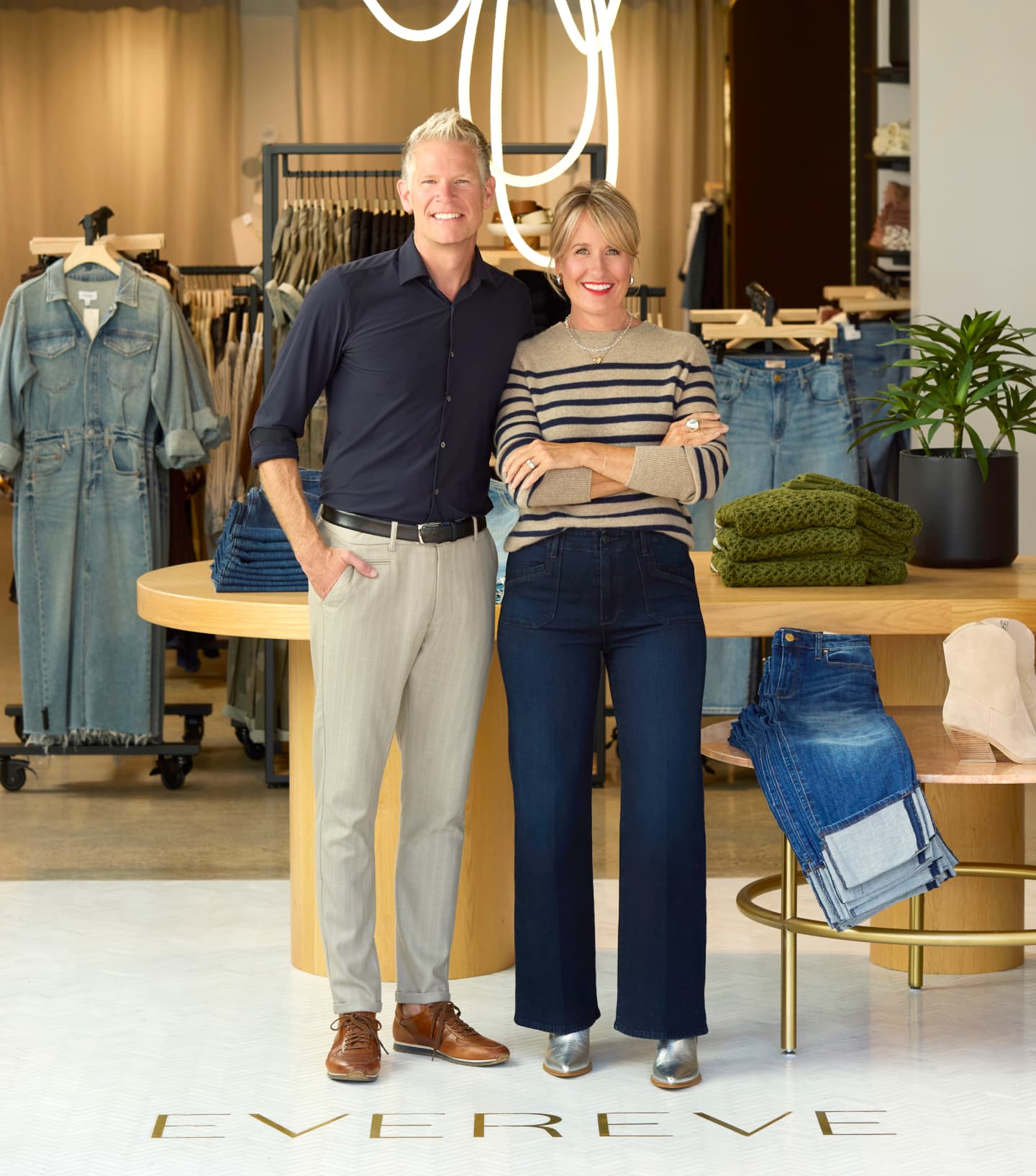
By 2014, Hot Mama had a problem printed above its doors. The name could suggest maternity clothing and could make women without children wonder whether the store was for them. A label meant to celebrate a customer had become an imperfect explanation of the merchandise. Success had given the Tamtes more reason to protect the brand, and more reason to reconsider it.
They changed the name to EVEREVE. The transition cost $1.5 million, a considerable bill for changing what customers were already accustomed to calling the place. It also required explanation. A name is a small piece of language carrying a large amount of expectation. Altering it meant asking shoppers to keep the relationship while learning a new word.
The business continued finding ways to carry its styling service beyond the original store. Trendsend launched in 2015, putting personalized selections into boxes sent to customers. In 2022, EVEREVE introduced its own denim line. The official company timeline records its 100th store, at Houston Galleria, in 2024. These milestones describe different kinds of expansion: geography, delivery and the clothes themselves.
- 2004First store
Edina, Minnesota - 2014New name
Hot Mama becomes EVEREVE - 2015Trendsend
Styling travels by box - 2024Store No. 100
Houston Galleria
Five words that have to survive expansion
Tamte’s approach to culture has its own vocabulary. EVEREVE’s HEART values are humility, empathy, authenticity, relationships and tenacity. Read together, they contain a useful tension. Tenacity asks people to keep going. Humility asks them to recognize that continuing may require help, correction or another person’s better idea. Both were necessary when the founders were learning how to open their first store.
She has described hiring and leadership in terms of finding people’s strengths rather than expecting a collection of flawless employees. Her children saw the less polished side of building a company too: uncertainty, frustration, risk-taking and repeated practice before a speech. The achievement they witnessed included the work leading up to it. The finished presentation was only one part of the education.
“Our heart and soul are the stylists.”
Megan Tamte
Her language about selling is similarly personal. She calls the approach “courageous authenticity”: telling the truth and behaving like yourself. That matters in a store where the customer is asking for judgment about something she will wear in public. Assistance has to feel credible. A person trying on jeans can usually detect when enthusiasm has become a reflex.
Growth makes all of this harder to preserve. One founder can personally set the tone in one room. A national retailer needs other people to carry it into many rooms, including the ones she never visits. Tamte has discussed working with Brené Brown while developing the culture. The challenge is recognizably hers: make the welcome repeatable without making the interaction feel rehearsed.
Making questions welcome
Tamte continues styling customers herself. Her Styled by the CEO series brings that work onto social media, where viewers can watch help being given rather than simply see an outfit after the decisions are finished. The title places an executive where the founding idea began. A fitting room remains a place to learn what a customer actually needs.
In March 2026, EVEREVE launched its first national brand campaign, Ever Wonder?, developed with YARD NYC. It grew out of a survey of 1,000 U.S. women over 35 who regularly shop for clothing and seek styling advice. The results suggested that enjoying fashion and finding it difficult can coexist. The campaign made the questions themselves part of the invitation.
Among EVEREVE’s survey respondents
Company survey of 1,000 U.S. women over 35 who regularly shop for clothing and seek styling advice. These figures describe that surveyed group.
The listening extends inside the business. Ever Wonder prompts in the home office invite employees to submit their own styling questions. Tamte has described wanting questions to arrive regularly from stores, social channels and teams. She contributes her own uncertainty too, including how to pair an oversized shirt with jeans. Owning a fashion company apparently does not exempt anyone from the occasional wardrobe puzzle.

A life beyond the company
There are other rooms Tamte has had to make time for. After years concentrated on work and family, she deliberately put making friends onto her weekly calendar. Her account of seeking closer friendships later in life applies some of the same initiative to a less commercial task. A calendar can contain an invitation as easily as a meeting, provided someone makes room.
She and Mike also maintain their own identities at work. She has described recognizing their different strengths and spending much of the working day separately. Partnership needs its own practical arrangements; sharing a company does not make every business trip a holiday. Their shared project has lasted through changes in the business and through raising two children into adulthood.
In September 2026, Tamte returned to the founding journey in a long podcast conversation about motherhood, entrepreneurship and partnership. The story still begins with a customer who wanted help. Its persistence is revealing. Years of expansion have supplied plenty of other milestones, yet she keeps returning to that ordinary request. A woman is trying to get dressed for her life. Someone should stay long enough to understand it.
Keep the conversation going
- EVEREVE’s story
- Megan on LinkedIn
- Megan on Instagram
- Megan’s Substack
- By All Means: Megan and Mike
- The founding journey with Holly Knoll
- 2026 Who What Wear conversation
- Who What Wear’s YouTube interviews
- Reclaiming Your Hue, September 2026
- Inside Ever Wonder?
- The 2014 name change
- Learning to open the first store
- Leadership and HEART values
- Megan’s career conversation
- Friendship and making time
- Early reflections on leadership
- Styling and priorities
- Crate & Barrel connection
- Borrowing books to begin
- Writing the dream