Missy Park mailed 13,000 catalogs and received 56 orders. Only seven came from people she did not know. The arithmetic would have made a discouraging postcard. It was 1989, she had merchandise in a Berkeley garage, and the American public appeared quite capable of continuing its day without buying a basketball from her.
There were basketballs in that first catalog. There were cycling clothes and running shorts, too, but no tops or tees. Four sports bras appeared in black and white. Those sold. A business intended to outfit women athletes began learning, item by item, what those women actually wanted to order.
Park had a reason to care about the answer. She had spent years competing in sports where the invitation to play came with equipment designed for men. She wanted women to have choices that began with their own experience. The gap between that ambition and seven unfamiliar customers was the space where she would have to learn retail.
Seven strangers said yes
A successful company makes a poor witness to its own beginnings. Once it exists, every early accident starts to look like preparation. Park is suspicious of that tidy version. Her memories leave room for wrong turns, awkward names, unsold goods, and help that arrived from other people. The garage was a place to keep inventory. It also flooded.
The name came during a visit to Moe’s Books in Berkeley. Browsing a book about the women’s movement, she reached a section about Title IX. Here was a name connected to something she had lived. She had considered other names, including Cheetah Sports. The bookstore supplied a better answer than another session of inventing fast animals.
Title IX had passed in 1972, when Park was ten. Growing up in South Carolina, she had been a girl who wanted to play. The law helped make that desire ordinary enough to act on. Naming a shop after it connected her future customers with the opportunities that had carried her into college sports.
A guard changes benches
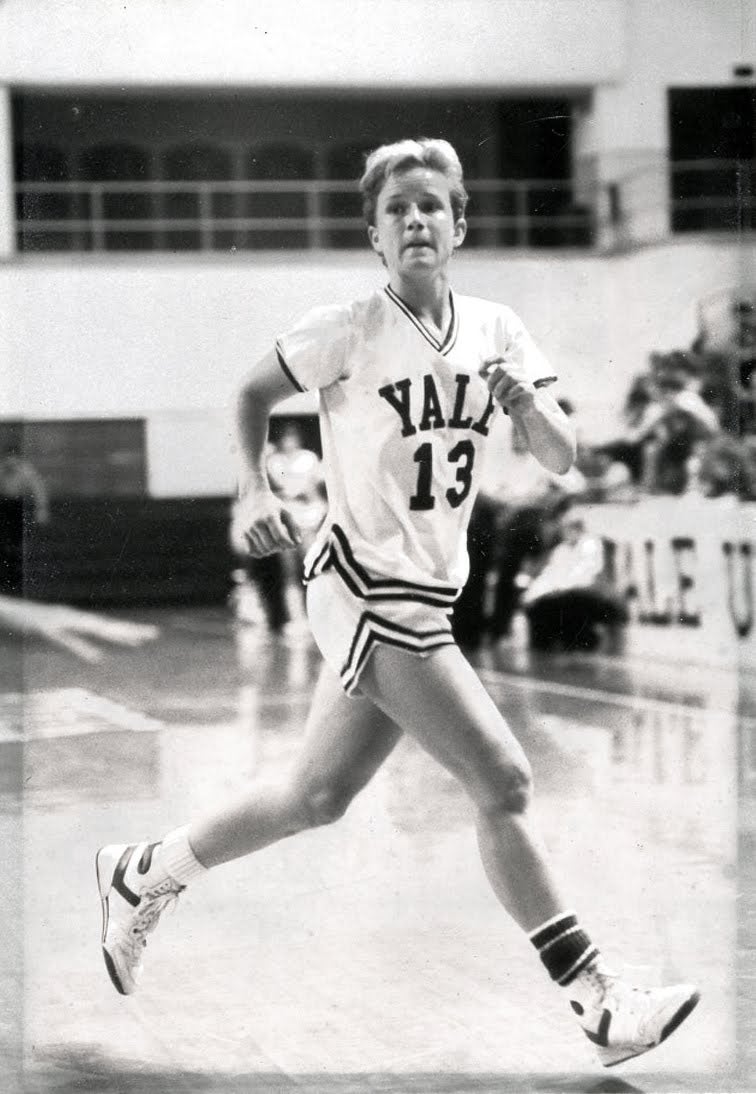
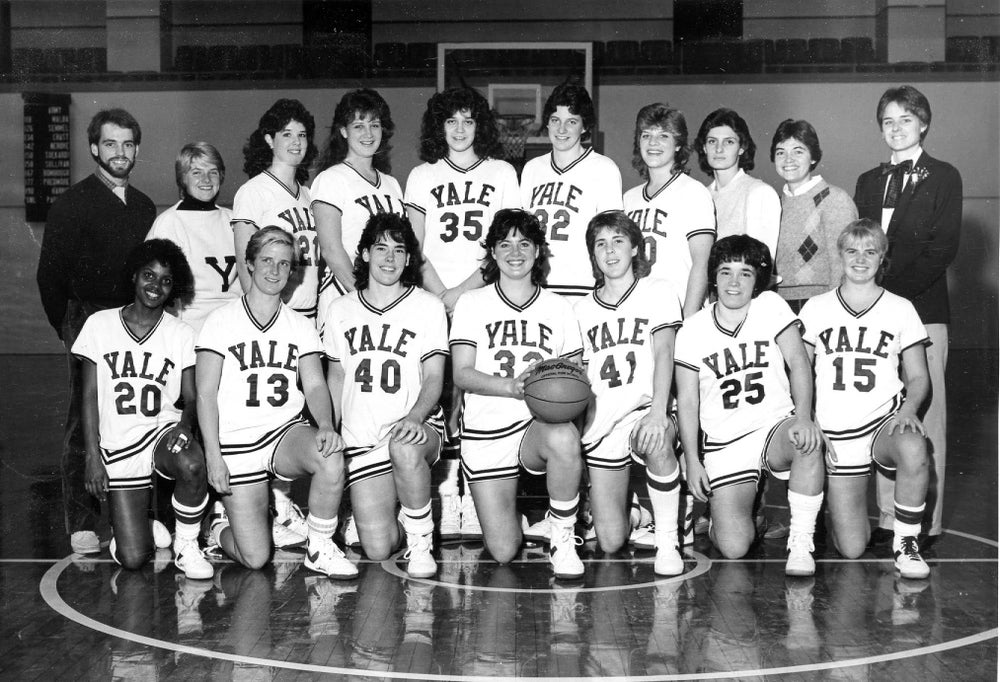
At Yale, Park played basketball, tennis, and lacrosse. The athletic experience matters beyond supplying a founder with a useful origin story. It put her among women who used equipment, compared it, complained about it, and understood exactly what a badly fitting uniform could do to an otherwise good afternoon.
Her lacrosse career has a small, appealing marker: the team’s Most Improved Player Award in 1983. It is an award for movement between two points. You can be delighted by it without pretending it means you arrived fully formed. For a future retailer who would have plenty to learn, it makes a fitting entry on the record.
She graduated in 1985 after four years of varsity basketball and moved to Harvard as an assistant coach. The following January, a game against Yale put her professional duties opposite her friendships. Some of the players on the other bench were among her closest friends. She called it her least favorite game of the season.
That moment gives the usual phrase about business being a team sport a little substance. A team is made of actual attachments. Changing benches does not erase them. Before Park was responsible for merchandise or a payroll, she was already learning how to care about people while accepting a job that required difficult choices.
Four years before the black ink
Park’s approach to starting was deliberately inexpensive. Advisers had told her a retail startup would require at least half a million dollars. She did not have it. She began with a small flyer sent to sporty women she knew, keeping the experiment cheap enough that mistakes could teach her without consuming a fortune.
“Fail faster to succeed sooner.”Missy Park
The sentence is brisk. Living through it is slower. A catalog needs merchandise before the orders arrive. Unsold merchandise occupies both space and money. Getting a customer to buy once is useful; getting enough customers to return is what makes next season possible. Park’s first profitable year came in 1993, four years after she began.
Suppliers helped make the timing work. Some allowed her months to pay for goods. She could order stock, sell it, and use the proceeds to settle the bill. The arrangement depended on trust and turnover. It gave a business without institutional backing a way to keep moving, provided the clothes moved too.
The result was independence built through ordinary commercial obligations. Other people had a stake in her doing well even when they held no shares. A vendor waiting for payment was taking a chance. A customer ordering again helped finance the next round. Ownership remained with Park; the work of sustaining it involved a much wider circle.
The people wearing the gear
In the early days, friends and teammates modeled for the catalog. They could do the sports, and they worked for free. Photo shoots had to fit around their tournaments. Park tried taking photographs herself, with results the company remembers less fondly than her prices. A founder can save money and still discover she has chosen the wrong second career.
That connection between the people in the pictures and the people using the products survived the garage. In 2017, Park described models with jobs, families, and sporting adventures. Her description of the staff included product makers, data enthusiasts, and spreadsheet specialists. There was room for competence and for the fact that people sometimes came back to work sweaty.
By January 2024, she was marking 35 years of women athletes and adventurers running the business. Her emphasis remained on testing: wearing the gear, trying the bras, choosing among other brands as well as selling Title Nine’s own products. A retailer has to earn the right to recommend something. Familiarity with the logo is a rather low bar.
The company’s public account of itself still puts women’s ownership at the center and says it has no outside investors. That choice has implications for the workday. It keeps product judgments and business decisions within an organization built around the women it serves. Park’s experiment has lasted long enough to become someone else’s ordinary place of work.
Make room for the next owner
Park’s business had received early help from women who already knew the apparel trade. As Title Nine grew, helping other founders became part of the work. A young company can have a promising product and still struggle to reach a buyer. The missing piece may be a relationship, rather than another improvement to the merchandise.
Title Nine’s Pitchfest creates that encounter. Women entrepreneurs present products and meet a retailer that can offer an order and access to its customers. The wider Movers & Makers program brings women-owned brands into the assortment. Park has spoken about helping those businesses remain independent, an ambition that turns a buying desk into a place with consequences beyond its own sales.
There is reciprocity in these relationships. The Practice Space, a nonprofit Pitchfest winner, later helped coach Park for her How I Built This interview. A founder with decades of experience could still accept help preparing to tell her story. The people receiving an opening were also people with something to offer her.
The million-dollar decision
In the summer of 2021, while the U.S. women’s soccer team competed in Tokyo, Title Nine contributed $1 million directly to the players association to help close the pay gap. It also created the Kick In for Equal Pay Fund and committed to matching contributions up to another $250,000.
Contributed directly to the U.S. Women’s National Team Players Association.
Plus a pledge to match fund contributions up to $250,000.The fund was managed by the players association, and Title Nine covered the processing fees. Those details matter. They describe where the money went and who could decide how to use it. The campaign’s contribution period has since closed; the fund remains a resource for the association’s work.
For a company named after a change in women’s opportunities, the check made the connection unusually visible. A shop can celebrate athletes in its pictures. Park’s business also spent money on the terms under which athletes work. The commercial operation and the conviction had to share the same balance sheet.
Two dollars left in the pants
By April 2025, Park was explaining another balance sheet problem in public. Her example began with a $100 pair of pants. Making the product absorbed $49. Selling it took $29. Shipping and returns took $12. Overhead took $8. After all that, the business had $2 of profit.
- Product
- $49
- Selling
- $29
- Shipping + returns
- $12
- Overhead
- $8
- Profit
- $2
Park’s illustrative breakdown, April 25, 2025. Additional tariffs in her example added $20.
The additional tariffs in that example added $20. She answered customers’ questions by showing the costs, including returns and the advertisements that follow shoppers around the internet. It was a plainspoken explanation of how little room a price can leave. The pants were still pants. The arithmetic had changed around them.
Park’s story keeps coming back to this combination of conviction and calculation. She wants women to own, risk, and lead. She also needs the next order to work. In her conversation with Guy Raz, she gave luck a large share of the credit for her career, including her upbringing, opportunities, and people who offered help. The work was the part she could control.
That seems a reasonable place to leave a founder who dislikes a neatly tied bow. Seven strangers ordered. Other people extended trust. The merchandise taught her what sold. Decades later, she was still explaining the numbers, still making decisions about who gets an opening, and still treating ownership as something to do with the people around her.