The sum was fourteen dollars. Not fourteen thousand, not fourteen hundred. Fourteen. A Boulder coffee shop had reordered the oat bars Beryl Stafford had delivered in plastic wrap with a handmade label, and after the arithmetic was finished, the founder had earned about the price of lunch. It was 2003. She knew very little about food manufacturing and even less about sales. Yet the second order contained information more valuable than its margin: somebody had eaten the thing and wanted another.
The product itself had arrived by a route too domestic to impress a venture capitalist. On a rainy Sunday, Stafford's 14-year-old daughter, Alex, opened a cookbook and made a gooey oat treat with butter, corn syrup and white sugar. Alex was nicknamed Bobo. Her mother, newly single and looking for a way to support two daughters, began revising the recipe with vegan and non-GMO ingredients. After many trials, she had four flavors, a name and the outline of a living. That distinction mattered.
A friend drew the logo with a Sharpie at Stafford's kitchen table. This was branding in its most literal condition: a friend, a pen, a table. Stafford went to a local printer for labels, wrapped the bars herself and carried them into coffee shops. She later joked that the first shopkeepers may have felt sorry for her. Her heart was pounding, and there was no presentation. The bars sold anyway.
A reorder after roughly one month. The money was modest; repeat demand was the revelation.
01 / PavementThe education arrived after the product
Stafford had spent time in kitchens as a child and enjoyed baking with her daughters. That experience did not teach shelf life, cost of goods or distributor terms. She learned those in sequence because each new customer created a new problem. Coffee shops led to co-ops. Co-ops led to a rented commercial kitchen. A local Whole Foods led to packaging questions that a home baker had no reason to anticipate.
The early routine was resolutely unglamorous. She bought ingredients at retail, cold-called stores, staffed demonstrations and went to every trade show she could afford. A distributor told her it would carry Bobo's on the West Coast once the product reached 30 stores. She shipped samples around Colorado and California until she hit the number. Later, distribution spread east. Stafford called it “pounding pavement,” an excellent phrase because it removes all romance from the shoes.
“I knew nothing about the food business, manufacturing or even sales.”Beryl Stafford
Ignorance did not make the work easy, but it left certain conventions looking negotiable. Advisers urged Stafford to shrink the three-ounce bar so it could sell at a lower price. She kept it large. Co-manufacturing offered the usual way to increase output. She chose to keep baking in-house. Conventional bars emerged from equipment with four crisp corners. Bobo's would remain a soft mini-loaf, a little irregular, unmistakably baked.
The stance was less precious than practical. Stafford believed the product was the reason to have a company. Its size, moistness and homemade appearance were part of the proposition. Efficiency that removed those qualities would have made a more economical imitation of somebody else's snack.
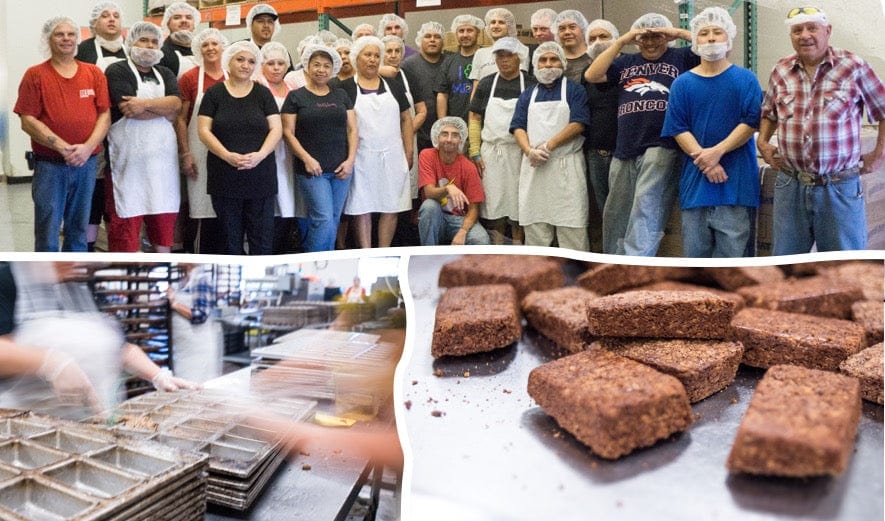
02 / MachineryHow to industrialize an imperfection
Shelf life presented one of the first serious tests. The early cakes lasted about three months, shorter than many grocery bars. More protective packaging would help, but Stafford wanted customers to see the crumbly, homemade surface. After research and restrained design changes, she bought a packaging machine. The reported price was about $25,000, a bracing figure for a company financed through reinvested profit, credit cards, a small bank line and eventually a second mortgage.
This is where instinct becomes expensive. It is easy to praise one's gut when the wager is an afternoon. A machine and a mortgage clarify the sentiment. Stafford bootstrapped Bobo's for roughly 12 years and managed every aspect herself. She has said she asks many questions and can ruminate, but returns in the end to her own judgment. Her slowness was useful. It limited the size of mistakes and kept her near customers long enough to understand what they were buying.
By 2016, TJ McIntyre had joined as chief executive, giving Stafford senior operating help after years of carrying the whole firm. In 2017, Bobo's announced its first outside capital, an $8 million minority round. Money accelerated sales and marketing, but it also changed the pressure around a company that had grown according to the founder's own cadence. Stafford has spoken candidly about burnout and the altered expectations that arrive with investors.
The physical culmination came in 2022 in Loveland, north of Boulder. A 123,000-square-foot bakery consolidated offices, production, packaging and warehousing under a wind-powered roof. Its 24 ovens could produce one million bars, bites or toaster pastries a day. Automated equipment was selected to mimic the handmade appearance of the flagship bar. Industrial engineering had received a charmingly perverse brief: please make a million things that do not look too perfect.
“I liked being in control of each hand-baked bar. The bars were perfectly imperfect, and I wanted them to stay that way.”Beryl Stafford
03 / CompanyA family recipe meets other families
The name kept the origin in view. Bobo was not a focus-group invention or a word engineered to travel neatly across categories. It belonged to Alex first. The company later added Stuff'd bars, bites, toaster pastries and PB&Js, but its public language continued to revolve around home, family and love. That can become cloying in lesser hands. Here it had documentary value. A mother and daughter really did begin with a mixing bowl on a wet afternoon.
Stafford also understood that a family story has to function on an ordinary Tuesday in a factory. Demand brought more space, tighter quality controls and more employees. In the first years, the bakery staff grew from one person to 100. The founder who had done everything had to let specialists do their work while defending the few details she considered indivisible from the product.
She describes herself with more humor than grandeur. Recalling her first pitches, she admits the fear. Recalling advice, she confesses to rumination. Asked about inspiration for flavors, she credits customers and employees: “I listen to my people.” Her reported favorites have migrated over time from Lemon Poppyseed to Almond Butter and Chocolate Almond Sea Salt, proof that even a founder may revise her loyalties without calling a board meeting.
04 / ReturnThe founder goes back to school
In March 2026, Stafford sat for a long How I Built This interview. The title supplied the rounded figure that now follows Bobo's: a $100 million business. More interesting were the details that survived the rounding. A $25,000 packaging machine. Endless demonstrations. The strain of Costco-scale demand. The moment when a founder must hire a chief executive because competence now requires an organization.
Two months later, she returned to the University of Colorado Boulder, where she had studied, to address the largest graduating class in the history of the Leeds School of Business. Her recipe for the occasion contained three ingredients: grit, instincts and determination. Her lessons were more pointed. Ignore naysayers. Feel fear and proceed. Be willing to wear the hairnet and host the demo. Stay humble.
“Find your cheerleaders,” she told the graduates. “There's strong magic in that.” It was perhaps the day's most faithful summary of Bobo's. The official founder is Beryl Stafford, but the cast has always been plural: a daughter with a cookbook, a friend with a Sharpie, baristas who placed a second order, buyers who clapped when she reached Whole Foods, bakers who translated a home texture into daily production.
Stafford has joined the board of Colorado grain company Dry Storage and remains publicly identified as Bobo's founder and president. She plays tennis and rides a road bike. The company she began as a way forward has stated an ambition to last 100 years, a timescale that makes the first two decades look like preheating.
The $14 is still the better number. A hundred million dollars describes scale after everybody agrees. Fourteen dollars describes the instant before certainty, when the label is crooked, the pitch is shaky and one person has come back for more. Stafford noticed. Then she got busy.