The biscuit was not supposed to become a business model. It was supposed to be breakfast. Yet the ones Ayeshah Abuelhiga could find after college had the peculiar gloom of food designed by committee: processed, forgettable, and a poor substitute for the cooking she remembered. She had grown up around a Baltimore carry-out, where her immigrant parents sold soul food and American comfort dishes. Her Korean mother and Palestinian-Israeli father did not agree on each other's cuisines. Fried chicken, however, proved diplomatic. A flaky biscuit could cross a border before anyone had time to draw it.
For Abuelhiga, food was never merely nostalgia. Her family had little money, but her parents insisted on balanced, home-cooked meals and bought bruised produce at farmers markets to make the budget work. She saw early that access and appetite were linked. Good food could be humble without being careless. Comfort did not require a chemistry set.
The obvious career, however, was not restaurants. Entrepreneurship was barely visible from where she stood. The acceptable ambitions were the sturdy ones: doctor, lawyer, teacher. Abuelhiga went to George Washington University, studied international affairs and geography, then spent roughly a decade and a half moving through technology, consulting and automotive work. Her résumé passed through companies including Leidos, Toshiba and Audi, with consulting work at Microsoft. She learned how large organizations sell, operate and decide. She also learned how long a corporate ladder can feel when the people above you appear permanently installed.
She had practiced being conspicuously prepared. A public biography records a 4.0 grade-point average, a term as class president, captaincy of a varsity track-and-field team and editorship of the school paper. That appetite for responsibility makes the later leap less mysterious. The restaurant was a risk, but not an improvisation without witnesses: roughly 350 Kickstarter backers helped finance the start. Abuelhiga was changing industries, not personalities. She carried the same competitive habit into a field where the scoreboard was suddenly a line of hungry people and the clock was the moment the kitchen ran out.
Four blocks of evidence
In 2014, she started Mason Dixie with a plan to clean up fast food. The first form was a pop-up in Washington, D.C., then a biscuit-centered restaurant. The ambition was broad; the premises were not. One early market stall measured about 80 square feet, hardly enough room for a culinary empire but quite sufficient for a queue.
Customers wrapped around several blocks. The kitchen sold out. The team doubled production for the following day and sold out again. It was gratifying, frantic evidence that people wanted scratch-made comfort food made with ingredients they recognized. The scene also contained a warning familiar to restaurant operators: popularity can fill a dining room while trapping the business inside it. Every plate still needed a kitchen, a counter and a customer standing within reach.
Then the regulars began asking a useful question. Could they buy the biscuits to bake at home?
Abuelhiga froze the dough, bought a vacuum sealer and packed the biscuits into an ice chest. There are grander origin stories in corporate folklore, involving garages, napkins and unusually prophetic whiteboards. The ice chest has the advantage of being both less solemn and more revealing. She was not guessing what a theoretical shopper might want. Her customers had already eaten the product and requested a way to keep it.
The shopper who did not introduce herself
A regional Whole Foods representative visited the operation quietly, effectively secret-shopping the young business. Not long afterward, the retailer invited Mason Dixie into stores. It was the hinge in the story: the restaurant had demonstrated desire; grocery offered distance. The biscuit could now reach a shopper who had never stood in Abuelhiga's line.
Retail also replaced the romance of the queue with the arithmetic of the freezer door. A product has to survive manufacturing, shipping, shelf placement, retailer fees and the cold judgment of weekly sales data. Abuelhiga's corporate years stopped looking like a detour. They had been an operating apprenticeship with less butter.
Ross Perkins joined as co-owner and operating partner. The company describes the two as best friends who became business partners while breakdancing, which is as plausible a foundation for a food company as most shareholder agreements and considerably easier to photograph. Together they worked the pivot from food service to packaged goods. Biscuits led to scones and rolls, then breakfast sandwiches, waffles and other handheld meals.
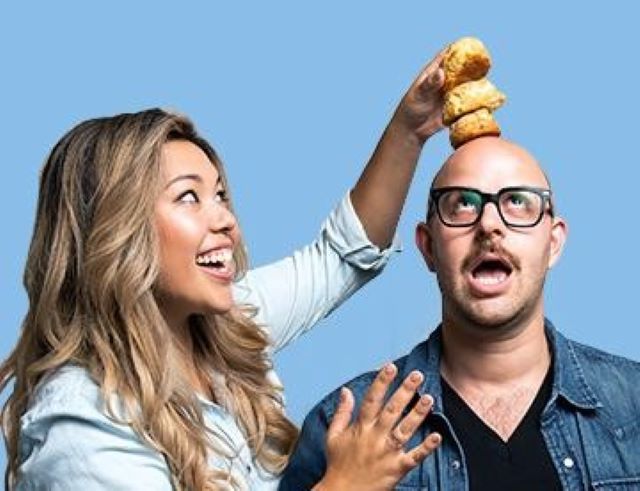
The joke in the photograph is good. The discipline behind it is less visible. A food brand can grow itself into distress if it confuses orders with cash, distribution with demand, or novelty with strategy. Abuelhiga has become candid about the gates a founder should clear before pitching a large retailer: enough trade spending, reliable volume, slotting fees and people who can support the account. Supermarkets are accustomed to dealing with billion-dollar suppliers. They do not lower the freezer temperature for a charming newcomer.
A pandemic closes one door
The restaurant closed permanently in 2020. By then, the retail line was no side project; it was the vehicle. Abuelhiga moved Mason Dixie back to Baltimore and concentrated on consumer products as households filled their freezers. The company's growth accelerated. A $6.3 million Series A followed in 2021, and the brand widened its national shelf space.
In 2023, Mason Dixie appeared at No. 638 on the Inc. 5000 after reporting 916 percent growth across three years. By 2025, the company said it was in 6,000 U.S. stores and 3,000 Marriott Select Brand hotels. The numbers are large enough to tempt a victory lap. Abuelhiga's language remained that of an operator: category gaps, cost discipline, cash and the value a premium frozen product must prove every time a shopper sees its price.
That tension shapes Mason Dixie's wager. Many shoppers expect frozen food to be cheaper than fresh food. Mason Dixie uses real butter, whole eggs and recognizable ingredients, which can pull costs in the opposite direction. The product must demonstrate that convenience has not been purchased with disappointment. In Abuelhiga's formulation, ingredient quality brings taste forward. The label is evidence; breakfast still has to be delicious.
Staying in the breakfast lane
By 2025, Mason Dixie had added breakfast burritos and chicken sandwiches, including spicy and crispy versions. The expansion could look like a company wandering beyond biscuits. Abuelhiga's logic is narrower: these are foods the restaurant knew. The brand declined opportunities to roam into unrelated categories because consumer trust is specific. A company famous for breakfast should think carefully before declaring itself an expert in dinner.
The restraint is paired with experimentation inside the boundary. Burritos used a wrapper designed for one-handed heating and eating. New sandwiches leaned into protein and whole grains. The company's location outside the usual consumer-goods hubs became an advantage in Abuelhiga's telling: Baltimore brought agility, lower overhead and proximity to the community that formed her palate.
The lane still has room. In May 2026, Mason Dixie introduced a whole-grain bagel sandwich layered with chicken sausage, egg and cheddar. A month later, the Mindful Awards named it Breakfast Product of the Year. The package changed; the operating thesis did not. The company was still translating familiar counter food into something that could make the trip through a grocer's freezer and a customer's microwave.
Her wider view of access extends beyond the product. In 2020, she co-founded Project Potluck, a nonprofit community created to help people of color thrive in consumer packaged goods. The intervention is practical. Founders do not only need inspiration; they need introductions, specialized knowledge and colleagues who will answer an unglamorous question before it becomes an expensive mistake.
Abuelhiga has been recognized by the industry she once entered from the outside. She joined the EY Entrepreneurial Winning Women North America class in 2022 and was named NOSH Person of the Year that year. In 2024 she was selected as one of the 100 Women to KNOW in America. The awards matter, but her more interesting definition of success appeared in a reflection on growth: it was never a race to an exit, she wrote, but a journey to build a legacy.
The table gets longer
Legacy can be an inflated word. In Abuelhiga's story, it has a pleasingly ordinary shape. It is a child watching her parents feed Baltimore from a small carry-out. It is a corporate employee deciding that thirty years is too long to wait. It is a customer asking to take the biscuits home. It is an ice chest, then a freezer door, then thousands of freezer doors.
It is also the insistence that familiar food deserves serious attention. Comfort food is often treated as a guilty pleasure, as though pleasure needed legal counsel. Abuelhiga's answer has been to remove the bargain underneath that guilt: no cheap approximation is required. A breakfast sandwich can be quick and still contain the sort of ingredients a cook keeps at home.
She once said that nothing is more gratifying than watching people eat and enjoy their food. The restaurant gave her that view directly, plate by plate. Packaged food asks for a stranger kind of faith. Somewhere far from the kitchen, a shopper opens a freezer, chooses a box and brings breakfast home. Abuelhiga cannot see the moment. She has built the company around making it count anyway.