A supermarket can make a revolution look terribly domestic. The argument about animals, land, climate and diet arrives under fluorescent lights, chilled to 38 degrees, with a sell-by date stamped on the lid. There is no barricade. There is a tub of almond-milk cream cheese, waiting beside the bagels.
Mike Murray has spent much of his career working on that peculiar conversion: taking ideas that begin at the edge of the food business and translating them into products that can survive the center of the store. He is now the chief executive of Kite Hill, the California company that makes dairy-free yogurt, ricotta, sour cream, dips, pasta and cream cheese alternatives. Murray works from the Denver area, far from Kite Hill’s Hayward plant but near the Colorado natural-products network in which he has served as a board member, treasurer and mentor.
His résumé reads like a tour through the last quarter-century of American grocery. It begins with the old establishment: a decade at General Mills, touching brands including Betty Crocker, Nature Valley and LÄRABAR. Then it veers into coconut milk, allergen-free chocolate, grass-fed beef, flax-and-pea milk and, finally, almond-milk cheese. The ingredients keep changing. The operating problem does not. A worthy idea still needs to taste good, reach a shelf and persuade somebody to buy it twice.
Learning the grammar of the big grocery store
Murray earned an MBA from UCLA Anderson in 2001 and entered General Mills the same year. Big food gave him an education that natural-food founders sometimes discover the expensive way: a product is also a price, a package, a slot on a shelf, a promotion calendar and a forecast. The romance of invention ends at the loading dock unless operations and distribution agree to participate.
LÄRABAR offered a bridge. General Mills acquired the whole-food snack-bar company in 2008, and Murray helped broaden the brand after the purchase. It was an early lesson in the appetite of a large company for a small brand’s credibility - and in the small brand’s need for a large company’s reach. He then left the Minnesota giant for Eugene, Oregon, joining So Delicious Dairy Free in 2011 as vice president of marketing and research and development.
So Delicious was already a pioneer. Its job was to persuade shoppers that “dairy-free” could describe a pleasure rather than an absence. Under Murray’s leadership, the brand expanded across beverages, creamers, frozen desserts, cultured products and coconut milk for cooking. Trade reporting put annual revenue growth during his 2011-to-2015 tenure at roughly $50 million to $150 million; a later company biography used figures of $54 million to $195 million over three years. Different measures, same broad picture: the niche had acquired velocity.
“We feel the line of natural is blurring.”Mike Murray, on the convergence of natural and mainstream retail
When WhiteWave Foods agreed to buy So Delicious in 2014, the deal gave Murray a second view of the bridge between challenger brands and scale. He remained with the business as commercial director before taking a CEO job in Boulder in 2016. The new company, free2b Foods, made sunflower-butter cups and chocolate bars without the leading food allergens. The technical brief was wonderfully unfair: remove the ingredients some people cannot eat, preserve the thing everybody wants.
The chocolate must still be chocolate
Murray did not pretend that reformulation was a moral victory lap. Removing dairy from milk chocolate was, in his words, “a difficult task.” The company substituted organic rice syrup powder for milk powder, worked from a dedicated allergen-free facility and expanded from its Sun Cups base into bars. The aim was not to imitate a cheap peanut-butter cup. Murray positioned the products nearer premium chocolate, emphasizing craft and a loyal community of households navigating food allergies.
That distinction matters. Mission-driven food often asks the customer to pay more for a benefit that is partly invisible: the ingredient that is absent, the farming method upstream, the animal treatment the shopper did not witness. Taste becomes the evidence that the sacrifice is not theirs. Murray’s public comments at free2b were unusually frank about the competitive risk. Large confectioners could enter the category. The defense would be loyalty, earned before they arrived.
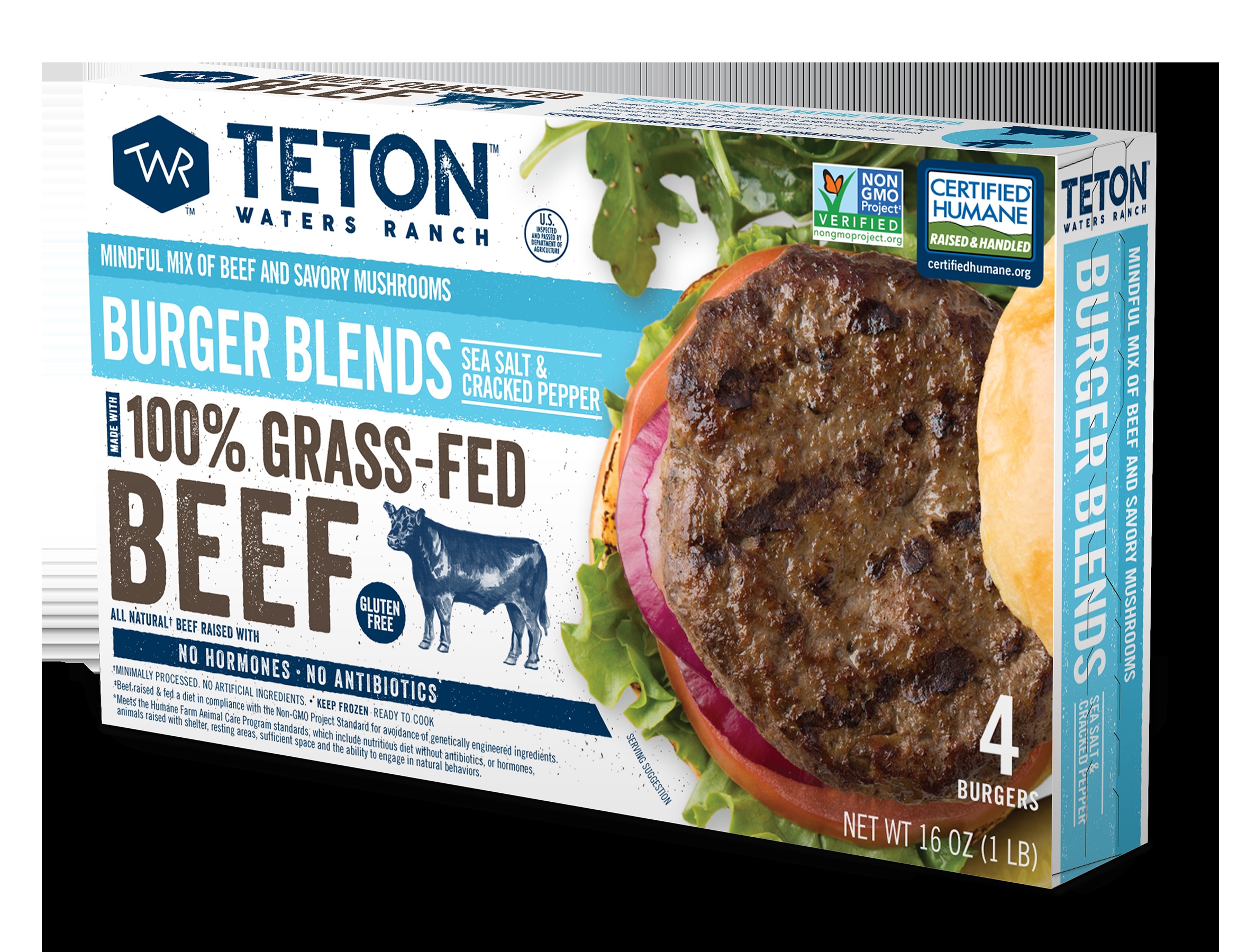
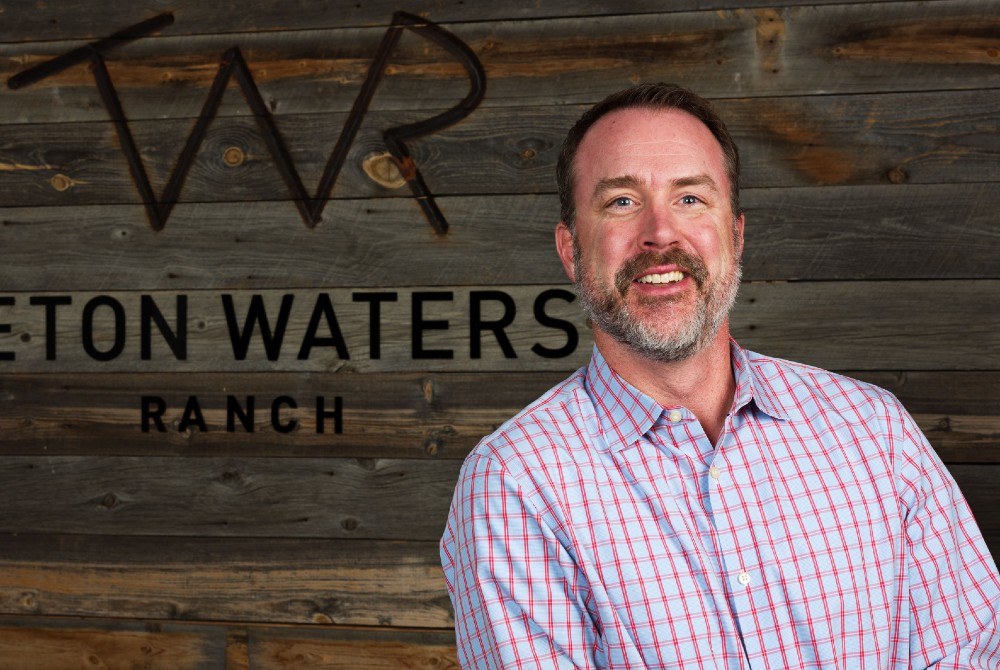
Two years later came the apparent plot twist. Murray, the executive associated with dairy-free and allergen-friendly brands, became CEO of Teton Waters Ranch, a maker of grass-fed beef sausages, hot dogs and meatballs. Yet the move makes sense if his subject is not veganism but the redesign of an everyday food system. Teton talked about pasture, humane standards and regenerative agriculture. Murray talked about making those attributes available to more consumers.
The clearest expression was a burger that contained less burger. A product conceived after his arrival blended 70 percent grass-fed beef with 30 percent mushrooms. It did not demand that meat eaters switch tribes. It quietly placed more plants in a familiar meal. The package called it a “mindful mix,” the sort of phrase that can sound coy until one considers the practical intelligence behind it. Most people change dinner more readily than identity.
Colorado, community and the useful middle
Murray’s Colorado years developed a second track alongside the CEO jobs. He mentored students at the University of Colorado Boulder’s Leeds School of Business, beginning in 2015. He mentored the Techstars Sustainability Accelerator, run with The Nature Conservancy, from 2019 to 2021. For five years he served as treasurer and a board member of Naturally Boulder, the organization around which much of the region’s natural-products community gathers.
These are not glamorous posts, which may be why they are revealing. Mentoring and treasury work are the connective tissue of an industry: reviewing the plan, introducing the person, asking whether the numbers survive the adjectives. Murray’s own professional summary calls him a passionate champion of “triple bottom line results.” The word results is doing useful labor there. People, planet and profit must eventually coexist on the same spreadsheet.
In late 2022, he returned to an explicitly plant-based company as CEO of Good Karma Foods. Its milks and creamers combined oats, flax and peas, and its investors were preparing another round of capital. Murray said he wanted to bring sustainable plant-based products to more households and to help people “do good every single day with their consumption choices.” It is the language of aspiration, but also of frequency. Every single day is how grocery brands are built.
The career looks less like a sequence of categories than a long negotiation between appetite and consequence.
At Kite Hill, the alternative borrows the old names
Kite Hill brings Murray back to the terrain where he first became conspicuous: cultured plant-based food. The company uses California-grown almonds and traditional techniques to make products named after dairy staples. There is a quiet confidence in borrowing those names. Ricotta alternative, Greek-style yogurt and cream cheese do not ask shoppers to learn a new cuisine. They ask for a place in the lasagna, the breakfast bowl and the bagel ritual.
This is where Murray’s large-company apprenticeship and challenger-brand career meet. Kite Hill is not merely selling almonds transformed by enzymes and craft. It is competing for refrigerator real estate against habit. A package must explain difference quickly, reassure the skeptical, survive a crowded cold chain and then vanish into family meals. When it works, the consumer stops narrating the substitution. The alternative becomes an ingredient.
Murray has made few public declarations about his current Kite Hill agenda. The record is richer on the path than on the new destination, and the path is sufficient. It shows an operator repeatedly drawn to products that carry ethical ambition but cannot live on virtue alone. At So Delicious, scale followed taste and range. At free2b, inclusion required difficult formulation. At Teton, progress came disguised as a mushroom in a burger. At Good Karma, the mission needed household penetration. Each assignment turns a noble noun into an operating verb.
Away from the aisle, a published biography places Murray on Colorado’s Front Range with his wife and three sons, fond of hiking, biking, skiing and team sports. It is an appropriately outdoorsy footnote, though perhaps the more telling geography is the space between Boulder’s founders and the national supermarket. Murray has occupied it for years, translating one side to the other.
Food executives rarely get monuments. Their work is too perishable and too often eaten over the sink. Murray’s record belongs to that modest scale. A cup without dairy. A burger with mushrooms. A yogurt made from almonds. None resolves the food system. Each makes a different choice easier on an ordinary Tuesday, which is where grand ideas either become habits or remain grand ideas.