In 1996, Eric Marston walked into Ferrari Lake Forest with a splendidly uncommercial proposition: he had no money and wanted to look. Fresh out of college, living in Chicago and surviving on ramen, he told the owner the truth. He was dreaming. Rick Mancuso showed him an F50 in the back, then photographs of the dealership's Ferrari Challenge cars. Marston had wanted a Ferrari since childhood. Now the fantasy acquired a starting grid.
Nearly three decades later, at Imola, that private ambition became a championship. Marston arrived at the 2024 Ferrari Challenge Finali Mondiali after five wins and seven podiums. A second-place finish in the opening race gave him an eighth podium and made the arithmetic friendly. The following day another driver's mistake sent his own race sideways, but he had scored enough. The North American Coppa Shell title was his.
The photograph invites an easy story: farm boy dreams of red car, works hard, gets red car. Life, usually a more exacting editor, inserted custom e-commerce systems, warehouse scales, middleware, return labels, fraud controls and a fashion company that once found itself three months from running out of money. Marston's route to the podium ran through the machinery of DAILYLOOK.
A shop window with an engine room
Brian Ree came to Marston in 2011 wearing his fanciest suit and carrying two pages torn from GQ and Details. The pitch was visual and wonderfully analog: these men looked sharp; assembling the look was tedious; the internet ought to make it easier. Marston had already spent years building websites. His résumé ran through software engineering, IBM, the Idealab startup Firstlook.com, Express.com and his own Nox Solutions. He understood the difference between a pretty page and a working operation.
Ree and Marston put up the first $400,000 themselves. Six months later they had an interactive store built around one shoppable outfit a day. DAILYLOOK found sales quickly, but novelty is an impatient landlord. Complete looks did not produce enough repeat buying, so the founders tested a more intimate proposition: send the clothes home, let the customer try everything, charge only for what she kept.
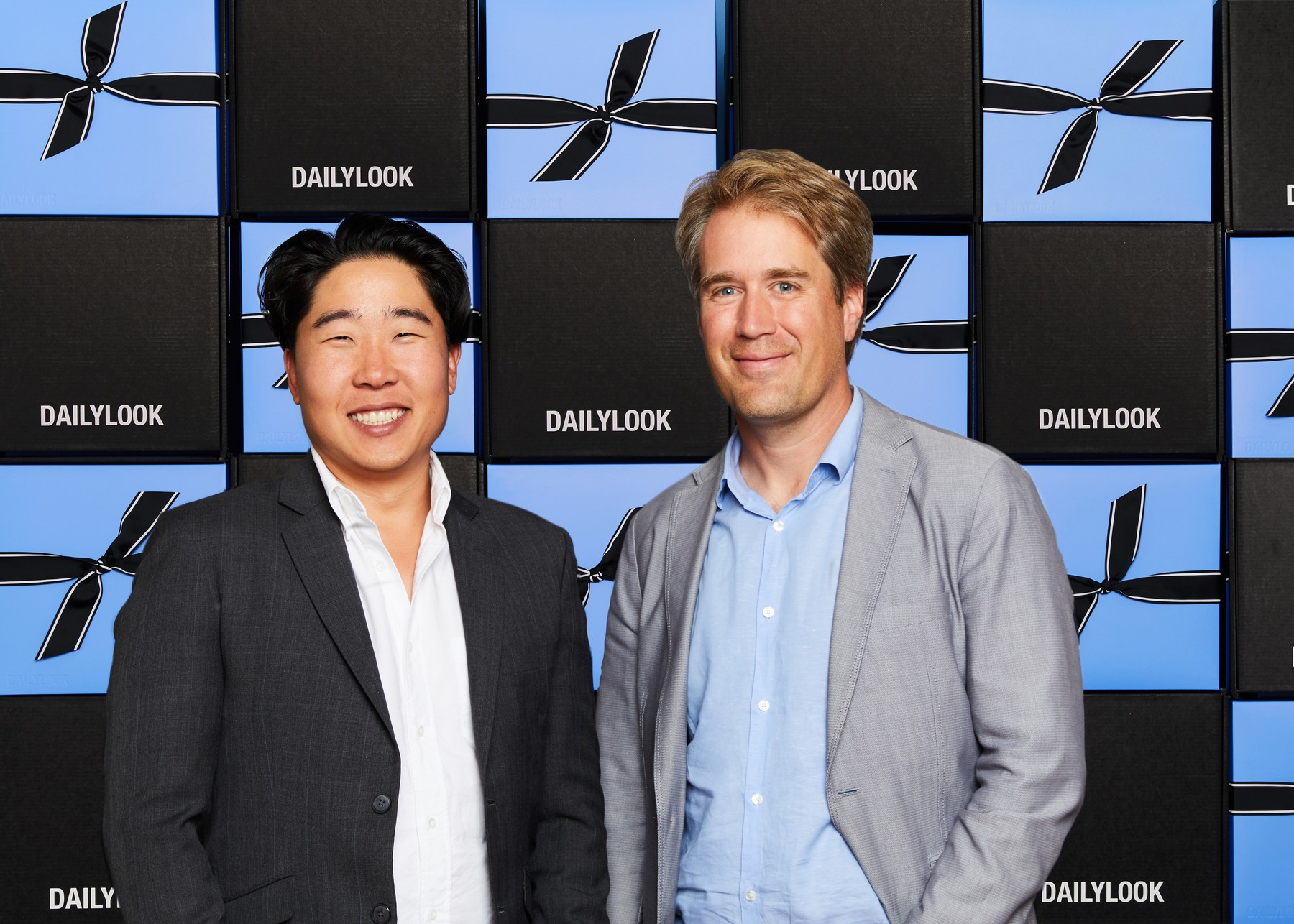
A normal online sale moves in a flattering direction: item, cart, payment, farewell. Try-before-you-buy performs a small ballet. Clothing leaves the warehouse before the final purchase is known. Some of it circles back. Inventory sits in bedrooms. The payment event arrives late. Fraud can begin early. Presentation matters because the box is also the fitting room.
“We have custom everything.”Eric Marston on the DAILYLOOK technology stack
Marston's team did not begin by automating the whole ballet. They opened the catalog to a small test group and ran the beta manually. His advice was to see whether the model worked for the market before building every system it would require. This is the rare sort of engineering wisdom that sounds obvious only after somebody else has paid for the lesson.
Once the behavior was clear, the custom work multiplied. DAILYLOOK used safeguards to screen obvious fraud. Large hang tags discouraged customers from borrowing a garment for the evening. A prepaid return label went into each box. The company expected a return from nearly every order, an admission of reality more useful than any slogan.
The customer-facing ritual began with a 40-question style quiz covering preferences, spending and measurements. A stylist then selected seven to twelve pieces. The apparent luxury was that somebody had already thought about the combinations; the operational burden was that each answer created another branch in the system. A size is data, but taste is a moving target. A rejected blouse is both inventory to recover and feedback to remember. Marston's platform had to translate those small human verdicts into useful signals without making the service feel like an interrogation conducted by a database.
The return label is part of the product
At first, a third-party logistics provider handled fulfillment. The arrangement soon offended the product. Marston saw that the packing, the presentation and the return trip were part of the promised service, not an errand to be tossed over the wall. DAILYLOOK brought fulfillment in-house. Warehouse stations could reach the shipping interface from any computer connected to a scale, while automation rules selected carriers and services by destination zone.
The business itself had a less tidy return route. When the styling model opened broadly in 2014, 10,000 people signed up in two weeks and 30,000 joined a waitlist. Average order value had climbed from $75 to $120 in testing, but appetite outran infrastructure. Returns were costly, the company had not charged a styling fee, and staffing needs rose. With three months of runway left, DAILYLOOK cut deeply and introduced a fee. Customers bought more. The company survived.
Marston's public comments are rarely theatrical. He talks about systems as collections of trade-offs. In 2015, with about 90 percent of DAILYLOOK traffic arriving through its native app, he described a mobile redesign that separated personalized information from relatively stable product data. Sometimes the cleaner system required two smaller calls instead of one. Edge servers could then stage the reusable material closer to the customer.
Closer to the customer
Approximate mobile update response time after DAILYLOOK reorganized its middleware and caching.
Updates that had taken roughly 500 milliseconds arrived in about 30. Around 70 percent of total data requests could be offloaded to the edge. It is the sort of improvement users experience mainly as an absence: less waiting, less drag, fewer visible gears. Technology does some of its finest work when nobody has to admire it.
The useful humility of a slower car
Speed was less invisible at Willow Springs. By 2016, Marston owned an F430 Spider and decided to take it to the track. Rain arrived around lunch. Almost everybody left. Marston, inexperienced and delighted, stayed out. He drove until the full tank was empty and returned only because petrol, unlike enthusiasm, has a gauge.
He sought instruction through every level of Ferrari's Corsa Pilota program and through Porsche driver training. Mentors then offered advice that would please a stern engineer: use less power. A Ferrari could conceal inadequacies. A lower-powered car would force him to carry momentum and expose imprecision. Marston bought a Lotus, earned an SCCA license, raced an SCCA season and added NASA events before entering Ferrari Challenge in 2019.
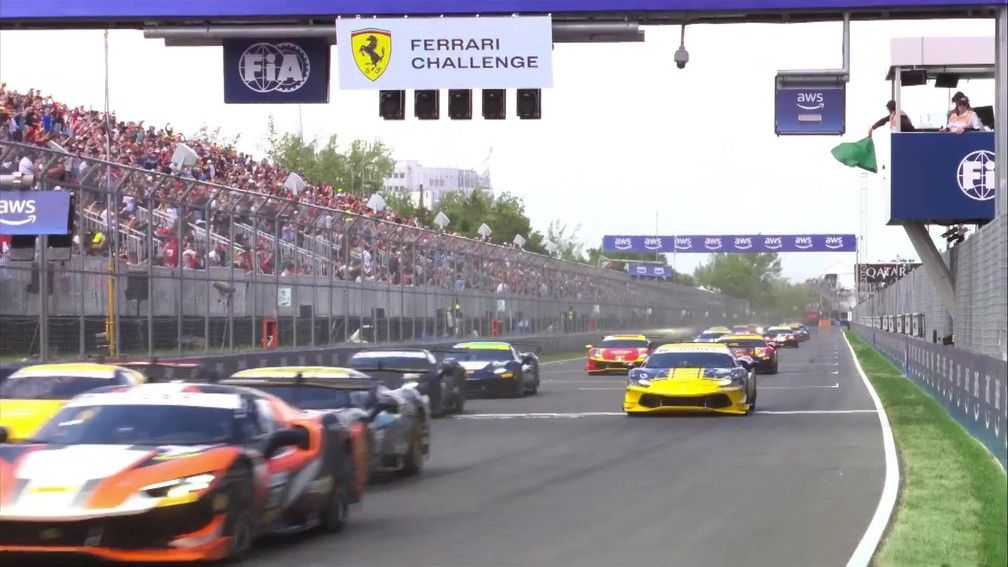
There is a pleasing symmetry here. At work, test the service manually before building the expensive platform. On track, learn in the less powerful car before asking horsepower to flatter you. Both methods make the feedback honest. Both delay the glamorous tool until technique can justify it.
His first Ferrari Challenge season supplied evidence that the apprenticeship had worked. In 2019, Marston won races and finished third in the North American Am standings. He also competed abroad, including at Le Mans and in Italy. Racing identical or closely matched machinery suited the engineer's instinct: reduce the variables, and the driver's decisions become easier to see. The stopwatch has no interest in job titles, childhood promises or the price of the car. It records the lap and moves on.
Racing also drew in his family slowly. Marston and his wife Amy have four children, but school schedules kept the whole group away from the circuit until a Sonoma weekend became a family holiday. Their first live view of his hobby was suitably impolite. He was pushed wide at the first corner, went through the dirt, fell roughly ten places and spent the race passing cars to regain ground. Subtle introductions are overrated.
By the 2024 season, his fifth with Ferrari Westlake and Scuderia Corsa, the paddock had become a community. He has said that many of his close friends came through Ferrari Challenge. The title was therefore both personal and social: a boyhood plan fulfilled in the company of coaches, mechanics, rivals and friends who knew exactly how much work the trophy concealed.
“My goal these days is to race the 24 Hours of Le Mans.”Eric Marston on what comes after the championship
The next circuit
Marston did not retire the dream at Imola. He moved into the 296 Trofeo Pirelli Am category in 2025, scoring 90 points across selected rounds, and appeared again with Ferrari Westlake at Road America in 2026. He has spoken about adding GT experience, perhaps through SRO racing, in pursuit of Le Mans.
Meanwhile, DAILYLOOK continues to turn judgment into logistics. The company's central tension remains intact: personal styling is supposed to feel human, while the operation beneath it must be ruthlessly systematic. Recent customer-service work has extended that machinery into automation, with Marston reporting that an AI agent resolved more than 70 percent of tickets end to end. The metric is new; the pattern is familiar. Map the awkward flows. Learn from the real work. Make the machinery disappear.
On the farm in Ohio, a Ferrari was not merely unaffordable. It belonged to another weather system. Yet Marston's story is less persuasive as a fable about belief than as a record of method. He kept the ambition, certainly, but he also accumulated the dull and necessary things: code reviews, licenses, beta tests, warehouse rules, coaching sessions, slower cars. The long straight looks dramatic from the grandstand. It is won in all the corners nobody remembers.