The short version
- Peeko carries roughly 30,000 baby-and-kids products and delivers within 60 minutes in supported parts of Bengaluru.
- Its useful distinction is try-at-home: eligible items can be inspected, kept or handed back at the doorstep.
- After a $3.2 million seed round, it raised $7 million in Series A funding in August 2026.
- The model works best where young families are dense, repeat purchases are frequent and one dark store can serve many orders.
The emergency is a diaper. The difficulty is a yellow romper in size 12 to 18 months. One is a question of time; the other is a question of judgment. Indian quick commerce became very good at the first question. Put a packet of diapers into a nearby dark store, hand it to a rider, and make a clock part of the logo. But the romper asks whether the cotton feels right, whether the colour resembles the photograph, and whether a rapidly growing child will tolerate the sleeves. Peeko was built in the gap between those two questions.
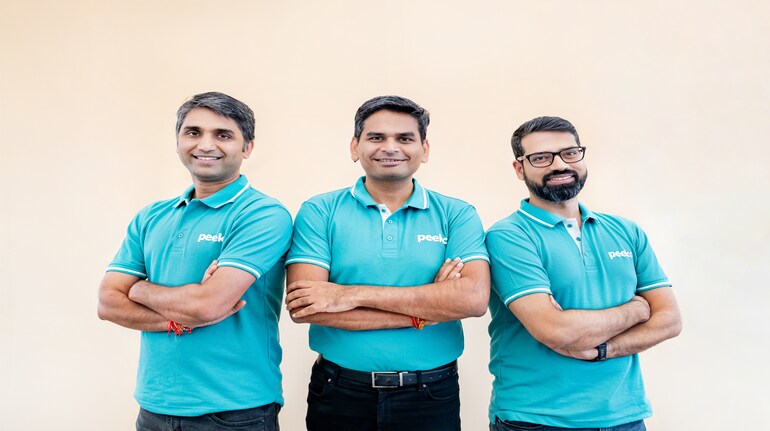
Founded in Bengaluru in 2025 by Chetan Sharma, Vivek Khetan and Abhijit Gairola, the company is a specialised marketplace for baby and kids products. It stocks apparel, diapers, feeding supplies, personal care, toys, books, gear and food close enough to customers to promise delivery in under an hour. In August 2026, Peeko said three dark stores covered about 55 percent of Bengaluru. The catalogue had grown from roughly 6,000 products at launch to somewhere between 27,000 and 30,000.
The first failureThe endless aisle stopped feeling generous
The thing that failed first was not Peeko. It was the old assumption that more choice automatically produces a better online shop. A parent searching for a bottle, toy or birthday outfit can meet thousands of near-duplicates, uneven quality and delivery estimates measured in days. Returns add another wait. The result is catalogue fatigue: the customer receives more possibilities and less confidence.
Peeko’s original answer sounded like the rest of quick commerce: compress the wait. Its first 4,000-square-foot dark store served 10 Bengaluru pincodes. Yet the founders’ diagnosis was broader. Babycare is unusually awkward retail. Diapers and wipes are replenishment goods. Toys are discovery goods. Apparel depends on fit. Strollers and carriers invite research. Gifts are attached to dates. A generalist can carry the urgent packet; a category specialist can try to carry the entire decision.
Curation, home trials and immediate returns determine whether a parent comes back after the emergency.
“We are not building another quick commerce company.”Chetan Sharma, co-founder
What changedSpeed became the invitation, not the party
By the Series A announcement, Sharma was explicitly calling 60-minute delivery only one part of the offering. The centre had moved to selection and touch-and-feel. That is not a cosmetic repositioning. It changes what Peeko must be good at. The company needs buyers who understand parents, local inventory that anticipates size and age, software that recommends without burying, and a reverse journey for rejected goods that is almost as smooth as the forward one.
Try-at-home is the memorable mechanism. A parent can inspect an eligible piece at the doorstep and send it back immediately if it fails the test. There is no repacking, courier booking or week-long refund vigil. By August 2026, Sharma said a majority of customers were choosing the feature. In effect, Peeko moved a sliver of the physical baby store into the apartment hallway.
The shelf got five times longer
Approximate SKU count. The paradox: a bigger catalogue is supposed to feel easier because it is organised for one kind of household.
The average order value, reported at about ₹1,000, offers another clue. This is higher than the tiny distress basket suggested by the phrase “quick commerce.” Peeko advertises free delivery, so the visible customer cost is the merchandise rather than a speed fee. Apparel, toys and baby gear make up a large share of the business and carry better gross margins than routine consumables. Peeko uses the diaper to establish frequency, then asks the toy and the sleepsuit to improve the basket.
The machine beneath itA marketplace with neighbourhood muscles
Peeko operates a marketplace model while building its supply chain and fulfilment capability in-house. The customer sees a website or app. Behind it sit merchants and brands, inventory choices, dark stores, pickers, routing and riders. The company lists household names such as Pampers, Huggies, Chicco, Sebamed, Funskool, Hot Wheels, Barbie, Skillmatics and R for Rabbit, while its site claims more than 2,000 brands in all.

The first 50,000 orders arrived within 5.5 months. More than 100,000 parents had shopped on the platform in the first 11 months, and the company said most revenue came from repeat users. Those are company-reported figures, but they are the right figures to watch. Together with the majority adoption of try-at-home, they help explain why the company’s language moved from raw speed toward trust and selection. Downloads can be purchased. A second order has to be earned.
Investors have paid for the next experiment. Stellaris Venture Partners led a $3.2 million seed round in August 2025. One year later, Chiratae Ventures led a ₹67.4 crore Series A, reported as roughly $7 million, with Stellaris and angels participating. Peeko said the money would fund expansion, technology and hiring. The immediate plan was to double from three dark stores to six by the end of 2026, reach the whole of Bengaluru, and enter two more cities in 2027.
10 pincodes
55% city coverage
by end of 2026
The copyable partDo not specialise by changing the label
The part worth copying is a sequence. Pick a category in which expertise changes the transaction. Concentrate enough customers inside a short radius. Stock the repeat purchase that creates habit, then add higher-consideration products that enlarge the basket. Finally, remove the category’s peculiar risk. For Peeko, that risk is the wrong fit or disappointing quality, so the return happens before the rider leaves.
A generic store with a baby tab does not reproduce this. Neither does a beautiful catalogue that takes three days to arrive. The model depends on the awkward combination of depth and proximity. That is its distinction from Blinkit, Zepto and Swiggy Instamart, whose dark stores must defend every square foot across many categories. It is also its challenge to FirstCry, whose breadth, stores, private labels and logistics give the incumbent a formidable starting position. OZi is the closest specialist analogue, operating a similar hour-delivery proposition from Delhi NCR.
There are clear limits. The system strains where families are too dispersed to support dense delivery routes, where purchase frequency is low, or where rent and customer acquisition overwhelm the margin on a ₹1,000 basket. It also weakens if generalists deepen their baby selection or FirstCry makes rapid delivery routine. Inventory grows expensive when 30,000 choices are multiplied across neighbourhood stores. Try-at-home adds handling precisely where quick commerce usually seeks simplicity.
This explains the quiet intelligence in Peeko’s changing pitch. Winning on minutes is fragile because another rider can always arrive sooner. Winning on judgment is slower. It requires knowing which bottle, book or romper deserves a place nearby, and making the wrong answer painless. The company may still be carrying a diaper across Bengaluru, but what it hopes to deliver is relief from choosing.
Go closerSee the shelf and the people building it
Company metrics are reported as of August or September 2026 unless another date is stated.