The groceries were the clue. Before Rappi became a familiar orange presence on Latin American streets, its founders worked on software for buying food online. Customers liked the interface. The delivery disappointed them. A better screen could not rescue a bad arrival. So Simón Borrero, Sebastián Mejía and Felipe Villamarín moved into the messy business on the other side of the checkout button.
That decision helps explain a development a decade later: Amazon turned to Rappi for rapid delivery in Mexico. The company that once had to persuade people to download its app now supplies expertise to a business that hardly needs an introduction. Rappi’s value reaches beyond the orange icon on a phone.
The app was lovely. Where were the groceries?
In their 2018 account for Y Combinator, the founders said customers “loved the app and hated the logistics.” Their response was a neighborhood experiment using a small shop’s inventory and crowdsourced delivery. It gave them something a software demonstration could not: responsibility for whether an order actually arrived.
Rappi launched in Colombia in 2015. Its careers site remembers an acquisition campaign with pleasingly little mystique: donuts in exchange for downloads in a parking lot. There is a useful distinction here. The pastry won a moment of attention. The next successful delivery had to win the next purchase.
“The experiment never ended.”
RAPPI CO-FOUNDERS · Y COMBINATOR, 2018
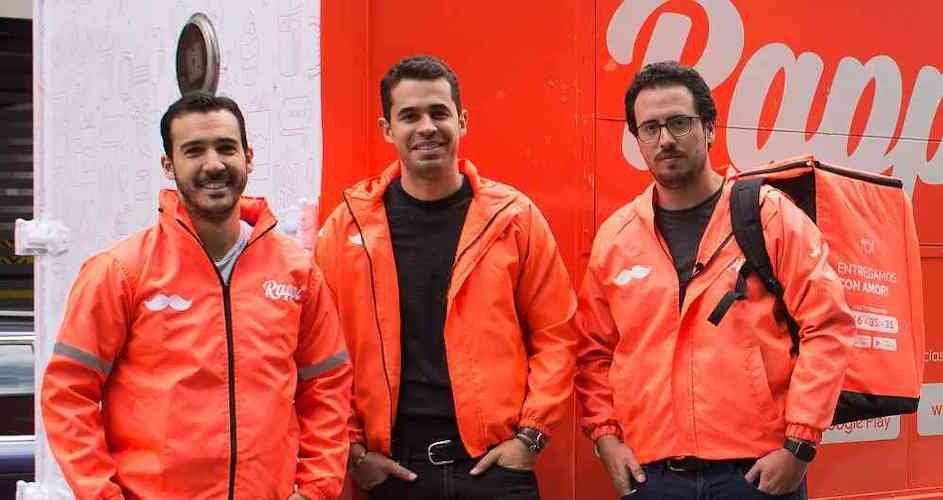
Today Rappi connects consumers with restaurants, supermarkets, pharmacies and other retailers across nine Latin American countries. Its customers include time-pressed households, merchants seeking online orders and brands paying to reach shoppers. Couriers, known as rappitenderos, connect those digital transactions to actual doors. Each group needs the others to keep showing up.
The underlying problem is ordinary: shopping takes time, city journeys take longer than hoped, and a missing ingredient rarely respects a schedule. Rappi bundles discovery, ordering, payment and delivery into one place. Its expertise is coordinating a local transaction across businesses and people who do not all work for the same company.
Ten minutes starts with a nearby shelf
Turbo, introduced in 2021, pushed the convenience proposition toward near-immediate delivery. Borrero described micro-warehouses positioned within roughly 1.5 kilometers of users, supported by real-time inventory software. The point was to shorten the journey before it began. A courier cannot make a distant supermarket become a nearby one.
That is a different operating problem from listing restaurants on a marketplace. A regular delivery order depends on a merchant preparing or picking it; quick commerce also depends on which goods have been stocked close to the customer. Speed becomes a question of inventory, picking, dispatch and distance. The countdown on the phone is the visible tip of that work.
The economics follow the geography. Nearby repeat customers can support a compact delivery operation. Sparse demand, long trips or an unreliable assortment make the same promise harder to keep. This is an inference from the operating model, and a reason to judge coverage by an address rather than a country flag. Nine markets do not mean identical service everywhere.
Amazon buys into the last mile
On November 4, 2025, Amazon introduced Amazon Now in collaboration with Rappi in Mexico. The launch covered ten cities, including Mexico City, Guadalajara and Monterrey, with roughly 5,000 everyday products and a delivery proposition of about 15 minutes. Customers could also access Rappi restaurant ordering through Amazon.
The arrangement paired Amazon’s reach with Rappi’s quick-commerce and restaurant capabilities. For consumers, it put another service inside an app they already used. For Rappi, it created a route to orders that did not begin on its own home screen. That makes distribution part of the story alongside delivery.
Amazon’s launch announcement listed free Amazon Now delivery for Prime members during the initial phase and MXN 53.33 per delivery for other customers. Those were launch terms, not a permanent regional price list. They nevertheless capture the strategy: package convenience with an existing membership, then make everyday purchases feel like a natural extension.
Your basket has more than one paying customer
Delivery fees and merchant commissions sit at the center of Rappi’s model. Subscriptions and advertising add other ways to earn from the same shopping relationship. A consumer pays for convenience; a merchant pays for access to orders; a brand pays for visibility while someone is deciding what to buy.
Rappi Ads offers sponsored products, campaign management and retail-media tools. Its pitch includes brands such as Coca-Cola, Kellogg’s and Baileys. A supermarket shelf has always been contested territory. The app gives that contest a search box, a paid placement and a more measurable route from attention to purchase.
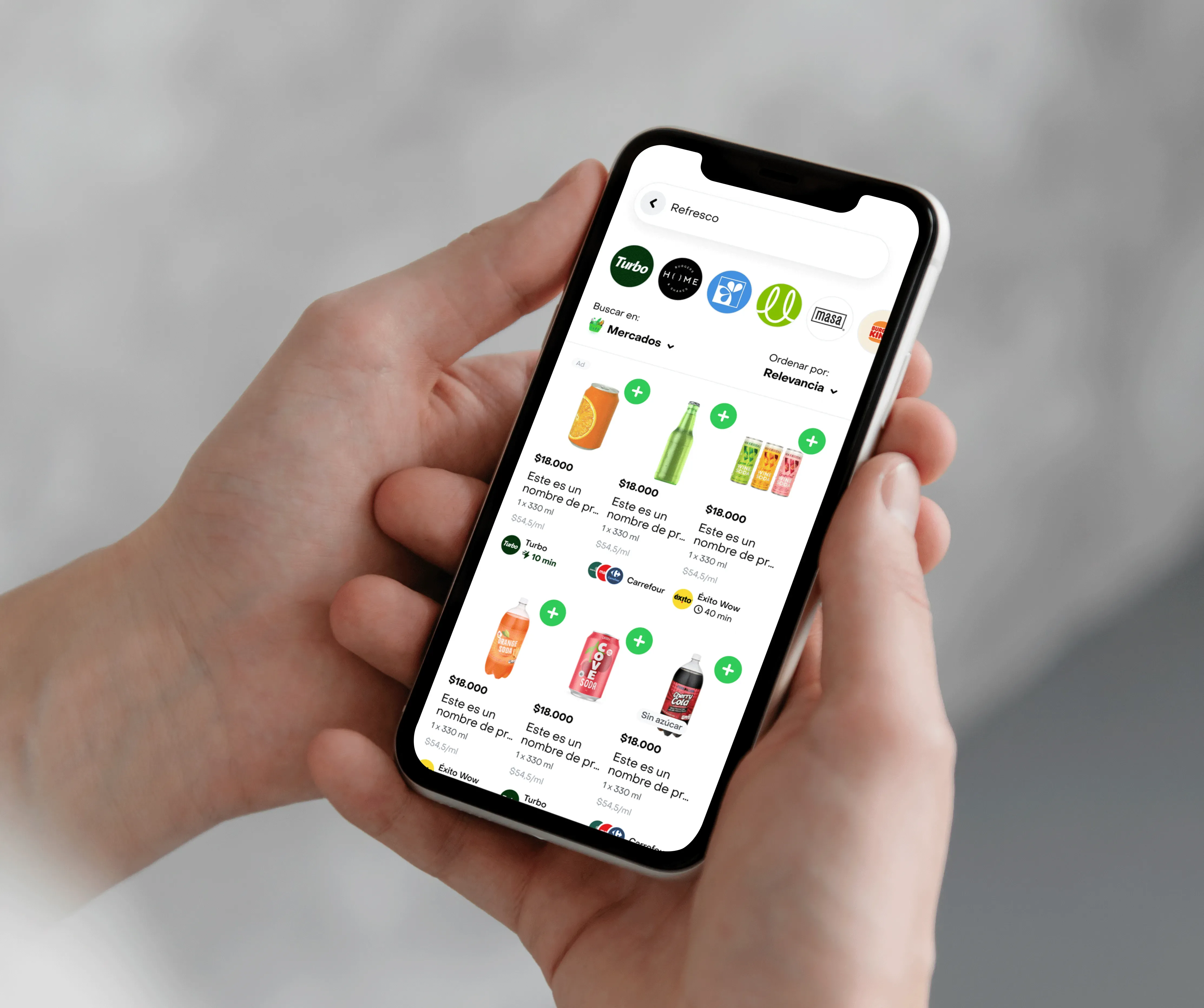
The advertising site promotes 30 million active users and more than 400 million annual orders. Those are company marketing figures, and the active-user period is unspecified. They describe the audience being sold to advertisers; they should not be mistaken for audited financial results or a precisely defined monthly customer count.
Subscriptions tackle another problem: a useful app can still be an occasional app. Rappi Pro offers benefits on eligible purchases, giving customers a reason to return. Mexican terms checked in September 2026 list MXN 69 a month, with automatic renewal. Free delivery depends on participating merchants and purchase requirements; additional charges can remain.
Fees monetize a transaction. Pro encourages another. Ads sell a place near the purchase decision.
Business-model illustration. No revenue proportions implied.For a household, the practical calculation is whether the benefits on orders it would already place exceed the subscription cost. For a merchant, the question is whether the extra business covers commissions, preparation and any advertising spend. More orders can look wonderful on a dashboard while leaving little behind.
A billion dollars buys time. A loan comes due.
Rappi’s expansion had a substantial financial engine. A DST Global-led round brought more than $200 million in 2018 and a valuation above $1 billion. SoftBank followed with a $1 billion investment in 2019. In July 2021, a T. Rowe Price-led Series F raised more than $500 million at a $5.25 billion valuation.
Those figures describe capital raised and a historical valuation. They are not revenue, profit or a bill for building the app. Keeping those categories separate matters because Rappi’s later financing introduces a different obligation: in August 2025, Kirkoswald Private Credit and Santander provided a $100 million senior secured loan.
The lenders said the money would support growth, refinancing and working capital. Debt supplies cash without being another ordinary equity round, but it must be serviced. The announcement documents financing, not proof that every delivery makes money. A large facility can tell readers who supplied capital; it cannot answer every question about operating performance.
Pressure had appeared much earlier. Axios reported in January 2020 that Rappi was cutting roughly 6 percent of its workforce, more than 300 people. Even a business with substantial backing had to reconsider its staffing. Growth and a famous investor did not remove the need to control costs.
The bank keeps the card. Rappi keeps the connection.
Financial services reveal another adjustment. In April 2025, Banorte agreed to pay $50 million for Rappi’s remaining 44.28 percent stake in Tarjetas del Futuro, the Mexican business behind RappiCard. Banorte’s annual report says the transaction became effective on December 17, 2025.
The deal came with a 15-year exclusive commercial agreement to offer financial products through Rappi’s ecosystem in Mexico. The card business had more than 1.14 million cardholders at the end of 2024. Rappi could sell its stake while retaining a role connecting customers to financial services. The structure suggests a more selective approach to ownership, though it does not establish the founders’ private motives.
Partnerships bring complications as well as reach. In May 2026, El País reported a disputed Mexican antitrust fine related to the original Banorte-Rappi alliance. Banorte challenged the regulator’s account. The dispute illustrates the extra scrutiny that comes when an everyday shopping platform moves into financial services.
The next order is the real test
Rappi’s alternatives depend on where the customer lives: iFood, PedidosYa, Uber Eats and DiDi Food compete in delivery, while local stores can take orders directly. Rappi’s distinction is the combination of categories, local fulfillment, membership and partner services. That breadth gives customers more reasons to open it, but also gives the company more things to get right.
Marriott Bonvoy rewards offer a small, revealing example. Eligible Rappi Pro users can link accounts and earn hotel points on qualifying orders in seven participating countries. The minimums and conditions matter. So does the intention: an ordinary purchase becomes one more reason to remain inside the relationship.
A founder can copy the original method without copying the entire company: find where the customer’s experience fails, test a fix in a small area and earn repeat use before expanding the menu. Rappi’s own culture emphasizes execution and learning. The transferable part is the short distance between a complaint and an operational experiment.
The limits are equally practical. Customers can switch apps, merchants need viable margins, and the delivery promise depends on couriers doing the work. Subscription perks and loyalty points cannot make up indefinitely for a missing order. Rappi began because an attractive interface was insufficient. Every doorstep is another examination of that founding insight.
Keep exploring
Watch the founder explain it
▶Founder interview with a Turbo ordering test
A long-form conversation about building the company