The shortest line through Mikayel Abramyan's career is not the most revealing one. On paper, the route looks conventional: a bright student studies biology, goes to medical school, trains in pediatrics and joins a practice. Draw the route on a map, however, and a different pattern appears. Hollywood. Irvine. New York. Irvine again. Sherman Oaks. His education took him across the country, but his work brought him back within a short drive of where he began.
That return is the quiet hinge of his story. Abramyan grew up in Hollywood and attended Van Nuys Magnet High School, where his public biography says he graduated with high honors. He went south to the University of California, Irvine, earned a Bachelor of Science in biology and finished magna cum laude. New York Medical College supplied the one long eastward arrow. Four years later, in 2004, he turned back toward California for pediatric residency at UC Irvine and Children's Hospital of Orange County.
He had tried the usual medical clerkships before settling on pediatrics. The choice put conversation near the center of his work. A pediatrician does not speak to one audience but at least two: the child in the room and the adult responsible for what happens after everyone leaves it. Abramyan's own description of his approach emphasizes education, anticipation and teamwork with parents. The exam is important. So is the translation.
A practice made of repetition
After residency ended in 2007, Abramyan accepted a position at Pediatric Associates Medical Group in Sherman Oaks. His national provider record dates from that same year. The practice sits in the San Fernando Valley, the part of Los Angeles he still calls home. He lives there with his wife and three children. The biography begins to fold back on itself: a former local student becomes a local parent, and the parent spends his working days advising other local parents.
Continuity rarely looks dramatic from the outside. It is made of recurring appointments, repeated explanations and the steady accumulation of trust. It also produces a particular kind of knowledge. The longer someone works with families, the easier it becomes to see the distance between an excellent recommendation and a recommendation that can survive a Tuesday morning. Families have school, work, commutes, preferences, budgets and the occasional refusal to cooperate before breakfast. Any useful plan has to meet that reality without losing its purpose.
Professional milestones arrived inside that long practice chapter. Abramyan became board certified by the American Board of Pediatrics and a fellow of the American Academy of Pediatrics. He was listed in Southern California Rising Stars in 2017, 2018 and 2019. In 2020, he joined Jessica Sea and Harvey K. Chiu on a pediatric endocrinology research abstract; a peer-reviewed article followed in 2021. The publication is a compact but telling addition to his record. A community practice had produced an observation worth carrying into the literature.
Credentials can look like alphabetic decoration when compressed into the line after a doctor's name. In Abramyan's case, they mark several different kinds of work. The MD records the years in classrooms and rotations. Board certification records formal specialty standards. The FAAP designation places him among the fellows of his professional academy. The three Rising Stars listings are outside recognition, repeated rather than singular. And the journal article is something else again: a clinical observation made legible to other practitioners through the slow conventions of academic publication.
The author line on that work also reveals a recurring feature of his career. Abramyan appears between Sea, then at UC Irvine, and Chiu, affiliated with UCLA. The institutions are large; his listed home was Pediatric Associates Medical Group. It is a small example of knowledge moving across the boundary between a neighborhood practice and university medicine. The paper has three names, not one, which suits a physician whose public philosophy emphasizes teams. Even the accomplishment refuses to be a solo.
There is restraint in that record. Abramyan is not presented as a laboratory scientist with a long catalog of papers, and there is no reason to inflate one publication into a separate career. Its value is more precise. It shows that, amid the repetitive work of a community practice, he remained alert to an unusual observation and willing to document it with colleagues. Attention came first. Publication followed.
“He has a strong emphasis on a team approach in raising a healthy thriving child.”From Abramyan's public professional biography
There is a temptation to make careers neat after the fact, as if every credential had always been pointed toward a founder's title. Abramyan's public record supports a more patient reading. First came the education. Then the residency. Then years in the same group practice. Research and recognition followed. Only later did the accumulated observations become a new venture. The sequence matters because the idea did not precede the experience. It came after it.
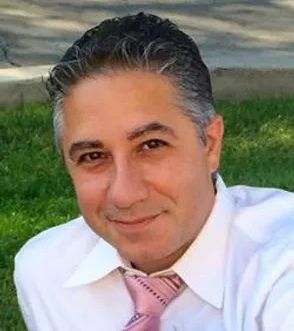
The founder title arrives late
Abramyan's Optimize Health is a pediatrician-led family wellness program based in Los Angeles. It should not be confused with the Seattle remote-patient-monitoring company that uses the same name. His venture is smaller in scope and closer to his existing work. It organizes guidance around nutrition, movement, sleep and daily routines, with an emphasis on strategies families can sustain. The project describes itself as wellness education rather than medical treatment.
In other words, it begins where an appointment often ends. A family leaves with information; ordinary life decides what becomes habit. Abramyan's founder thesis is that this gap deserves its own structure. The aim is not to replace his clinical work but to extend its educational side, giving parents practical tools beyond the brief geometry of the exam room.
The language of the venture is notable for what it values: realistic routines, personalized strategies, partnership and small steps. These are unfashionable words in a business culture fond of disruption. There is little disruption in getting to bed on time. There is also little glory in preparing tomorrow's lunch tonight. Yet family life is governed by precisely these repeatable acts, and Abramyan has spent enough time with parents to know that durability beats theatrical ambition.
“Our mission is simple: to partner with parents in raising healthier, happier, and more resilient kids.”Optimize Health
The founder's own off-duty habits fit the theme almost too neatly. Abramyan enjoys cooking and tending an organic garden. He travels and stays active. None of this makes him a parable, and a tomato plant should not be forced to carry the weight of a corporate metaphor. Still, gardening is an occupation with an honest attitude toward time. It rewards attention, routine and adjustment. It cannot be hurried by a better slide deck.
He is also raising three children. That biographical fact gives the word “practical” some ballast. Theories about family routine are exposed rather quickly when brought into an actual family. A program meant for parents has to acknowledge competing schedules, limited patience and the fact that perfectly sensible plans sometimes encounter perfectly unreasonable Wednesdays.
Depth over distance
The most distinctive fact about Abramyan's biography may be its modest radius. Los Angeles careers are often told through reinvention, each act replacing the last. His is additive. The biology student remains visible in the physician. The physician remains visible in the founder. The local child becomes the local parent, then addresses families in the same broad patch of city.
That continuity supplies a connection between his roles. At Pediatric Associates Medical Group, he is one member of a team. In research, he is one of three coauthors. In his stated philosophy, parents are partners rather than an audience. Even his founder language prefers “with” to “for.” The work repeatedly places him inside collaborations, translating knowledge among people with different responsibilities.
It also suggests why education figures so prominently in his public profile. Information handed down from a height is easy to admire and easier to ignore. Education asks whether the other person can use it. For Abramyan, that means speaking to children as well as adults and anticipating questions before they harden into confusion. The objective is not merely a correct answer in the room. It is a workable decision outside it.
Optimize Health is still a young project, and the evidence for its impact will have to come with time. What can be said now is narrower and more interesting: it is consistent with the career that produced it. It takes a pediatrician's educational instinct, a parent's sense of real schedules and a gardener's tolerance for incremental progress, then gives them a separate address.
Abramyan left Los Angeles to earn the authority of a physician. He came home to learn what to do with it. Nearly two decades later, his newest work does not represent an escape from the practice in Sherman Oaks. It is an argument drawn from it: that expertise becomes useful only when it can enter ordinary life, survive the week and be repeated.