The razor blades were behind glass. Andy Katz-Mayfield needed someone with a key. It was a peculiar amount of ceremony for an object whose principal job was to remove yesterday’s stubble. At a Rite Aid at 14th and Wilshire in Santa Monica, he found himself considering the price, the packaging and the rather large gap between what he wanted to buy and how the industry wanted to sell it.
One package showed a razor flying over the moon. Katz-Mayfield was shopping for a shave, and the shelf was offering a space programme. The detail stayed with him. Expensive cartridges, an inconvenient purchase and advertising that felt remote from his own life added up to an opening. He sent a message to his friend Jeff Raider, who had already helped start Warby Parker.
The complaint eventually became Harry’s. Then Harry’s acquired a blade factory. Years later, the parent company acquired other brands and changed its name to Mammoth Brands. Katz-Mayfield’s career has an unusually useful starting point: a customer who could describe, quite precisely, what had annoyed him. The more interesting question is how far he was willing to follow the answer.
A friend on the other end of the message
Raider was a consequential person to contact. Warby Parker had demonstrated a different way to sell an everyday product, combining design, a direct customer relationship and a price customers could understand. Katz-Mayfield’s question was whether some of that experience could travel from glasses to razors.
Their friendship predated either business. As undergraduates at different universities, Katz-Mayfield at Duke and Raider at Johns Hopkins, they met while interning at Bain & Company in Boston. Their working lives later overlapped at Charlesbank Capital Partners. They had seen each other at work before they had a company to divide between them.
Katz-Mayfield studied public policy at Duke and earned his Stanford MBA in 2011. Consulting and private equity gave him experience examining businesses. Harry’s required him to become responsible for one. The distinction became rather concrete when the founders began investigating who could actually make the blades. A good-looking handle was only the part a customer could easily see.
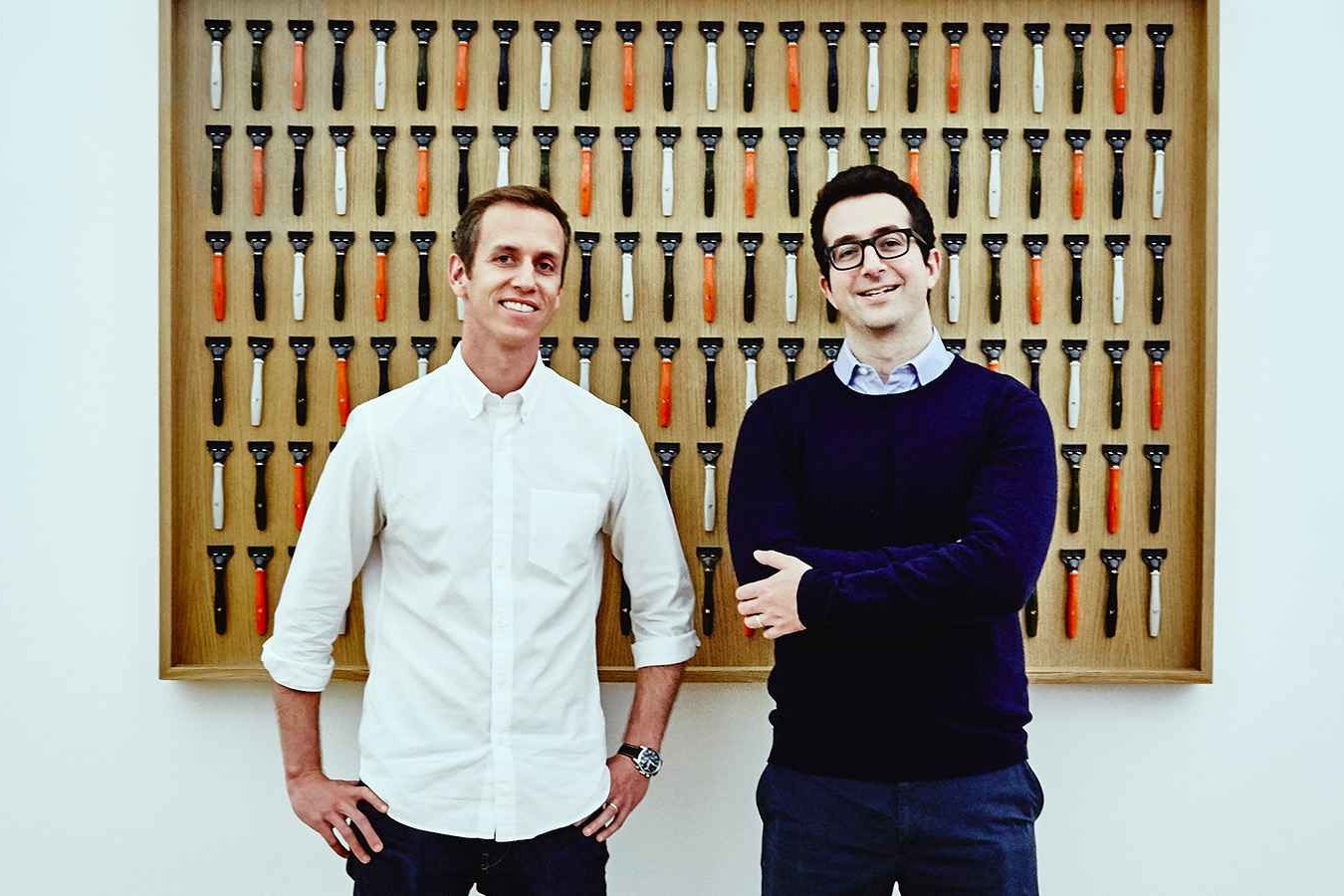
The company came with a factory problem
Harry’s launched in March 2013. In January 2014 it bought Feintechnik, a German blade manufacturer, for $100 million. A young American brand now owned a business with close to a century of manufacturing history. The distance between an online checkout and a factory floor had become Katz-Mayfield’s problem to manage.
That purchase makes the early Harry’s story stranger than the familiar account of a subscription startup. Customers could encounter a clean website and an approachable name. Behind those simple choices sat machinery, specialist knowledge and a substantial commitment of money. Selling directly could remove a layer of distribution; it could not make precision manufacturing disappear.
The founders later recalled using Google Translate during the German negotiations. For all their financial experience, they were still newcomers trying to understand the people who possessed the expertise they needed. Their 2023 conversation with Guy Raz returns to the cultural adjustment of working with the factory. It is an origin story with more industrial equipment than the usual laptop mythology allows.
The acquisition also created a management question substantial enough to become a Stanford business case: how should a fast-moving American startup work with an established German manufacturer? Ownership provided control over production. It also brought responsibility for an existing organisation, its habits and its people. The transaction could be completed on paper well before that relationship was finished being built.
A blade factory, purchased less than a year after Harry’s launched.
A website was only the first shop
Harry’s entered Target in 2016 and Walmart in 2018. For a company associated with buying online, those moves carried a practical admission: plenty of people still pick up razor blades while shopping for other things. Convenience depends on where a customer already is.
Katz-Mayfield’s original irritation had included the experience of buying the product. Becoming available on a store shelf addressed that problem in another way. The brand could keep its direct business while learning the demands of large retailers. The customer’s choice of shopping channel was becoming part of the product’s usefulness.
This later mattered beyond razors. Getting a brand established online and getting it distributed through retail require overlapping but different capabilities. Mammoth would eventually offer other founders help with both. Before it could make that pitch, Katz-Mayfield and Raider had to build the experience inside their own company, with orders to fulfil and shelves to keep stocked.
The exit that became a detour
In 2019, Edgewell Personal Care agreed to buy Harry’s in a proposed $1.37 billion transaction. The owner of Schick would acquire the younger shaving business. For Katz-Mayfield and Raider, it offered a very different next chapter from continuing to build independently.
In February 2020, the Federal Trade Commission moved to block the acquisition. Its complaint argued that combining the companies would remove an important source of competition in shaving. Edgewell abandoned the transaction that month. A deal large enough to reorganise the founders’ future had become a plan they could no longer use.
Katz-Mayfield has been unusually candid about the immediate performance required of him. He had to stand in front of the company and describe reasons to be optimistic while still persuading himself. In a later interview with Bob Safian, he distinguished between how much he believed those reassurances at the time and how much he came to believe them afterwards.
That is a revealing piece of executive work. Employees still need a direction when a transaction collapses. The leader cannot wait for every feeling to settle before explaining what comes next. Harry’s kept operating, raised fresh capital and pursued acquisitions of its own. The former acquisition target was developing the capacity to become a buyer.
Build a brand
Own production
Continue independently
Build across brands
The uncomfortable business of letting people work
The factory purchase and the failed sale are the conspicuous episodes. Katz-Mayfield’s account of management is quieter. He has talked about reserving thinking time, keeping his footing through setbacks and recognising that a founder eventually has to stop making every decision. Those habits receive fewer headlines than a transaction, though they determine what happens between transactions.
His first paid job was as a banquet waiter at a country club. He took from it a lesson about politeness and empathy in service. There is a pleasing continuity between carrying someone’s dinner and reconsidering the razor aisle: both involve paying attention to the person receiving the service.
He has also acknowledged a tendency to look first for a product or technical explanation when an organisational problem may come from people failing to exchange information. That admission complicates the polished founder biography in a useful way. Analytical experience does not automatically make someone attentive to every human part of a business.
In his leadership discussions, Katz-Mayfield has described making values specific enough to use in hiring, rather than leaving them as attractive words. An interview question can ask for an example that reveals a value in practice. It is a modest mechanism, which is part of its appeal. A company’s character is decided repeatedly, including in rooms where it is choosing its next colleague.
“90% of success is execution”
Andy Katz-Mayfield · Stanford interview, 2016
A bigger name, and more people to trust
Flamingo launched in 2018. Lume joined the business in 2021, and Mando followed in late 2022. By April 2025, the corporate name Harry’s Inc. was doing too much work for a company containing several distinct brands. The parent became Mammoth Brands, with Katz-Mayfield and Raider continuing as co-founders and co-CEOs.
The rebranding announcement put figures behind the change: $835 million in 2024 revenue and nearly $100 million in adjusted EBITDA. Those are company figures for that year, and the latter is an adjusted earnings measure. They establish the scale of the operation without needing to turn a private company’s performance into a fairy tale.
The founders also brought in John Butcher as CEO of Harry’s and Flamingo in April 2025. Butcher had spent two decades at Target and had helped with Harry’s retail launch. Katz-Mayfield and Raider would concentrate on the parent company’s longer-term direction. Delegation had acquired an organisational chart.
Katz-Mayfield supplied a less formal description of the ambition on LinkedIn: “Get Big without Sucking.” It is a useful phrase to keep nearby as a company adds layers. Size offers resources, but it also creates more distance between a founder and an ordinary customer. His wording makes that risk sound like something colleagues might actually discuss.
Company-reported results, announced April 2025. Adjusted EBITDA is an adjusted earnings measure.
The next test arrives by the diaperful
In October 2025, Mammoth announced an agreement to acquire Coterie, the baby-care brand founded by Frank Yu. The deal extended the group into diapers and wipes. Coterie had passed $200 million in revenue over the preceding twelve months, according to the announcement, and would retain its leadership, including CEO Jess Frenchman Jacobs.
The relationship had roots before the deal. Katz-Mayfield had spoken with Yu while Coterie was still an idea. By 2026, Coterie was part of Mammoth’s portfolio. For Katz-Mayfield, the proposition now reaches beyond identifying the next irritating purchase: can the organisation help another founder’s company grow while allowing its own identity to survive?
His earlier aspiration was expressed in a longer unit of time: “I would love to build a brand that is around for 100 years.” A century makes an interesting companion to the factory he bought before Harry’s first birthday. He began by questioning the way a small object was sold. The continuing job is to build an institution that remembers why the question mattered.