The first thing to go wrong at Mezcla was the bar itself. In Coco Sotelo’s kitchen, a promising batch could taste good today and turn rancid a week later. For a snack meant to wait patiently in a bag or on a shelf, this was an awkward personality trait. Griffin Spolansky and Sotelo needed help from a food scientist. Revising the recipes took months.
- The product: crispy plant-protein bars, with 10-11 grams of protein depending on flavor.
- The opening: make a functional snack enjoyable enough to choose for its taste.
- The scale: roughly 9,000 U.S. retail outlets and a $9.5 million Series B in 2026.
That unglamorous kitchen problem is a useful place to begin. Mezcla’s proposition sounds simple: give a protein bar the appeal of a crispy treat. Delivering it requires flavor, texture and enough shelf stability for the pleasures of the first bite to survive the journey to the customer.
A partnership outside the classroom
Spolansky met Sotelo after she spoke to his University of Virginia entrepreneurship class in 2018. She ran Coco’s Granola, selling homemade foods at Charlottesville-area farmers’ markets. He was an economics student and lacrosse player. They initially considered working together on granola, then chose a different snack. The company dates its founding to 2019; its bars launched in August 2020.

The name is Spanish for mixture. It suits both the partnership and the product: different food experiences brought together in something small enough to fit beside a laptop. A brand born around food also has a reason to look beyond its own customers. Mezcla supports The Hunger Project, which works with communities toward ending hunger.
The bite is the business
Mezcla sells Puff-Crispy Bars built around pea protein, with ingredients including quinoa and nut butters. Its current materials describe 10-11 grams of plant protein and 160-170 calories per bar. The range is vegan, gluten-free and non-GMO. Those credentials help shoppers decide whether to consider it. The texture gives them another reason to open the wrapper.
Consider the flavor names: Matcha Vanilla, Pistachio Chocolate, Maple Blueberry. They promise recognizable eating occasions, from a cup of tea to a pancake breakfast. Peanut Butter Chocolate keeps a familiar combination in the lineup. Chocolate Pretzel and Mint Chocolate widen the assortment. Nutrition gets a seat at the table; pleasure has been allowed to order.
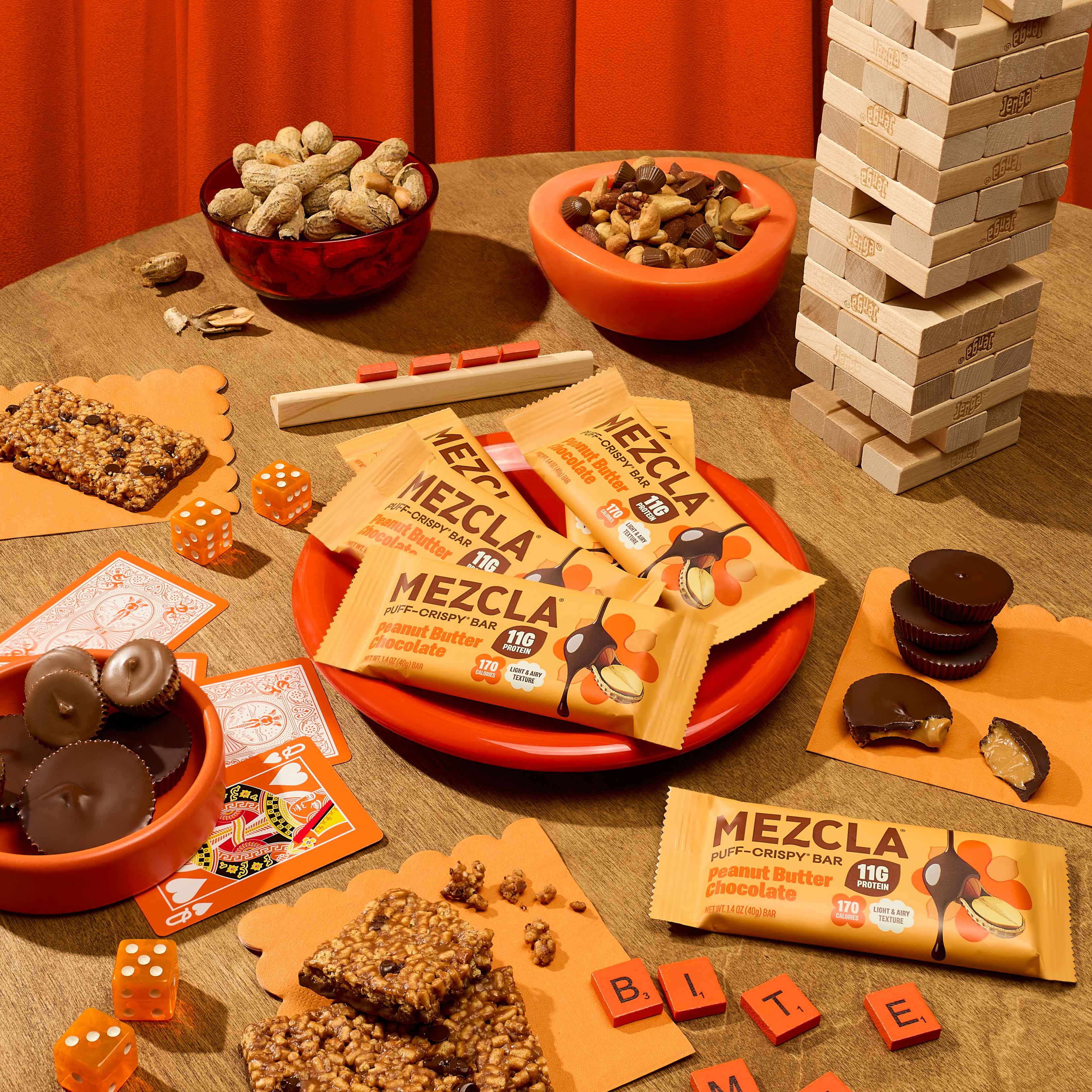
The intended customer need is ordinary: a portable snack between meals, on a journey or during a busy workday. Someone seeking plant-based food can use Mezcla without turning the purchase into a sports-nutrition project. Athletes can eat it too, but the appeal extends to people whose most strenuous afternoon event is finding time for lunch.
That places the company between familiar choices in the bar aisle: the functional protein product and the everyday snack. RXBAR, Quest, KIND and CLIF are alternatives for different appetites and priorities. Mezcla’s argument centers on the eating experience. Buyers who want the largest protein number may choose differently; a lighter, crispy format has its own audience.
“We really want to give the consumer a different eating experience.”Griffin Spolansky
A buyer finds the bar
Whole Foods initially rejected Mezcla’s application. A buyer later spotted the bars in an Austin juice shop and contacted Spolansky. By July 2023, they were available in Whole Foods stores nationwide. The detail matters: a small retail placement could put the product where a consequential buyer would encounter it.
By early 2026, public announcements put Mezcla in approximately 9,000 outlets. The list includes Whole Foods, Sprouts, Publix and H-E-B, with selected regions or locations at Target, Albertsons, Kroger and Costco. Availability is uneven, so the store locator is more useful than assuming every branch of a named chain carries every flavor.
When the wrapper gets practical
Growing beyond the natural grocery aisle exposed another problem. Spolansky has described early packaging as sophisticated but insufficiently clear. Mezcla revised its presentation to communicate the product more directly. A shopper facing a crowded shelf needs to understand the snack before appreciating the ingenuity behind it.
Country qualifiers in flavor names created sourcing constraints too. Italian pistachios made a charming story and a narrower purchasing brief. Mezcla removed the qualifiers, giving itself more flexibility. The inference for another consumer brand is practical: write promises your supply chain can keep. Distinction becomes expensive when every ingredient must obey the copy.
The money behind the next shelf
The company raised a $4 million Series A, reported in December 2023, led by Dream Ventures and Santatera Capital. That year it also joined Mondelēz’s CoLab: a 12-week program offering expertise, networking and a $20,000 grant. These were different resources for the same commercial task - building a snack business that could operate beyond its earliest stores.
Its $9.5 million Series B, confirmed in February 2026, was led by Bluestein Ventures. Announced priorities included distribution, staffing, brand building and product innovation. SG Credit Partners separately announced senior debt financing in March for working capital. Inventory has to be paid for before the shopper takes it home; expanding distribution creates cash demands as well as opportunities.
Spolansky’s stated discipline is “capital efficiency and unit economics.” It is a useful phrase to copy only if it changes decisions: how much a bar costs to make, what remains after selling it, and whether another shelf earns its keep. Funding totals alone cannot answer those questions.
Start with one wrapper
For a prospective customer, the simplest experiment is a single bar from a nearby retailer. The website offers packs and subscriptions, with a stated 10% subscription discount and options to pause or cancel. Matcha enthusiasts can start there; someone who prefers familiar flavors can try peanut butter and chocolate.
Check the individual label if allergies matter. Vegan ingredients do not eliminate shared-equipment exposure, and nuts appear in the range. The buying decision is otherwise refreshingly modest: does this texture suit your appetite, at a price you will pay again? Mezcla’s entire business has to survive that small question, repeated at thousands of shelves.