In the spring of 2012, David Simnick stood inside a Whole Foods in Glen Mills, Pennsylvania, talking strangers into buying a $6.99 bar of soap. He sold more than 80 in a day. The store saw velocity; Soapbox saw a future. The young Washington company expanded into 42 locations, where its founder could not be everywhere at once. Sales fell 75 percent.
That plunge is more illuminating than the demo-day triumph. Simnick had built a persuasive performance, not yet a self-selling product. The bar cost several times what a shopper might pay for an ordinary one. Its package showed children's faces, which made some customers wonder if children had made it. Its charitable promise was earnest, but earnestness had been assigned three jobs at once: explain the product, justify the price, and close the sale.
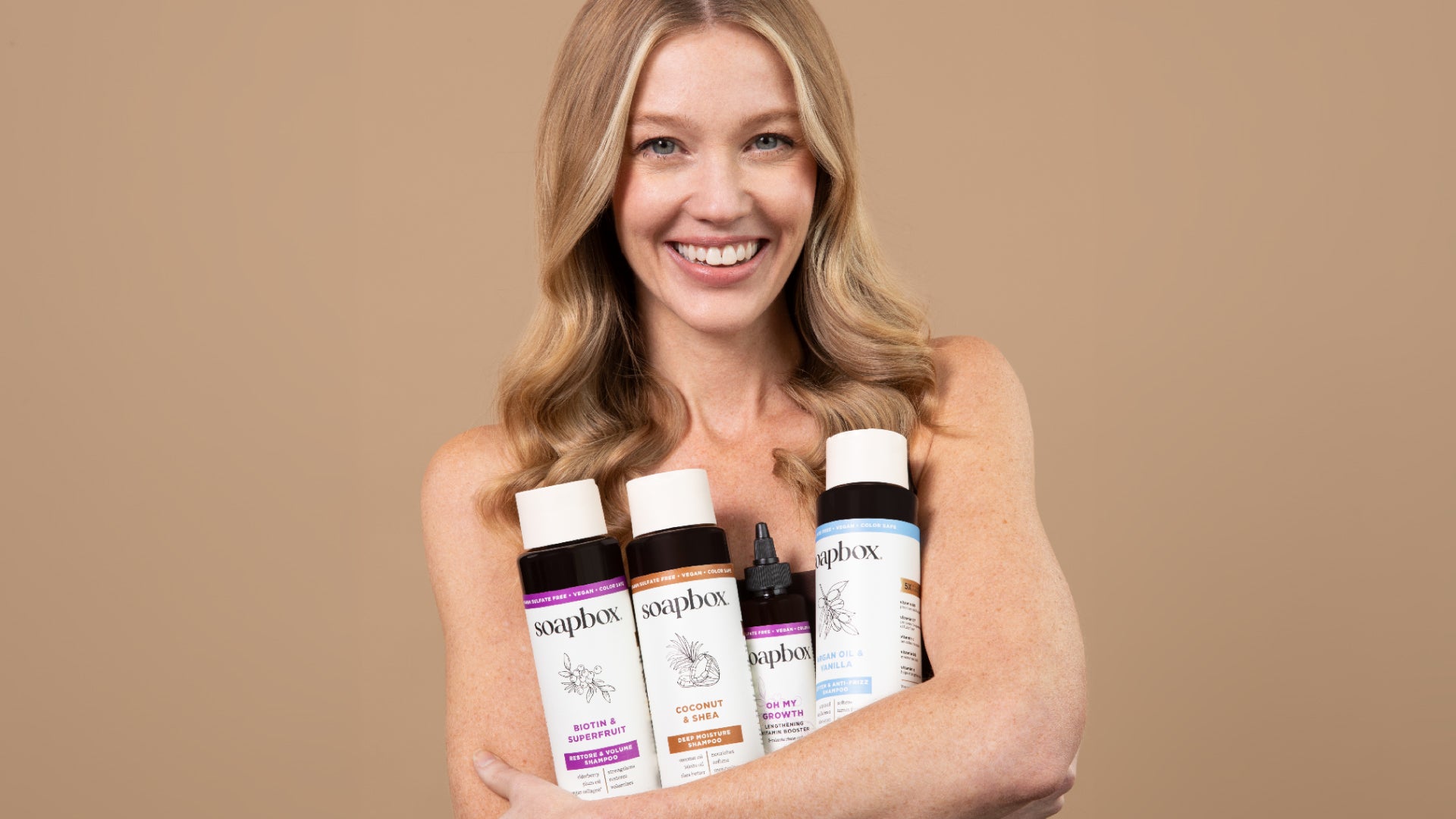
Soapbox survived because the founders let the tactics change while the premise stayed fixed. They lowered prices, rebuilt the package, hired experienced operators, expanded into liquid soap and body wash, and eventually made hair care the economic center of the assortment. The company now sells shampoos, conditioners, treatments, stylers, body washes, lotions, deodorants, hand care, and clinical-positioned scalp products online and through major retailers. Every purchase helps provide soap and hygiene education through nonprofit partners.
The shelf is a ruthless editor
Simnick did not enter personal care because he loved shampoo chemistry. He had worked as a subcontractor on U.S. Agency for International Development projects and saw a gap in water, sanitation, and hygiene work: water drew attention, sanitation was gaining it, but basic hygiene and soap access received less. In 2010, he called childhood friend Eric Vong with the idea for a company that could fund hygiene through ordinary purchases. Daniel Doll, now president and chief operating officer, joined the founding team.
Their reported starting stake was roughly $25,000 in pooled savings. Simnick's first research included searching how to make soap. The homemade attempts earned bad reviews, so the team found a manufacturer. That decision is the first useful clue in the Soapbox story: attachment to the mission did not become attachment to a broken method.
What failed first · Whole Foods rollout, 2012
Indexed illustration based on the reported 75% sales decline after expansion to 42 stores. It compares relative sales, not revenue dollars.
The company pulled several levers. It moved from a premium bar toward more accessible pricing. It widened the line to liquid formats that shoppers already preferred. It sought mentors with consumer-products experience. Most importantly, it learned to separate the product message from the impact message. What does this shampoo do for my hair? Why should it sit in my shower? Only after those questions are answered does the donation become a meaningful tiebreaker.
“We were way too expensive and the packaging was awful.”David Simnick, on Soapbox's early retail proposition
A later rebrand made that distinction visible. Instead of treating the bottle like a charity brochure, Soapbox adopted an apothecary-like look, clearer benefit language, and an affordable-luxury position. After the 2017 relaunch, the company reported average baseline sales increases ranging from 40 to 90 percent. One SKU rose more than 2,000 percent. Promotions pushed some products 200 to 400 percent above the already improved baseline.
Those numbers came from the company, but the behavioral lesson is sturdier than any single percentage. Customers had not rejected the mission. They had struggled to decode the offer. A worthy cause is not permission to make people work harder at the shelf.
A giving company disguised as a useful bathroom shelf
Soapbox occupies a busy middle of personal care: more ingredient-conscious and mission-forward than a conventional mass brand, but priced and distributed for everyday retail rather than boutique scarcity. Its current catalog groups hair products by jobs such as volume, deep moisture, anti-frizz, scalp balance, and styling. Body care covers washes, lotions, deodorants, and wipes. Hand care spans liquids, foams, bars, refills, and sanitizer. Bundles and selected subscriptions increase basket size online.
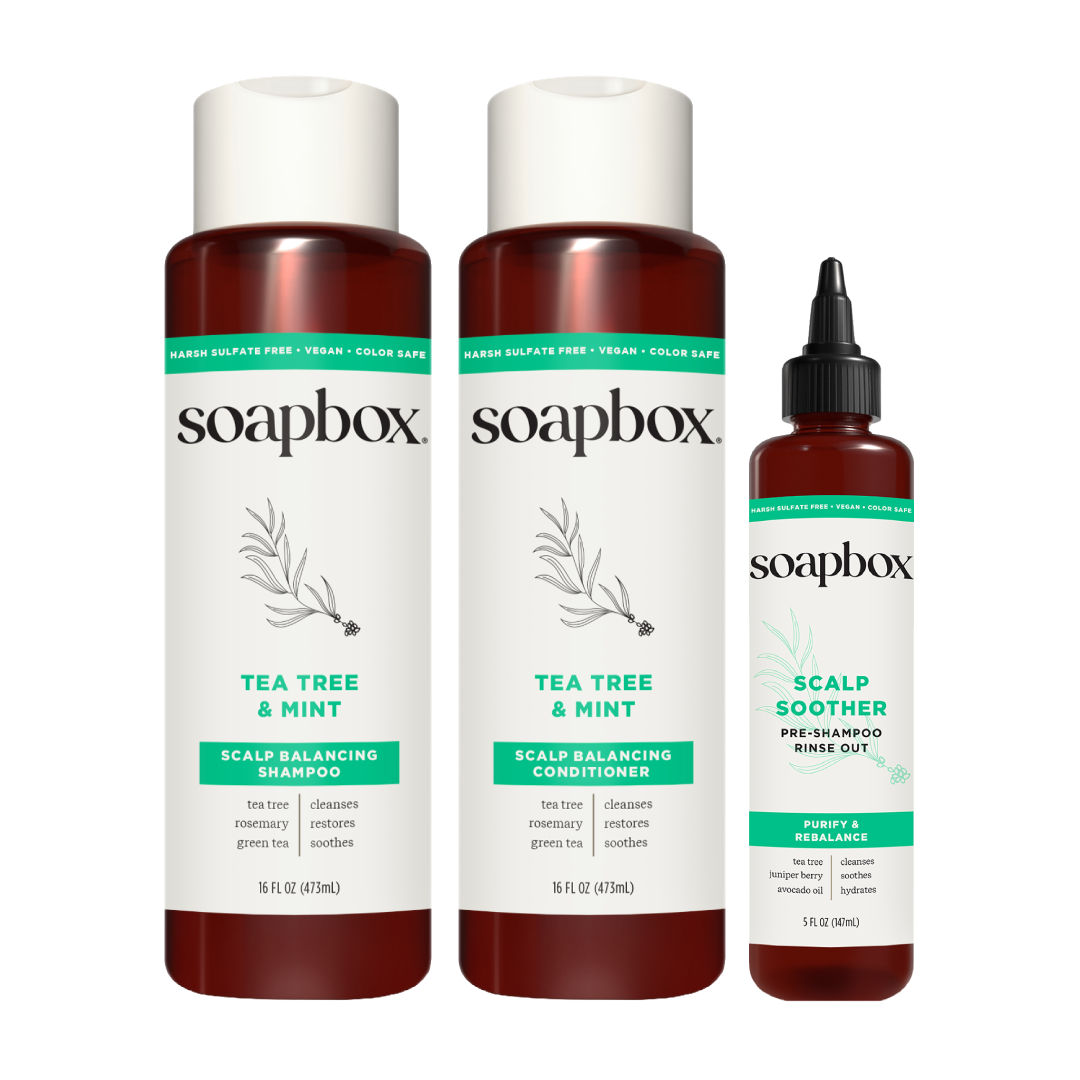
At the higher end, the ProGRO Density+ scalp and hair serum is listed at $54.99, far above the roughly $10 shampoo and body-care staples. That extension matters. In mass personal care, volume is unforgiving and margins can be thin. Treatment products, routines, bundles, and direct ecommerce can improve the economics that support both retail growth and donation commitments.
The customers are not a narrow tribe of soap enthusiasts. They are Target and Walmart shoppers trying to fix frizz, Sally Beauty customers seeking hair performance, online buyers who prefer vegan and cruelty-free formulas, and households restocking ordinary hygiene products. Soapbox competes for the same shower ledge as Dove, Native, SheaMoisture, Method, Love Beauty and Planet, Dr. Bronner's, and retailer-specific hair labels. The impact story differentiates it, but only after scent, feel, efficacy, price, and availability clear the bar.
Clear routines for moisture, volume, smoothing, scalp care, washing, and everyday hygiene.
Each purchase supports soap and hygiene education, connected to a trackable Hope Code.
Wholesale retail, direct ecommerce, bundles, and selected replenishment subscriptions.
Thin unit margins, crowded shelves, vague claims, weak repeat purchase, or poorly matched aid.
The donation needs a supply chain, too
Buy-one-give-one can be charmingly simple in an ad and clumsy in practice. Sending a branded American product across oceans may be expensive, environmentally wasteful, or poorly matched to local needs. Soapbox's answer is to work with existing organizations that already understand their communities. Its network has included EcoSoap, Sundara, Comfort Cases, the WASH Foundation, Splash, and other local and global groups.
Much of the donated supply has come from recycled hotel soap. Partners collect partially used bars, sanitize and reprocess them, employ local women in parts of the network, and combine distribution with hygiene education. Soapbox's public impact dashboard reports 61 million bars donated, 49 nonprofit partners, 20,907 hygiene classes taught, and 338 women employed. Those figures turn the model from a sentimental extra into something closer to an operating ledger.
The small invention is the Hope Code printed on a bottle. A customer enters it on Soapbox's site to discover the nonprofit or community the purchase supports. It does not convert the buyer into an auditor, but it gives a specific action to a promise that would otherwise dissolve into label copy. The model becomes purchase, donate, discover.
This only works under certain conditions. Customers must like the product enough to buy again. Gross margin must absorb impact costs without pushing the price outside the category. Nonprofit partners must be able to source, distribute, and teach locally. The giving claim must remain comprehensible as the assortment expands. Remove any one of those supports and purpose becomes a tax on a fragile business, or worse, a marketing story attached to badly targeted aid.
From hand-selling bars to buying the funnel
Soapbox's distribution history reads like a tour of American retail: Whole Foods, Target, CVS, Walgreens, Walmart, grocery chains, Amazon, and Sally Beauty. Each channel asks a different question. Grocery rewards dependable turns. Specialty beauty rewards education and regimen building. Ecommerce can explain ingredients and mission at length. Mass retail gives scale but buries a small brand in a wall of alternatives.
A Walmart Connect campaign running from March 2024 to March 2025 shows how far the company traveled from relying on Simnick beside a folding table. Soapbox began with Sponsored Products aimed at shoppers already searching, then added Sponsored Brands, video, and onsite display for awareness and repeat purchase. Walmart reported 107 percent year-over-year sales growth, 78 percent new-to-brand buyers, and 70 percent ad-attributed sales for the campaign.
That sequence is worth stealing. Start at the bottom of the funnel, where intent is visible and conversion is measurable. Learn which product and query pairings work. Then spend upward on awareness. The company did not begin by buying a giant purpose campaign and hoping goodwill found a checkout button.
Price and package exposed
A successful founder demo failed to repeat across 42 Whole Foods stores.
Benefits move to the front
A deeper brand redesign reportedly lifted baseline sales by 40 to 90 percent.
Sanitizer at emergency speed
An eight-person team expanded into hand sanitizer and reported tenfold revenue growth.
Retail becomes measurable media
Target distribution widened while Walmart search and display produced reported triple-digit growth.
The 2020 sanitizer pivot offers a second version of the lesson. As the pandemic created acute demand, Soapbox moved into hand sanitizer, a category adjacent to its manufacturing and mission. The eight-person company reported a tenfold revenue increase, with shampoo still its most profitable line and sanitizer next. The move worked because demand, capability, distribution, and purpose briefly aligned. Copying it in an ordinary market would invite excess inventory and commodity competition.
Purpose can earn the first look. Performance earns the second bottle.
Keep the principle; interrogate the mechanism
Soapbox is not a tidy tale of values rewarded. It is a company that made bad soap, chose a bad price, printed a bad package, and learned in public. Its advantage was not clairvoyance. It was the willingness to treat every embarrassing result as product data.
The five-step steal
- Test whether the package can sell without the founder speaking.
- State the functional job before the emotional or social reward.
- Price against the real shelf, not the elegance of the story.
- Let local partners shape delivery and measure more than units donated.
- Prove conversion at the bottom of the funnel before buying broad awareness.
There are limits. This playbook will not rescue a product with poor repeat use. It is a poor fit for categories with no margin to fund giving, products bought too rarely to create meaningful volume, or aid problems that require policy and infrastructure rather than distributed goods. Traceability also creates an obligation: impact numbers need definitions, dates, and continued scrutiny as they grow.
Still, Soapbox has managed an uncommon trick. The donation is not hidden, but neither is it asked to cover for the conditioner. The company learned to put product performance, an accessible price, and shelf clarity in front. Its mission then supplies a reason to choose between two bottles that both promise better hair. That order is less romantic than the dorm-kitchen origin story. It is also how the soap keeps moving when the founder goes home.