The most revealing thing about a bottle of Method hand soap is where it sits. Usually, it is out in the open. Under the sink is where cleaning products have traditionally gone to wait out their sentence: necessary, useful, visually apologetic. Method's founders noticed that exile. Their wager was that a cleaner could work well, ask less of the planet and earn a place on the counter. A small rearrangement of household geography became a large business idea.
- Eric Ryan and Adam Lowry founded Method around a marriage of design and cleaner formulation.
- Four sprays sold in 2001 led to a 90-store Target test in 2002, then national distribution.
- Today the line stretches from surfaces and laundry to hand, body, hair and dish care.
- Its sharpest test is behavioral: will people refill a bottle they like enough to keep?
Four sprays and a useful embarrassment
Ryan came at cleaning products as a design and marketing problem. Lowry brought a background in chemical engineering and an interest in formulas with less environmental impact. The company's own history records a first sale of just four cleaning sprays to Mollie Stone's grocery store in Burlingame, California, in 2001. This was hardly the sort of volume that keeps a factory awake at night. It was enough to put the idea on a shelf.
What had failed first was the aisle's imagination. A buyer looking for a product that felt pleasant to use generally found either conventional cleaners with familiar performance or green alternatives whose appeal depended heavily on virtue. Method's founders treated that gap as a product brief. The formula needed to clean. The scent had to be welcome in a home. The bottle had to deserve the light.
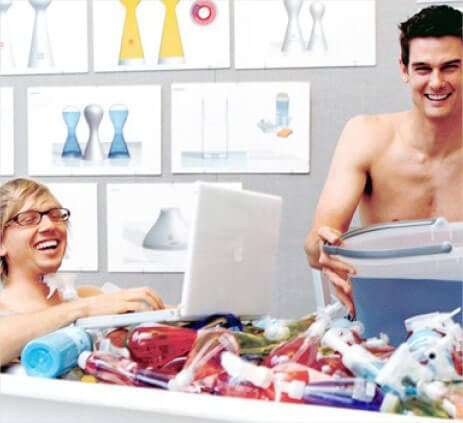
First recorded sale at Mollie Stone's in California.
Target tests sprays and dish soap after the packaging redesign.
The Target test becomes a national rollout.
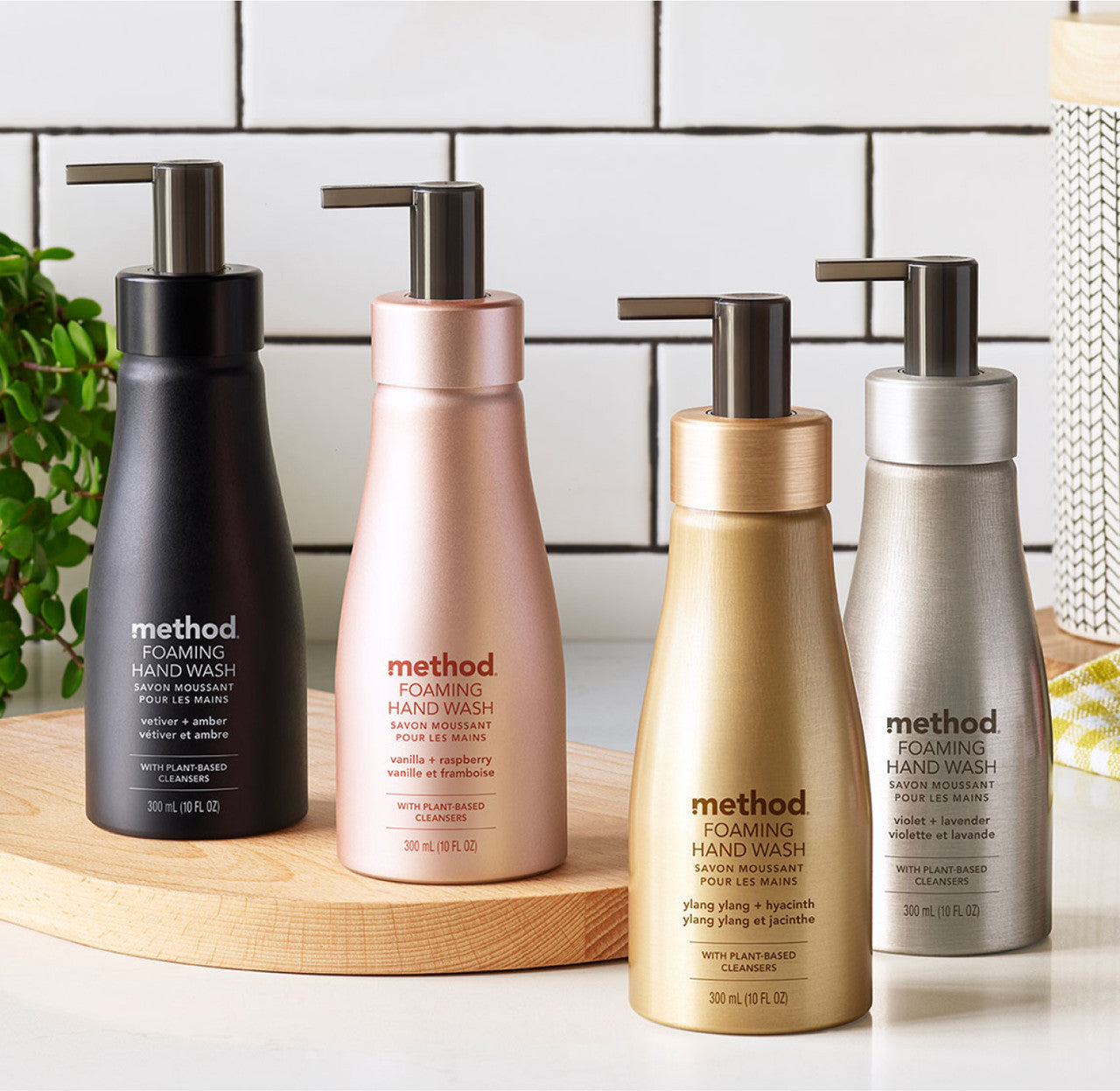
Designer Karim Rashid helped make the next step visible. Method's products reached a 90-store Target test in 2002; seven months later they were in Target stores nationally. In 2003 came the hand wash in its teardrop bottle. The chronology is telling. The bottle was not decoration applied after a product had won. It was one reason a shopper might pick the product up in the first place.
A cleaner that stays on the counter gets seen twice: once at purchase, and again every day it is used.The design logic behind Method's early growth
The object on the counter
Method sells household cleaning sprays, dish and laundry products, hand wash, body wash, shampoo, conditioner and newer fragrance-led products. That range makes sense once the founding insight is understood. The customer is not a special breed of cleaner. It is an ordinary household buying things it will use repeatedly, and perhaps paying attention to scent, appearance, ingredients or packaging along the way. The products compete with conventional mass-market cleaners and with other environmentally positioned brands. Method's difference is that it lets the bottle and the experience do part of the persuasion.
There is a commercial discipline under the charm. Soap, detergent and surface cleaner run out. Method sells through large retailers and its own online store; a household that likes its bottle and formula can buy again, or buy a refill. The packaging has to win the first sale, while the formula has to win the second. Method's 2026 Super Shine dish line shows the performance side of that bargain: liquid soap uses amylase and protease enzymes aimed at starch and protein residues; the foaming spray adds lipase for fats. The line includes refills, and the foaming trigger is designed to be reused.
Those are launch prices announced by the company, not a promise about what every shop charges. They answer a practical question often lost in talk of green innovation: what does the consumer actually have to spend? Method's pitch has never depended on a vague promise of saving money. It asks shoppers to value how a product works, feels and looks, then come back.
A factory with lettuce on the roof
In 2015 Method opened the South Side Soapbox in Chicago's Pullman district. The factory put manufacturing, bottling and distribution in one building and earned LEED Platinum certification. Gotham Greens built a 75,000-square-foot rooftop greenhouse there. The greenhouse is the detail people remember, and understandably so: a soap factory with vegetables overhead sounds like a joke an architect managed to get funded. It also made Method's interest in industrial design physical, not merely graphic.
The company says many of its North American home products are made at the Chicago plant, while other products come from manufacturing partners in the United States and Canada. That qualification matters. A consumer brand's supply chain is usually more complicated than the one handsome building in the brochure. Method's 2024 switch to recycled recovered coastal plastic is similarly precise: the claim covers clear North American PET bottles, not triggers or closures. Better packaging can be measured, but only when the boundary of the claim is kept in view.
The refill experiment is the most interesting part of the business now. A recyclable single-use bottle asks for proper disposal after the purchase. A refill system asks the customer to remember the bottle, keep it and do a little mixing. Method's concentrates come in small glass bottles; the user adds water to the reusable aluminum container, swirls and sprays or pumps. The design is trying to remove friction from a better habit. It cannot make that habit automatic.
From cleaning aisle to shower shelf
Method's owners and channels changed as the range widened. Ecover acquired Method in 2012; Method became a public benefit corporation in 2013; SC Johnson acquired the Method and Ecover brands through People Against Dirty in 2018. Today Method sits in SC Johnson's Lifestyle Brands group. This gives the brand large-company distribution and resources, while putting it beside other household names, including some that serve as alternatives on the same shelf.
The most striking recent move is into beauty retail. Method launched personal care at more than 1,400 Ulta Beauty stores in 2025, including body wash and body-and-hair mists. In 2026 it added Body Wash Tonics and Hydrating Serum Hand Washes. Coachella sponsorships put shampoo, conditioner and body wash in front of festivalgoers. A 2026 limited-edition collection gave seven Latinx artists bottle designs and custom fragrances inspired by their cities. One can see the old counter idea at work: make an everyday routine feel distinctive enough that the object becomes part of someone's taste.
The point is not that every spray bottle needs a famous designer or every factory needs a farm upstairs. The repeatable lesson is narrower and more useful. Find the aspect of a routine people quietly dislike, then improve performance and experience together. Give a retailer a product that is legible at a glance. Test it in a real aisle. Make the second purchase worth making. And when the environmental case depends on reuse, design for the person who has to remember to refill it. If the cleaner fails at cleaning, the bottle goes back under the sink.