Spectrum Brands is the corporation you have probably never asked for by name, even while its products occupy your bathroom, kitchen, garage and pet cupboard. The label on the deshedding tool says FURminator. The fish flakes say Tetra. The mosquito spray says Cutter. The shaver says Remington. The indoor grill carries George Foreman's name. Spectrum is the backstage operator, content to let each specialist take the bow.
That anonymity is a feature. A person stalking a mosquito does not need a relationship with the company that also sells aquarium filters. A dog owner does not care that the same corporate parent understands weed killer. What joins the collection is less poetic: consumer research, product development, sourcing, ecommerce, distribution and the ability to persuade enormous retailers to keep making room on crowded shelves.
In fiscal 2025, those activities produced $2.809 billion in net sales. The portfolio is split among Global Pet Care, Home & Garden, and Home & Personal Care. It sells to mass merchants, ecommerce platforms, warehouse clubs, drug and grocery chains, wholesalers and specialty stores. Millions of households use the products; Amazon and Walmart alone represented about 42 percent of Home & Personal Care sales in fiscal 2025. That is reach with a bargaining counter attached.
A conglomerate built for irritating little problems
The product logic starts with ordinary friction. Hair collects under the couch. Algae clouds the aquarium. Crabgrass arrives uninvited. Mosquitoes discover the patio exactly when dinner does. A beard needs trimming; a sandwich needs grilling. These are not grand human dilemmas, but they recur, and recurring annoyances make durable categories.
Pet care combines consumables and equipment: food and water treatments for fish, chews for dogs, stain removers, grooming tools and hygiene products. Home & Garden covers herbicides, insecticides, repellents and cleaning or restoration products. Home & Personal Care spans hair dryers, shavers and trimmers as well as kettles, coffee makers, air fryers, toaster ovens and grills. Some names are owned; others are rented. Spectrum licenses Black+Decker for designated appliance categories and licenses Emeril for certain products and markets. Brand architecture, in this house, can involve a royalty check.
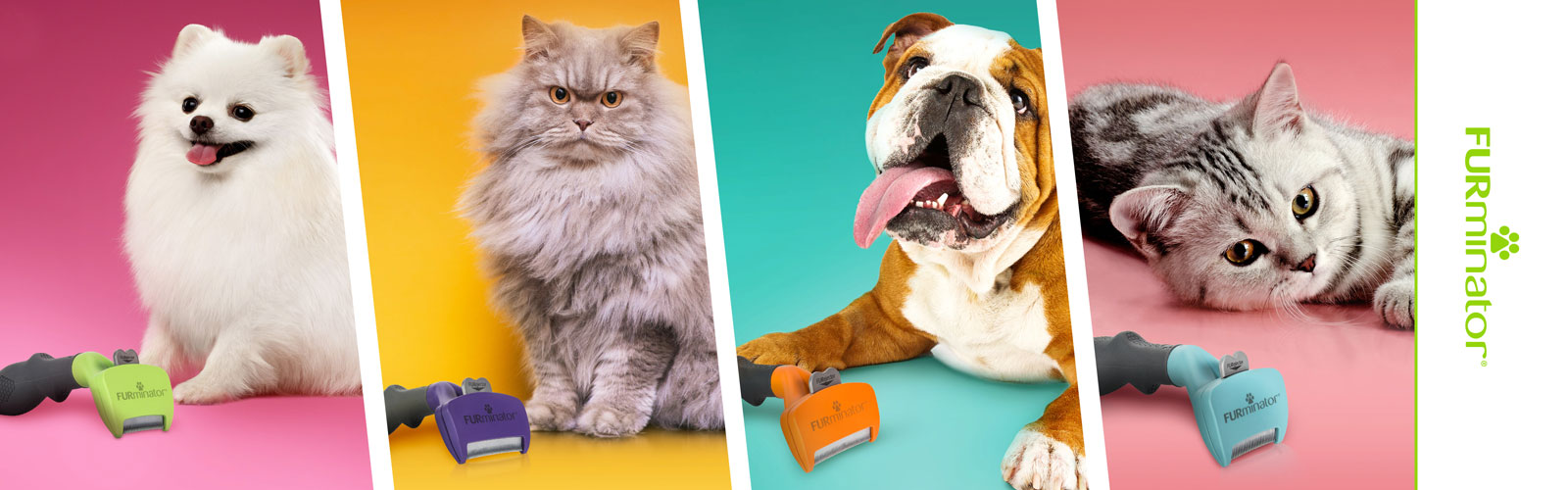
The differences from a Procter & Gamble or a private-label factory are worth noticing. Spectrum is smaller and more eclectic than the global staples giants, but more brand-led than an anonymous manufacturer. Its expertise sits at the category level: aquatic chemistry, pet behavior, pest regulation, grooming ergonomics, seasonal garden demand and compact appliance design. The portfolio can share corporate plumbing while leaving the customer promise specific.
The $4.36 billion lesson
Spectrum's most legible strategic move was selling Hardware & Home Improvement, the business behind residential locks and related hardware, to ASSA ABLOY. Announced in 2021 at $4.3 billion, the transaction ran into a US Justice Department challenge and did not close until June 2023. The final value was $4.36 billion after customary adjustments. Management said HHI's EBITDA had nearly doubled under Spectrum ownership.
This answers the question, “What exactly did they do?” They assembled and operated a broad consumer portfolio, improved a major unit, then sold it to an owner willing to pay more than 14 times expected fiscal 2021 adjusted EBITDA. The proceeds reduced leverage and funded large share repurchases. Spectrum bought back 17.1 million shares between the HHI closing and August 2025 for roughly $1.3 billion.
The company did not merely sell a weak limb. It sold a good business at a price that made continued ownership difficult to defend.YesPress analysis of company filings
The copyable idea is simple, if emotionally unpleasant: do not confuse a business you improved with a business you must own forever. A portfolio manager should ask who values each asset most, what capabilities genuinely transfer to the rest, and whether the sale proceeds have a better use. This works when the asset is separable, buyers exist and management has the discipline to allocate cash. It works poorly when the supposedly shared systems are inseparable, the sale creates a tax leak, or proceeds drift into overpriced acquisitions.
What failed first
The appliance story is messier. In February 2022, Spectrum paid $325 million for Tristar's appliance and cookware business, adding PowerXL, Emeril Lagasse and Copper Chef. The announced terms had allowed up to $125 million more if performance targets were hit. Tristar brought $546 million of trailing sales, fast growth, direct-response television expertise and a content studio. Spectrum planned to combine it with Home & Personal Care and eventually create a standalone appliance company.
Then the channel and the category soured. Spectrum recorded impairments tied to PowerXL and George Foreman trade names, rationalized products, completed a costly integration and later exited the direct-response television business. In fiscal 2025, appliance softness and tariff disruption compounded the problem. The first thing to fail was not the physical appliance. It was the growth thesis around a channel-heavy acquisition meeting a post-boom consumer market.
The appliance deal, without the perfume
- What it cost
- $325 million at closing, with contingent consideration in the original agreement.
- What failed first
- The assumed growth engine: North American appliance demand weakened, acquired brands were impaired and direct-response television was eventually abandoned.
- What changed their mind
- Lower growth, weaker margins and the valuation drag of keeping unlike businesses together pushed management from integration toward separation.
By 2024, Spectrum had confidentially filed for a possible spin-off of Home & Personal Care, while explicitly preserving the option of a sale, merger or another transaction. A neat spin did not arrive. In May 2026, the company took a more pragmatic route: Oaktree Capital agreed to put $127 million into HPC through $67 million of convertible preferred equity and a $60 million first-lien term loan. Spectrum expected to retain about 73 percent of the appliances business, whose new capital structure would be non-recourse to the parent.
That is what changed the plan. Separation stopped meaning one dramatic cut and became staged independence: outside capital, its own debt, reduced cross-contamination and strategic room for organic or acquired growth. A founder can steal this structure when a division needs time to stand alone. Ring-fence it, give it accountable economics, invite a partner with relevant capital discipline and keep some upside. Do not copy it when the division cannot support itself, when preferred returns consume the recovery, or when “temporary” complexity merely postpones a needed closure.
When the boxes stopped
The most revealing operational episode came from tariffs, not boardroom geometry. When US tariffs on Chinese imports rose to 145 percent in spring 2025, Spectrum paused virtually all purchases from China for the US market. It negotiated tariff-related prices with retailers and, where talks stalled, stopped shipping. When the rate dropped to 30 percent, importing resumed. The pause left holes in orders and helped drive a 10.2 percent sales decline in the fiscal third quarter.
There is a useful operator's rule here: when unit economics become unknowable, buying inventory can be more dangerous than missing revenue. Spectrum chose cash preservation and supply diversification over pretending the old price still worked. But the conditions matter. A company needs liquidity, retailers who cannot instantly replace every product, and customers willing to tolerate price resets. A commodity seller with no brand pull may discover that a shipping pause is simply a customer-donation program.
Copy this
Keep category brands specific. Centralize invisible infrastructure. Put hard gates on acquisition assumptions. Stop volume when it destroys cash. Treat ownership as a decision, not an identity.
Skip it when
Your units share inseparable technology, your buyers can switch overnight, your balance sheet cannot absorb a pause, or your “portfolio” is just unrelated logos without operating leverage.
A rebound, with weather attached
By the fiscal third quarter of 2026, the picture had improved. Sales reached $753.3 million, up 7.7 percent. Home & Garden jumped 19 percent as favorable April weather lifted point-of-sale consumption and retailer replenishment. Global Pet Care grew 3.3 percent. HPC grew 3.6 percent, though North American home appliances remained weak and competition persisted.
Profit needs an asterisk. A $60.6 million one-time tariff refund lifted gross profit and adjusted EBITDA. Excluding the refund, adjusted EBITDA still rose 27.5 percent, a healthier signal, but not license to annualize the headline number. Weather, tariff refunds and retailer order timing can make a quarter look more decisive than the underlying consumer.
The deeper bet is focus. Spectrum wants Global Pet Care and Home & Garden to become the core: categories with consumables, specialist knowledge and familiar shelf brands. HPC is being moved toward a life with its own capital structure. A unified SAP S/4HANA system, largely deployed by mid-2026, is meant to make the remaining machinery more legible. The market position is not that of the biggest household-goods company. It is that of a category operator trying to be more selective than its history.
The company began in batteries in 1906, later renamed itself when batteries no longer described the collection, sold the battery business, sold the locks and began separating appliances. The recurring skill is not devotion to a product. It is the willingness to redraw the boundary around what belongs together. Spectrum Brands has already shown it can make money from subtraction. The hard part now is making the remainder add up.