Jordan DeCicco had a problem that would be familiar to anyone who has tried to be both a college athlete and an attentive student. He needed energy. The bottled drinks available to him did not fit the way he wanted to eat. At Philadelphia University, the basketball player began making his own coffee mixture. In 2015, his brothers Jake and Jim joined him. A private solution acquired a public name: Super Coffee.
- Coffee and protein share one bottle, saving a separate mixing ritual.
- Retail distribution made the brand large; complexity made it expensive.
- A later reset cut products and costs, according to the founders.
- The 25-gram Protein+ line followed a habit customers already had.
The night shift behind the sugar factory
Super Coffee sells packaged drinks, rather than a place to sit with a laptop. Its customer is someone who wants coffee’s familiar ritual with protein and less sugar: a commuter, a gym regular, a person collecting breakfast from a refrigerator. The early proposition was straightforward. Combine things people already consumed separately, and make the combination easy to carry.
The difficulty was getting it made. Jim later described a circular problem: stores wanted a distributor, distributors wanted stores, and manufacturers wanted orders large enough to justify a run. The brothers found a makeshift bottling line behind an old Domino Sugar factory in Baltimore. They could use it between 8 p.m. and 6 a.m. After bottling all night, they chose the delivery driver by rock-paper-scissors. Sugar-free coffee was coming out of a sugar factory. Entrepreneurship occasionally supplies its own jokes.
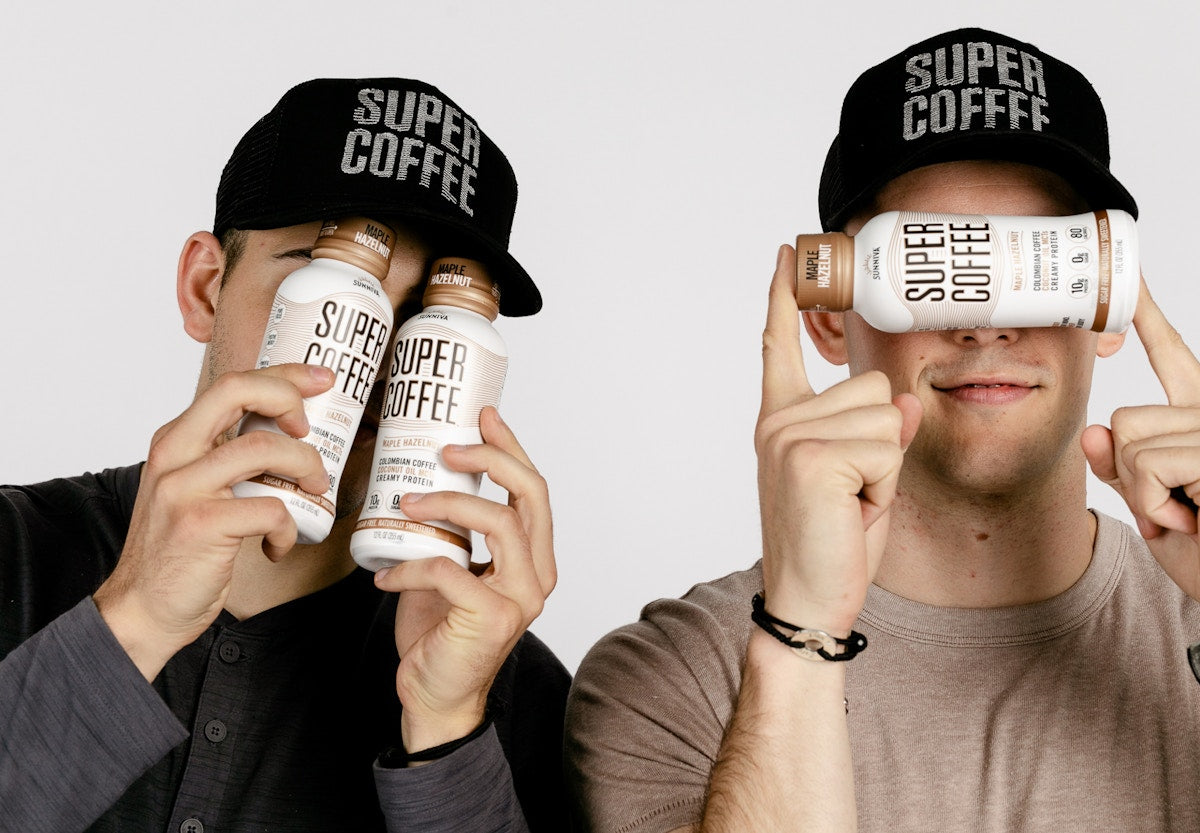
A bottle must earn its shelf
The brothers appeared on Shark Tank in 2018 and left without an investment. It was an early, public refusal. Taste and valuation attracted objections. Yet the broadcast also put the brand in front of people who could help. Skyview’s account describes an executive watching the show, recognizing the company’s finance officer, and getting in touch. Rejection and introduction had arrived in the same television episode.
By 2020, a $25 million funding round accompanied a master distribution agreement with AB InBev. This mattered for an unromantic reason: a beverage has to be where someone is thirsty. A website can explain the recipe. A distributor can get it into the cooler. Jim put the distinction plainly in a 2021 interview.
“People buy what’s there, whether they want to or not.”Jim DeCicco, 2021
The company reported $55 million in 2020 sales. In August 2021, it closed a $106 million Series C led by Durable Capital Partners. Approximately $30 million was earmarked for cashing out early investors. The entire headline amount was therefore not fresh operating money. Grocery represented about 60% of the business at the time; convenience stores were the next target. A nationally distributed coffee brand was taking shape, with all the expenses that shape implies.
The expensive education
There is a seductive mistake in consumer goods: confusing more products with more reasons to buy. Every flavor offers another possible customer. It also creates another inventory forecast, production requirement, and sales task. In a September 2025 Shelf Help interview, Jim described a reset from 65 SKUs to 15 and an 80% cost reduction. Those are founder-reported figures, but the direction is unmistakable. The business needed editing.
About 77% fewer product SKUs. An 80% cost reset.
Founder account, September 2025; historical figures.
Paid acquisition offered another expensive lesson. A May 2026 recap of Jim’s remarks describes monthly Meta spending of $500,000 to $1 million at the height of growth. The account says too many buyers ordered once and disappeared. A shipped case has to support more than ingredients: packaging, freight, acquisition, and a reason to reorder. More first purchases can deepen losses when the second purchase never arrives.
This is the part another founder can copy without buying a coffee factory. Concentrate effort where products actually sell. Match advertising to physical availability. Judge acquisition against repeat buying. These moves depend on having a product customers want again; they cannot repair an unwanted flavor or make an expensive shipment profitable by enthusiasm alone.
Customers were already mixing the answer
The next clue came from people’s kitchens. Jake has said the team noticed consumers combining cold brew with protein shakes in 2023. Customers were assembling their own higher-protein coffee, tolerating the inconvenience because they wanted at least 25 grams of protein. The company spent 2024 developing a response. Protein+ reached the market in 2025.
That placed Super Coffee between two shelves. Starbucks and Dunkin’ were familiar bottled-coffee alternatives. Core Power, Muscle Milk, and Premier Protein supplied another competitive set. A bottle carrying substantial protein could compete for a different occasion than a sweet coffee treat. The company’s expertise lay in making the combination manufacturable, portable, and legible to a shopper deciding in seconds.
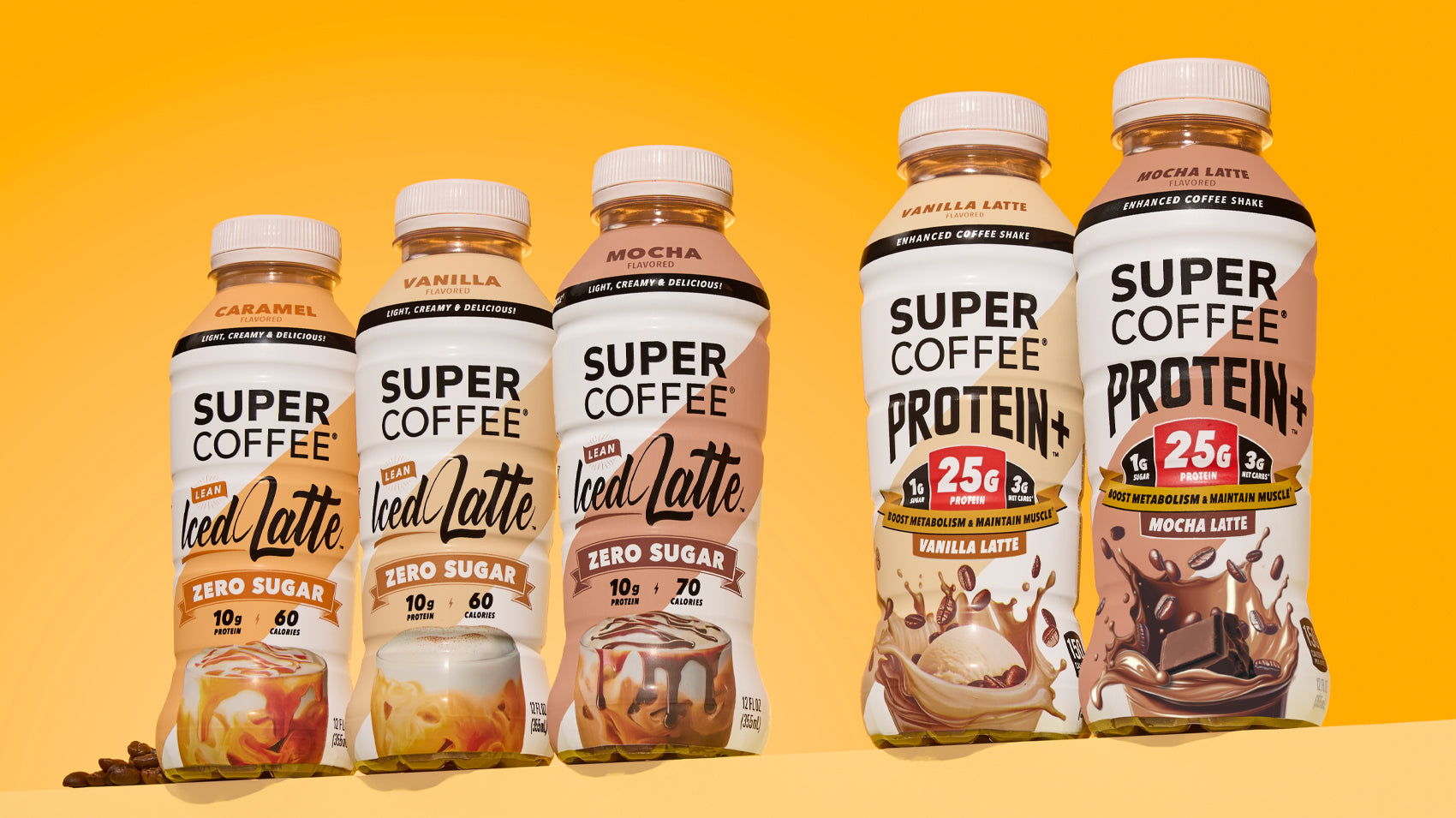
The portfolio also acquired clearer assignments. March 2025 reporting described multiserve cold brew for grocery, energy coffee for convenience stores, espresso for natural and specialty retail, and Protein+ for drugstores and other protein-drink occasions. Jake later reported more than $10 million in Protein+ shipments through November 30, 2025, following the first shipment in April. Shipments show retailer demand; they do not establish profit or every consumer’s repeat purchase.
Read the label, then do the arithmetic
The current online catalog makes those distinctions tangible. Vanilla Lean Iced Latte lists 10 grams of protein, 60 calories, and zero sugar. Mocha Protein+ lists 25 grams, 150 calories, and 1 gram of sugar. Its online sale price is $36.99 for twelve bottles, roughly $3.08 each before any shipping or tax. These are different purchases for different appetites.
Vanilla Protein+ powder offers another route: 25 grams of protein and 130 calories per serving, with 3 grams of sugar. Its ingredients include beef protein, casein, and dry milk. The ready-to-drink products examined also contain milk; low lactose does not mean dairy-free. Current recipes use sucralose, so older descriptions of an entirely naturally sweetened range should not substitute for the package in your hand.
For a customer, the practical test is whether one purchase conveniently replaces two. For the business, the test is whether that customer returns at a price that pays the bills. Super Coffee began by improving a student’s morning. Its more interesting education has been learning which improvements can survive the supermarket.