The problem with a baby wipe is that it was designed for a baby. Put it in a deployment bag, ask it to stand in for a shower, and its shortcomings become rather less adorable. The cloth can be flimsy. Open a shared packet and the remaining wipes can dry out. A mundane bathroom purchase becomes a small engineering problem when the bathroom disappears.
- Body care developed with service-member feedback.
- Made in the USA, sold to civilians as well as military customers.
- Wipes and deodorant now share the catalog with fine fragrance.
BRAVO SIERRA’s current origin story begins here: a stronger, individually packed antibacterial wipe, tested with U.S. Special Operations personnel, including the 75th Ranger Regiment’s 2nd Battalion. Packaging was part of the solution. Each wipe had to arrive ready for use, regardless of how many had already been taken out. The last one deserved the same chance as the first.
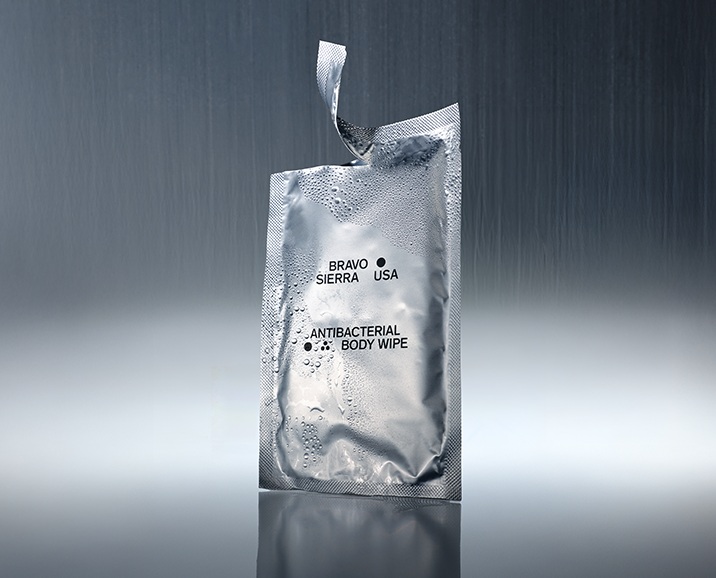
The last wipe in the packet
That is a useful way to think about this company. BRAVO SIERRA sells familiar things: deodorant, cleansers, wipes, hair paste. Its distinctive proposition concerns who helps decide whether those things are good enough. Instead of beginning with an imaginary customer in an immaculate bathroom, it seeks feedback from people using products under inconvenient conditions.
The company calls its testing community the Battalion. Its published description puts membership above 2,000 active-duty service members and veterans, with testing extending to bases and deployments. The feedback feeds subsequent formula changes. That number describes a development community, not a clinical study or the total number of people buying the brand.
Beauty veterans meet field veterans
The founders brought another kind of experience. Justin Guilbert and Benjamin Bernet knew each other as children in Paris and later worked in the beauty industry. Guilbert had also cofounded Harmless Harvest, the coconut-water business. Bernet’s background included Kiehl’s, L’Oréal and Glossier. They understood the considerable machinery required to make an ordinary object desirable.
Their early conversations took place during family weekends in East Hampton. There were children, meals and product-development sessions at a breakfast table. The setting is pleasantly incongruous: a military-connected personal care company emerging from two beauty professionals talking between family activities. Expertise came from their careers; the demanding product requirements came from users.


Two beauty insiders with a decidedly practical brief. Portraits: courtesy BRAVO SIERRA / The Daily Front Row.
“A true field-tested, cooperative effort”Justin Guilbert, describing the wipes in 2020
The brand dates its establishment to 2018 and its market launch followed in 2019. Its name spells B.S. in the phonetic alphabet, a joke that conveniently warns its own marketing department against getting carried away. The sensible reading of “military tested” is specific: service members contributed experience and feedback. The website explicitly says their testimonials do not constitute Department of Defense endorsement.
The test bench becomes a sales channel
Military exchanges supplied an early route to buyers. In a 2020 interview, Bernet described distribution through 144 locations on U.S. bases worldwide. That arrangement connected development and distribution: the community helping sharpen the brief could also encounter the finished product on a shelf. Civilian ecommerce gave the same products a wider audience.
Expansion required money. A $12 million Series A was announced in February 2020, led by existing investor Global Founders Capital. In August 2022, BRAVO SIERRA announced a $17 million Series B led by The Merchant Club alongside a nationwide Walmart rollout. Target and Amazon were already among its channels. The brand was moving from a defined founding audience into everyday shopping.
The military connection also shaped its contribution model. Early announcements committed 5% of sales to Morale, Welfare and Recreation programs. Current copy promises a portion of sales for veterans and families. The distinction matters when reading an old profile: a historical percentage should not be casually promoted into a permanent present-tense promise.
From a tactical shower to a scent wardrobe
Open today’s storefront and the utilitarian beginning has acquired rather better manners. Ten individually wrapped wipes cost $18. A 2.8-ounce deodorant costs $20; body wash is $25 and a cleansing bar $18. These are listed prices at the October 2026 research snapshot. They make the current offer easier to place: performance-oriented body care with a premium scent proposition.
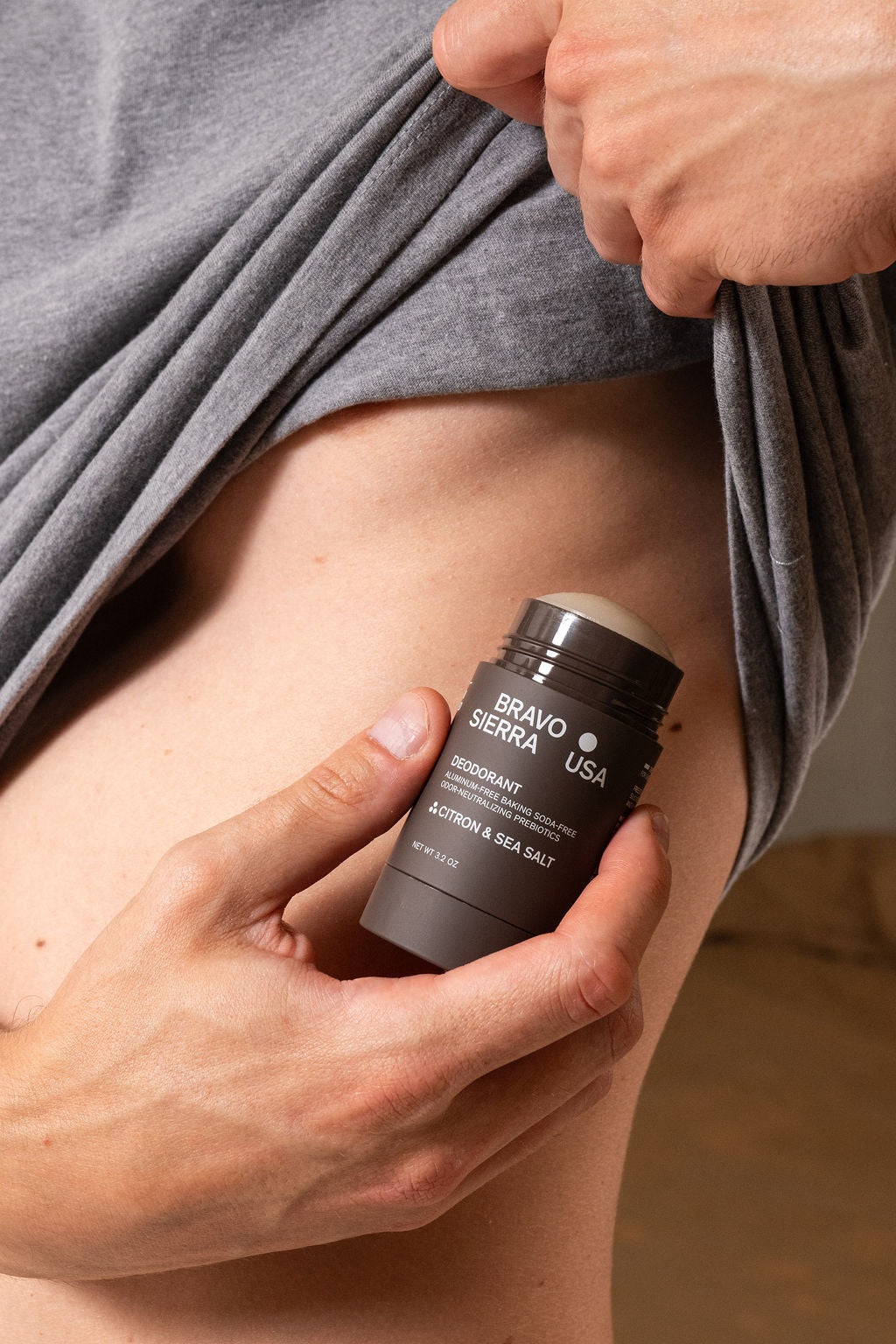
The deodorant excludes aluminum and baking soda. Its product page describes cassava-derived starch for moisture absorption and a ferment blend for odor control. It is worth choosing by the job required: deodorant addresses odor, while shoppers seeking an aluminum-based antiperspirant are looking for a different mechanism. Field testing cannot erase that distinction, or make every fragrance suit every wearer.
Fragrance now has its own room. Body fragrances include Marine Salt, Smoked Orris and Suede Musk, listed at $50 each. Vanilla Hide, the brand’s first eau de parfum, is $90. The amusing detail is in the name: the company describes an impression of vanilla without vanilla in the bottle. Black tea, pepper and woody notes do the storytelling.
A shopper comparing deodorants can also look at Native, whose standard 2.65-ounce stick was listed at $14 when researched. BRAVO SIERRA’s $20, 2.8-ounce stick asks for a higher outlay. That puts the purchase decision squarely on formula, scent and personal preference. The military testing story offers a reason to investigate; the experience of using it has to earn the reorder.
Copy the question, not the camouflage
This evolution was deliberate. In 2024, Bernet announced a new generation of formulas, scents, packaging and manufacturing processes after two years of work. Esquire’s 2025 grooming awards subsequently selected its hair paste and cleansing bar. The offering now competes for bathroom space on texture and scent as well as practical usefulness.
For a buyer, the choices are concrete: keep wipes in a gym bag, choose an aluminum-free deodorant, or build a washing-and-fragrance routine. The business encourages repeat purchases through subscriptions offering 15% savings. Its direct store currently ships within the United States, including territories and APO/FPO addresses. Military families can verify eligibility through GovX for a 15% discount.
For another founder, the transferable move is to ask about conditions before preferences. What happens when the packet is opened? When the shower is unavailable? When the customer has to carry everything? An extreme user can reveal an overlooked requirement. The approach works best when that requirement also matters to ordinary buyers. Otherwise, a beautifully solved field problem remains a specialized product, waiting for the right bag.